 Klaus K
 Paco Hope
OMG. Can you imagine publishing Machine Code for Beginners today??
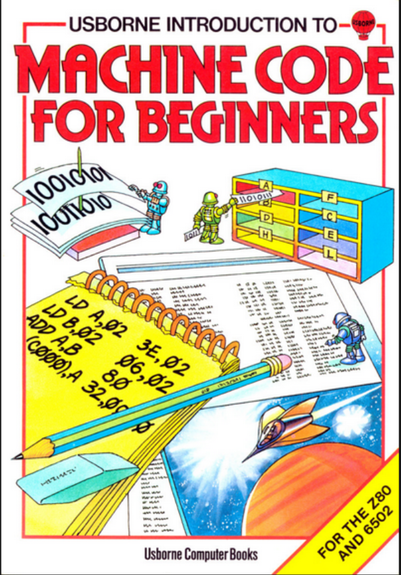
OMG. Can you imagine publishing Machine Code for Beginners today??
@eestileib ...and helps learning and practicing debugging a lot!
In my youth I made the experience that almost every code in a magazine had errors. 🤬
That and some of the other books on that site were nostalgic. Never read then specifically, but yeah, definitely the right time for the time.
@paco possibly not as charmingly illustrated, but the modern equivalent is the RISC-V ISA Manual: https://docs.riscv.org/reference/isa/_attachments/riscv-unprivileged.pdf
RISC-V was developed as a teaching tool initially, and that's still a part of its purpose and it's reflected in the documentation. It's very approachable.
Baby University Complete "for Babies" Board Book Set (Baby University Board Book Sets): Chris Ferrie, whurley, Cara Florance: 9781728232300: Books - Amazon.ca
@paco Most "coders" these days are even overwhelmed by the "complexity" of low-level programming languages ... and for whom even high level languages are too complex: HELLO VIBE CODING.
Guess which programming languages rank among the top 10 of the most popular languages to "vibe code" in ... Python, JavaScript, and Java ...
some of us did… 😬
(and for small, simple architectures, I still find it kinda fun, but amd64 and ARM have gotten too big for me to find them fun/interesting)
@paco Kudos to Usborne for making them available, we might run faster computers, but the fundamentals of electronics and making stuff haven't changed AT ALL. You can still buy a 555 timer chip, discrete components, everything. Even a Z80 micro although the original Z80 chips are no longer made.
How to Make Computer Model Controllers is just as relevant today owing to Raspberry Pi's making control computing affordable.
Spent half my life on a 6502c but nobody wants to hear...
I was living in a Z80 at the time...
Symplicity goes a long way...
That was my father's adventure, the Sinclair ZX80. He still has it. He played with it a lot. He taught me how to program. When I was 18, I switched to an Atari 800XL, which I used as my breaker box in the Air Force. The first thing I programmed was a modification to the tape OS using machine code (with a self-written assembler) to increase the baud rate and record/read file name headers on cassette tapes. I mean, 500 baud and not knowing what track is on the tape is bananas...

RPOM (previously called Magpi) had a series on it, less than a year ago... They'll turn it into a book soon...
@paco when I got my Commodore PET 2001, the previous owner threw in a handwritten disassembly of the entire BASIC ROM. I learned a lot from that, and it kindled my interest in languages.
Unfortunately the 6502 is one of those modern integrated devices, so no peeking under the hood there. But when the PDP8 at school came with full schematics, and the whole thing turned out to be constructed using TTL chips I already knew, that too was weeks of exploration, fun and learning.
@GreenYesScotland @paco This is how I learned Fortran.
There are still one or two brave souls that program in Assembler 🙂👍
@simonzerafa My first, and perhaps most interesting, contribution to open source was assembly.
To play DOOM head to head over a modem, you needed a TSR that ran in DOS and basically translated a modem connection onto a network connection. My uni had these super fast digital modems (115K when the standard was 56K). The DOOM folks open-sourced this little serial adapter thingie. I rewrote some of the main loop in assembly to improve efficiency and emailed the patch.
Frankly, I was a 4th year student who had just taken his first assembly class. It’s entirely likely that I didn’t improve it much at all.
On the first computer I used with any regularity, I entered machine code via a hex keypad into its RAM--all 256 bytes of it.
That was an RCA COSMAC ELF single-board computer.
I was around 10 years old.
Assemblers and assembly language are luxury in comparison.
 Mark Shane Hayden
 eestileib (she/hers)
 Alfons Klarname
 Martin Rust
 Infinity
 muddle
 Tor Iver Wilhelmsen
 Darth Depro
 Kyle Davis
 Shane Celis
 VerbGarden
 Nuclear Oatmeal
 Jeff
Jeff Daniel Durrans
 Boyd Stephen Smith Jr.
 Michael T Babcock
 DP0
DP0 Toni Aittoniemi
 Impossible Umbrella


 Tim Chase
 glasspshr
 Ian Turton
 Roger Whiteley
 BigLinter
 Marcella Francesca
 Walrus 🏴
 Fritz Adalis
 Steve
Steve Wouter Verhelst
 Umur Gedik
 Gerard van Oel 🍋
 Christoff, the human
 Marcin Cieślak
 Bert Driehuis
 LisPi
LisPi Green Yes Scotland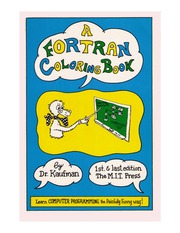
 Simon Zerafa (Status:
 😊)
😊) Codey McCodeface
 John Carlsen 🇺🇸🇳🇱🇪🇺