
27 Followers
33 Following
626 Posts
Reverse Engineering, Mathematics, and Eclipses.

Happy 40th birthday, ZMODEM! On May 20, 1986 the ZMODEM protocol specification was posted on Usenet by Chuck Forsberg of Omen Technology.

https://www.tuhs.org/Usenet/comp.sources.unix/1986-May/004372.html

If you used a BBS before the Internet you might get nostalgic. Otherwise you probably have no idea what this is about (and that’s fine).
ZMODEM Protocol Description

We’re through the looking glass here, people: https://www.tmz.com/2026/05/13/gwyneth-paltrows-goop-layoffs/ #AI #Goop

What better way to Celebrate Sir David Attenboroughs 100th Birthday, than with some #LaserDisc Goodness

Here is a brief glimpse of the phenomenal BBC British Garden Birds LaserVision Disc, 1982

It really is remarkable & absolutely
groundbreaking at the time
It’s all there
Teletext
Dual Audio Channels
CAV - Active Play, Frame by Frame
Subtitles
It still holds up today

@obsoletemediauk
@LaserdiscTurtle

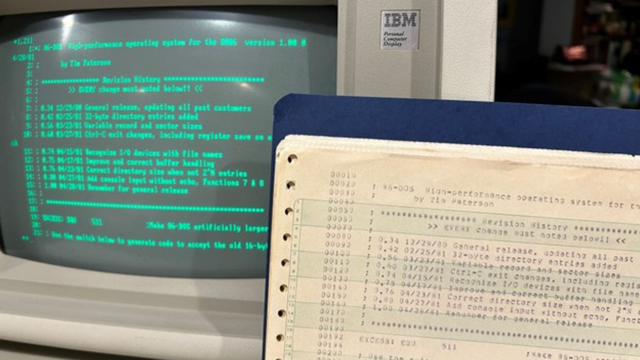
The earliest DOS source code was found on printer paper in Tim Paterson's garage so we've open sourced it on 86-DOS 1.00’s 45th anniversary! This is next-level software archaeology for preservation, and plain ol’ curiosity. #DOS #RetroComputing

https://opensource.microsoft.com/blog/2026/04/28/continuing-the-story-of-early-dos-development

Continuing the story of early DOS development | Microsoft Open Source Blog

In 2018 we (re)-open-sourced MS‑DOS 1.25 and 2.11, and more recently in 2024 we were able to make the source for MS‑DOS 4.0 available to the public as well. Today, on 86-DOS 1.00’s 45th anniversary, we’re continuing that tradition with the earliest DOS source code discovered to date.

Microsoft Open Source Blog
SUPER ZSNES

A GPU-powered SNES emulator rewritten from scratch with hi-res Mode 7, per-game enhancements, and a modernized classic UI.

How the modem dial-up sound was actually created 

#enough #negative #tech #and #news #timeFor #eyebleach

In recognition of Michael Rabin’s recent passing, I wanted to share the algorithm that first introduced me to his work: https://en.wikipedia.org/wiki/Miller–Rabin_primality_test #ComputerScience
Miller–Rabin primality test - Wikipedia

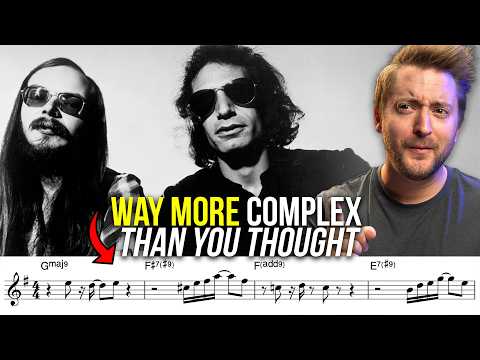
I don't really listen to music analytically, so I'd never noticed the infectious groove of Steely Dan's "Peg" was based on the moving the Hendryx chord around the circle of fifths, and then applying tritone substitutions!

Those are three music theory nerd delights wrapped up in a neat package. Charles Cornell explains them pretty clearly here. Then he gets sidetracked by *other* cool things going on in this song....

https://www.youtube.com/watch?v=PHHAzbKR3xk

I Never Knew Steely Dan Was THIS Genius

YouTube

The cat's out of the bag! My latest book, "The Secret Life of Circuits", is available in early access:

https://lcamtuf.coredump.cx/blog/secret/

It's the reference I wish I had when I was starting out. Electrons to embedded systems, 290+ color illustrations and 420+ pages of well-explained theory.

The Secret Life of Circuits

Many of you follow this blog because of the regular features about electronic circuit design.