@cainmark asks:

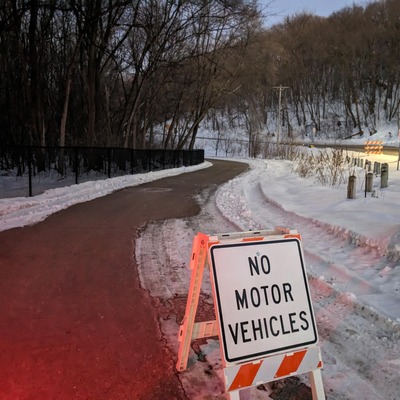
Q6. Anyone else have trouble navigating from city to country (urban to rural) & the reverse? On the road, w/ no paths available, when the shoulders disappear.

My closest calls have all been on the "outskirts" of a city, just past suburbs, before fully becoming country.

Anyone have ideas on how to traffic engineer that to stop being a problem? Speed limits don't help when people constantly speed over them.

#BikeNiteQ #BikeNite #BikeTooter #Cycling cc @bikenite

@ascentale @cainmark @bikenite

A6. My experience across the U.S. has been that basically every suburban/exurban transition features the worst/most dangerous bicycling conditions. The main time I've ever seen an exception is when there's somehow a magical bike path that keeps on going.

I think the problem is that it costs money to put in a proper shoulder, and in the burbs everything is more expensive because it's inherently spread out.

#bikeNite

@ascentale @cainmark @bikenite A6: the traffic engineering approach I'm used to is bike paths that end roughly on the city limits. If those are decently signposted you're riding into the city and there's a friendly sign saying "bike route to city centre, 5km" and a nice wide path.

#BikeNite

@ascentale @cainmark @bikenite A6: trains that take bikes are the other obvious, easy option.

One that sometimes works is the bike navigation app(s) saying "turn down the short side road here, then 100m later there's a track over a hump, then a fence, and then you're on singletrack through bush... it works but it's not discoverable without the app. And since it's not official sometimes it just ends abruptly at the back of a new construction site or something. Still worth trying.

#BikeNite

@moz @ascentale @bikenite

A6. Trains, especially affordable and timely passenger trains, would be great to have again in the United States. Car companies and the oil cartels help prevent that.

#BikeNite

@cainmark @ascentale @bikenite A6: especially the Sydney style heavy rail "metro area" trains that go from Newcastle to Wollongong to Goulburn. Cycle tour, get the train back into Newcastle (etc), change trains back into Sydney. It's a 150km "metro" train ride.

#BikeNite #OnlyInAustralia

@ascentale @cainmark @bikenite A6: Big initiative passed last year in the legislature is establishing inter-city bike highways, so that's our solution in progress up in Washington State. It'll be a minute before it's realised, but, you know.

#BikeNite

@moira @ascentale @cainmark @bikenite

Come to think of it, this was what the cycling network was like in the Netherlands, when I visited. Seamless transitions between towns.

#bikenite

@theantlady @ascentale @cainmark @bikenite Mind you, if the towns are actually close and around Seattle, we already have those sorts of transitions. But once you get further away, it gets worse.

I can and do bike between a _lot_ of towns right now. "Greater Northshore" covers a lot of territory and a lot of jurisdictions and all those are pretty seamless. _But._

#BikeNite

@theantlady @moira @ascentale @cainmark @bikenite The Netherlands are pure paradise for cyclists!
If you need any inspiration, go there! But I warn you: I cried a lot seeing what is possible, which is not at home.

@realSiegfried @moira @ascentale @cainmark @bikenite

It took a crisis and a lot of political will to change things in the Netherlands! There are also big differences in population densities and distributions there vs. my country (USA, sigh). I appreciate having a vision for what's possible.

@theantlady @moira @ascentale @cainmark @bikenite The Netherlands in the early 1970s were car-centric just like other European countries or the USA. I still adore the brave citizens those days and how politicians listened to the people and were willing to try change.

This is one of the many documentations with pictures how it started showing also changes that happened not long ago. They might encourage us today:

https://storymaps.arcgis.com/stories/55863ed081c14596968f3de40f3dc6f4

#StopDeKindermoord

Reclaiming Amsterdam

Our topic will explore the reclamation of the City of Amsterdam by cyclists.

Esri

@ascentale @cainmark @bikenite A6.

We're slowly getting separated bike paths along these exurban routes. They start as tourism but have turned out to be generally handy, popular (eg, people will do a day walk to a village for lunch), and useful for residents.

The clear engineering response is a wide verge until the sight lines of the road open up. And a very obvious fixed speed camera.

#BikeNite

@ascentale @cainmark @bikenite A6 #BikeNite Okay, there are going to be a few parts to my answer, but I'll try and put each into a separate post so threads are sane.

One aspect that may be localised to some places is the way US creates town and they borders being weird and the difference between a town and a county. So that town border can have a change in who's responsible that causes changes in infrastructure in awkward ways.

@ascentale @cainmark @bikenite A6 #BikeNite
Another aspect is that some busy fringe roads really aren't designed well / at all. There are a few roads I use that are impossible to pass a cyclist on due to being very windy and cresty (and double lines for many kilometers, so even when safe to pass, technically illegal). Other drivers get very annoyed when I refuse to unsafely pass cyclists on these roads.
Such roads shouldn't be so busy, traffic should be funnelled to better roads.

@ascentale @cainmark @bikenite A6 #BikeNite And obviously the usual things about the roads they are funnelled to should be less busy by diverting lots of traffic to active options.

So the kernel of answer here is: more better infrastructure will make the bad fringe roads less busy and then those roads will be better for everyone.

@ascentale @cainmark @bikenite A6. I've had the problem, but no idea on how to solve it without changing the culture of speeding. Too much traffic to be safe, but not enough for the cars to have to slow down.

#BikeNite

@ascentale @cainmark @bikenite A6 #BikeNite I am much more comfortable in the city, generally. There's too much fast sloppy driving in rural places (in my opinion).

@ascentale @cainmark @bikenite Similarly, all the scariest biking I've done has been in the suburbs or the countryside (with maybe some exceptions for parts of Nova Scotia that was very bike friendly in the 90s-early aughts, uncertain it still is)

I don't know how much traffic engineering car-first-always infrastructure can really help. The older I get, the more I see how helpful bike lanes can be in cities, the more I think we should have bike routes/lanes outside of major city areas.

@ascentale @bikenite

A6. Thanks everyone who answered this.

Without paths, and no access to trains, Slow speed side road connectors (that are difficult to speed on) leading directly from Bicycle Boulevards coming out of the suburbs might be the fastest solution.

Gravel roads work like this in the countryside, but you still have to get *to* them, often off of busier highways *after* coming out of a city.

#BikeNite

@cainmark @ascentale @bikenite A6: even continuous bicycle gutters might be a step up. Or just sweeping of the verges where cyclists end up riding (the paved area outside the official lanes)

#BikeNite

@ascentale @cainmark @bikenite
A6: This is one of my favorite things about Minnesota. Almost any of the medium sized towns will usually be decent to bike in/out compared to other metro areas across the US. I really love that I can pick any point within the greater region and it's only crappy a little bit to bike there and not the entire way like it would be in so many other places.

#BikeNire A6: Oh man, every time, anywhere I go!

I'm in an area with a large Mennonite community, who still use horses and buggies to get around. As accommodation, #WaterlooRegion has paved the shoulders on some highways to make it easier for the horses. Happily, paved shoulders also make great cycle paths, wide enough to give good separation from car traffic.

So I ride where there are paved shoulders, even when it's not the most direct route.

@ascentale
@cainmark @bikenite

When I do take another route I'm on the edge of the road between the painted edge-of-road line and the gravel shoulder. Far more dangerous, and much less fun.

Last year I got a "punishment pass", where a pickup truck veered towards me, passing with only centimetres to spare. Probably to "teach that cyclist a lesson", although the only thing I learned was something about the relative IQ of pickup truck drivers.

@ascentale
@cainmark @bikenite

#BikeNite A6b

@bobjonkman @ascentale @cainmark @bikenite That reminds me of something I read a number of years ago from someone who biked in Detroit, an unsurprisingly extreme car-centric area, and compared the stochastic violence they experienced when biking, people swerving at them, throwing things and verbally assaulting them, to the kinds of mistreatment racism victims experience all the time, that they only experienced on their bike. They found it kind of eye-opening on how other white people could just turn on them suddenly and commit senseless acts of violence.

@ascentale @cainmark @bikenite A6. I haven't thought of this specifically all that much because lots of city infrastructure isn't great, either.

I think about it more when walking - there are county areas in LA like Altadena where there are no sidewalks. Some residents in wealthier parts seem to argue against non-car infra, I guess fearing making it easier for any "great unwashed" to come to their neighborhoods.

If the only infra kept up is car infra, take the lane. #BikeNite

@ascentale @cainmark @bikenite A6 (cont'd) I realize I've made a behavioral answer to your traffic engineering question. However, if traffic engineering is the solution - then they should just put proper sidewalks and separated cycle infrastructure in. That's the solution.

The way to get them to do it can be long. Building coalitions, showing up to local gov't meetings over & over, etc.

What helps there is wonks making the issues & solutions clear to regular folks in plain language #BikeNite

@ascentale @cainmark @bikenite Do outreach to affected communities (in their languages). Make meeting places and times accessible. Listen to people who have quibbles to see if they have a point you should pay attn to (rather than being people not to be in coalition with).

Keep building coalition. Make meetings fun & rewarding so ppl keep showing up. Keep working to make it clear to local pols that they won't get re-elected without making your changes. #BikeNite

@ascentale @cainmark @bikenite A6: In my limited experience with a mid-sized US city, this comes down to the politics of each particular inner-ring suburb. Some transition seamlessly from urban to rural, some are a nightmare vortex of cul-de-sac neighborhoods and stroads.

@ksmoker @ascentale @bikenite

A6.

I've only experienced the latter. What makes the transition seamless? How can that be done for areas where it isn't?

#BikeNite

@cainmark @ascentale @bikenite
In my limited experience, mostly eastern US mid-sized cities, the nicer city neighborhoods tend to sit next to nicer inner ring suburbs (quiet, wide residential streets, even bike lanes) linked to the nicer rural exurbs (wide shoulders, plenty of un-commercialized property). Where I say โ€œnicer,โ€ think old-moneyinfrastructure.
@ascentale @cainmark @bikenite Bike toured in Europe. Bike paths along roads work great.
@Anibyl @ascentale @cainmark @bikenite Not everywhere in Europe. Your profile picture shows cycling in the Netherlands. That is bike heaven.
But I get an impression, how bad bike infrastructure is elsewhere, especially in the USA. Helps a bit to honor the few nice spots I find here in Germany, though they're often the exception, like our new road, excusively for bicycles (no cars allowed!):
@realSiegfried @ascentale @cainmark @bikenite The question was โ€œhow to solve the problem with traffic engineeringโ€, the answer was โ€œbike pathsโ€, not sure why your comment is needed.
I rode the through Germany between Hamburg and Szczecin, I know how much better German infra is than e.g. Canadian one.

@Anibyl @realSiegfried @ascentale @bikenite

In the U.S. there are lots of obstacles to getting bike paths made, hence my original question.

@cainmark @realSiegfried @ascentale @bikenite There's no magic bullet. If the traffic speed is too high, you need to build separated infra for micromobility, or you don't have micromobility. Getting rid of the mentioned obstacles is how you make cycling in rural areas safer.

@Anibyl @ascentale @cainmark @bikenite I feel sorry for feeling misunderstood. Also, English is not my first language.

I never said you're suggestion was wrong. Yes, separate bike lanes are definitely a solution (and the picture I sent gives a positive example).
You mentioned cycling in Europe, and I say that it still isn't perfect everywhere in Europe. Sad to hear that infra is worse in Canada. (Btw. The roads from Hamburg to Szczecin don't represent Germany in general. I rode them too.)

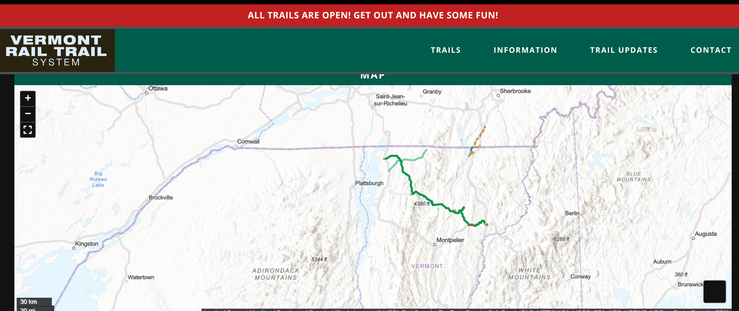
@ascentale @cainmark @bikenite A6: luckily, around me the rails-to-trails thing does a lot of the heavy lifting. Since railroads did exactly that & here in New England the layout of town/country hasnโ€™t much changed since then. So converting old track routes that are never gonna see a train again tends to get the bike paths going in the right direction pretty seamlessly. #BikeNite