 Spaceflight 🚀
Within the next few years, a new #communications infrastructure will unfold for the Moon 🌙. Shackleton Crater is deeper than the #GrandCanyon. Extremes at the South Pole present challenges for establishing wireless networks like #WiFi 📶 and #5G📱. #Earth 🌎 is only visible for roughly two weeks of each month. #Nasa has funded #Nokia to demonstrate a #4G link on the #IM2 mission, which will be the first #cellular network on the #Moon https://www.bbc.com/future/article/20240308-talking-on-the-moon-the-quest-to-establish-lunar-wifi

Early next month, #IM2 is targeting a touchdown at 84.6° south latitude, just 160 km from the #Moon’s 🌙 south pole. It will deploy an #ice-mining drill 🕳️ and mass spectrometer, a miniaturized rover, and a unique “hopper” craft. Its first hop will reach a height of 20 m with two additional hops aiming to reach 50 m then 100 m. On its fourth and fifth hops, it will leap in and out of a permanently shadowed region inside a 20 m-deep #crater. https://www.astronomy.com/space-exploration/intuitive-machines-preps-im-2-mission-for-moon-launch-this-week

During the #IM2 mission, the #4G cell 📱 network will allow for #communication between the lander and the two vehicles. But #Nokia has plans for a more expansive 4G or 5G cell network that can cover the planned #Artemis habitat and its surroundings. The company is also working on integrating cell communications in Axiom #spacesuits meant for future lunar #astronauts 👩🚀 https://www.technologyreview.com/2025/02/18/1111984/nokia-is-putting-the-first-cellular-network-on-the-moon
#SpaceCommunication https://wiki.openstreetmap.org/wiki/Key:communication:space

The #IM2 #NovaC lander is currently scheduled to land on Mons Mouton (-84.78°, 29.13°E) on 📆 6 March 2025 https://www.lroc.asu.edu/images/1401
IM-2 Landing Region
The Intuitive Machines IM-2 Nova-C lander (Athena) is currently scheduled to land on Mons Mouton on 6 March 2025 (predicated upon a launch before the 2nd of March). The IM-1 Odysseus landing site is indicated at the center top, and the IM-2 intended landing region is shown with a white box in the lower right. The image width is 130 kilometers, and north and nearside are towards the top [NASA/GSFC/Arizona State University].
#IntuitiveMachines 2 lunar landing 12:32 p.m. EST (06:32 pm CET) on 📆 Thursday, March 6 https://plus.nasa.gov/scheduled-video/intuitive-machines-2-lunar-landing

#Athena was communicating with controllers and generating solar power, officials said. But 20 minutes after touchdown, Crain still was unable to confirm if everything was all right with the lander. #NASA and #IntuitiveMachines abruptly ended their live landing webcast, promising more updates at a news conference later in the afternoon https://apnews.com/article/moon-landing-nasa-intuitive-machines-athena-cf4a88baa6644fb381dbaea497001d51

Private lunar lander may have fallen over while touching down near the moon's south pole
A privately owned lunar lander has touched down near the moon's south pole. But flight controllers in Texas fear it may have fallen over. The last time Intuitive Machines landed a spacecraft on the moon, a year ago, it ended up sideways. Officials say the newest lander may have fallen as well. The Athena lander dropped out of lunar orbit as planned Thursday, carrying a drill, a drone and two rovers for NASA and others. NASA's Lunar Reconnaissance Orbiter will fly over the landing site in the coming days to confirm Athena's position and orientation.
#Athena came to rest inside a crater, 250m from its intended target. “With the direction of the sun, the orientation of the #solar panels, and extreme cold temperatures in the crater, #IntuitiveMachines does not expect Athena to recharge 🔋”. Issues with Athena’s laser altimeter may have contributed to the bad landing https://www.straitstimes.com/world/united-states/us-company-says-moon-mission-over-after-landing-sideways-again

 Steve Hersey
@spaceflight
Space is hard.
Space is hard.
@n1xnx #intuitively, what would you guess could have lead to the fact that one lunar lander succeeded on first try while the other toppled twice ? 🤔 🙄

 Krystian Majewski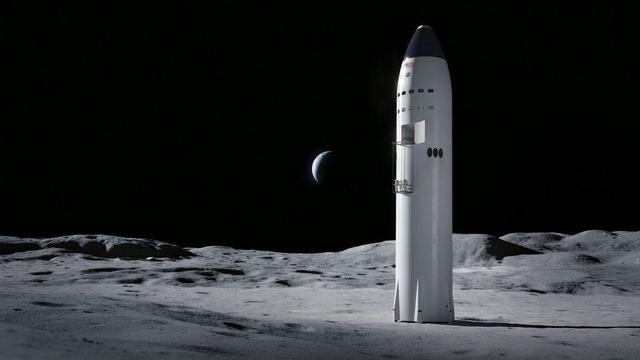
@krystman @spaceflight
I think the failure of the laser altimeter on each mission is much more of a factor than the shape of the lander. You can tip ANYTHING over if you're landing badly.
If you look at the photos of the lander and observe the landing legs (which is what matters here), they have a VERY wide stance, and the CG of the lander is said to be low, so the effective shape of the lander is far less narrow than you may think.
The Starship upper stage is a different matter. It is indeed a tall, narrow thing, so it would need seriously good landing legs, really smooth terrain, and a reliable altimeter. I doubt anyone would actually try to land an upper stage like that without a prepared landing pad, so it won't be the first landing if it is ever used.
 Isaac Ji Kuo
@n1xnx @krystman @spaceflight If I understand correctly, Starship is indeed supposed to land directly on the Moon (and Mars) with no preparation. Originally, the stupid and insane idea was to land directly on the rocket nozzles, practically, but the current plan is to redesign Starship with engines placed near the nose. And pretend this sort of redesign doesn't mean anything, whatever.
Anyway, the inescapable challenge for all lunar landers is that landing rockets need clearance ...
@n1xnx @krystman @spaceflight Without adequate clearance, the rockets will kick up regolith that stand a good chance of destroying the lander.
The intuitive solution is for the lander to have long landing legs. But this obviously increases odds of tipping over.
JAXA SLIM had a brilliant and elegant solution that used extremely short legs - PURPOSEFULLY tip over. That way, the landing rockets can cut off while still some distance from the ground and then it can belly flop onto the stubby legs.
@n1xnx @krystman @spaceflight Okay, this didn't work out quite as intended, and it ended up flopping over a wrong way. But it's not necessarily a bad idea and it could be in the right direction.
If SLIM used two circular arc hoops instead of just stubby landing legs, it could have self righted after flopping over. This costs more mass, of course, so it's a matter of calculating if it's worth it.
@isaackuo @krystman @spaceflight
And, of course, all these clever hoop schemes and such rather depend on NOT landing atop pointy rocks that will puncture the lander.
Space is hard.
@n1xnx @krystman @spaceflight Obviously choosing an appropriate landing site helps. But it is possible to design a lander to deal with pointy rocks - at extra costs, of course.
For example, you can literally wrap the lander in bubble wrap...
@isaackuo @krystman @spaceflight
Well, we've already done a bouncy-castle lander, and another dropped on cables from a rocket-powered skyhook.
Of course, it's generally cheaper and easier to choose a landing site that's poor in pointy rocks. Now that we've established that sinking outta sight in moondust isn't A Thing. (Though I bet you could manage it with rocket exhaust fluidizing a sandy landing area.)