 Spaceflight 🚀
Within the next few years, a new #communications infrastructure will unfold for the Moon 🌙. Shackleton Crater is deeper than the #GrandCanyon. Extremes at the South Pole present challenges for establishing wireless networks like #WiFi 📶 and #5G📱. #Earth 🌎 is only visible for roughly two weeks of each month. #Nasa has funded #Nokia to demonstrate a #4G link on the #IM2 mission, which will be the first #cellular network on the #Moon https://www.bbc.com/future/article/20240308-talking-on-the-moon-the-quest-to-establish-lunar-wifi

Early next month, #IM2 is targeting a touchdown at 84.6° south latitude, just 160 km from the #Moon’s 🌙 south pole. It will deploy an #ice-mining drill 🕳️ and mass spectrometer, a miniaturized rover, and a unique “hopper” craft. Its first hop will reach a height of 20 m with two additional hops aiming to reach 50 m then 100 m. On its fourth and fifth hops, it will leap in and out of a permanently shadowed region inside a 20 m-deep #crater. https://www.astronomy.com/space-exploration/intuitive-machines-preps-im-2-mission-for-moon-launch-this-week

During the #IM2 mission, the #4G cell 📱 network will allow for #communication between the lander and the two vehicles. But #Nokia has plans for a more expansive 4G or 5G cell network that can cover the planned #Artemis habitat and its surroundings. The company is also working on integrating cell communications in Axiom #spacesuits meant for future lunar #astronauts 👩🚀 https://www.technologyreview.com/2025/02/18/1111984/nokia-is-putting-the-first-cellular-network-on-the-moon
#SpaceCommunication https://wiki.openstreetmap.org/wiki/Key:communication:space

The #IM2 #NovaC lander is currently scheduled to land on Mons Mouton (-84.78°, 29.13°E) on 📆 6 March 2025 https://www.lroc.asu.edu/images/1401
IM-2 Landing Region
The Intuitive Machines IM-2 Nova-C lander (Athena) is currently scheduled to land on Mons Mouton on 6 March 2025 (predicated upon a launch before the 2nd of March). The IM-1 Odysseus landing site is indicated at the center top, and the IM-2 intended landing region is shown with a white box in the lower right. The image width is 130 kilometers, and north and nearside are towards the top [NASA/GSFC/Arizona State University].
#IntuitiveMachines 2 lunar landing 12:32 p.m. EST (06:32 pm CET) on 📆 Thursday, March 6 https://plus.nasa.gov/scheduled-video/intuitive-machines-2-lunar-landing

#Athena was communicating with controllers and generating solar power, officials said. But 20 minutes after touchdown, Crain still was unable to confirm if everything was all right with the lander. #NASA and #IntuitiveMachines abruptly ended their live landing webcast, promising more updates at a news conference later in the afternoon https://apnews.com/article/moon-landing-nasa-intuitive-machines-athena-cf4a88baa6644fb381dbaea497001d51

Private lunar lander may have fallen over while touching down near the moon's south pole
A privately owned lunar lander has touched down near the moon's south pole. But flight controllers in Texas fear it may have fallen over. The last time Intuitive Machines landed a spacecraft on the moon, a year ago, it ended up sideways. Officials say the newest lander may have fallen as well. The Athena lander dropped out of lunar orbit as planned Thursday, carrying a drill, a drone and two rovers for NASA and others. NASA's Lunar Reconnaissance Orbiter will fly over the landing site in the coming days to confirm Athena's position and orientation.
#Athena came to rest inside a crater, 250m from its intended target. “With the direction of the sun, the orientation of the #solar panels, and extreme cold temperatures in the crater, #IntuitiveMachines does not expect Athena to recharge 🔋”. Issues with Athena’s laser altimeter may have contributed to the bad landing https://www.straitstimes.com/world/united-states/us-company-says-moon-mission-over-after-landing-sideways-again

 Steve Hersey
@spaceflight
Space is hard.
Space is hard.
@n1xnx #intuitively, what would you guess could have lead to the fact that one lunar lander succeeded on first try while the other toppled twice ? 🤔 🙄

 Krystian Majewski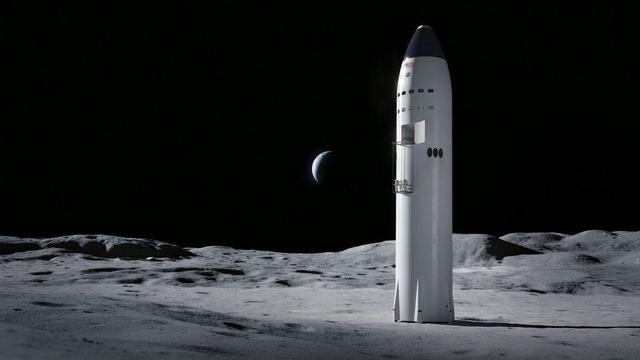
@krystman in this case it's not the first (or second) try https://www.youtube.com/watch?v=bvim4rsNHkQ

How Not to Land an Orbital Rocket Booster
@spaceflight So what you‘re saying is „space is hard“?
@krystman @spaceflight
I think the failure of the laser altimeter on each mission is much more of a factor than the shape of the lander. You can tip ANYTHING over if you're landing badly.
If you look at the photos of the lander and observe the landing legs (which is what matters here), they have a VERY wide stance, and the CG of the lander is said to be low, so the effective shape of the lander is far less narrow than you may think.
The Starship upper stage is a different matter. It is indeed a tall, narrow thing, so it would need seriously good landing legs, really smooth terrain, and a reliable altimeter. I doubt anyone would actually try to land an upper stage like that without a prepared landing pad, so it won't be the first landing if it is ever used.
 Isaac Ji Kuo
@n1xnx @krystman @spaceflight If I understand correctly, Starship is indeed supposed to land directly on the Moon (and Mars) with no preparation. Originally, the stupid and insane idea was to land directly on the rocket nozzles, practically, but the current plan is to redesign Starship with engines placed near the nose. And pretend this sort of redesign doesn't mean anything, whatever.
Anyway, the inescapable challenge for all lunar landers is that landing rockets need clearance ...
@n1xnx @krystman @spaceflight Without adequate clearance, the rockets will kick up regolith that stand a good chance of destroying the lander.
The intuitive solution is for the lander to have long landing legs. But this obviously increases odds of tipping over.
JAXA SLIM had a brilliant and elegant solution that used extremely short legs - PURPOSEFULLY tip over. That way, the landing rockets can cut off while still some distance from the ground and then it can belly flop onto the stubby legs.
@n1xnx @krystman @spaceflight Okay, this didn't work out quite as intended, and it ended up flopping over a wrong way. But it's not necessarily a bad idea and it could be in the right direction.
If SLIM used two circular arc hoops instead of just stubby landing legs, it could have self righted after flopping over. This costs more mass, of course, so it's a matter of calculating if it's worth it.
@isaackuo @krystman @spaceflight
And, of course, all these clever hoop schemes and such rather depend on NOT landing atop pointy rocks that will puncture the lander.
Space is hard.
@n1xnx @krystman @spaceflight Obviously choosing an appropriate landing site helps. But it is possible to design a lander to deal with pointy rocks - at extra costs, of course.
For example, you can literally wrap the lander in bubble wrap...
@isaackuo @krystman @spaceflight
Well, we've already done a bouncy-castle lander, and another dropped on cables from a rocket-powered skyhook.
Of course, it's generally cheaper and easier to choose a landing site that's poor in pointy rocks. Now that we've established that sinking outta sight in moondust isn't A Thing. (Though I bet you could manage it with rocket exhaust fluidizing a sandy landing area.)
 (moved)Galbinus Caeli 🌯
@isaackuo @n1xnx @krystman @spaceflight also, maybe don't land the squishy humans in an unprepared field. Drop a remote control zamboni first.
@SkipHuffman @n1xnx @krystman @spaceflight If it's possible, it would be better to design a manned lander so that it could safely land on an unprepared field. The thing is ... it's not so easy to ensure your landing ellipse is small enough to fit in a prepared field.
So, accounting for all the things that could go wrong ... well ... I'd be more comfortable with landers that could handle operating on an unprepared field.
@isaackuo @n1xnx @krystman @spaceflight We should be extremely careful about landing humans on the moon until we are a lot better at landing anything there. The Wright brothers flew a lot of kites before strapping themselves into one.
@SkipHuffman @n1xnx @krystman @spaceflight We fundamentally know how to land humans on the moon with adequate safety, but here's the thing. It costs orders of magnitude more than what we are willing to spend today.
And by "we" I don't just mean the USA space budget. Budgets for JAXA and ESA and others are even more limited.
@isaackuo @n1xnx @krystman @spaceflight doing something as a stunt with unlimited funds is one thing. Making it a useful routine is another.
@SkipHuffman @n1xnx @krystman @spaceflight Apollo landings became routine. They were also very expensive. Whether or not it would have been politically possible to maintain political support for those budget levels is way outside my ken.
All I can say for sure is that no nation's space budget has since come anywhere close to those levels.
@isaackuo @SkipHuffman @krystman @spaceflight
I'm with you there, especially if my frail pink body is on the line.
I'm with you there, especially if my frail pink body is on the line.
@isaackuo @SkipHuffman @krystman @spaceflight
Of course, if you're operating a moon base of any sort, you're more or less going to have to make that landing ellipse fit a prepared field. "Oops, we just landed on the habitat dome, and it's not exhaust-plume-proof" isn't a Good Thing.
@n1xnx @SkipHuffman @krystman @spaceflight That opens up a whole uncomfortable can of worms, because regolith kicked up by supply landers can EASILY punch through other rockets and habitats hundreds of kilometers away.
To some extent, the risk can be mitigated by covering habitats with thick layers of regolith (arguably desirable for radiation shielding anyway). But you kinda want to have more than one rocket ship around at a time - at least one escape rocket available at all times...
@n1xnx @SkipHuffman @krystman @spaceflight But simply crashing a rocket in case it doesn't make it to the prepared field doesn't work either, because the impact can kick up even more regolith.
Ultimately you may just have to lie and pretend the chances of catastrophic failure aren't high just to get the lunar base funded in the first place. Otherwise, the complexity and budget could get insane.
@isaackuo @n1xnx @krystman @spaceflight Building an arrival port needs to be a very early task. A remote control zamboni like device to clear big rocks, level surfaces and do something to consolidate regolith should be someone's project.
@SkipHuffman @n1xnx @krystman @spaceflight Maybe. Or maybe there's a better way, that doesn't require so much effort/expense/time and which may be safer.
I dunno ... maybe a skycrane system could be used to softly land the main payload, and then the skycrane module is designed with crumple zones to limit ejecta when it (purposefully) crashes.
@SkipHuffman @n1xnx @krystman @spaceflight Personally, I have a thing for landing with some sort of tower or horizontal line held up high. This was used successfully on the X-13 Vertijet but has basically gone ignored other than that ... until the Starship tower.
Well, the Starship tower seems to work fine. A light duty variant to minimize mass could be a cable between two guyed masts.
So, instead of crashing a skycrane, it could try to fly itself to the landing cable.
@SkipHuffman @n1xnx @krystman @spaceflight Under ideal circumstances, the skycrane delivers the payload directly to where it's wanted and it has enough remaining range to reach the landing masts.
But if things don't work out entirely, there's a lot of flexibility to drop the payload wherever it can reach, and then crash the skycrane some place as safe as possible.
Another skycrane at the mast base can be sent to pick up the payload and bring it where it's desired.
@isaackuo @n1xnx @krystman @spaceflight how high would the catch cable need to be to avoid backsplash? Also what do you do for launch?
@SkipHuffman @n1xnx @krystman @spaceflight I don't know how tall it would have to be.
The X-13 Vertijet used the landing cable for both landing and launch, so that's what I've always thought in terms of.
To assist dealing with the extra weight of full fuel tanks, a long strut could be used. The top of the strut has a cup that the nose hook hooks over into (along with the cable). This strut is placed before the skyhook is refueled.
After launch, the strut falls away.
 Winchell Chung ⚛🚀
@SkipHuffman @isaackuo @n1xnx @krystman @spaceflight
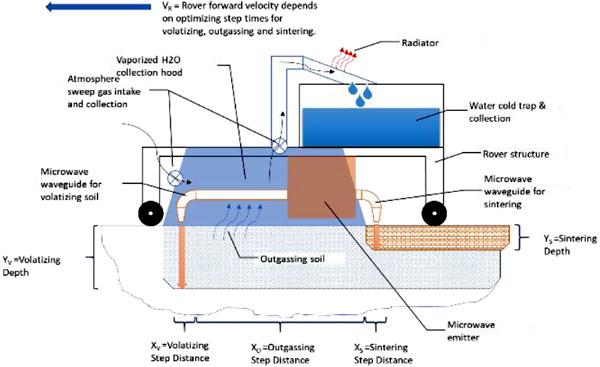
It has been suggested to use a robot zamboni equipped with a microwave emitter that will sinter the regiolith into a flat surface.
https://www.projectrho.com/public_html/rocket/landing.php#hardlz
@nyrath @SkipHuffman @n1xnx @krystman @spaceflight As noted, the required thickness is ill defined. But the massive destruction caused by early Starship launch suggests maybe several meters deep at least? And that was concrete, not loose regolith.
On the other hand, if we're talking a polar base, maybe more familiar zamboni technology could be used to prepare a surface of water ice or dry ice...
@isaackuo @nyrath @n1xnx @krystman @spaceflight Launching a fully loaded booster on earth is a much more energetic event than launching or landing a half empty ship on the moon.
@SkipHuffman @nyrath @n1xnx @krystman @spaceflight Fair enough. Still, concrete on Earth has a lot more "holding it down" than sintered regolith only held down by lunar gravity.
@isaackuo @n1xnx @SkipHuffman @krystman @spaceflight
I think you remember this concept?
https://www.nasa.gov/general/instant-landing-pads-for-artemis-lunar-missions/
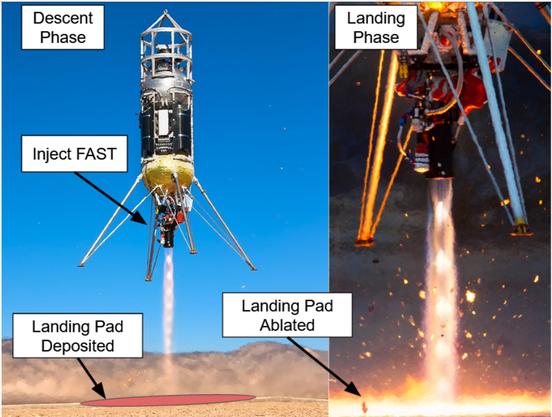
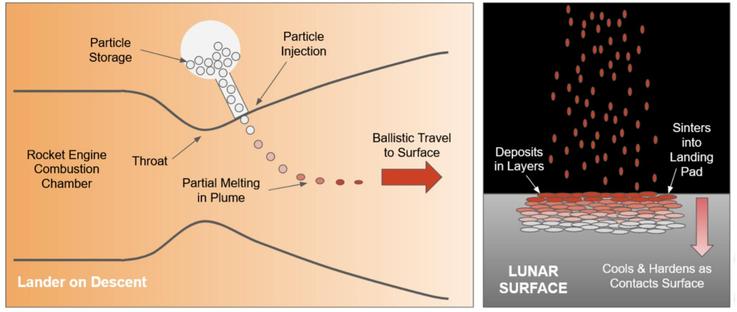

@nyrath @n1xnx @SkipHuffman @krystman @spaceflight Oh yeah! I didn't mention it because it feels ... uhh ... I'll use the word "optimistic".
@isaackuo @krystman @spaceflight
Ye hairy gods.
Sixty-plus years of landing things on other planets, and these fools STILL base their designs on artists' concepts from glossy magazines and SF novel covers. I'm amazed they didn't try to develop Cavorite.
@n1xnx @krystman @spaceflight Bear in mind that Elon Musk has design intellect well below Calvin from Calvin and Hobbs, and when he orders that to happen ...
I mean, just look at Cybertruck.
I'm just saying ... it's not "these fools". It's one fool. One specific fool.
@isaackuo @krystman @spaceflight
Nope. It's one VERY RICH fool and a lot of gullible techies willing to implement his stupid schemes. Fool-enablers.
One of my coworkers has a Cybertruck. I told him we were taking up a collection to buy more polygons for his truck so it would render properly on the road.
@isaackuo @n1xnx @krystman @spaceflight won't moving the engines to the top also move the center of mass significantly higher requiring greater effort for rotation control?
 Khleedril
@n1xnx @krystman @spaceflight They'll have to build a gantry with chopsticks first. At least they won't need to be quite as strong as Earth-based ones.