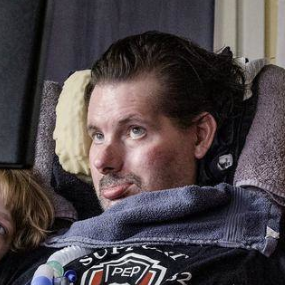
Hi you all!

I'm working for just, #sustainable #transition at the Social Democratic think tank Sorsa Foundation (www.sorsafoundation.fi) in #Helsinki, #Finland.

I've been trying to advance #sustainability since about 2007. I originally have a background in #engineering and #design, and did a PhD about technological substitutes for critical resources. However, #energytransition has been my main focus.

I firmly believe that broadening #democracy is THE key to sustainability.

#introduction

For a long time, I thought that we have to separate #socialjustice issues from #environmental and #sustainability issues in order to solve either.

I thought all of these were too complex in themselves, and entangling them would complicate the solutions even more.

I now think I was wrong. Environmental and sustainability issues ARE social justice issues. What's more, I don't believe an unjust society can ever be sustainable.

So it's a choice between justice or judgment day.

In my view, #humanity is in the grip of a two-pronged problem:

1. unsustainable use of the #Earth and its resources
2. #technology constantly increases the powers of the few.

These processes feed each other: more powerful technologies enable more #exploitation, and exploitation increases pressures to compete with more powerful technologies.

As a result, the Earth-system's margins of safety erode, and cascading disasters become more likely by day.

This vicious cycle has to be broken before it breaks our human #civilization .

I've given the matter considerable thought yet haven't found durable solutions - except one:

distribution of #power .

To stop the cycles of exploitation and prevent new ones,

1. No being should have so little power that exploiting them is easy;
2. No being should have so much power that exploiting others is easy.

In other words, I believe #democracy is THE answer.

Every alternative to #democracy requires steep #hierarchy - some beings having unilateral power to make decisions over others.

And then we're back at the problem of benevolent dictatorship: they invariably become mere dictatorships in short order.

What's more, a hierarchical society incentivises #competition .

Hierarchies force everyone to compete. Either for a higher position, or to avoid losing position: in a hierarchy, those at the bottom are at the mercy of the more powerful.

The steeper the hierarchies, the greater the rewards for the winners of the competition... and the greater the penalties for the losers.

Over time, this tends to make existing hierarchies even steeper. And competition more cutthroat.

In a world where infectious horsepox can already be assembled from mail-order RNA for $100 000 or less, cutthroat competition WILL lead to a disaster.

And #technology marches on. While #environmental margins of safety erode.

https://www.science.org/content/article/how-canadian-researchers-reconstituted-extinct-poxvirus-100000-using-mail-order-dna

How Canadian researchers reconstituted an extinct poxvirus for $100,000 using mail-order DNA

A study that brought horsepox back to life is triggering a new debate about the risks and power of synthetic biology

The ONLY truly #sustainable solution for this two-pronged problem is, I firmly believe, #democracy .

Share #power and #resources fairly and equitably.

THEN it may be possible to set safe, universally respected #limits to the use of powerful technologies and finite resources.

Because only fair, democratic sharing

a. reduces the pressure to compete, and
b. gives those in danger of being exploited enough power and resources to defend themselves.

@jmkorhonen Taxation is a good way to control the sharing vs. stagnation issue. I think I may disagree with you in my perception of how much resources (=total wealth) are required to solve the sustainability question. I think we need more. Their unpurposeful distribution is a separate issue.

@rmattila74 Yes - taxation and redistribution would be the perfect way to share economic power more equitably.

I also greatly prefer market-based solutions over more clunky forms of service provision IF the differences in purchasing power aren't too great.

More wealth that goes to incentivise destructive activities and competition almost certainly hurts more than helps at this point. But poor countries need more.

@jmkorhonen Destructive activities should indeed be more heavily taxed. Not sure about the purchasing power - that could kill innovativity. Back when I was healthy, my goal was to make €5M to set up an electromechanical product development shop. I felt that having co-owners would have limited the adaptivity needed in development. The same way that big corporations could never have made EVs mainstream. Democracy and risk aversion are good for governments but bad for tech companies.

@rmattila74 There are times when hierarchies are very useful, even essential. Innovation can be one of them.

But I'm certain we have to find a solution that doesn't just throw hands in the air and permit individuals and small groups amass immense economic #power beyond democratic control. The risks are just too great.

I can think of a few ideas, and would love to hear more, and feedback:

@jmkorhonen @rmattila74 Why though? Why are "hierarchies very useful, even essential" for innovation?

I see this being repeated like a mantra by centrists and people who like free markets without absolutely any evidence tied to it, time and again.

It smells incredibly elitist to me -- "we need hierarchies for innovation because we, the rich, are the enlightened ones" / "we need hierarchies for innovation because you need to reward it with something worthwhile, and the only worthwhile reward is unconsenting domination"

But in reality most innovation comes from small groups of people coming together. Even big industrial breakthroughs usually stem from public-funded research, and then private companies get to profit from it without paying it back.

And the rich and powerful stifle innovation at every turn to maintain the status quo.

Hierarchies are a problem, not an asset, and the fact that the rich and powerful gaslit most of the population into believing the opposite causes us harm in every sphere.

@brocolie @jmkorhonen Innovating is the easy part. Commercialization is where the risks are, and shared responsibility leads to risk aversion. Case in point: legacy auto and EVs. It took "betting the company" from Tesla to break through.

@rmattila74 @jmkorhonen I don't buy this "Tesla made EVs a reality" narrative.

If anything, it's another case of a highly oligarchical and captured market stifling innovation for decades, and maintaining the destructive status quo.

And don't forget that Tesla EVs are still bad for the environment. Actual innovation would look like better public transit in cities, more rail and waterway transport. Elon Musk has campaigned against this at every turn. Even electric trucks should be a second thought because just the energy and carbon cost of producing them is too high to justify during a climate crisis. Not to mention the waste.

Instead we're getting luxury electric cars that are inaccessible to the population, and that won't be accessible for the global population in time to deal with the climate crisis. We're getting standards wars for charger plugs. We're getting even less investment than necessary in cleanly generating the electric power required for EVs. We're getting more greenwashing and oligopoly.

@brocolie @jmkorhonen In reality, EVs are now eating market share rapidly from EVs. It's 30% in many countries and most automakers are phasing out ICEs completely. None of this would have happened with the risk-aversive, status quo-oriented Ltd. companies. It required a level of disruption that can only be accomplished by an individual who has the freedom to risk his own money.

@rmattila74 @jmkorhonen This stat seems to be pulled out of thin air.

Even in countries with good EV penetration (which is basically only in Europe afaik), the new vehicles are overwhelmingly hybrid models that still rely mostly on ICEs.

Whether hybrids compensate for the extra emissions from manufacturing is something I have not seen any study about yet.

@brocolie @jmkorhonen Here are the stats.

@rmattila74 @jmkorhonen no only there's no source given, the info on that table also just confirms what I just said:

tiny fraction of rich countries, only counts sales of new vehicles and is not at all representative of actual vehicles in circulation, hybrids inflate the numbers, no discussion on whether they're even worth it over reducing overall production and retrofitting to begin with

@brocolie @rmattila74
I'm afraid there's a good argument to be made for Tesla's strategy, as much as it pains me to say this.

New technologies are always costly at first. It's not a question of who designs them, it's inherent in the newness.

Finding a so-called "technological niche" of users who are willing to pay for the new technology is very often what makes or breaks promising innovations. 1/

@brocolie @rmattila74

Niches are crucial, because otherwise only the projects funded by the deepest and most patient pockets can afford to develop the innovation from a "hopeful monster" to its refined form.

Finding these niches can be very hard. New technologies tend to have all sorts of teething troubles, and are often relatively costly in comparison to incumbent alternatives, which have profited from e.g. mass manufacturing and other improvements already. 2/

@brocolie @rmattila74
For electric vehicles, wealthy users are the niche.

They are the initial customers who are willing and able to pay a premium that 1) funds further development, including setting up mass manufacturing, and 2) attracts more entrants into the electric vehicle business (Including component manufacturing).

Further development to cut costs and ESPECIALLY mass manufacturing is crucial for driving down the cost, so that the less well off can afford EVs. 3/

@brocolie @rmattila74
This is exactly what happened with #solar panels.

NASA and #satellite operators paid for the very early development: the cost wasn't a concern because solar panels were so much better for Earth-orbiting satellites than any alternatives.

Further development was paid by wealthy countries and individuals. Germany's feed-in tariffs were IIRC quite important.

This got the mass manufacturing ball rolling. Now solar is poised to dominate. 4/4