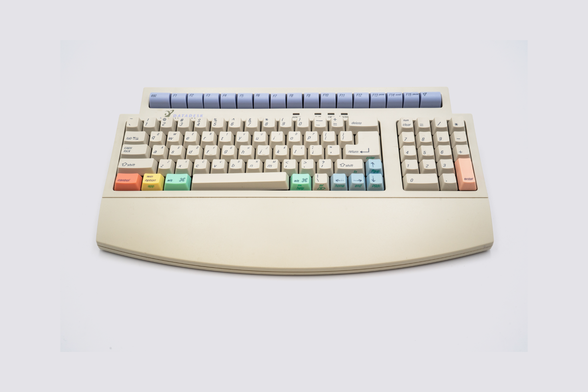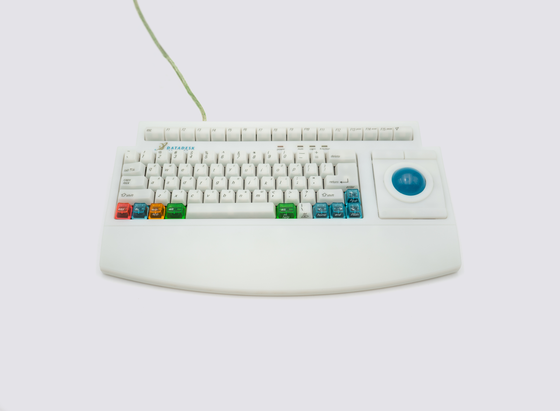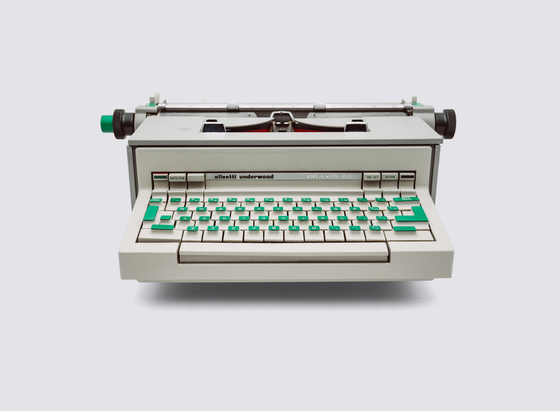
This is technically a bit of a spoiler for the book, but a) a lot of them are not in the book, and b) the book comes out in half a year, and we’ll all forget by then!
Let’s start!
@mwichary The long dark tea-time of #Commodore clawing for relevance in a world where the popular market couldn’t see past the flood of #PC clones to their struggling #Amiga machines. Jack Tramiel knew how to fight a price war, but he was forced out and took over #Atari to seek revenge. Both companies ended up fighting over niches and scraps.
@mwichary I think Doug would have enjoyed your *augmentation*. He believed in BOOTstrapping after all.
(I got to spent a few hours with him once in Menlo Park)
In case you never came across it, a nice ACM puzzle I read once:
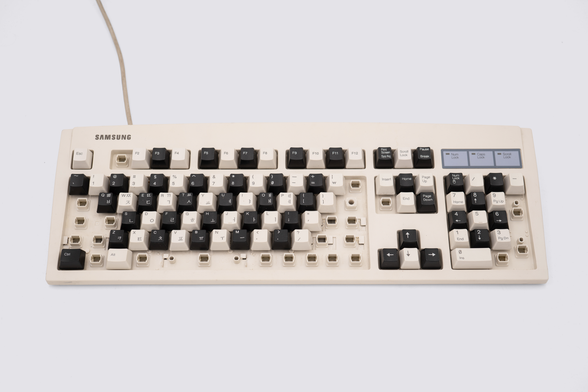
Explain why a keyboard lets Doug* log in when sitting down but not when standing up.
*I've forgotten whom originally
Pause here.
Answer:
Keycaps moved (prank) + touch typing when seated & two fingers when standing, not looking & looking respectively.
I use one of these for some hot keys for myself. Can’t beat a good arcade button. https://store.djtechtools.com/products/midi-fighter-spectra
@mwichary
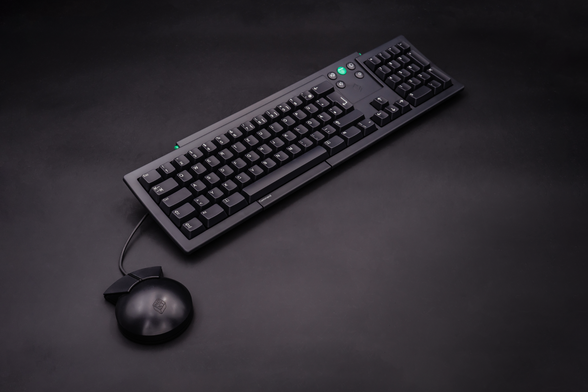
That was actually the NeXT ADB keyboard, introduced IIRC about 1992. The original had a more conventional layout (https://en.wikipedia.org/wiki/NeXTcube).
The ADB keyboard certainly looked attractive, but for me at least the keys required far too much pressure to activate then had a very solid endpoint. The mouse similarly looked great but was an ergonomic disaster (presaging perhaps Apple’s later puck mouse). Together they gave me appalling RSI.
@mwichary
I typeset this book on the NeXT using FrameMaker and @tjt’s excellent equation editor, and Tailor to edit various PostScript images
AbeBooks.com: Visual Representations of Speech Signals: 385pp + x prelims. Fine/no jacket. No inscriptions. Loose leaf 4pp list of contributors. Tiny crease to tip of tail of spine. Black lettering on green coloured spine. Appears unread.
@mwichary
Yes, I used that combination for perhaps a year.
Although a great innovation, the implementation of the Command Bar didn’t work well *for me*.
It was too narrow — my thumb joint used to regularly hit the *sharp* edge of the main body of the keyboard, and like the keys the actuation pressure was too great so the repetitive stress of having to press on it negated the value of using the thumb for the action. It also quickly became lopsided as I typically pressed on the right hand end.