 David Ojcius
Mucin modulates phage infection dynamics and #biofilm formation in enteropathogenic #Yersinia enterocolitica
#OpenAccess #biofilms #microbiology #bacteriophage #phages
https://davidojcius.blogspot.com/2026/06/mucin-modulates-phage-infection.html
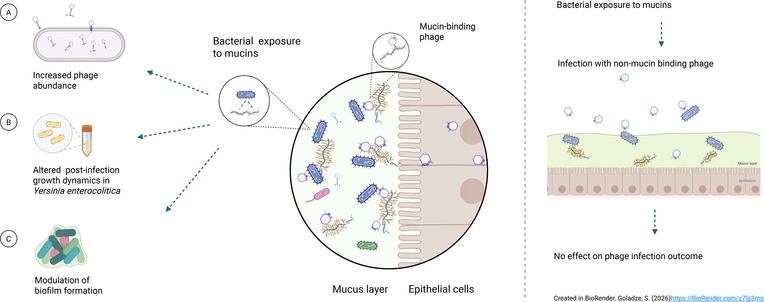
Mucin modulates phage infection dynamics and #biofilm formation in enteropathogenic #Yersinia enterocolitica
#OpenAccess #biofilms #microbiology #bacteriophage #phages
https://davidojcius.blogspot.com/2026/06/mucin-modulates-phage-infection.html
New study! @bfr
High exposure to #Campylobacter, #Salmonella, #Yersinia and #Hepatitis E virus in migrant and non-migrant groups in Berlin.
Risk patterns vary with culturally rooted eating habits, calling for targeted prevention and food safety awareness.
#Drumpf era #CDC has stopped monitoring for several factors it once tracked for foodborne illness outbreaks. As of July 1, a critical surveillance program is ordered to only monitori for two pathogens instead of the previous eight.
Currently only two #pathogens: #salmonella and #Shiga toxin-producing E. coli are being tracked federally, now ignored are #campylobacter, #cyclospora, #listeria, #shigella, #vibrio and #Yersinia.
#Neolithic #bones reveal isolated #Yersinia pestis infections, not #pandemics.
https://phys.org/news/2024-09-neolithic-bones-reveal-isolated-yersinia.html

Since the catastrophic pandemics of the Middle Ages, one disease has almost proverbially symbolized contagion and death: the plague. It is now known that the plague bacterium Yersinia pestis has been present in Central and Northern Europe for more than 5,000 years. However, it is still uncertain whether it also led to pandemics and mass deaths in its early forms.
An ancient #disease has another vector hidden up your sleeves http://blogs.biomedcentral.com/bugbitten/2024/06/07/an-ancient-disease-has-another-vector-hidden-up-your-sleeves/
#Yersinia pestis can infect the Pawlowsky glands of human body #lice and be transmitted by louse bite https://journals.plos.org/plosbiology/article?id=10.1371/journal.pbio.3002625
"Everyone knows that #rats and #fleas spread the #BlackDeath... But is there more to this old and deadly story? A team of #scientists set out to definitively say that the human body #louse be a crucial part of this infectious tryst."
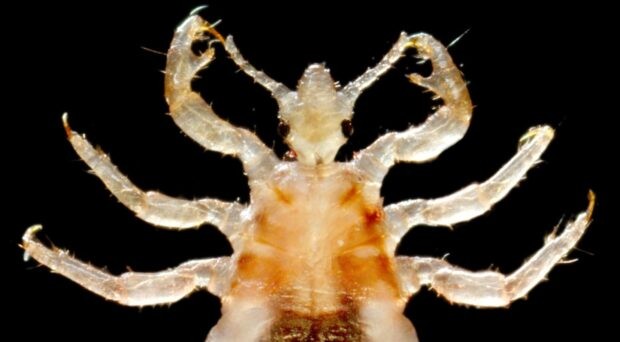


Yersinia pestis, the causative agent of plague, uses fleas and rodents as vectors for transmission. This study reports a new vector for Y. pestis, showing that it can infect the Pawlowsky glands of human body lice and be transmitted by louse bite.
#Genetic study offers little evidence of #Black_Death having selective impact on genetic variation in England.
#anthropolology #archeogenomics #Yersinia
https://phys.org/news/2024-01-genetic-evidence-black-death-impact.html

A team of archaeologists, geneticists and pathologists affiliated with a host of institutions across Europe, working with one colleague from the U.K. and another from the U.S., has found little evidence of the Black Death causing genetic variants to arise in affected populations.
 Robert Koch-Institut
 SPAAM-community
 LilMikeSF
 Zeitgeisty Aphorisms
 CellBioNews
 Lukas VFN 🇪🇺
 PLOS Biology
 Giuseppe Michieli