Apparently the wind speed here is verbal! 🤯
#WindSpeed #verbal
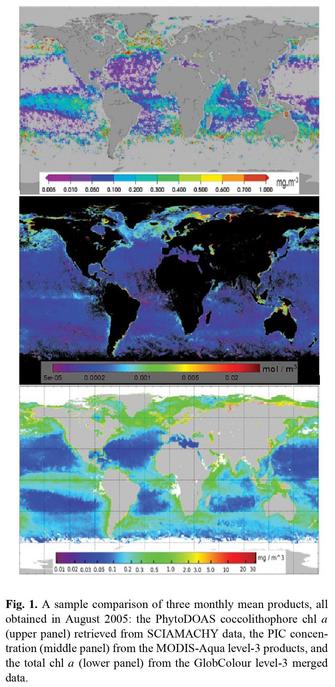
BG - Remote sensing of coccolithophore blooms in selected oceanic regions using the PhytoDOAS method applied to hyper-spectral satellite data
Thanks to everyone who participated in Wednesday's @wdefnews12
#PaniaguaAutoMall #WeatherPoll of the day. Most popular + correct answer: the
#BeaufortScale measures
#windspeed.
Mostly
#cloudy now but the clouds will clear out later,
#overnight. Expect cool night breeze with
#windspeed between 10 and
#15mph. Your accurate
#weather #forecast information is courtesy of The @WeatherChannel, online at
http://weather.com/.
#MichianaWeather #IndianaWeather
National and Local Weather Radar, Daily Forecast, Hurricane and information from The Weather Channel and weather.com
The Weather Channel and weather.com provide a national and local weather forecast for cities, as well as weather radar, report and hurricane coverage
Mostly
#cloudy now but the clouds will clear out later,
#overnight. Expect cool night breeze with
#windspeed between 10 and
#15mph. Your accurate
#weather #forecast information is courtesy of The @WeatherChannel, online at
http://weather.com/.
#MichianaWeather #IndianaWeatherNational and Local Weather Radar, Daily Forecast, Hurricane and information from The Weather Channel and weather.com
The Weather Channel and weather.com provide a national and local weather forecast for cities, as well as weather radar, report and hurricane coverage
Hey, #NorthCarolina folks! How are all y'all? I got this weird-ass #air #stagnation #warning about the #weather from #NOAA today. Never seen such a thing. Is this because #Canada (AKA the coldest place ever) is on #fire?
It's been #stagnant as hell since The Flood last week. I don't have my AC on and cross-breeezes have been hard to come by. Is it going to be stagnant-er? Will there be a negative #windspeed sucking up the air? /s
#wx #uswx #ncwx #AirQuality
Via NWS Bay Area: Severe Thunderstorm Warning including Seaside CA, Monterey CA and Marina CA until 1:45 PM PDT. This destructive storm will contain wind gusts to 80 MPH!
#cawx #windspeed #windsTIL those flag symbols on some weather maps (wind profile plot) are called "wind barbs".
https://www.weather.gov/hfo/windbarbinfo #Weather #WindSpeedInformation about wind barbs
Offshore #WindEnergy is another example for applications of our climatological datasets.
Substantial expansion of wind energy is planned in the exclusive economic zone of #Germany according to the German "Gesetz zur Entwicklung und Förderung der Windenergie auf See".
The figure shows average #WindSpeed 1995–2018 in the German Exclusive Economic Zone (EEZ) in the #NorthSea and #BalticSea at 116 m height based on DWD's #RegionalReanalysis (level 4 above ground).
https://doi.org/10.5194/asr-17-115-2020


Regional atmospheric reanalysis activities at Deutscher Wetterdienst: review of evaluation results and application examples with a focus on renewable energy
<p><strong class="journal-contentHeaderColor">Abstract.</strong> Based on the numerical weather prediction model COSMO of Germany's national
meteorological service (Deutscher Wetterdienst, DWD), regional reanalysis
datasets have been developed with grid spacing of up to 2 km. This
development started as a fundamental research activity within the
Hans-Ertel-Centre for Weather Research (HErZ) at the University of Bonn and
the University of Cologne. Today, COSMO reanalyses are an established
product of the DWD and have been widely used in applications on European and
national German level. Successful applications of COSMO reanalyses include
renewable energy assessments as well as meteorological risk estimates. The
COSMO reanalysis datasets are now publicly available and provide
spatio-temporal consistent data of atmospheric parameters covering both
near-surface conditions and vertical profiles. This article reviews the
status of the COSMO reanalyses, including evaluation results and
applications. In many studies, evaluation of the COSMO reanalyses point to
an overall good quality and often an added value compared to different
contemporary global reanalysis datasets. We further outline current plans
for the further development and application of regional reanalyses in the
HErZ research group Cologne/Bonn in collaboration with the DWD.</p>

Open Source Ultrasonic Anemometer with no moving parts
Ultrasonic anemometers have no moving parts but come at the cost of significantly more electronic complexity. They work by measuring the time it takes for an...
 Your Autistic Life
 💧🌏 Greg Cocks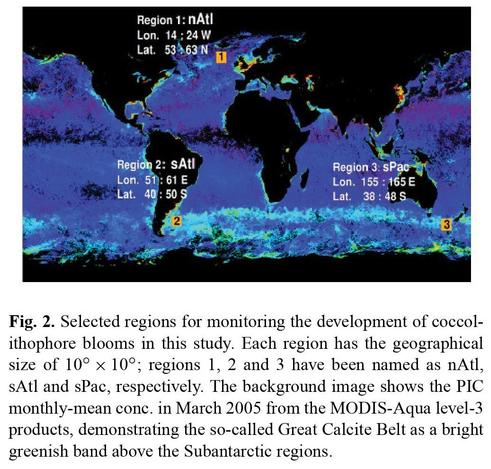
 Austen Onek
 Idris Busari
 Idris Busari
 Anglophyl
 Geewhizpat
 Amster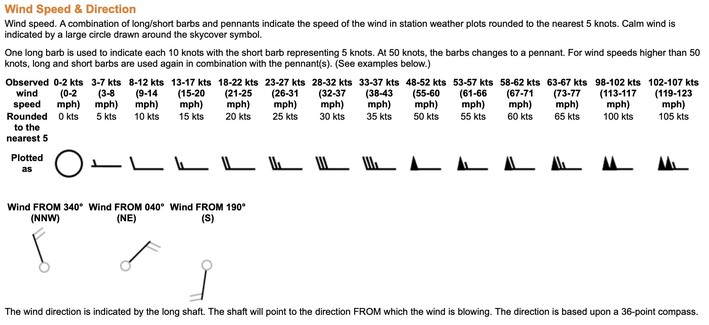
 Frank Kaspar
 Danie
Danie