 PLOS Biology
The flagellar pocket collar (FPC) is a cytoskeletal structure essential for nutrient uptake & immune evasion in #Trypanosome. This study uses U-ExM to provide novel insights into FPC biogenesis, and reveals two previously unknown cytoskeletal structures @PLOSBiology plos.io/4n3bWi6
How is transport directionality achieved through the #trypanosome nuclear pore complex? The current model is symmetrical, but this study reveals that the trypanosome #NuclearPore has an asymmetrical architecture, with conserved hubs that direct mRNA transport #plosbiology https://plos.io/3Q36QV2
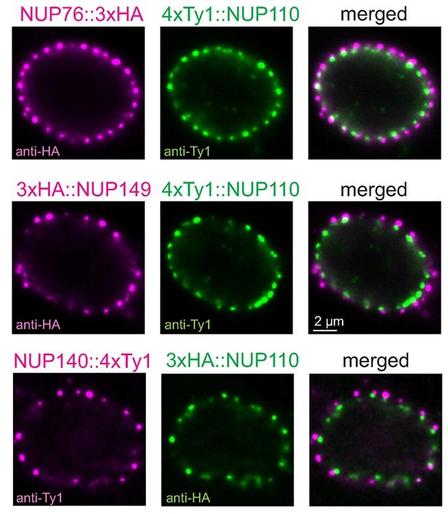

Detailed characterisation of the trypanosome nuclear pore architecture reveals conserved asymmetrical functional hubs that drive mRNA export
How transport directionality is achieved through the trypanosome nuclear pore complex is unclear, as the current structural model is mostly symmetrical. Using a combination of expansion microscopy and proximity labeling, this study reveals that the trypanosome nuclear pore has an asymmetrical architecture, with conserved hubs that direct mRNA transport.
 CellBioNews
Scientists discover novel way to attack the #trypanosome #parasite through its #ribosome.
https://phys.org/news/2023-12-scientists-trypanosome-parasite-ribosome.html

Scientists discover novel way to attack the trypanosome parasite through its ribosome
Trypanosome is a single-celled parasite that takes an extensive human and economic toll due to its involvement in causing sleeping sickness in humans and a similar disease in cattle. The parasite, found mainly in rural areas of Africa, is transmitted to humans or cattle by the tsetse fly. There is no vaccine for the disease, and current treatments are difficult and ineffective due to the resistance of the parasites to existing drugs.
Chronic #trypanosome brain infection induces meningeal responses resulting in ectopic lymphoid aggregates containing #autoreactiveBcells; #autoantigens include MBP, consistent with experimentally observed #demyelination @Jquintanalcala &co #PLOSBiology https://plos.io/3R8xgpH
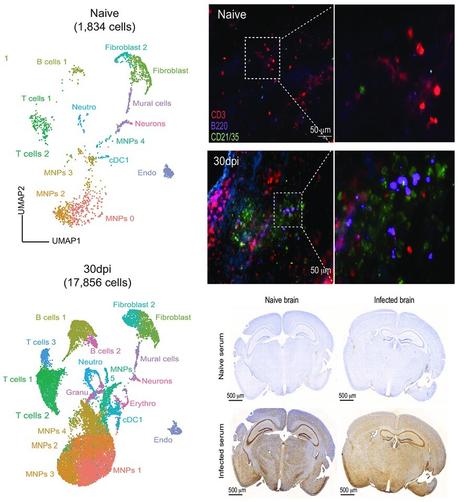

The murine meninges acquire lymphoid tissue properties and harbour autoreactive B cells during chronic Trypanosoma brucei infection
This study shows that chronic brain infection with African trypanosomes induces broad meningeal responses resulting in the development of ectopic lymphoid aggregates containing autoreactive B cells; myelin basic protein is one of the autoantigens detected by autoreactive B cells, consistent with the cortical demyelination observed in experimental infections.
 Thiago Carvalho
New leads in the quest for better anti-trypanosome drugs
"We performed phenotypic screening against trypanosomes and identified a class of cyanotriazoles (CTs) with potent trypanocidal activity both in vitro and in mouse models of Chagas disease and HAT."
#InfectiousDisease #Chagas #drugdiscovery #trypanosome
 Caroline_Keroack
Time to finally #introduce myself! I’m currently a #postdoc studying #trypanosome #parasites at Brown. I’m working on understanding T. cruzi (which causes Chagas’ disease) from multiple perspectives. I previously did my #phd on #babesia at the at Harvard (HSPH), and even before that I worked on #nematode parasites! Outside science, I am an #artist and I love #painting. I also work on initiatives advocating for support of #mentalhealth and ending stigma around #mentalillness