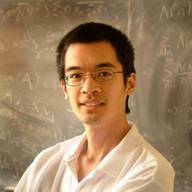
Michel Talagrand took home the 2024 #Abel #Prize for his work on stochastic systems, randomness and a proof of a physics reaction that many experts thought was unsolvable

#Talagrand’s work focuses on #stochastic #systems, which model random variables within a given time and space.

Over years of work, he came to make sense of such systems, using mathematical inequalities, to better characterize the limits of their variability.

Where to safely build a house along a rushing waterway, or how to anticipate the growth of a bacterial population, for example, are problems with solutions that may be closely predicted using Talagrand’s methods.

The water level in a river may be random, but the mathematician’s work can discern its likely maximum level, which would advise where to construct buildings to avoid flooding, writes the New York Times’ Kenneth Chang.

Essentially, his inequalities, which convert complex systems into geometrical terms, create precise estimates.

They offer new tools for study and applications in other fields, including physics, chemistry, communications and ecology.

“There are papers posted maybe on a daily basis where the punchline is ‘now we use Talagrand’s inequalities,’” Assaf Naor, a mathematician at Princeton University, tells Nature News.

The Abel committee also commended another element of Talagrand’s work, which shows that even random systems have an element of predictability.

For example, flipping a coin 1,000 times will predictably yield close to 500 heads and 500 tails. The same thought process can be applied to travel routes, and Talagrand’s principles provide convincing proof.

“It’s like a piece of art,” Helge Holden, a mathematician at the Norwegian University of Science and Technology and the Abel committee chair, tells Nature News.

“The magic here is to find a good estimate, not just a rough estimate.”

Talagrand also earned recognition for providing a proof for a physics problem that many scientists thought could never be explained by pure mathematics. Giorgio Parisi shared the 2021 Nobel Prize in Physics for his 1979 work in predicting spin glasses, which describe the states and random behaviors of condensed magnetic atoms.

After five years of effort, Talagrand—and, separately, Italian physicist Francesco Guerra—provided the mathematical basis for Parisi’s work in the early 2000s.

“It’s one thing to believe that the conjecture is correct, but it’s another to prove it, and my belief was that it was a problem so difficult it could not be proved,” Parisi tells New Scientist’s Alex Wilkins.
https://www.smithsonianmag.com/smart-news/mathematician-who-made-sense-of-the-universes-randomness-wins-maths-top-prize-180984020/

Mathematician Who Made Sense of the Universe's Randomness Wins Math's Top Prize

Michel Talagrand took home the 2024 Abel Prize for his work on stochastic systems, randomness and a proof of a physics reaction that many experts thought was unsolvable

Smithsonian Magazine

"Majorizing measures provide bounds for the supremum of stochastic processes. They represent the most general possible form of the chaining argument".

Michel Talagrand, 1996, https://projecteuclid.org/journals/annals-of-probability/volume-24/issue-3/Majorizing-measures-the-generic-chaining/10.1214/aop/1065725175.full

#geometry #theorem #probability #maths #mathematics #Talagrand #data #bigData #chaining #ML #AbelPrize #Abel

Majorizing measures: the generic chaining

Majorizing measures provide bounds for the supremum of stochastic processes. They represent the most general possible form of the chaining argument going back to Kolmogorov. Majorizing measures arose from the theory of Gaussian processes, but they now have applications far beyond this setting. The fundamental question is the construction of these measures. This paper focuses on the tools that have been developed for this purpose and, in particular, the use of geometric ideas. Applications are given to several natural problems where entropy methods are powerless.

Project Euclid

Concentration of measures:
Talagrand's "work illustrates the idea that the interplay of many random events can, counter-intuitively, lead to outcomes that are more predictable, and gives estimates for the extent to which the uncertainty is reigned in."

Marianne Freiberger: https://plus.maths.org/content/abel-prize-2024 @data @mathematics

#maths #mathematics #Talagrand #data #probability #magnets #spinGlasses #physics

The Abel Prize 2024: Michel Talagrand

The Abel Prize 2024 has been awarded to Michel Talagrand for ground breaking contributions to probability theory and functional analysis.

Plus Maths
Michel Talagrand, un improbable mathématicien : « J’ai voulu prendre des risques »

A 72 ans, le scientifique est le cinquième Français à recevoir le prix Abel, remis ce mercredi 20 mars. Ce spécialiste des probabilités, ancien directeur de recherche au CNRS, revient sur sa trajectoire chaotique. Rencontre au lendemain de sa prestigieuse récompense.

Le Monde
Rencontre avec Michel Talagrand, mathématicien, lauréat du Prix Abel 2024 | Actu CNRS

YouTube
Michel Talagrand Wins Abel Prize for Work Wrangling Randomness | Quanta Magazine

The French mathematician spent decades developing a set of tools now widely used for taming random processes.

Quanta Magazine

Congratulations to Michel #Talagrand for receiving the 2024 #AbelPrize "for his groundbreaking contributions to probability theory and functional analysis, with outstanding applications in mathematical physics and statistics": https://abelprize.no/article/2024/michel-talagrand-awarded-2024-abel-prize

Michel is perhaps less well known outside of probability than he ought to be. I consider myself a user of probability rather than an expert in the subject, but I have always been impressed by the powerful, deep, general, and non-obvious probabilistic tools that he has developed, particularly his concentration inequality https://en.wikipedia.org/wiki/Talagrand%27s_concentration_inequality (which provides concentration of measure estimates in very general settings, without explicitly requiring otherwise standard assumptions such as Gaussian distribution, martingale structure, or Lipschitz dependence), or his majorizing measures theorem https://projecteuclid.org/journals/annals-of-probability/volume-24/issue-3/Majorizing-measures-the-generic-chaining/10.1214/aop/1065725175.full , that gives a remarkably precise (but highly unintuitive) answer to what the expected size of the supremum of a gaussian process is, in terms of the geometry of that process.

Michel Talagrand awarded the 2024 Abel Prize | The Abel Prize