#SolarMaximum could hit us harder and sooner than we thought. How dangerous will the sun's chaotic peak be?

The sun is quickly approaching a major peak in solar activity. Experts warn it could potentially begin by the end of 2023, years before initial predictions suggested.

By Harry Baker, June 23, 2023

"Originally, scientists predicted that the current solar cycle would peak in 2025. But a bumper crop of sunspots, #SolarStorms and rare solar phenomena suggest solar maximum could arrive by the end of this year at the earliest — and several experts told Live Science we are poorly prepared. "

• The sun is becoming more active and may reach peak activity sooner than expected.

• Solar maximum was predicted to happen in 2025, but #sunspot activity has changed that.

• An unusual burst of sunspots this year suggests solar maximum could hit by the end of 2023.

#SolarFlares #SolarFlare #SolarCycle24 #CarringtonEvent #CarringtonEffect #LightsOut

Read more:
https://www.livescience.com/space/the-sun/solar-maximum-could-hit-us-harder-and-sooner-than-we-thought-how-dangerous-will-the-suns-chaotic-peak-be

Solar maximum could hit us harder and sooner than we thought. How dangerous will the sun's chaotic peak be?

The sun is quickly approaching a major peak in solar activity. Experts warn it could potentially begin by the end of 2023, years before initial predictions suggested.

Live Science

Now we know how a solar storm took out a fleet of Starlinks

by Carolyn Collins, April 3, 2023

"The folks at Starlink found that out the hard way in February 2022. On January 29th that year, the sun belched out a class M 1.1 flare and related coronal mass ejection. Material from the sun traveled out on the solar wind and arrived at Earth a few days later. On February 3, Starlink launched a group of 49 satellites to an altitude only 130 miles above Earth's surface. They didn't last long, and now solar physicists know why."

#SolarFlare #SolarFlares #SpaceWeather #SolarCycle24 #CarringtonEvent #SolarWind #CMEs #KesslerSyndrome

Read more: https://phys.org/news/2023-04-solar-storm-fleet-starlinks.html

Now we know how a solar storm took out a fleet of Starlinks

On March 23, sky observers marveled at a gorgeous display of northern and southern lights. It was reminder that when our sun gets active, it can spark a phenomenon called "space weather." Aurorae are among the most benign effects of this phenomenon.

May 19, 2023

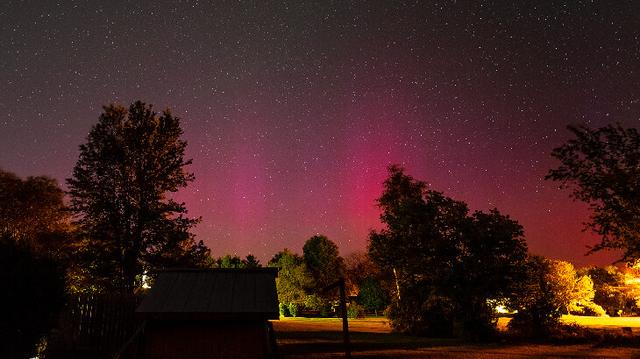
SURPRISE GEOMAGNETIC STORM: Surprising forecasters, a crack opened in Earth's magnetic field on May 19th. #Solar wind poured through the gap, sparking a G2-class #geomagnetic storm. Naked-eye auroras were visible across many northern-tier US states while photographic auroras descended as far south as Missouri (latitude +40.2N):

"'The night started off with a surprise passage of #Starlink satellites whose 21 or so members flared to incredibly bright for a few seconds,' says photographer Dan Bush of Albany, Missouri. 'Then the red auroras came and were visible to my camera for about an hour or so.'

"This event was probably caused by a near-miss #CME--one of many that left the sun last week on trajectories slightly off the sun-Earth line. South-pointing magnetic fields in the CME's wake washed over Earth. Those south-pointing fields partially cancelled Earth's north-pointing magnetic field, lowering our defenses against the solar wind."

#SolarFlare #SolarFlares #SpaceWeather #SolarCycle24 #CarringtonEvent #SolarWind #CMEs

https://spaceweather.com/

SpaceWeather.com -- News and information about meteor showers, solar flares, auroras, and near-Earth asteroids

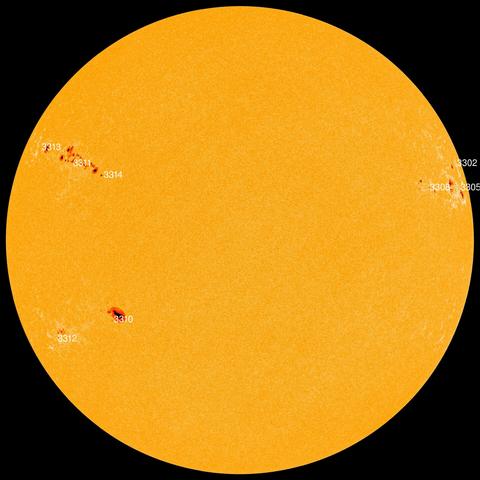
Hold onto your hats! Very active sunspot region 3310 just belched out an M 8.9 fare (almost X-class), and is about to become Earth-facing.

Via Spaceweather.com - A DANGEROUS SUNSPOT: Growing sunspot AR3311 has an unstable 'beta-gamma-delta' magnetic field that harbors energy for strong solar flares. NOAA forecasters say there is a 75% chance of M-class flares and a 35% chance of X-flares on May 21st. "

Latest #Solar news:
Solarham.com
SpaceWeather.com

#SolarFlare #SolarFlares #SpaceWeather #SolarCycle24 #CarringtonEvent

Dr. Tamitha Skov on Twitter

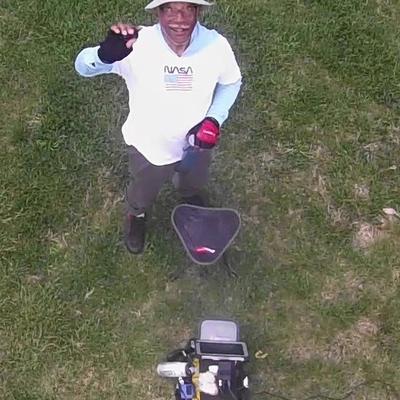
“The Sun celebrates #NewYearsEve with an Earth-directed #solarstorm! NASA predictions show impact early January 2. #Aurora possible to mid-latitudes. Amateur #radio operators & #GPS users expect issues on Earth's nightside. Drone pilots should calibrate often once the storm hits.”

Twitter