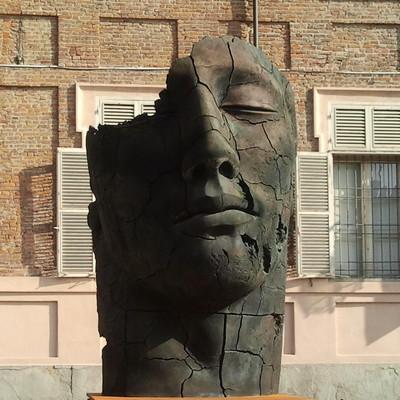
 BornToBeBlueUnderABadSign
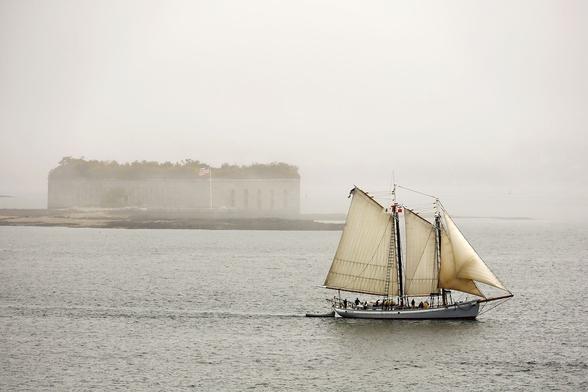
#Fotografie di #fortificazioni USA dal concorso dello Smithsonian Magazine
 pablolarah
👑 The True Story of the Koh-i-Noor Diamond—and Why the British Won’t Give It Back
by Lorraine Boissoneault
at @Smithsonianmag
#KohINoor #diamond #India #BritishCrown #SmithsonianMagazine

 DrWeb
DrWebYou Can See a Swirling Sculpture Made of 8,000 Books at a Library in Prague – Smithsonian Magazine
You Can See a Swirling Sculpture Made of 8,000 Books at a Library in Prague
Officials are managing an influx of tourists coming to see “Idiom,” a seemingly infinite tunnel of books by the artist Matej Krén, at the Municipal Library
By Christian Thorsberg, Correspondent January 16, 2026
Inside Idiom, which uses mirrors to provide the illusion of infinite length Omar Marques / Anadolu Agency / Getty ImagesNearly 30 years after a dizzying sculpture fashioned from books was first installed at the Prague Municipal Library in the Czech Republic, literature lovers on TikTok and Instagram have turned the artwork into a viral fascination and unexpected tourism hotspot.
Idiom, created by Slovak artist Matej Krén, features roughly 8,000 books stacked into a tower. Mirrors placed on the top and bottom give the illusion of infinite length, and a raindrop-shaped entryway invites visitors to peek inside the wormhole—almost like they’re literally disappearing into a good book.
“The Idiom is meant to symbolize the infinity of knowledge,” according to a description of the sculpture on the library’s website. “[Books] are like bricks to [Krén], but they contain much more information, destinies, stories and knowledge. He puts them into the form of dwellings: primitive on the one hand, infinitely intelligent on the other.”
During peak travel seasons, the library estimates that 1,000 people per day are visiting the installation. Omar Marques / Anadolu Agency / Getty ImagesThe installation made its debut at the Sao Paulo International Biennial in 1995, and in 1996 it was brought to Prague. It was first exhibited for a summer at the Jiri Svestka Gallery, which in the 1950s was a communist warehouse of banned books, before moving to its permanent home at the library in 1998.
For years, Idiom stood as little more than a familiar fixture, with its fame generally limited to the regular library-goers in the Czech capital. But beginning in 2022, the sculpture gained renown by going viral on BookTok, the pocket of TikTok dedicated to discussions of books and writing. Algorithms on Instagram similarly pushed the sculpture to the forefront of feeds.
“Kids that were in Prague looking into their phones suddenly saw a cool thing that they liked and they wanted to see it as well,” Czech journalist Janek Rubeš told Radio Prague International in 2023. “And as it is in today’s world, everyone wants to have the same picture or same video, because it looks cool and they can get likes.”
Quick fact: Idiom on the cover of Science
A photo of the sculpture was featured on the magazine’s cover in January 2011.In that issue, researchers analyzed a massive collection of 5.2million books to study cultural trends.
Today, librarians and local tourism officials are bewildered at the foot traffic the sculpture generates. During peak travel seasons—such as Christmas and Easter—more than 1,000 people each day endure wait times of more than two hours to snap a photograph.
“We’ll have to deal with it in some way, because working with tourist crowds is a completely different service from that we have provided up to now,” Lenka Hanzlikova, a spokesperson for the library, tells Agence France-Presse (AFP). “Most readers laugh about it and say it’s bizarre, but we have had people who wanted to return books and joined the queue.”
Continue/Read Original Article Here: You Can See a Swirling Sculpture Made of 8,000 Books at a Library in Prague
#8000Books #CzechRepublic #Czechoslovakia #Idiom #Instagram #Library #MatejKren #MunicipalLibrary #Prague #Slovak #SmithsonianInstitution #SmithsonianMagazine #SwirlingSculpture #TikTok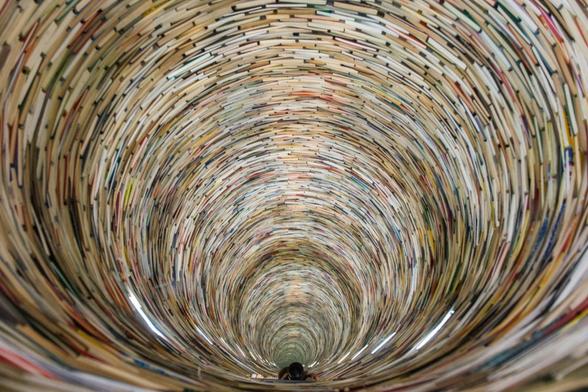

A Cat Left Paw Prints on the Pages of This Medieval Manuscript When the Ink Was Drying 500 Years Ago
An exhibition called "Paws on Parchment" tracks how cats were depicted in the Middle Ages through texts and artworks from around the world—including one example of a 15th-century "keyboard cat"
 bananabob
  🇺🇦 🇵🇸
🇺🇦 🇵🇸Hundreds of Mysterious Victorian-Era Shoes Are Washing Up on a Beach in Wales. Nobody Knows Where They Came From

The Ten Best Children’s Books of 2025 Feature a Story of Untrustworthy Fish and a Tribute to a Beloved Bus Driver – Smithsonian Magazine
A Smithsonian magazine special report
The Ten Best Children’s Books of 2025 Feature a Story of Untrustworthy Fish and a Tribute to a Beloved Bus Driver
This year’s top titles run the gamut and include an adaption of a Korean folk tale, a highly entertaining question-and-answer book and much more
By Megan Gambino – Senior Editor December 17, 2025
Smithsonian magazine’s picks for the best children’s books of 2025 include The Three-Year Tumble, Let’s Be Bees and Every Monday Mabel. Illustration by Emily LankiewiczBack when I first published this list in 2017, my two daughters were just 3 years and 7 months old. Now somehow I find myself the mom of an 11-year-old and an 8-year-old who have largely outgrown picture books. My sixth grader is deep into The Hunger Games, and my third grader eats up The Baby-Sitters Club graphic novels. But I, however, will never grow out of them.
Reading picture books is like eating dessert for every meal. From rowdy rhymes to outrageous plots to all-absorbing illustrations, they are sweet and satisfying.
The authors of my favorite children’s books published this year succeed, I’d argue, because they genuinely tap into a childlike perspective. Mike Rampton poses questions that seemingly only kids could come up with in There Are No Silly Questions. X. Fang captures the complex emotions that swirl inside tiny bodies in Broken, and Gideon Sterer demonstrates how imaginary friends can lead to real ones in If You Make a Call on a Banana Phone.
Treat yourself, and the kids in your lives, to some dessert.
There Are No Silly Questions by Mike Rampton
I’d like to meet Britain-based writer Mike Rampton. With his debut picture book, There Are No Silly Questions, the author has proved that he thinks like a kid, and that usually makes for a good time. How else would he have come up with the 200-plus truly clever queries he poses in its pages?
Apparently, Rampton’s daughter inspired the project when she asked a real stumper: Can spiders run out of web? “I realized I had absolutely no idea, but really wanted to know,” the author explains on the title page. “Hundreds of questions later, here we are!”
Rampton delivers questions that feel like they’re straight out of our kids’ mouths. Why do my fingers get wrinkly in the bath? Why do dogs spin around before going to the bathroom? How many people’s birthday is it today? And much like our very own Ask Smithsonian series, he calls on experts to help answer them—only not curators and scientists at the Smithsonian Institution, but a cadre of researchers from the University of Cambridge near his home.
The encyclopedic nature of the book—covering the human body, animals, space, music, inventions, food and more—makes it a great diversion in a car ride. Or kids can jump to a page for a few fun facts before bed.
And about those spinning dogs … it could be something to do with the Earth’s magnetic field. Seriously.
There Are No Silly Questions: More than 200 Weird and Wacky Questions, Expertly Answered!
Have you ever wondered . . . If dinosaurs sneezed? How long would it take to run around the world? If moths like light so much, why do they only come out at night?
Continue/Read Original Article Here: The Ten Best Children’s Books of 2025 Feature a Story of Untrustworthy Fish and a Tribute to a Beloved Bus Driver
#2025 #ChildrenSBooks #MikeRampton #Smithsonian #SmithsonianMagazine #TenBest #ThereAreNoSillyQuestions #TributeToABelovedBusDriver #UntrustwothyFish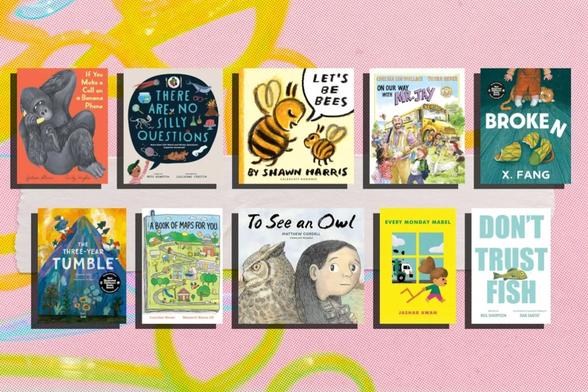
If Mount Vesuvius Erupted in August, Why Were Pompeii Victims Wearing Heavy Wool Garments?
#SmithsonianMagazine #Archaeology #Volcano #Vulcanology #Pompeii #Vesuvius

This Artist Put 2,500 of Her Favorite Books in a Massive Rotating Library on Miami Beach – Smithsonian Magazine
This Artist Put 2,500 of Her Favorite Books in a Massive Rotating Library on Miami Beach – The 20-foot-tall installation, titled “Library of Us,” featured titles that hold personal meaning for British artist Es Devlin—who invited visitors to sit on nearby benches and read
By Ella Feldman – Daily Correspondent, December 8, 2025
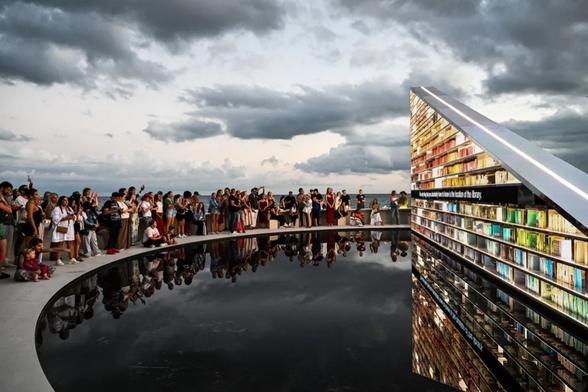
Visitors look at “Library of Us,” an installation by British artist Es Devlin, during Miami Art Week. Chandan Khanna / AFP via Getty ImagesA glowing triangle that rotates like the needle of a compass in a pool of water on the beach might not be the first thing you imagine when you picture a library. That is, unless you’re at Miami Art Week.
British artist Es Devlin’s dazzling installation, “Library of Us,” includes 2,500 books that hold personal meaning for Devlin, who also works as a set designer and has collaborated with artists like Bad Bunny and Lady Gaga. The book collection—color-coded to create a rainbow gradient—contains everything from childhood favorites to plays Devlin has created sets for.
The 20-foot-tall bookshelf, which sits on the sands of Miami Beach, explores “how we build ourselves out of what we read,” the artist tells the New York Times’ Nazanin Lankarani. “It’s an experiment in seeing through the eyes of others.”
The bookshelf was commissioned by Faena Art, a nonprofit that often funds large-scale installations during Art Basel inside and nearby the beachside Faena Hotel. The organization celebrates its 10th anniversary this year.
“I thought it would be great to invite Es because she’s bold, magnificent, strong and magical,” Argentine developer and collector Alan Faena, the founder of Faena Art, tells the Times.
“Library of Us” invites members of the public to step onto its slowly rotating platform and, if they’re so inclined, pick up one of the extra volumes placed on a long curved table, sit down on one of the installation’s benches and read. The installation also features an LED screen stretching across the library and projecting lines from the books.
The library’s compass-like form was inspired by Italian novelist Umberto Eco, who described libraries as “a compass of the mind, pointing us in the direction of new explorations,” Devlin tells Artnet’s Sarah Cascone.
Quick fact: What is Umberto Eco famous for?
The Italian writer is best known for his novel The Name of the Rose, a murder mystery published in 1980.
A voracious reader, Devlin says she reads as many as 300 books in one year. When her installation concludes, she plans to donate the books to Miami public schools and libraries so others can read them, too, reports Artnet.
But some of the 2,500 books Devlin selected have been banned from some schools and libraries across the country, including in Florida. She says these bans helped inform her project, which features many titles with different viewpoints sitting side by side on the shelves.
Continue/Read Original Article Here: This Artist Put 2,500 of Her Favorite Books in a Massive Rotating Library on Miami Beach
#2500Books #Artist #EsDevlin #FavoriteBooks #Florida #LibraryOfUs #MiamiBeach #RotatingLibrary #SmithsonianMagazine
Archaeologists Are Unraveling the Mysteries Behind Deep Pits Found Near Stonehenge

This Stunning Image Shows a Skydiver Falling Across the Face of the Sun. Here’s How the Team Captured the Mesmerizing Photo
