And now for the Pseudo-Germanisms in some Slavic languages. An under-studied subject, compared to Pseudo Anglicisms! This is when a word has been borrowed into a language, where the meaning then has changed.
Examples: Čus borrowed from Tschüss, means "hi!" in CS, but "bye!" in DE, or ancug borrowed from DE Anzug, means sportswear in SR but "suit" in DE.
Publication by G. Olsson in press: Einige Scheingermanismen in fünf slawischen Sprachen.

Spotted this extremely unusual stylized script on some graffiti in Split, Croatia. Pretty sure the second word is in Glagolitic letters, but I can’t decipher the letters.
What does it say? And what does it mean? Any help would be much appreciated.
#glagolitic #glagolitija #glagolitsa #slavic #hvratski #hvratska #croatian #historicallinguistics #languages #slavonicstudies #oldchurchslavonic #Slavonic #cyrillic #glagoljica #croatia
📢 New Book Alert!
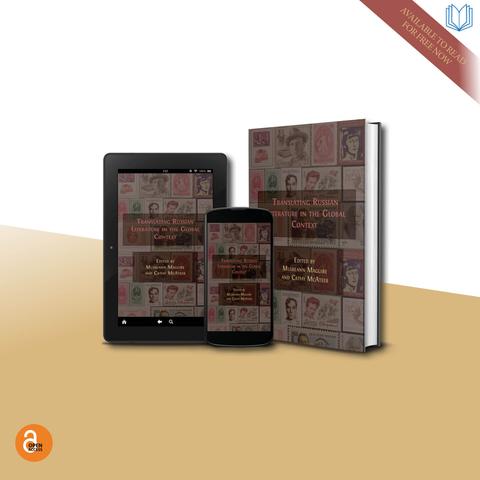
🚀 Explore 'Translating Russian Literature in the Global Context', ed. by Muireann Maguire & Cathy McAteer.
🌍 'Translating #RussianLiterature in the Global Context' examines the translation and reception of Russian literature as a world-wide process. This volume aims to provoke new debate about the continued currency of #Russian #literature as symbolic capital for international readers, in particular for nations seeking to create or consolidate cultural and political leverage in the so-called ‘World Republic of Letters’. It also seeks to examine and contrast the mechanisms of the translation and uses of #Russian #literature across the globe. This collection presents academic essays, grouped according to geographical location, by thirty-seven international scholars.
This volume will open up #Slavonic #Translation Studies for the general reader, the student of #ComparativeLiterature, and the academic scholar alike.
ACCESS NOW: https://www.openbookpublishers.com/books/10.11647/obp.0340
Translating Russian Literature in the Global Context examines the translation and reception of Russian literature as a world-wide process. This volume aims to provoke new debate about the continued currency of Russian literature as symbolic capital for international readers, in particular for nations seeking to create or consolidate cultural and political leverage in the so-called ‘World Republic of Letters’. It also seeks to examine and contrast the mechanisms of the translation and uses of Russian literature across the globe.
From the same article:
> ❝A similar taboo also operated in the #Slavic languages, but a different circumlocution was used. The word for #bear in #Russian is "medved", and the same in #Czech. In #Polish, bear is a similar word "niedzwiedz", and in Old Church #Slavonic, bear is "medvedi". All of these words mean something like "honey-eater" and are derived from the common Slavic words "medu" = "honey" (PIE *medhu-, from which we also get the English word "mead") plus "ed-" = "eat".❞