Tengrism

Also known as Tengriism, Tengerism, or Tengrianism.

This is a belief system that originated in the Eurasian steppes. It’s based on shamanism & animism. It usually involves the sky god, Tengri.

It was the predominant religion of the Gokturks, Xianbei, Bulgars, Xiongnu, Yeniseian, Mongolic peoples, & the Huns. It was the state religion of several medieval states, including the 1st Turkic Khaganate, the Western Turkic Khaganate, the Eastern Turkic Khaganate, Old Great Bulgaria, the 1st Bulgarian Empire, Volga Bulgaria, Khazaria, & the Mongol Empire.

In the Irk Bitig, a 9th-century manuscript on divination, Tengri is referred to as Turuk Tangrisi (“God of Turks”).

The forms of the name Tengri (Old Turkic: Tanri), among the ancient & modern Turkic & Mongolic, are: Tengeri, tanagra, Tangri, Tanri, Tangre, Tegri, Tingir, Tenkri, Tangra, Ter, & Ture.
The name “Tengri” (“the Sky”)is derived from Old Turkic: Tenk (“daybreak”) or Tan (“dawn”).

The name of the important deity Dangun (also Tangol, God of the Mountains) of the Korean folk religion is related to the Siberian Tengri (“Heaven”), while the bear is a symbol of the Big Dipper (Ursa Major).

It was originally polytheistic. But a monotheistic branch with the sky god Kok-Tengri as the supreme being evolved as a dynastic legitimation. Tengrism was a monotheistic religion only at the imperial level in aristocratic circles.

Tengri itself was never an Absolute. But only 1 of many gods of the upper world, the sky deity, of polytheistic shamanism, later known as Tengrism.

The 1st time the name Tengri was recorded in Chinese Chronicles was in the 4th century BC as the sky god of the Xiongnu.

Tengrism played a large part in the religion of the Mongol Empire as the primary state spirituality. Genghis Khan & several generations after him were Tengrian believers & “shaman-king(s)” until Genghis’ 5th-generation descendant, Ozbeg Khan, converted to Islam in the 14th century.

Tengrists view their existence as sustained by the eternal blue sky (Tengri), the fertile mother-earth spirit (Eje), & a ruler regarded as the chosen one by the holy spirit of the sky.

Heaven, earth, spirits of nature, & ancestors provide for every need & protect all humans. By living an upright, respectful life, a human will keep his world in balance & perfect his personal Wind Horse, or spirit.

The Huns of the northern Caucasus reportedly believed in 2 gods: Tangri Han (or Tengri Khan), considered identical to the Persian Esfandiyar & for whom horses were sacrificed, & Kuar (whose victims are struck by lightning).

Traditional Tengrism was more embraced by the nomadic Turks than by those residing in the lower mountains or forests. This belief influenced Turkic & Mongol religious history since ancient times until the 14th century, when the Golden Horde converted to Islam. The Golden Horde was a Mongol/Turkicized Khanate.

From then on, Tengrism was mostly submerged by other religious ideas. Traditional Tengrism persists among the Mongols & in some Turkic & Mongolic-influenced regions of Russia (Sakah, Buryatia, & Tuva), in parallel with other religions.

According to the Orkhon inscriptions, Tengri played a big role in the choices of the Khaghan & in guiding his actions. Many of these were performed because “Heaven so ordained.” The Orkhon inscriptions are bilingual texts in Middle Chinese & Old Turkic carved into 2 memorial steles erected in the 8th century by the Gokturks in modern-day Mongolia.

A revival of Tengrism has played a role in the search for native spiritual roots & a Pan-Turkish ideology since the 1990s. Especially in some autonomous republics of the Russian Federation (Tatarstan, Bashkortostan, Buryatia, Yakutia, etc.). As well as among the Crimean Karaites & Crimean Tatars.

In 2003, in Bishkek, Kyrgyzstan, Tengir Ordo held the 1st international scientific symposium on Tengrism. In 2005, the French Institute for Central Asia Studies organized a conference on Tengrism in Almaty, Kazakhstan. Since 2007, biennial scientific conferences on Tengrism have been held in Russia, Mongolia, & other countries.

The Tengrist cosmology proposes a division between the upper worlds (heaven), the Earth, & the world of darkness (underworld). These worlds are inhabited by different beings, often spirits or deities. A shaman (kam) can communicate with these spirits using mental powers. The worlds aren’t entirely separated, & they have a constant influence on the Earth.

In Turkic mythology within Siberian Asian religious systems, there is the “celestial world,” the ground to which “earth-water” (yer-su) belongs, & the “underworld,” ruled by spirits beneath the earth. They’re connected through the world tree in the center of the worlds.

The celestial & subterranean worlds are divided into 7 layers. Although there are variations, the underworld sometimes has 9 layers & the celestial world 17.

Shamans are able to find entries to travel into these realms. In the multiple realms, beings live just like humans on Earth. They also have their own respected souls & shamans & nature spirits. Sometimes, these beings visit the Earth but are invisible to people. They manifest themselves only in a strange sizzling fire or a bark to the shaman.

The heavens are inhabited by righteous souls, the Creator, & protector deities. The celestial world has many similarities with the Earth. But it’s undefiled by humans. It contains a pristine, untouched nature, & the natives have never deviated from the traditions of their ancestors.
This realm is much brighter than the Earth & is under the auspices of Ulgen, a son of Tengri. Shamans can also visit this world.

On some days, the doors of this heavenly world are opened, & the light shines through the clouds. During this moment, the prayers of the shamans are most influential. A shaman performs his imaginary journey, which takes him to the heavens, by riding a black bird, a deer, or a horse, or by changing into the shape of these animals. Otherwise, he may scale the world tree or cross a rainbow.

The underworld is the home of wicked souls, devils, & evil deities. There are many similarities between the Earth & the underworld, & its inhabitants resemble humans. Though they’ve only 2 souls instead of 3. They lack the “Ami soul,” which produces body temperature & allows breathing. Therefore, they’re pale, & their blood is dark. The sun & the moon of the underworld give far less light than the sun & the moon of the Earth. There are also forests, rivers, & settlements underground.

Erlik Khan (In Mongolian: Erleg Khan), 1 of the sons of Tengri, is the ruler of the underworld. He controls the souls there. Some of them are waiting to be reborn. Extremely evil souls are believed to be extinguished forever here. If a sick human isn’t dead yet, a shaman can move to the underworld to negotiate with Erlik to bring the person back to life. If the shaman fails, the person dies.

It’s believed that people & animals have many souls. Generally, each person is considered to have 3 souls. But the names, characteristics, & numbers of the souls may differ among tribes.
Humans are the product of (father) Heaven & (mother) Earth. Tangrism sanctifies human relationships with nature & their relationship with the sky. Tengrism doesn’t place humans above nature. Rather, it considers mankind as part of nature, without any rank assigned by God.

Make a one-time donation

Your contribution is appreciated.

Donate

Make a monthly donation

Your contribution is appreciated.

Donate monthly

Make a yearly donation

Your contribution is appreciated.

Donate yearly #14thCentury #1990s #2003 #2007 #4thCenturyBC #8thCentury #9thCentury #Almaty #AmiSoul #Asia #Bashkortostan #BigDipper #Bishkek #Bulgars #Buryatia #CrimeanKaraites #CrimeanTatars #Dangun #EasternTurkicKhaganate #Eje #ErlegKhan #ErlikKhan #Esfandiyar #EurasianSteppes #FirstBulgarianEmpire #FrenchInstituteForCentralAsiaStudies #GenghisKhan #Gokturks #GoldenHorde #Huns #IrkBitig #Islam #Kam #Kazakhstan #Khazaria #KokTengri #Korea #Kuar #Kyrgyzstan #MiddleChinese #MongolEmpire #Mongolia #MongolicPeoples #monotheistic #NomadicTurks #NorthernCaucasus #OldGreatBulgaria #OldTurkic #OrkhonInscriptions #OzbegKhan #PanTurkish #Persia #polytheistic #Russia #RussianFederation #Sakha #ShamanKings #Siberia #SkyGod #Steles #Tangol #TangriHan #Tanri #Tatarstan #Tengerism #TengirOrdo #Tengri #TengriKhan #Tengrianism #Tengriism #Tengrism #Tenk #TurkicKhagnate #TurukTangrisi #Tuva #Ulgen #Underworld #UrsaMajor #VolgaBulgaria #WesternTurkicKhaganate #WindHorse #Xianbei #Xiongnu #Yakutia #Yeniseian #YerSu

The Dogon Religion

The Dogon religion is the traditional religious/spiritual beliefs of the Dogon people of Mali.

Dogons who adhere to the Dogon religion believe in 1 Supreme Creator called Amma, or Ama. They also believe in ancestral spirits known as the Nommo, also known as Water Spirits. Veneration of the dead is an important element in their spiritual beliefs.

They hold ritual mask dances immediately after the death of a person & sometimes long after they’ve passed on to the next life. Twins, “the need for duality & the doubling of individual lives” (masculine & feminine principles), is a fundamental element in the belief system. Like other traditional African religions, balance & reverence for nature are also key elements in this belief system.

Dogon cosmology & astronomy are broad & complex. Like some of the other African groups in the Upper Niger region, & other parts of the continent, they have a huge repertoire of “system of signs,” which are religious in nature.

In the Dogon religion, there’s a belief in a single omnipotent, omniscient, & omnipresent Creator deity called Amma. The Dogon religion teaches that it was through Amma’s powers which brought forth the creation of the universe, matter, & the biological processes of production.

Amma, the Sky God, is the head of the Dogon triumvirate. The others being the Water God, Nommo, & the Earth God, Lewe/Lebe.

Amma is genderless, & may be regarded as he, she, or it. It depends on which aspect of its principles one is trying to satisfy. The Deity symbolizes both the masculine & feminine principles. As such, it’s genderless, or being of dual gender, which invokes balance, duality, & the pairing of opposites. The cosmological concepts of balance, duality, & opposites are found in all aspects of Dogon spirituality & culture.

Religious sacrifice (Bulo, a word for sacrifices in their language.) & rituals are directed to Amma. Carved figurines which act as “representations of the living” are also produced. These figurines aren’t physical representations of the Divine. But merely serve as mediators, or interceders, between the living world & the Divine.

The Dogon attributes the origins of masks to beings they refer to as Andoumboulou. The 1st masks were made of fiber. Although women eventually acquired them, & later men. Their function wasn’t apparent to the Dogon until the ancestors started dying. The 1st ancestor to suffer death did so in the form of a snake.

As common in other African beliefs & cosmogonies such as in the Serer myth, a serpent death represents the process of transforming into spirit form. When people realize the negative effects of the nyama released by death, the ancestors decided to carve a mask so that it serves as a support for the nyama.

The mask was in the form of a snake, symbolizing the dead ancestors. That initial mask, called “imina na” in the Dogon languages (“great mask” or “mother of masks”) is the style of mask used in the Sigi ceremony in order to commemorate this mythic event every 60 years.

Although the face of the mask is in snake form, it’s never worn. Instead, the Dogon would display it in a stationary position or while carrying it. Every 60 years during the Sigi ceremony, each Dogon village will make a new “great mask,” other deaths followed, & soon after, the Dogon had to seek other measures to deal with the released nyama.

Initially, the Dogon erected altars for the ancestors while wood figures served as a repository for the spiritual forces. As deaths increased, this became insufficient & masks were then made for dama rituals.

The dama is a ritual where the souls of the dead are escorted out of the village & sent to the afterlife permanently. The Dogon have many rituals about death which are important elements of their mask culture.

A 4-set of masks, called bede, a carved wooden mask called sirige are usually put on for the bagu bundo ritual, which is a type of dance held 2 days after the burial of a man who had participated in a Sigi ceremony.

After several years since the passing of the deceased, the dama ritual is performed. The dama lasts for 6 days. Its purpose is to raise the prestige & reputation of the deceased & that of his descendants. A lot of time & resources goes towards the preparation of the dama.

It’s a very elaborate & costly ritual. During the dama ritual, the Mask Society (the Awa Society) performs in the village plaza, at the deceased’s house, & in the Hogon’s sacred fields.

The soul of the dead, which had been localized in the handle of his hoe & in a container of millet beer is then removed from the village- thrown into a bush. (Millet is a type of grain. It’s considered an ancient grain, like quinoa, farro, or barley.) Where the dama ritual is performed for a deceased woman, it’s not accompanied by mask dancing. Unless the deceased female was a yasigine – the sole member of the Mask Society.

There are many different types of Dogon masks. Some of the masks represent mammals, reptiles, birds, humans, objects, & abstract concepts.

The concepts of Heaven & Hell don’t exist in the Dogon religion. Ancestor veneration is an important element. Sculptures & masks are normally made by Dogon blacksmiths, who also work iron. There are 2 types of smiths in Dogon society: the jemo who lives on the plains & the iru who lives on the plateau.

Blacksmiths’ mastery of earth, air, & fire, & their expertise in making iron tools (which the Dogon people depend on for farming) grant them a privileged position within the Dogon society.

Both the jemo & iru serve as intermediaries & peacemakers between other Dogons, between the living & the ancestors, & between mankind & Amma, especially on rituals surrounding rainmaking.

The respect granted to blacksmiths comes from their role in the creation myth, in which the 1st blacksmith is said to have descended from the Empyrean Heaven in order to bring mankind fire, iron, & seeds for cultivation.

As with their rites associated with procreation during life, the image of humanity developing in its placenta is also present in their funeral rites. When a person dies, their mouth is covered with a muzzle.

This ritual symbolizes the wattles of fish. The dead’s head is covered with a white band circling the top of his skull. This symbolizes the top of the fish’s head. As they send the deceased to the next life, women & girls perform ritual dances mimicking a fish (with their arms & hands stretched out in front of them) symbolizing the swimming of fish. These movements are done very subtly.

The Nommo are ancestral spirits (sometimes referred to as deities) venerated by the Dogon. The word Nommos is derived from the Dogon language meaning “to make one drink.”

The Nommos are usually described as amphibious, hermaphroditic, fish-like creatures. The Nommos are also referred to as “Masters of the Water,” “the Monitors,” & “the Teachers.”

The Dogon’s spiritual leader is called hogon. According to Dogon cosmogony, there were 4 pairs of twins, 4 girls & 4 boys. They were ancestors of humans. In the Dogon tradition, the 7th ancestor’s gift to humankind included weaving, music, dress, & language.

All their festivals occur within precise temporal cycles & are occasions for young Dogon men to complete their initiation rites & receive knowledge from their dad, grandpa, or the head of the family (ginna bana).

Festivals:

Bulo: Like the Xooy divination ceremony of the Serer people of Senegambia, the Bulo is a New Year festival that’s celebrated between May & June. It’s an agrarian festival, marking the beginning of the rainy season & millet cultivation.

Unlike the Xooy, which is presided over by The Saltigue (the Seer priestly class), the Bulo festival is characterized by masked dances & overflowing canaries of millet beer. (Canaries are containers made for beer.)

The Bulo festival signals the start of the sowing season. It takes place during the summer/estival solstice.

Sigi: The Sigi/Sigui festival pays homage to the Dogon’s primordial time, & it’s way of atonement & transmitting secret & ancient knowledge to the younger generation.

It’s mainly about communicating the revelation of speech to men, a ceremony of atonement & initiation, & a way of demanding pardon for the death of an ancestor after the folly & forgetfulness of some young men.

It’s a long procession that starts & ends in the village of Youga Dogorou. The Sigi festival is 1 of the most well known & anticipated Dogon festivals, & perhaps the most important of all the Dogon rituals.

The Sigi occurs once every 60 years in the Dogon calendar. It’s determined by the position of the star named Sirius (also called the Dog Star) in the night sky. (Ancient astronaut theorists love to get in on this. Thinking that there’s an alien connection.)

A person may only live to see 1 Sigi festival, or 2 if they’re lucky to live long enough. The 60-year interval also corresponds to the life span of the mystic Dogon ancestor. Every 5 days, the Dogon would tie a knot on a rope. This constitutes the Dogon ancestor.

The last 4 Sigi celebrations occurred in 1787, 1848, 1907, 1967. The next 1 will be in the year 2027 (So 2 more years, when this was posted.) The Sigi ritual & rituals of its sort which occurs within precise temporal cycles are a way of transmitting knowledge of the Dogon.

The night before the 60th anniversary celebration, the male participants enter a bush in an isolated cave & go into fasting. In the morning of the ceremony, they shave their heads (symbolizing rebirth).

They then put on the Sigi costume & dressed to look like a fish. A white cap that represents the head of a catfish is put on. The black color symbolizes the waters of the womb. A wide pair of black trousers gathered at the ankles with its tail bifurcated is also put on. On their chests, they wear some type of crossbelt adorned with cowries which symbolize the fish’s eggs.

On their right hands, they hold a crooked staff. This staff, symbolizes the sexual organ of Nommo, the mythical ancestor of humans. Along with the staff, they also hold a 1/2 calabash that they’ll use to drink the Sigi beer.

The Sigi runs for several years. The last 1 ran from 1967-1973.

Dama: The Dama ceremony marks the end of bereavement.

Bado: The Bado festival is a festival of the elders, which occurs is spring.

Bago: The Bago festival is a harvest festival that takes place during fall.

Gogo: A winter festival.

One-Time Monthly Yearly

Make a one-time donation

Make a monthly donation

Make a yearly donation

Choose an amount

$1.00 $5.00 $10.00 $1.00 $5.00 $10.00 $5.00 $10.00 $15.00

Or enter a custom amount

$

Your contribution is appreciated.

Your contribution is appreciated.

Your contribution is appreciated.

DonateDonate monthlyDonate yearly

#1787 #1847 #1907 #1967 #60Years #africa #africanReligions #amma #ancestorVeneration #andoumboulou #badoFestival #bagaBundoRitual #bagoFestival #bede #bereavement #blackTrousers #blacksmiths #bulo #catfish #cowries #damaFestival #damaRituals #dogStar #dogonMasks #earthGod #elderFestival #empyreanHeaven #ginnaBana #gogoFestival #harvestFestival #hogon #idols #iru #jemo #june #lebe #lewe #mali #mastersOfTheWater #may #milletBeer #nommo #nyama #ritualMaskDances #senegambia #sererMyth #sererPeople #sigiCeremony #sigiCostume #sirius #skyGod #summerSolstice #theAwaSociety #theDogonReligion #theMaskSociety #theMonitors #theTeachers #triumvirate #upperNiger #venerationOfTheDead #waterSpirits #xooy #yasigine #yougaDogorou

If I were an old guy
Who lived up in the sky
And people were to look up to me
Robes are not what I'd wear.

#skygod #fashion #underwear

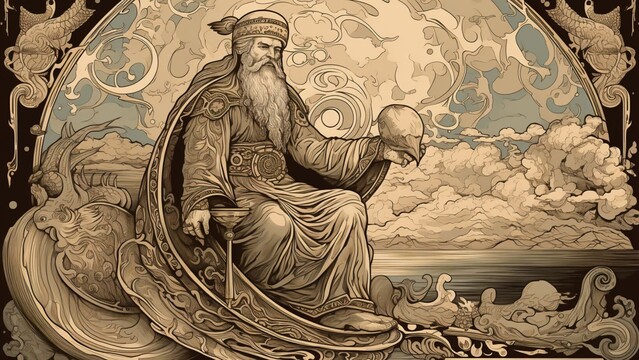
Kök #Tengri: The #SkyGod in #Tengricism and #TurkicBeliefs: " data-image-caption="

All Turkic (Midjourney) " data-medium-file="https://i0.wp.com/allturkic.com/wp-content/uploads/2023/05/#Tengri-The-Sky-God-in-#Tengricism-and-Turkic-Beliefs.jpg?fit=300%2C169&ssl=1" data-large-file="https://i0.wp.com/allturkic.com/wp-content/uploads/2023/05/Tengri-The-Sky-God-in-Tengricism-and-Turkic-Beliefs.jpg?fit=1024%2C577&ssl=1" />Discover the significance of Tengri, the #SkyGod, in Tengricism and #Turkicbeliefs. Uncover #ancienttraditions and cultural reverence.

The post Kök Tengri: The Sky God in Tengricism and Turkic Beliefs appeared first on ALL TURKIC * 𐰀𐰞𐰞… https://allturkic.com/kok-tengri-the-sky-god-in-tengricism-and-turkic-beliefs/?utm_source=dlvr.it&utm_medium=mastodon All Turkic🧿 Allturkic.com🧿

On this glorious Tuesday, I want you to remember that just because your current sky god is the most popular right now, does not mean that he or she won't be replaced with a new sky god.

#tuesday #skygod