When God Calls You to Lead Through the Unknown: 3 Battlefield Lessons from Joseph’s 90-Mile March to Bethlehem
3,096 words, 16 minutes read time.
I’ve been thinking about Joseph lately. Not the flashy coat guy—the other one. The carpenter who got handed the most impossible assignment in human history: “Hey, your fiancée is pregnant, but it’s not yours, and by the way, you need to protect the Son of God.” No pressure, right?
If you’ve ever felt the weight of responsibility crushing your shoulders, if you’ve ever had to lead when you didn’t have all the answers, if you’ve ever wondered how to be strong when everything feels uncertain—then Joseph’s journey to Bethlehem has something to teach you. This isn’t just a Christmas card story. It’s a masterclass in masculine faith under fire.
I want to walk you through three hard-won lessons from that brutal 90-mile trek from Nazareth to Bethlehem. These aren’t feel-good platitudes. They’re battlefield tactics for when God calls you to step up and lead through the chaos. Because here’s the truth: God often calls men to protect what’s precious precisely when the path forward looks impossible.
Joseph’s Silent Strength: When Real Leadership Doesn’t Need Words
I’ve noticed something about Joseph that hits me right in the gut every time I read these passages. In the entire biblical account, Joseph never speaks. Not one word. Matthew and Luke record his actions, his obedience, his protection of Mary and Jesus—but they never record him saying anything. And brother, that silence speaks volumes about the kind of man he was.
Think about it. Most of us men feel the need to explain ourselves, to justify our decisions, to make sure everyone knows we’re in charge. I know I do. When I’m leading my family through a tough decision, I want to lay out my reasoning, defend my position, make sure everyone understands why I’m doing what I’m doing. But Joseph? He just acts. When the angel tells him to take Mary as his wife, he does it. When the government demands he travel to Bethlehem for a census, he goes. When another dream warns him to flee to Egypt, he packs up in the middle of the night.
This wasn’t passive silence—this was the silence of a man who understood that sometimes leadership means shutting up and doing the work. It’s like a master craftsman at his bench. He doesn’t need to announce every cut he makes or explain why he’s using a particular joint. His work speaks for itself. Joseph was that kind of man, and in a world full of loud voices and empty promises, we need more men like him.
Consider the cultural powder keg Joseph was navigating. In first-century Jewish society, honor and shame weren’t abstract concepts—they were social currency. Mary’s pregnancy before the wedding ceremony would have been scandalous beyond our modern comprehension. The law allowed for public disgrace, even stoning. Joseph had every legal right to expose her, to protect his own reputation, to walk away clean.
But Matthew 1:19 tells us Joseph was a “righteous man” who didn’t want to disgrace her publicly. He planned to divorce her quietly. Even before the angel’s intervention, Joseph chose protection over self-preservation. He chose her honor over his own vindication. That’s the kind of strength I’m talking about—the strength to absorb the blow so someone else doesn’t have to.
The Greek word used for “righteous” here is “dikaios,” which means more than just following rules. It implies a man aligned with God’s character, someone who embodies justice tempered with mercy. Joseph could have been technically right and morally wrong. Instead, he chose the harder path—the path of sacrificial protection.
I think about this when I’m facing decisions that affect my family. How often do I choose the path that makes me look good versus the path that protects those under my care? How often do I prioritize being right over being righteous? Joseph’s example cuts through my excuses like a hot knife through butter.
The journey to Bethlehem itself reveals more of Joseph’s character. Put yourself in his sandals for a moment. Your wife is nine months pregnant. The Roman government—the occupying force that has crushed your people under its boot—demands you travel 90 miles through bandit-infested territory to register for a tax census. The safe thing, the reasonable thing, would be to find an exemption. Surely a pregnant woman could stay home?
But Joseph goes. Why? Because sometimes obedience to earthly authority is part of our witness. Paul would later write in Romans about submitting to governing authorities. Joseph lived it out decades before Paul penned those words. He didn’t protest, didn’t complain (at least not that we’re told), didn’t use Mary’s condition as an excuse. He simply prepared for the journey and led his family forward.
This is construction-site leadership. When you’re pouring a foundation, you don’t get to wait for perfect weather. You work with what you’ve got. You adapt. You protect your crew from the elements as best you can, but the work must go on. Joseph understood this. He couldn’t change the census decree. He couldn’t make the journey shorter. He couldn’t guarantee comfortable accommodations in Bethlehem. But he could be faithful with what was in his control: getting his family safely from point A to point B.
The Cost of Obedience: When Following God Disrupts Everything
Let me be straight with you—obedience to God will wreck your five-year plan. If you’re looking for a faith that fits neatly into your life without messing up your schedule, your finances, or your reputation, then you’re looking for something other than biblical Christianity. Joseph’s journey to Bethlehem is Exhibit A in God’s habit of calling men to costly obedience.
Think about what this census meant for Joseph’s livelihood. He was a “tekton” in Greek—traditionally translated as carpenter, but really meaning a construction worker, someone who worked with wood and stone. In a world without power tools, building a reputation and client base took years of consistent work. Every day away from Nazareth was a day not earning, not building relationships with customers, not teaching apprentices. This wasn’t a vacation; it was an economic disruption.
I’ve been there. Maybe you have too. That moment when following God’s call means walking away from the secure job, the familiar routine, the predictable income. It’s like being asked to dismantle the engine you just spent months rebuilding because God has a different vehicle in mind. Everything in you screams that this is inefficient, wasteful, even irresponsible. But obedience rarely follows the rules of human efficiency.
The timing of the census adds another layer of difficulty. Mary is “great with child” as Luke puts it. Any man who’s been through pregnancy with his wife knows the anxiety of those final weeks. You’re checking for signs of labor, making sure the midwife is on standby, keeping everything ready for that moment when it all kicks off. Now imagine loading your nine-months-pregnant wife onto a donkey for a week-long journey through rough terrain.
This wasn’t just inconvenient—it was dangerous. Ancient travel was hazardous under the best circumstances. Bandits prowled the roads between cities. The terrain between Nazareth and Bethlehem includes significant elevation changes. There were no hospitals along the way, no emergency services to call. If Mary went into labor on the road, Joseph would have to handle it with whatever help he could find from fellow travelers or nearby villagers.
But here’s what grips me about Joseph: he doesn’t negotiate with God. He doesn’t say, “Lord, I’ll go after the baby is born.” He doesn’t look for loopholes in the census law. He counts the cost and pays it. This is the kind of radical obedience that separates spiritual boys from spiritual men.
The physical journey itself would have been grueling. Having made similar trips through that terrain, I can tell you it’s not a casual stroll. The route from Nazareth to Bethlehem covers approximately 90 miles, depending on the path taken. In good conditions, with a healthy person walking, you might cover 20 miles a day. With a pregnant woman? Maybe 10-15 miles on a good day. We’re talking about a week or more of travel.
Each night would bring its own challenges. Where to sleep? Travelers often camped in the open or sought shelter in caves. How to keep Mary comfortable? The basic provisions they could carry would have been minimal—bread, dried fish, water skins, a few blankets. Every morning meant packing up and facing another day of dust, sun, and uncertainty.
I think about Joseph watching Mary’s discomfort increase with each passing mile. Any husband knows the helpless feeling of watching your wife in pain and not being able to fix it. Yet he pressed on. Why? Because sometimes obedience means leading your family through discomfort toward a purpose you can’t fully see yet.
The economic cost extended beyond lost wages. Travel required money—food for the journey, fodder for the donkey, potentially tolls or fees along the way. The census itself was about taxation, adding insult to injury. Joseph was spending money he probably couldn’t spare to register for taxes he didn’t want to pay to an empire he didn’t choose to serve.
But this is where Joseph’s faith shines brightest. He understood something we often forget: God’s commands don’t come with exemption clauses for inconvenience. When God says move, you move. When earthly authority aligns with God’s greater purpose (even unknowingly), you submit. Not because it’s easy or comfortable or makes sense, but because faithfulness is measured in obedience, not outcomes.
This challenges me to my core. How often do I treat God’s commands like suggestions, weighing them against my comfort and convenience? How often do I delay obedience until the timing suits me better? Joseph’s immediate, costly obedience exposes my excuses for what they are—failures of faith dressed up as wisdom.
Providence in the Chaos: Finding God’s Hand in Life’s Detours
Brothers, if there’s one thing I’ve learned from walking with God, it’s this: His GPS doesn’t work like ours. We want the fastest route with no traffic. God often takes us on what looks like detours through construction zones, only to reveal later that the “delay” was the whole point. Joseph’s journey to Bethlehem is the perfect example of divine providence disguised as government bureaucracy.
On the surface, this whole situation looks like a cosmic comedy of errors. A census forces a pregnant woman to travel at the worst possible time. They arrive in Bethlehem only to find no room anywhere. The Son of God is born in what was likely a cave used for sheltering animals, laid in a feeding trough. If you were scripting the entrance of the Messiah, this isn’t how you’d write it.
But pull back the lens and watch God’s sovereignty at work. Seven hundred years before Joseph loaded Mary onto that donkey, the prophet Micah wrote, “But you, O Bethlehem Ephrathah, who are too little to be among the clans of Judah, from you shall come forth for me one who is to be ruler in Israel” (Micah 5:2). God used a pagan emperor’s tax grab to fulfill ancient prophecy. Caesar Augustus thought he was flexing Roman might. In reality, he was an unwitting servant moving chess pieces on God’s board.
This is what I mean by providence in the chaos. Caesar didn’t know about Micah’s prophecy. He didn’t care about Jewish messiahs or ancient promises. He wanted an accurate count for taxation. But God specializes in using the plans of kings and rulers to accomplish His purposes. Proverbs 21:1 says, “The king’s heart is a stream of water in the hand of the LORD; he turns it wherever he will.”
Think about that for a minute. The most powerful man in the known world issues a decree that disrupts millions of lives, and behind it all, God is directing the stream toward His intended destination. Joseph and Mary probably didn’t feel the providence in the moment. They felt the ache in their feet, the dust in their throats, the anxiety of finding shelter. But they were walking in the very center of God’s will.
I’ve lived this truth more times than I can count. The job loss that led to a better position. The closed door that redirected me toward God’s actual plan. The inconvenient move that positioned our family for unexpected ministry. What looked like chaos was actually divine choreography. But here’s the catch—you rarely see it in real time. Providence requires the rearview mirror.
Consider the “no room in the inn” situation. The Greek word Luke uses is “kataluma,” which can mean inn, but more likely refers to a guest room. Bethlehem was Joseph’s ancestral home—he probably had relatives there. But the census had brought many descendants of David back to town. The guest rooms were full. So they ended up in the lower level where animals were kept, possibly a cave adjacent to a house.
From our perspective, this seems like failure. The King of Kings born in a barn? But God’s perspective is different. The shepherds—religious and social outcasts—could approach a cave more easily than a house. The manger, a feeding trough, becomes a profound symbol: Jesus, the Bread of Life, placed where food goes. What looked like plan B was actually plan A all along.
This reshapes how I view the detours in my own journey. That career path that got derailed? Maybe God was protecting me from something I couldn’t see. The ministry opportunity that fell through? Perhaps God had a different field for me to plow. Joseph’s journey teaches me that faith isn’t about understanding the route—it’s about trusting the Navigator.
There’s another layer of providence here that speaks to the spiritual warfare every man faces. Herod the Great ruled in Jerusalem, paranoid and murderous. If Jesus had been born in the capital city, in a palace or prominent house, Herod would have known immediately. The humble circumstances weren’t just fulfilling prophecy about the Messiah’s lowly birth—they were providing tactical cover. God hid His Son in plain sight, protected by obscurity.
Joseph would later need this lesson when angels warned him to flee to Egypt. The gifts of the Magi—gold, frankincense, and myrrh—suddenly make sense not just as worship offerings but as travel funds for refugees. God’s providence extends beyond getting us to the right place; it includes providing for the journey we don’t yet know we’ll need to take.
This is construction wisdom at its finest. A good builder doesn’t just plan for ideal conditions. He accounts for weather delays, supply chain issues, unexpected site conditions. He builds margin into the timeline and budget. God’s providence works the same way. What looks like random chaos often turns out to be divine preparation for challenges we can’t yet see.
The Challenge Before You
Brother, as I reflect on Joseph’s journey, I’m confronted by how far my own faith falls short of his example. It’s easy to read these stories like mythology, forgetting that Joseph was a real man with real fears, real bills to pay, real concerns about his pregnant wife. He wasn’t a superhero—he was a blue-collar worker who chose obedience over comfort, protection over reputation, faith over sight.
The question that haunts me, and I hope haunts you, is this: What is God calling me to do right now that I’m avoiding because it’s inconvenient, costly, or uncomfortable? Where am I negotiating with God instead of obeying? What vulnerable person in my life needs my protection more than I need my reputation?
Joseph’s legacy isn’t measured in words spoken or battles won. It’s measured in faithful steps taken on a dusty road to Bethlehem, in nights spent watching over a young mother and miraculous child, in choosing righteousness when vindication would have been easier. He shows us that godly masculinity isn’t about dominance or control—it’s about surrendered strength used in service of God’s purposes.
The journey to Bethlehem reminds us that God’s plans rarely align with our timelines. His purposes often disrupt our comfort. His providence works through apparent chaos. But for men willing to lead with silent strength, embrace costly obedience, and trust divine providence, He accomplishes the impossible.
So here’s my challenge to you, and to myself: Stop waiting for perfect conditions to obey God. Stop expecting the path of faith to be convenient. Stop measuring success by comfort and stability. Instead, ask God for the courage to lead like Joseph—quietly, sacrificially, faithfully. Ask Him to show you who needs your protection, what journey He’s calling you to take, what costly obedience He’s requiring of you today.
If this resonates with you, if Joseph’s example has challenged your comfortable Christianity like it’s challenged mine, then let’s walk this road together. Subscribe to our newsletter for more biblical truth aimed straight at the hearts of men. Leave a comment sharing your own journey of costly obedience—sometimes knowing we’re not alone makes all the difference. Or reach out to me directly if you need a brother to talk through what God might be calling you to do.
The road to Bethlehem was never about the destination. It was about who Joseph became along the way—a man who could be trusted with the sacred because he was faithful with the mundane. That same transformation is available to us if we’re willing to take the first step.
Remember, brother: Your Bethlehem journey might start tomorrow. Will you be ready?
Call to Action
If this study encouraged you, don’t just scroll on. Subscribe for more bible studies, share a comment about what God is teaching you, or reach out and tell me what you’re reflecting on today. Let’s grow in faith together.
D. Bryan King
Sources
Disclaimer:
The views and opinions expressed in this post are solely those of the author. The information provided is based on personal research, experience, and understanding of the subject matter at the time of writing. Readers should consult relevant experts or authorities for specific guidance related to their unique situations.
#adventDevotion #BethlehemJourneyLessons #biblicalCourage #biblicalExample #biblicalFatherhood #biblicalManhood #biblicalMasculinity #biblicalMentorship #biblicalTeaching #biblicalWisdom #ChristianHusband #ChristianLiving #ChristianMenLeadership #ChristianMenSStudy #ChristianResponsibility #ChristmasFaithStory #ChristmasStoryForMen #ChristmasTheology #costlyObedience #discipleship #divineProvidence #faithApplication #faithInChaos #faithJourney #faithUnderPressure #faithfulLeadership #followingGodThroughUncertainty #GodSProvidence #GodSSovereignty #GodSTiming #godlyLeadership #gospelTruth #JosephAndMaryStory #JosephCarpenterFaith #JosephJourneyToBethlehem #JosephSObedience #KingdomLeadership #masculineFaith #masculineSpirituality #menSBibleStudy #menSDevotional #menSFaithJourney #menSMinistry #menSSpiritualGrowth #nativityStoryMeaning #practicalChristianity #protectiveLeadership #radicalObedience #righteousMan #sacrificialLove #silentStrength #spiritualBattles #spiritualGrowthMen #spiritualLeadership #spiritualMaturity #spiritualStrength #spiritualWarfare #trustingGod #trustingGodSPlan
 A A D H I L O K E S H
 Share Inspire Quotes
 Shekhar Vashist
 Bryan King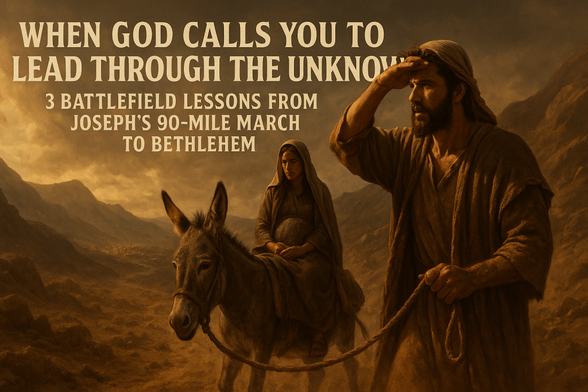
 Sanjay Mohindroo
 SpiritualKhazaana
 My Space
 Tom's IT Cafe

 EarthStarRising