When Trouble Calls, God Answers

As the Day Begins

Psalm 91:15 gives the soul a steady place to stand: “He shall call upon Me, and I will answer him; I will be with him in trouble.” Notice that God does not promise a life without trouble. He promises His presence in trouble. The Hebrew idea behind “call” carries the sense of crying out, naming, summoning, or appealing to someone greater than ourselves. It is the language of dependence. The believer does not have to pretend to understand every sorrow, every tragedy, or every disruption in life. We are invited to call upon the Lord with honest hearts and trembling hands.

There are moments when the question “Why?” rises almost automatically. Yet Psalm 91 redirects us from speculation to trust. God says, “I will answer.” He says, “I will be with him.” He says, “I will deliver him and honor him.” This does not make suffering simple, but it does make faith possible. The God who was sovereign before the crisis remains sovereign during it. He has not lost power, wisdom, love, or presence. As the day begins, I do not need to know everything God is doing. I need to know that He is with me, that He hears me, and that even trouble must answer to His authority. This devotional follows the IF 2026 morning rhythm for “As the Day Begins,” emphasizing Scripture meditation, Triune prayer, practical application, and SEO/GEO clarity for daily spiritual formation.

Triune Prayer

The Father, I come before You this morning with gratitude because You are not distant from my trouble. You are not a silent observer standing beyond the reach of my fears. You are my refuge, my dwelling place, and my faithful God. When I face circumstances I cannot explain, help me resist the temptation to measure Your goodness by my understanding. Teach me to call upon You before I complain, to seek You before I surrender to anxiety, and to trust Your heart when Your hand is not yet visible. I thank You that Your sovereignty is not cold control but loving rule. You hold history, nations, families, churches, and individual hearts in Your care. Shape my response today so that I ask not only, “Why did this happen?” but “Father, what do You want me to learn, become, and surrender through this?” Keep me steady beneath Your covering.

The Son, Lord Jesus Christ, I thank You that You entered trouble rather than avoiding it. You knew betrayal, grief, violence, injustice, pain, and death, yet none of it overthrew the will of the Father. When I look at the cross, I see the worst humanity could do and the greatest salvation God could give. Help me remember that control does not always look like comfort. Sometimes Your victory is hidden beneath suffering until resurrection reveals what grace has been doing all along. Walk with me today as the Good Shepherd. Speak peace into the places where fear has become loud. Teach me to respond to tragedy, disappointment, and uncertainty with faith rather than panic. Let Your words become my anchor: “Peace I leave with you; my peace I give unto you.” May my thoughts, words, and decisions bear witness that You are Lord even when the day feels uncertain.

The Holy Spirit, breathe courage into my heart today. When I am tempted to dwell on fear, remind me of the promises of God. When I am tempted to chase answers that may not be mine to hold, guide me into trust. Open my eyes to the lessons hidden inside difficulty. Make me sensitive to the needs of others who are also walking through trouble. Let me become a calm presence, a prayerful voice, and a steady witness to the faithfulness of God. I ask You to renew my mind so that tragedy does not make me cynical, sorrow does not make me bitter, and uncertainty does not make me forgetful. Lead me into holy attentiveness. Help me listen for what the Father is teaching, follow where Jesus is leading, and rest in the assurance that I am never alone. Fill this day with wisdom, compassion, and spiritual steadiness.

Thought for the Day: When trouble comes, my first response will not be panic, speculation, or despair. I will call upon the Lord, trust His presence, and ask what He desires to teach me through this moment.

FEEL FREE TO COMMENT, SUBSCRIBE, AND REPOST, SO OTHERS MAY KNOW


#GodSSovereignty #morningDevotional #Psalm91 #TrustInTrouble

When Fear Knocks, Let God Answer

The Bible in a Year

There are seasons in Scripture that feel uncomfortably familiar, and the account of King Hezekiah in 2 Kings 19:6 is one of them. “Thus saith the Lord, Be not afraid of the words which thou hast heard…” comes as a divine interruption into a moment of crisis. Assyria stood as the dominant military force of its time, and Jerusalem was surrounded, threatened, and seemingly outmatched. The enemy’s words were not only strategic—they were psychological, filled with intimidation and blasphemy against God Himself. As I read this, I find myself stepping into Hezekiah’s tension, recognizing how often fear begins not with reality, but with what we hear.

What strikes me first is the command of God: “Be not afraid.” This is not a suggestion; it is an imperative rooted in divine authority. The Hebrew phrase אַל־תִּירָא (al-tira) carries the sense of a settled refusal to fear. It is not denying the presence of danger, but refusing to let fear dictate response. Hezekiah had every visible reason to tremble, yet God’s word redefined his posture. Matthew Henry once wrote, “Those that trust in God need not fear the worst of words, nor the worst of men.” That insight reminds me that fear often grows louder when God’s voice grows faint in our attention. When I choose to listen to God over the noise of circumstance, fear begins to lose its authority.

As the message unfolds, I notice something unexpected—God’s contempt for the enemy. The Assyrian officials are described not with honor, but as “servants,” or more accurately, “foot-boys,” a term of dismissal. What the world sees as powerful, God sees as insignificant when it stands in opposition to Him. This challenges my tendency to magnify threats beyond their true standing. In Isaiah 40:15, the prophet reminds us that nations are “as a drop in a bucket” before the Lord. The enemy’s voice may sound commanding, but in God’s perspective, it carries no lasting authority. As one note from Blue Letter Bible explains, “God’s sovereignty reduces even the mightiest opposition to a temporary instrument within His control.” That reshapes how I interpret the pressures around me.

Then comes the quiet but steady assurance of God’s awareness. Hezekiah had wondered if God had heard the blasphemies spoken against Him. The answer comes clearly—God had heard every word. This speaks to the cognizance of God, His omniscience. Nothing escapes His notice. The Hebrew concept of God as יָדַע (yada‘)—to know intimately—means He is not only aware, but fully engaged with what concerns His people. When I feel overlooked or when injustice seems unchecked, this truth steadies me. God hears. God sees. And in His time, God acts.

As I walk through this passage today, I find it inviting me into a deeper discipline of trust. Fear will always attempt to narrate my circumstances, but God’s Word offers a different script. I am reminded that obedience often begins with choosing what voice I will believe. Like Hezekiah, I can bring my concerns before the Lord, trusting that His response will not only address my fear but redefine my perspective. The same God who spoke into that ancient crisis speaks into mine today.

FEEL FREE TO COMMENT, SUBSCRIBE, AND REPOST, SO OTHERS MAY KNOW


#GodSSovereignty #Hezekiah #overcomingFear #trustInGod

In every line of poetry, God’s sovereignty shines—reminding us that no moment is random, no struggle unseen. Through faith-filled words, we’re invited to trust His divine plan, where His power, grace, and purpose reign over all things.

#GodsSovereignty #FaithThroughPoetry #TrustGod #SpiritualReflection #DivinePlan #ChristianPoetry

The Concrete Grace Found in Shattered Dreams

673 words, 4 minutes read time.

And we know that in all things God works for the good of those who love him, who have been called according to his purpose. — Romans 8:28 (NIV).

This means God is in the middle of your mess. He’s taking the hits you didn’t see coming and using them to build a man who can actually handle what’s next.

The Brutal Truth About Your Loss

You worked hard, you played by the rules, and you still got kicked in the teeth. It feels like a waste. You’re looking at the wreckage of your job, your bank account, or your pride, and you’re waiting for an apology from God that isn’t coming. Here’s the reality: God doesn’t owe you a “yes.” Sometimes the “no” is the only thing that keeps you from becoming a man you’d hate. I’ve been there, sitting in the dirt, wondering how I missed the mark. But the “good” God talks about in this verse isn’t about making your life easy. It’s about making you solid. A man who gets everything he wants becomes soft and useless. A man who survives a gut-punch and keeps walking becomes dangerous to the enemy. Your biggest disappointment is usually God’s way of clearing the junk out of your life so He can put something real in its place. He’s not punishing you; He’s pruning you. He’s cutting off the parts of your life that were never going to go anywhere so you can finally grow in the right direction. The pain is real, but it’s not pointless. Stop acting like the story is over just because one chapter ended in a wreck. If you’re still breathing, God is still working. He’s using this failure to kill your ego before your ego kills you.

Face the New Reality Today

Your job today is to stop looking back. You can’t drive a car forward if you’re staring at the rearview mirror. Take five minutes to admit out loud that your plan failed and that you’re not in control. Once you say it, the power that disappointment has over you starts to die. Pick one small, productive task you’ve been putting off because you were too busy feeling sorry for yourself, and get it done. No excuses. Just move.

Prayer

Lord, this hurts and I don’t like it. But I know You’re in control and I’m not. Take the bitterness out of my gut. Help me stop looking at what I lost and start looking at what You want me to do next. Give me the strength to be the man You called me to be, even when it’s hard. Amen.

Reflection

  • What is one thing you still have right now that you should be thanking God for?
  • What is the one thing you lost that you’re still trying to get back, even though the door is locked?
  • Are you actually mad at God, or are you just mad that you didn’t get your way?
  • How has this loss made you realize you aren’t as “in control” as you thought you were?

Call to Action

Get off the sidelines. If you’re tired of reading about the man you’re supposed to be and you’re ready to start being him, then move.

Stop waiting for a sign or a better mood. God already gave you your orders. Pick up your Bible, get on your knees, and start leading your family and your life with the grit it takes to finish the race. The world has enough soft men—be the one who stands firm when the ground starts shaking.

Decide right now. Are you going to keep making excuses, or are you going to start making progress? Choose the mission.

SUPPORTSUBSCRIBECONTACT ME

D. Bryan King

Sources

Disclaimer:

The views and opinions expressed in this post are solely those of the author. The information provided is based on personal research, experience, and understanding of the subject matter at the time of writing. Readers should consult relevant experts or authorities for specific guidance related to their unique situations.

#biblicalEncouragement #biblicalManhood #biblicalTruth #biblicalWisdom #buildingALegacy #characterBuilding #ChristianDevotionalForMen #ChristianGrowth #ChristianLeadership #ChristianPerspectiveOnFailure #conqueringFear #dailyBreadForMen #dealingWithDisappointment #enduringTrials #facingDefeat #faithInTheRuins #faithUnderPressure #findingPurposeInPain #GodSPlanForMen #GodSSovereignty #gritLitDevotional #hardboiledFaith #hopeForTheBroken #ironSharpensIron #lettingGoOfPride #manOfGod #masculineSpirituality #menSBibleStudy #menSMinistry #menSDevotionalGuide #nonDenominationalMenSStudy #overcomingFailure #overcomingSetbacks #perseverance #practicalTheology #radicalFaith #rebuildingAfterLoss #resilientFaith #Romans828 #solidFoundation #spiritualDiscipline #spiritualGrit #spiritualMaturity #spiritualWarfare #strengthInSuffering #trustInGod #visceralChristianity #walkingWithGod

Poetry becomes a powerful expression of God’s sovereignty—revealing His control, grace, and purpose through every verse. Discover how faith-filled poetry reflects trust in God’s will and invites deeper reflection, worship, and spiritual growth. https://www.booksofcordellctaylor.com/poetry-gods-sovereignty/

#GodsSovereignty #ChristianPoetry #FaithJourney #SpiritualGrowth #TrustGod #Worship

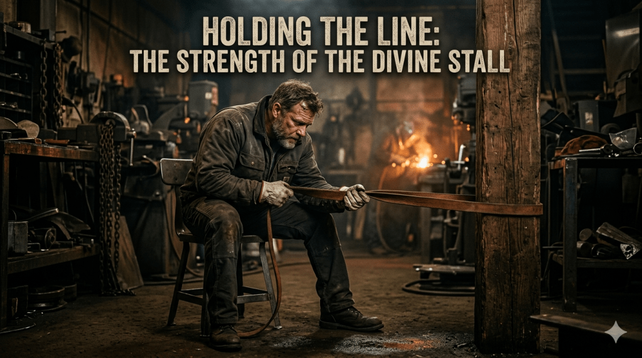
Holding the Line: The Strength of the Divine Stall

668 words, 4 minutes read time.

Wait for the Lord; be strong and take heart and wait for the Lord.
— Psalm 27:14 (NIV).

The core principle here is that spiritual endurance isn’t a stagnant pause; it is the tactical holding of a position while the Commander finishes the logistical work beyond your line of sight.

Finding Strength in the Waiting Room of God’s Timing

The air in the waiting room is stale, and your knuckles are white from gripping a steering wheel that isn’t moving. You’ve done the work, you’ve put in the sweat, and you’ve bled for the vision you believe God placed in your gut, yet the door remains bolted from the inside. It feels like a stall—like the engine of your life has cut out on a dead-end road while the rest of the world screams past you in the fast lane. You start to think God’s watch is broken, or worse, that He’s forgotten your coordinates. But a man of faith knows that the most vital, bone-deep growth happens in the dark, underneath the soil, long before the first sprout breaks the surface. In the kingdom of God, waiting isn’t a passive sentence; it’s a forge where the heat of delay burns off the dross of your arrogance and leaves behind the tempered resolve of your character. If God handed you the promotion, the marriage, or the breakthrough the second you demanded it, your ego would hijack the credit and your soul would be too soft to handle the weight of the blessing. Exegesis—the critical explanation of the text—reveals that David wasn’t writing Psalm 27 from a sun-drenched palace balcony; he was writing it while his enemies were breathing down his neck, proving that waiting for the Lord is an act of high-stakes courage, not a white flag of surrender. You aren’t being sidelined; you’re being prepared for a weight of glory that would crush the man you were yesterday. Stop looking at your watch and start looking at your foundation, because when the season shifts, you’ll need the roots you’re growing right now to keep you from being uprooted by the very success you’re praying for.

Taking Decisive Action in the Midst of the Stall

Identify one area of your life where you have been complaining about the delay and commit today to kill the “why me” narrative. Instead of asking God when the season will end, ask Him what specific piece of your character needs to be hardened or healed before you move forward, and execute the one small, disciplined task in front of you that you’ve been neglecting while waiting for the “big thing” to happen.

Prayer

Lord, I’m tired of the wait and the silence feels heavy against my chest. Give me the backbone to stand my ground and the wisdom to trust Your clock over my own. Strip away my impatience and forge a spirit in me that is ready for the heavy lifting ahead. Amen.

Reflection

  • What is one discipline or habit you can sharpen today while the “big” answer is still over the horizon?
  • What specific “closed door” are you currently trying to kick down instead of trusting the timing of the Architect?
  • In what ways has your character grown during past seasons of waiting that you were too frustrated to notice at the time?
  • Is your current anger born out of a desire for God’s will, or a desire for your own immediate comfort?

Call to Action

If this devotional encouraged you, don’t just scroll on. Subscribe for more devotionals, share a comment about what God is teaching you, or reach out and tell me what you’re reflecting on today. Let’s grow in faith together.

D. Bryan King

Sources

Disclaimer:

The views and opinions expressed in this post are solely those of the author. The information provided is based on personal research, experience, and understanding of the subject matter at the time of writing. Readers should consult relevant experts or authorities for specific guidance related to their unique situations.

#bibleVersesOnTiming #biblicalManhood #BiblicalStrength #characterBuilding #ChristianActionSteps #ChristianDiscipline #ChristianGrowth #ChristianHardboiledStyle #ChristianMenSDevotional #ChristianResolve #dailyBreadForMen #divineAppointments #DivineTiming #Ecclesiastes31 #enduranceForMen #faithForMen #faithInTheDark #faithUnderPressure #GodSSchedule #GodSSovereignty #GodSTiming #GritLitDevotion #grittyDevotionals #holdingTheLine #KingdomOfGod #masculineFaith #menSBibleStudy #menSMinistry #nonDenominationalDevotional #overcomingImpatience #prayerForStrength #preparationSeason #Psalm27Study #Psalm2714NIV #reflectionForMen #spiritualEndurance #spiritualForge #spiritualFoundations #spiritualLogistics #spiritualMaturity #strengthAndHeart #strengthInWaiting #tacticalWaiting #trustGodSPlan #trustingTheLord #visceralFaith #waitingForTheLord #waitingOnGod #waitingRoomOfGod

When God’s Favor Becomes Visible to the World

The Bible in a Year

“Blessed be the Lord thy God, which delighted in thee, to set thee on the throne of Israel; because the Lord loved Israel forever, therefore made he thee king, to do judgment and justice.” — 1 Kings 10:9

As I walk through this portion of Scripture, I find myself standing beside Queen of Sheba, listening carefully as she responds to what she has seen in the life of Solomon. Her words are not casual admiration; they are a testimony. She has observed the wisdom, order, and blessing of Solomon’s kingdom, and she traces it back to its true source—God Himself. What captures my attention is not only what she says, but what she understands. She recognizes that Solomon’s success is not self-made. It is divinely given, sustained, and purposed. In her declaration, I hear five distinct threads woven together: praise, position, passion, promise, and purpose—all anchored in the character of God.

The first response that rises from her lips is praise: “Blessed be the Lord thy God.” That is always where true wisdom begins. The Hebrew word for blessed, בָּרוּךְ (baruch), carries the idea of kneeling in reverence. When I see God at work—whether in Scripture or in my own life—the natural response should be worship. The Queen of Sheba was not part of Israel, yet she recognized the hand of God. That challenges me. Do I live in such a way that others, even those outside the faith, can see God’s influence in my life and respond with honor toward Him? As Matthew Henry once observed, “The prosperity of God’s people should be a means to draw others to think well of God.” That insight invites me to consider whether my life reflects God’s goodness or obscures it.

She then acknowledges that Solomon’s position came from God: “The Lord thy God… set thee on the throne.” This confronts one of the most persistent struggles in the human heart—pride. The Hebrew verb שִׂים (sim), meaning “to place” or “to appoint,” reminds me that elevation is not accidental. Whether influence is great or small, it is assigned by God. I am reminded of the words of Jesus in John 19:11, where He told Pilate, “You could have no power at all against Me unless it had been given you from above.” Even authority that seems worldly is still under divine sovereignty. When I begin to attribute success solely to my own effort, I drift from truth. But when I recognize God as the giver, gratitude replaces arrogance, and stewardship replaces entitlement.

The Queen of Sheba also speaks of God’s passion—His love: “The Lord loved Israel.” This is not a fleeting emotion but a covenant commitment. The Hebrew word אָהֵב (’ahav) expresses a deep, enduring love rooted in God’s nature. As the apostle John the Apostle later writes, “God is love” (1 John 4:8). This means that everything God does flows from who He is. His love is not earned; it is revealed. The ultimate expression of that love is seen at Calvary, where Christ became the ἱλασμός (hilasmos)—the atoning sacrifice—for our sins (1 John 4:10). When I understand that God’s actions toward me are grounded in His love, it changes how I interpret both blessings and trials. His love is the constant beneath every circumstance.

She continues by affirming God’s promise: “The Lord loved Israel forever.” That word “forever” echoes the Hebrew concept of עוֹלָם (‘olam)—a duration without end, stretching beyond human comprehension. God’s promises are not temporary agreements; they are eternal commitments. This is why Israel’s story continues to matter. It is a living testimony that God keeps His word. As one commentator from Bible.org explains, “God’s faithfulness is not dependent on human consistency but on His own unchanging nature.” That truth steadies me. In a world where promises are often broken, God remains unwavering. His Word is not subject to revision; it is anchored in eternity.

Finally, she identifies God’s purpose: “to do judgment and justice.” Solomon’s kingship was not merely for display; it was for responsibility. The Hebrew terms מִשְׁפָּט (mishpat) and צְדָקָה (tsedaqah) describe justice and righteousness—actions that reflect God’s moral order. Leadership, in God’s design, is always tied to accountability. This principle extends beyond kings to every believer. Wherever God places me, He gives me a purpose that reflects His character. I am not positioned simply to succeed, but to serve. Jesus demonstrated this perfectly when He said, “For even the Son of Man did not come to be served, but to serve” (Mark 10:45). That redefines how I view influence—not as a privilege to enjoy, but as a calling to fulfill.

As I reflect on this encounter between the Queen of Sheba and Solomon, I see more than a historical moment. I see a mirror held up to my own life. Do others see God’s work in me and respond with praise? Do I recognize that my position, whatever it may be, comes from Him? Do I trust in His love, rest in His promises, and live out His purpose? These are not abstract questions—they are daily realities. The same God who established Solomon’s throne is actively working in my life, shaping my path, and calling me to reflect His glory.

FEEL FREE TO COMMENT, SUBSCRIBE, AND REPOST, SO OTHERS MAY KNOW


#biblicalLeadership #divinePurpose #GodSPromises #GodSSovereignty

When God’s Favor Becomes Visible to the World

The Bible in a Year

“Blessed be the Lord thy God, which delighted in thee, to set thee on the throne of Israel; because the Lord loved Israel forever, therefore made he thee king, to do judgment and justice.” — 1 Kings 10:9

As I walk through this portion of Scripture, I find myself standing beside Queen of Sheba, listening carefully as she responds to what she has seen in the life of Solomon. Her words are not casual admiration; they are a testimony. She has observed the wisdom, order, and blessing of Solomon’s kingdom, and she traces it back to its true source—God Himself. What captures my attention is not only what she says, but what she understands. She recognizes that Solomon’s success is not self-made. It is divinely given, sustained, and purposed. In her declaration, I hear five distinct threads woven together: praise, position, passion, promise, and purpose—all anchored in the character of God.

The first response that rises from her lips is praise: “Blessed be the Lord thy God.” That is always where true wisdom begins. The Hebrew word for blessed, בָּרוּךְ (baruch), carries the idea of kneeling in reverence. When I see God at work—whether in Scripture or in my own life—the natural response should be worship. The Queen of Sheba was not part of Israel, yet she recognized the hand of God. That challenges me. Do I live in such a way that others, even those outside the faith, can see God’s influence in my life and respond with honor toward Him? As Matthew Henry once observed, “The prosperity of God’s people should be a means to draw others to think well of God.” That insight invites me to consider whether my life reflects God’s goodness or obscures it.

She then acknowledges that Solomon’s position came from God: “The Lord thy God… set thee on the throne.” This confronts one of the most persistent struggles in the human heart—pride. The Hebrew verb שִׂים (sim), meaning “to place” or “to appoint,” reminds me that elevation is not accidental. Whether influence is great or small, it is assigned by God. I am reminded of the words of Jesus in John 19:11, where He told Pilate, “You could have no power at all against Me unless it had been given you from above.” Even authority that seems worldly is still under divine sovereignty. When I begin to attribute success solely to my own effort, I drift from truth. But when I recognize God as the giver, gratitude replaces arrogance, and stewardship replaces entitlement.

The Queen of Sheba also speaks of God’s passion—His love: “The Lord loved Israel.” This is not a fleeting emotion but a covenant commitment. The Hebrew word אָהֵב (’ahav) expresses a deep, enduring love rooted in God’s nature. As the apostle John the Apostle later writes, “God is love” (1 John 4:8). This means that everything God does flows from who He is. His love is not earned; it is revealed. The ultimate expression of that love is seen at Calvary, where Christ became the ἱλασμός (hilasmos)—the atoning sacrifice—for our sins (1 John 4:10). When I understand that God’s actions toward me are grounded in His love, it changes how I interpret both blessings and trials. His love is the constant beneath every circumstance.

She continues by affirming God’s promise: “The Lord loved Israel forever.” That word “forever” echoes the Hebrew concept of עוֹלָם (‘olam)—a duration without end, stretching beyond human comprehension. God’s promises are not temporary agreements; they are eternal commitments. This is why Israel’s story continues to matter. It is a living testimony that God keeps His word. As one commentator from Bible.org explains, “God’s faithfulness is not dependent on human consistency but on His own unchanging nature.” That truth steadies me. In a world where promises are often broken, God remains unwavering. His Word is not subject to revision; it is anchored in eternity.

Finally, she identifies God’s purpose: “to do judgment and justice.” Solomon’s kingship was not merely for display; it was for responsibility. The Hebrew terms מִשְׁפָּט (mishpat) and צְדָקָה (tsedaqah) describe justice and righteousness—actions that reflect God’s moral order. Leadership, in God’s design, is always tied to accountability. This principle extends beyond kings to every believer. Wherever God places me, He gives me a purpose that reflects His character. I am not positioned simply to succeed, but to serve. Jesus demonstrated this perfectly when He said, “For even the Son of Man did not come to be served, but to serve” (Mark 10:45). That redefines how I view influence—not as a privilege to enjoy, but as a calling to fulfill.

As I reflect on this encounter between the Queen of Sheba and Solomon, I see more than a historical moment. I see a mirror held up to my own life. Do others see God’s work in me and respond with praise? Do I recognize that my position, whatever it may be, comes from Him? Do I trust in His love, rest in His promises, and live out His purpose? These are not abstract questions—they are daily realities. The same God who established Solomon’s throne is actively working in my life, shaping my path, and calling me to reflect His glory.

FEEL FREE TO COMMENT, SUBSCRIBE, AND REPOST, SO OTHERS MAY KNOW


#biblicalLeadership #divinePurpose #GodSPromises #GodSSovereignty

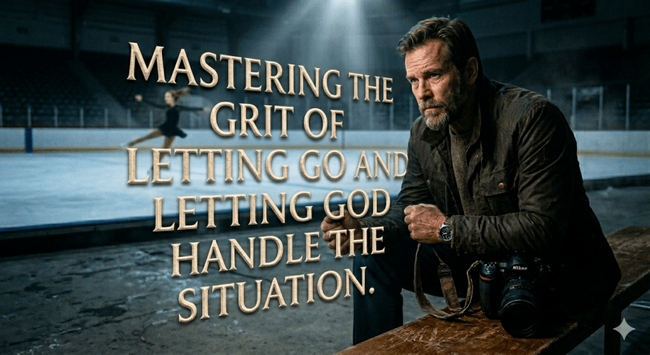
Mastering the Grit of Letting Go and Letting God Handle the Situation

1,656 words, 9 minutes read time.

Trust in the Lord with all your heart and lean not on your own understanding; in all your ways submit to him, and he will make your paths straight — Proverbs 3:5-6 NIV

This command is the ultimate field manual for the man who thinks he can out-think or out-work his circumstances; it demands you stop treating your own intellect as the final authority and start deferring to the Sovereign Architect.

The Brutal War of Surrendering the Situation to God

Men often grind their health into the dirt, torch their marriages, and hemorrhage their peace of mind because they are hooked on the lie of control. The common delusion is that one more double shift, one more aggressive text, or obsessively replaying a failure in the mind will force the world to bend. That isn’t leadership; it is pride. Anxiety is frequently dressed up as “responsibility” to make a man feel like a martyr, but in reality, it is a flat-out lack of faith. No man is powerful enough to sustain the weight of the universe, and trying to do so is an exercise in futility.

Real surrender isn’t a soft, flowery retreat for the weak. It is a violent, tactical act of the will where a man decides to stop playing God. Consider a man whose business is circling the drain, pacing the floor until 3:00 AM with a heart hammering against his ribs like a trapped animal. Worry is not fuel for a solution; it is spinning tires in the mud and digging a deeper hole. The turning point comes only on the knees, admitting the truth: the work has been done, but the outcome belongs to the Creator. If the ship goes down, God is still the King of the ocean.

That is the sacred art of letting go. It is the raw realization that human “understanding”—a narrow, meat-and-bone perspective—is a garbage foundation for a life. Leaning on personal intellect is leaning on a snapped crutch. Theology calls this “Providence,” which is the hard-nosed belief that God is actively steering the gears of the universe toward His purposes, even when the radar is dark. God does not need human panic to fix problems. In fact, white-knuckled gripping usually just gets in the way of the character God is trying to build. Stepping back isn’t quitting; it’s repositioning so the Almighty can take the point. No man was built to carry the weight of the “what-ifs.” Pick up the tools for today and leave the harvest to Him.

Releasing the Grip and Letting God Handle the Situation

Identify the one situation—whether it’s a wayward child, a legal battle, a crumbling marriage, or a career crisis—that is currently keeping you awake at night and eating you alive from the inside out. You have to stop the mental gymnastics and the frantic attempts to fix things that are outside your pay grade. Stand up, physically open your hands in front of you as a sign of total tactical surrender, and verbally tell God: “I am resigning as the manager of this outcome.” Be specific. Tell Him that while you will do the work set before you today, you are no longer responsible for the result. You are only responsible for your obedience in this moment. This isn’t a one-time suggestion; it is a daily transfer of weight from your breaking back onto His unshakable shoulders.

Prayer

Lord,

I’m done trying to micromanage the universe. I hand over this situation to You because I’m breaking under the weight and I was never meant to carry it. Take the wheel, take the burden, and give me the guts to stay out of Your way.

Amen.

Reflection

  • What specific disaster are you trying to prevent through your own sheer arrogance and willpower?
  • Where has your “own understanding” left you exhausted and empty-handed lately?
  • Do you actually trust God’s capability, or is your stress level proving that you think you’re a better pilot than He is?
  • What is the line between “doing your job” and “trying to control the result”?
  • How would your life change today if you accepted that the final result is already settled by God?

Author’s Note:

I usually plan the topics for these blogs months in advance, typically without any concern for what might be going on in my own life on those days. I also tend to write them well in advance and have them scheduled for release; occasionally, I’ll change the topic right before writing, but for the most part, the calendar is set. Saying all of that, this topic hits me hard, and quite honestly, this devotional is exactly what I needed to hear today. It amazes me how often these devotionals tend to align perfectly with what I need to hear at the exact moment they are scheduled to go live.

The local Ice Show season started last night with the first show, which serves as a heavy reminder of why I had to learn to let go. As many of you know, I was deeply involved in taking photos of skaters and serving in a technical advisory role for a particular organization. To avoid discussing this ad nauseam, I eventually had to hand the entire situation over to God. I am still hurt by what happened, but I can move on with the focus on God’s promise: “It is mine to avenge; I will repay” (Romans 12:19 NIV). I have faith that one day, God will deal with the people involved.

Let’s be clear: forgiveness isn’t some mandate to develop amnesia. It isn’t about forgetting the betrayal or pretending the damage didn’t happen. Even Jesus, in the book of Revelation, is shown with the scars—the pierced hands, the feet, and the wound in His side. He didn’t “forget” the cross; He moved through it. Forgiveness is about knowing exactly what debt was owed and making the executive decision to cancel it so you can move the hell on. People around me know that I still struggle with the raw hurt caused by the lies told by this person. The scars are there, but they don’t have to be shackles.

“There is no more dangerous ground for a man to occupy than the space between God and His mission, obstructing the work He intends to do.”

There is a terrifying reality in Matthew 18:6 about those who cause “one of these little ones” to stumble; it’s better for that man to have a millstone hung around his neck and be drowned in the depths of the sea. By holding onto my own desire for vengeance, I was effectively getting in the way, trying to play judge where God already has a gavel.

This is the power of what is “bound and loosed” (Matthew 16:19). If I stay obsessed with the debt they owe me, I am binding myself to them and their lies. I stay stuck in the mud of that past event. But when I choose to loose that debt—to unbind it and hand it to the Almighty—I am finally free. Forgiving the “debt” of revenge isn’t about being a doormat; it’s about tactical freedom. By handing that debt over to God, I am no longer the debt collector. I don’t have to waste my mental rounds calculating how or when they will get hit with what’s coming to them. That is God’s business, and His artillery is much more accurate than mine.

In my situation, letting God handle the “repayment” has freed me to continue doing what I love without the poison of bitterness clogging the lens. It allows me to keep showing up at the rink to capture the incredible work of these skaters. These kids are world-class athletes who put in grueling hours of practice, often in the dark of early morning, achieving feats of strength and grace that largely go unnoticed by the broader community. They deserve to have their achievements documented and celebrated. If I had stayed stuck in my anger toward the organization or the cowards involved, I would have walked away from the ice entirely. I would have let the actions of a few people rob me of my passion and rob these athletes of the recognition they’ve earned.

This freedom is what allows me to capture the moments of pure, unadulterated grit. One of my favorite photos is of a skater finally nailing an advanced jump during an event—a jump she had bled for over a long period of time. In that split second, the camera captures the culmination of months of falls, sweat, and raw determination. If I were still white-knuckled in my resentment, I would have been too distracted by the politics in the building to see the triumph on her face. Surrender protects my ability to witness those victories. When I’m behind the camera now, I’m not thinking about the technical roles I lost or the people who mistreated me. I’m thinking about the lighting, the shutter speed, and the sheer force of an athlete hitting their mark. Forgiving that debt didn’t just change my perspective; it saved my craft. It allowed me to move on with a clean slate, trusting that while I document the beauty on the ice, God is perfectly capable of handling the justice behind the scenes. That is the freedom found in surrender.

Call to Action

It’s time to make a tactical decision. Are you going to continue binding yourself to the hurt, or are you ready to experience the freedom of unbinding that debt and handing it to the Almighty? Releasing control isn’t a sign of weakness; it is the ultimate expression of grit and faith.

Your Battle Ends Today. How will you take the first step toward surrendering control and mastering the grit of letting go?

SUPPORTSUBSCRIBECONTACT ME

D. Bryan King

Sources

Disclaimer:

The views and opinions expressed in this post are solely those of the author. The information provided is based on personal research, experience, and understanding of the subject matter at the time of writing. Readers should consult relevant experts or authorities for specific guidance related to their unique situations.

#athleticAchievement #biblicalManhood #biblicalMasculinity #bindingAndLoosing #capturingGrit #characterBuilding #ChristianMenSDevotional #ChurchHurtRecovery #dealingWithEnemiesBiblically #emotionalFreedom #faithForMen #faithInTheWorkplace #faithUnderPressure #familyLeadership #figureSkatingPhotography #findingPeaceInChaos #forgivenessForMen #GodSProvidence #GodSSovereignty #healingFromLies #JesusScarsMeaning #justiceBelongsToGod #leavingItToGod #lettingGoOfControl #lettingGodTakeTheLead #maleSpiritualGrowth #Matthew1619 #Matthew186 #mentalGymnastics #mentalHealthForMen #movingOnFromBetrayal #overcomingAnxiety #overcomingBitterness #prayerForMen #prideVsFaith #Proverbs356 #releasingResentment #Romans1219 #spiritualDiscipline #spiritualGrit #spiritualLeadership #spiritualWarfareForMen #stoppingTheGrind #surrenderIsNotWeakness #surrenderingToGod #tacticalSurrender #theArtOfLettingGo #trustingGodSPlan #VengeanceIsMine

Resting in the Greatness We Cannot Contain


As the Day Ends

There is a quiet comfort in admitting that God is greater than my understanding. The thought that if we can fully explain God, we have reduced Him to something less than the God of Scripture, humbles and steadies me at the close of the day. As evening settles, the words of 1 Chronicles 29:11 echo like a gentle anthem: “Yours, Lord, is the greatness and the power and the glory and the majesty and the splendor, for everything in heaven and earth is Yours.” These words lift my gaze from unfinished tasks and lingering worries to the vastness of God’s reign. He is not confined to the limits of my reasoning. He holds galaxies and heartaches with equal authority.

Yet the Scriptures do not leave God distant in His greatness. Psalm 135:5 reminds me that He does whatever pleases Him in heaven and on earth, in the seas and their depths. His sovereignty is not theoretical; it is active. At the same time, Psalm 145:7 assures me that His rule is righteous and loving toward all He has made. This combination—absolute power joined with perfect goodness—gives the soul a place to rest. As night falls, I do not entrust myself to blind fate or impersonal force but to a holy and caring Lord. The mystery of God does not create fear when His character is known. Instead, it nurtures trust. I may not understand every turn of the day behind me, but I can rest in the One who governs it.

Evening invites reflection. I think back over conversations, choices, and emotions that filled the hours. Some moments shine with gratitude; others carry regret or questions. In both, God’s greatness offers perspective. His purposes are not threatened by my limitations. His love is not diminished by my frailty. When I release the need to grasp every explanation, I find peace. Like a child falling asleep in a parent’s presence, I am secure not because I comprehend everything but because I know the One who watches over me. The majesty of God becomes a shelter, not a distance.

Triune Prayer

Most High Father, You are exalted above all, yet You draw near to my small and ordinary life. I thank You that Your greatness does not make You unreachable but trustworthy. As I lay down the concerns of this day, I place them into Your sovereign hands. Forgive where I have failed, strengthen where I am weak, and help me trust that Your purposes continue even while I sleep. Teach my heart to rest in Your loving rule.

Jesus, blessed Son of God, You revealed the heart of the Father in human form. You walked under the same sky that now darkens over me, carrying both authority and compassion. Thank You that Your life, death, and resurrection assure me that God’s power is always joined with redeeming love. As I end this day, I cling to Your grace. Cover my mistakes, quiet my anxieties, and remind me that nothing can separate me from Your care.

Holy Spirit, faithful Comforter, dwell with me in the stillness of this evening. You know the unspoken thoughts and the hidden burdens I carry. Breathe peace into restless places within me. Guide my dreams, guard my mind, and prepare my heart for tomorrow. Keep me aware that even in sleep, I remain held in divine presence. Lead me deeper into trust as I yield this night to God.

Thought for the Evening
Release what you cannot understand into the hands of the God whose greatness is matched by His love, and let trust carry you into rest.

For further reflection on the greatness and nearness of God, see: https://www.ligonier.org/learn/devotionals/greatness-of-god

FEEL FREE TO COMMENT, SUBSCRIBE, AND REPOST, SO OTHERS MAY KNOW


#1Chronicles2911 #ChristianReflection #eveningDevotional #GodSSovereignty #Psalm135 #Psalm145 #trustInGod