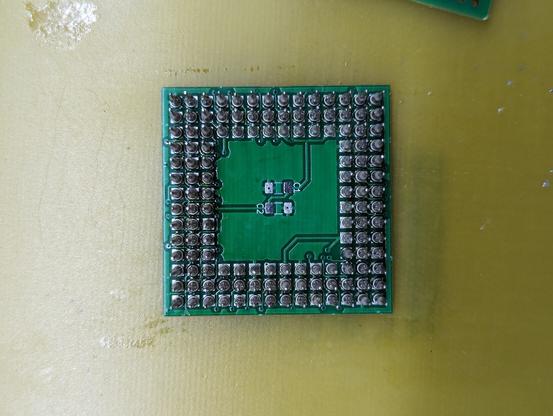
Given the positive experience with the 386 #adapter, why not leverage the same process for something slightly different?

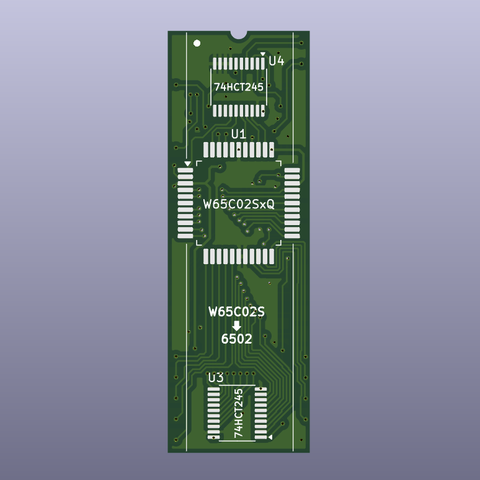
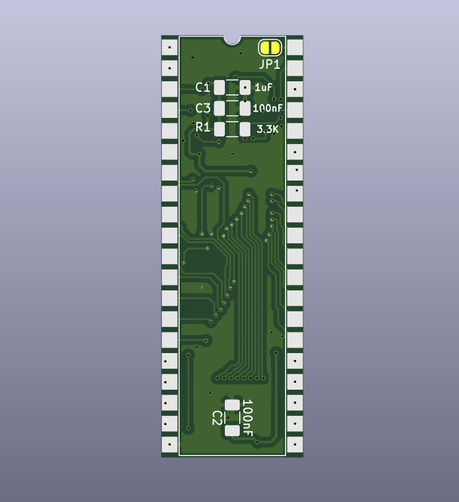
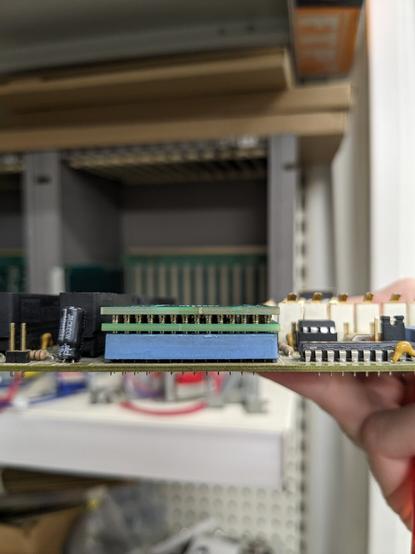
TheByteAttic designed a #W65C02 -> 6502 adapter that buffers the data bus with an 'HCT245, this is a variant of the same design (with another '245 for inbound control lines too), but, instead of having the transceivers on the side, it uses #SMD pins to occupy the exact same space as an original 6502, allowing a #QFP CPU to sit on top of the adapter.

I'd like to use for repairs on #VIC20 units.

So I can do the Shatner. All day long.

Over and over.

GitHub - hkzlab/386DX_QFP_PGA_Adapter: A QFP -> PGA adapter for 386DX CPUs

A QFP -> PGA adapter for 386DX CPUs. Contribute to hkzlab/386DX_QFP_PGA_Adapter development by creating an account on GitHub.

GitHub
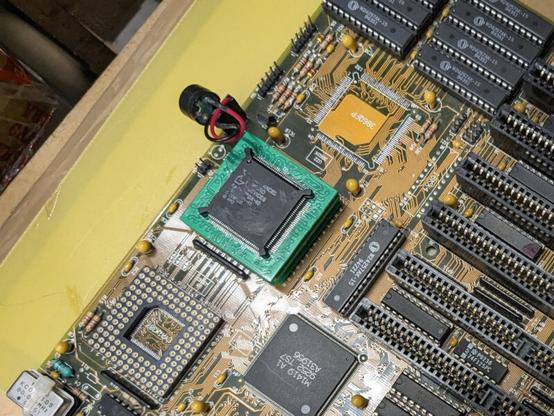
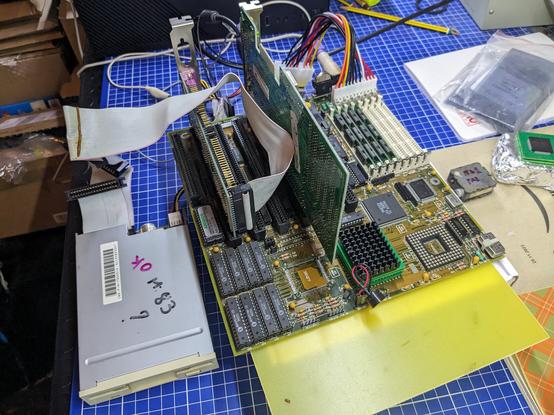
Pretty busy these days: had some more unexpected Amiga recapping, PCB drawing for a friend's project, bbq... But now I can finally go back to test my #PGA to #QFP adapter (and, at the same time, test the repair of this 386 motherboard).
Seems stable for now, and it is running a 386DX@40Mhz. If everything goes well, I'll release the project so other people can make use of it. #repair
Errata: A respeito da Zilog, Z80 e afins… - Retrópolis

Como somos humanos, isto quer dizer que somos passíveis de erros. E admitir o erro é algo que é obrigatório para nós. E sobre o post anterior, a respeito da Zilog largar a mão do Z80, trazemos novidades. Antes de tudo, queria agradecer ao amigo Pablo Villalba por ter, numa manhã de domingo, escrito um

Retrópolis - A cidade dos clássicos

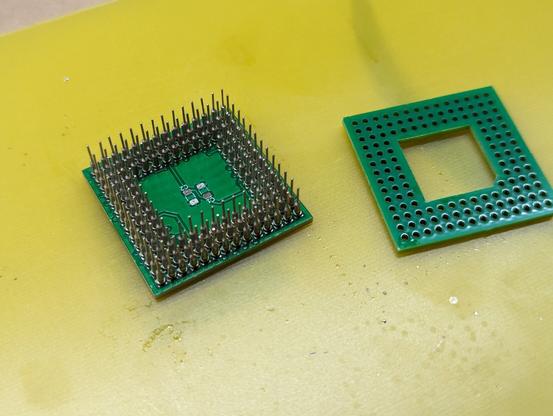
Last friday I received the shorter pins I bought on aliexpress, to experiment with my #QFP -> #PGA #adapters.
I'm quite satisfied how it turned out: easier to insert and extract from a socket, and less vertical space wasted.

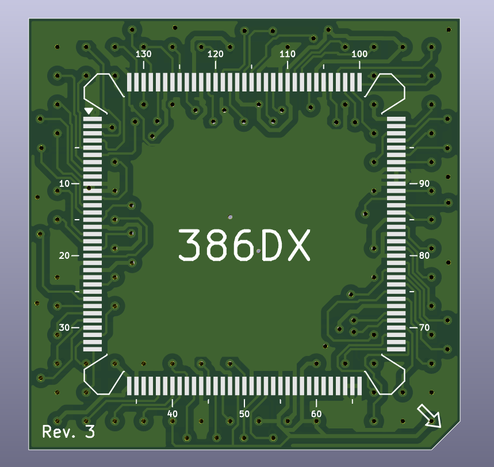
Next step (probably by the end of the month, maybe grouped with other things) is sending the new revision out to print: I optimized a few traces, added pin numbers to the silkscreen and cut the corner for easier PGA orientation. I'll build one, solder another 386 to it, and if it turns out to be stable, I'll release everything.

Woohoo success! Look who's alive!
The #AM386 i soldered in my #QFP to #PGA socket seems fine, and also this #repaired motherboard is giving good signs of life!
@mmu_man
Well, it worked!
#qfp to #pga adapter for my 386DX! Now I just hope I got the pinout right!

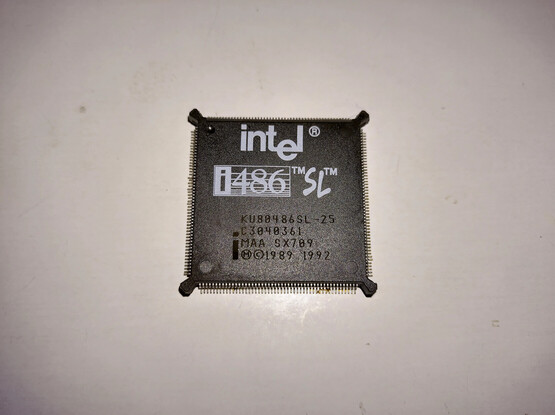
First 486SL a 25Mhz QFP CPU for my collection.

#intel #486sl #QFP #cpu

Nifty Chip Adapter Does The Impossible

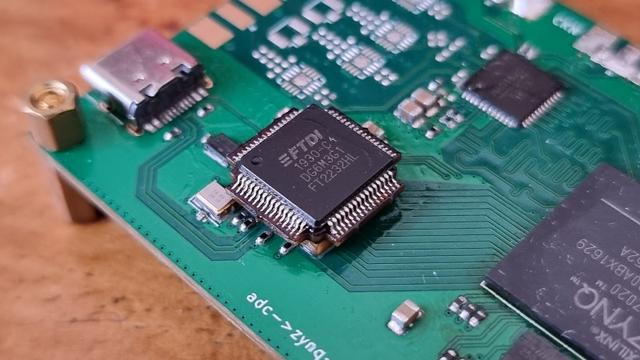
The semiconductor shortage has curtailed the choices available to designers and caused some inventive solutions to be found, but the one used by [djzc] is probably the most inventive we've yet seen. The footprint trap, when a board is designed for one footprint but shortages mean the part is only available in another, has caught out many an engineer this year. In this case an FTDI chip had been designed with a PCB footprint for a QFN package when the only chip to be found was a QFP from a breakout board.

The three boards which make up the adapter

For those unfamiliar with semiconductor packaging, a QFN and QFP share a very similar epoxy package, but the QFN has its pins on the underside flush with the epoxy and the QFP has them splayed out sideways. A QFP is relatively straightforward to hand-solder so it's likely we'll have seen more of them than QFNs on these pages.

There is no chance for a QFP to be soldered directly to a QFN footprint, so what's to be done? The solution is an extremely inventive one, a two-PCB sandwich bridging the two. A lower PCB is made of thick material and mirrors the QFN footprint above the level of the surrounding components, while the upper one has the QFN on its lower side and a QFP on its upper. When they are joined together they form an inverted top-hat structure with a QFN footprint below and a QFP footprint on top. Difficult to solder in place, but the result is a QFP footprint to which the chip can be attached. We like it, it's much more elegant than elite dead-bug soldering!

#techhacks #qfn #qfp #soldering

Nifty Chip Adapter Does The Impossible

The semiconductor shortage has curtailed the choices available to designers and caused some inventive solutions to be found, but the one used by [djzc] is probably the most inventive we’ve ye…

Hackaday