What economic experts think about Trump’s choice of Kevin Warsh for Fed chair – PBS News

USA-FED / Former U.S. Federal Reserve Governor Kevin Warsh speaks during a monetary policy conference at Stanford University…

By — Hannah Grabenstein

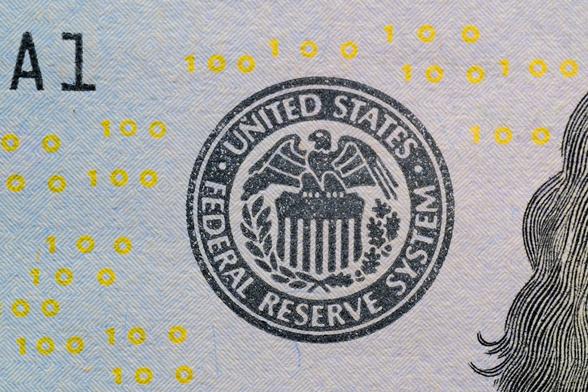
Detailed view of the US Federal Reserve System seal on currency with yellow digital numbers. WP.

What economic experts think about Trump’s choice of Kevin Warsh for Fed chair

Economy Updated on Jan 30, 2026 7:29 PM EST — Published on Jan 30, 2026 5:17 PM EST

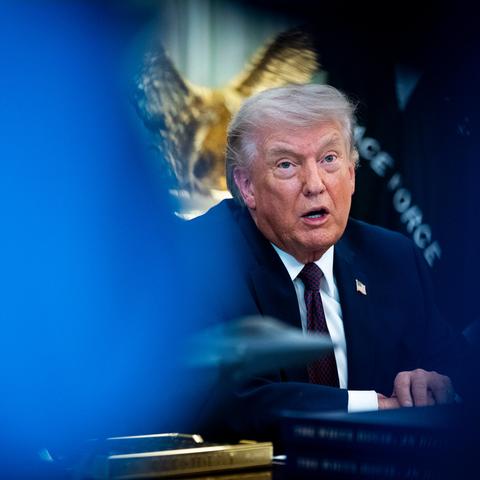
President Donald Trump announced Friday that he would nominate Kevin Warsh to be the next chair of the Federal Reserve, an independent agency that has been under pressure from the president to lower interest rates for the last year.

If confirmed, Warsh would succeed Fed Chair Jerome Powell — a previous Trump nominee who has incurred the president’s ire for not heeding his demands — when Powell’s term expires in May.

Educate your inbox, Subscribe to Here’s the Deal, our politics newsletter for analysis you won’t find anywhere else. Enter your email address

Warsh served on the Fed Board of Governors from 2006 through 2011, where he had an opportunity to help shape the U.S. economy during one of its greatest periods of turmoil in recent history. Now a fellow at the Hoover Institution, a conservative think tank, and a lecturer at the Stanford Graduate School of Business, he also worked as an economic advisor to President George W. Bush.

Experts appear to view Warsh’s nomination with “cautious relief,” said Mark Gertler, a professor of economics at New York University.

Here are three things to know about Warsh and how he might influence the Fed as the agency’s new head.

1. Warsh is a lawyer, not an economist

Like Powell, Warsh has a J.D., not a Ph.D. in economics. Powell was the first Federal Reserve chair in 30 years to not have a doctorate in economics.

“The Fed’s culture is Ph.D. economists on top,” said Aaron Klein, a senior fellow in economic studies at the Brookings Institution.

“I think Powell was pretty deferential to what the professional staff economists’ view was,” he added.

But Warsh may have a different approach, said Klein, who first met him when Warsh was working at the National Economic Council at the White House. Lawyers view the world through a different cultural lens than macroeconomists do, he said.

WATCH: Supreme Court hears case on Trump’s attempt to control Federal Reserve

“The question is: Is Kevin going to shake up the culture of the Fed staff? Or is he going to show deference to the Fed’s Ph.D. economists who are accustomed to running the show?” Klein said.

That could influence his policy decisions, too, Gertler said. Warsh isn’t an economist and doesn’t speak — or necessarily reason — like one, he added.

“The reason I’m not too worried is Powell was not an economist either, but Powell learned over time. In fact, I think (he) learned pretty well,” Gertler said. “I’m hopeful that the same will be true with Warsh — that is, put him in there with a bunch of economists and they will help sharpen his thinking.”

2. In many ways, Warsh is a conservative pick

While not a macroeconomist by education, Warsh has a relatively traditional background for a Fed chair nominee, experts said.

He’s an academic with experience in the executive branch, as well as on the Federal Reserve Board of Governors, and is knowledgeable about financial markets. During his term as a board member, he was instrumental in helping then-Chair Ben Bernanke navigate the 2008 financial crisis.

“Warsh is a serious guy with a long track record and a deep experience,” Klein said. “Warsh was the Fed board’s interlocutor with the markets during the financial crisis.”

Gertler said that knowledge about financial markets is an important characteristic in a Fed chair, because while interest rate setting isn’t easy, it’s “straightforward.” But understanding the markets requires “specialized expertise,” which Gertler said he thinks Warsh has.

READ MORE: GOP senators break with Trump on these 2 points

Warsh also has a history of being intellectually conservative, Klein said, with an eye toward reducing government intervention in the markets.

“He’s not some outsider. This is not like Pete Hegseth coming in, or Kristi Noem, or whatever. This is someone who does have some genuine expertise, and he has been at the Fed,” Gertler said.

“He has not come across as overtly political in the way some other candidates did,” he added.

Warsh likely understands the Fed’s culture and is unlikely to “try and tear the place apart,” Gertler noted. That’s giving experts reason for some relief, he said.

Editor’s Note: Read the rest of the story, at the below link.

Continue/Read Original Article Here: What economic experts think about Trump’s choice of Kevin Warsh for Fed chair | PBS News

#BoardOfGovernors #EconomicExperts #Economy #FederalReserveChairman #IndependentAgency #JeromePowell #LowerInterestRates #MonetaryPolicy #PBS #PBSNews #PublicBroadcastingService #Replacement #Succeed #Thinking #TrumpSChoice
Border Patrol ‘untrained’ for urban areas, ex-CBP head says | Georgia Public Broadcasting & PBS

Tagged as: 

Border Patrol ‘untrained’ for urban areas, ex-CBP head says PBS News Hour

Share this page

Premiered January 26, 2026

Border Patrol ‘untrained’ for urban areas, ex-CBP head says

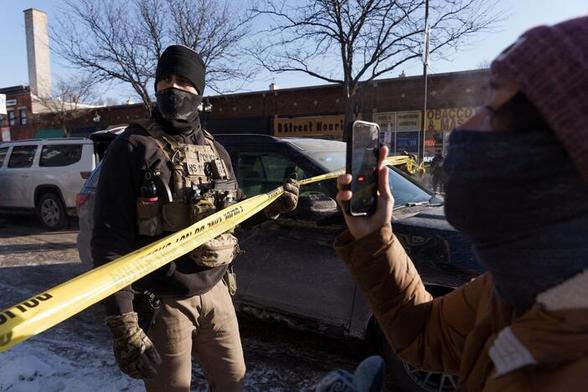
Border Patrol ‘untrained and unskilled’ for policing in urban areas, ex-CBP head says

Editor’s Note: Below is the PBS video from YouTube. –DrWeb

https://www.youtube.com/watch?v=k4N_LgBy-Nc

Continue/Read Original Article Here: Border Patrol ‘untrained’ for urban areas, ex-CBP head says | Georgia Public Broadcasting

#BorderPatrol #Cities #ExCBP #GeorgiaPublicBroadcasting #ICE #PBS #PublicBroadcastingService #training #UnitedStates #Unskilled #Untrained #Video
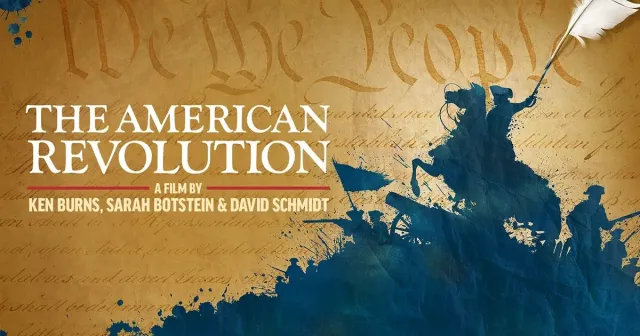
The American Revolution – Premieres Nov. 16 – PBS

About the Film

Thirteen American colonies unite in rebellion, win an eight-year war to secure their independence, and establish a new form of government that would inspire democratic movements at home and around the globe. What begins as a political clash between colonists and the British government grows into a bloody struggle that will engage more than two dozen nations and forever change the world.

Official Trailer, Explore the Revolution Events Resource Center For the Classroom

Premieres Nov. 16

Events About the Film Explore the Revolution How to Watch

Events – see online…

Explore The Revolution – see online…

How to Watch

Thirteen colonies unite in rebellion, win their independence, and found the United States.

The American Revolution is available to stream on pbs.org and the free PBS App, available on iPhone, Apple TV, Android TV, Android smartphones, Amazon Fire TV, Amazon Fire Tablet, Roku, Samsung Smart TV, and Vizio. Stream The American Revolution on pbs.org Download the PBS App

Continue/Read Original Article Here: The American Revolution | Premieres Nov. 16 | PBS

#13Colonies #250AnniversityAmerica #britishGovernment #changeTheWorld #classrooms #corporationForPublicBroadcasting #davidSchmidt #documentary #film #kenBurns #localPbsStations #pbs #publicBroadcastingService #publicTelevision #resourceCenter #sarahBotstein #series #theAmericanRevolution
NPR and PBS Must Transform After Trump’s Cuts Cripple Broadcasters

https://fed.brid.gy/r/https://www.nytimes.com/2025/09/13/us/politics/public-broadcasting-cuts.html


Kagan criticizes fellow justices over lack of explanation in recent Supreme Court rulings | PBS News

The Supreme Court has handled a flood of appeals from the Trump administration on its emergency docket, also known as the shadow docket. In the first six months of Trump’s term, the conservatives on the court have sided with him on several key policies, but the decisions have come with little to no explanation for their rationale. Geoff Bennett discussed more with Supreme Court analyst Amy Howe.

Read the Full Transcript

Notice: Transcripts are machine and human generated and lightly edited for accuracy. They may contain errors.

  • Geoff Bennett:

    Supreme Court Justice Elena Kagan is urging her colleagues on the bench to be more transparent as they make more emergency decisions, including those involving President Trump.

    At an event in California, Kagan criticized how the court has handled a flood of appeals from the Trump administration on their emergency docket. The emergency docket, also known as the shadow docket, is a process the Supreme Court uses for urgent cases that are decided quickly with no oral arguments.

  • Elena Kagan, U.S. Supreme Court Associate Justice:

    As we have done more and more on this emergency docket, there becomes a real responsibility that I think we didn’t recognize when we first started down this road to explain things better.

    I think that we should hold ourselves sort of on both sides to a standard of explaining why we’re doing what we’re doing.

  • Geoff Bennett:

    In the first six months of President Trump’s second term, the conservatives on the court have sided with him on several key policies, including allowing the administration to continue mass firings at multiple government agencies and to cancel certain federal grants. But those decisions have come with little to no explanation for their rationale.

    For more on all this, we’re joined now by SCOTUSblog co-founder and “News Hour” Supreme Court analyst Amy Howe.

    Always great to have you here.

Continue/Read Original Article Here: Kagan criticizes fellow justices over lack of explanation in recent Supreme Court rulings | PBS News

#2025 #America #DonaldTrump #Health #History #JusticeKagan #Libraries #LibraryOfCongress #Opinion #PBS #Politics #PublicBroadcastingService #Resistance #Science #SCOTUS #Trump #TrumpAdministration #UnitedStates

How PBS, NPR lost funding — and bipartisan support — under Trump : NPR

Analysis, July 18, 20255:00 AM ET

By David Folkenflik

Nearly sixty years after President Lyndon B. Johnson signed the Public Broadcasting Act of 1967 into law, Congress voted to take back federal funding already promised for the public media system. The Republican majority has accused PBS and NPR of left-leaning bias and being a waste of taxpayer funds. Bettmann / Bettmann Archive

When President Lyndon B. Johnson spoke after signing the Public Broadcasting Act of 1967, he marveled at technologies like radio and television and satellites, and echoed the words of Samuel Morse in sending the first telegraph message.

“What hath man wrought?” Johnson asked. “And how will man use his inventions?”

Johnson offered an answer to his own question: “While we work every day to produce new goods and to create new wealth, we want most of all to enrich man’s spirit. That is the purpose of this act.”

The years that followed brought forth the Corporation for Public Broadcasting, PBS and NPR, largely with bipartisan support. It also led to a framework of laws intended to ensure those organizations were protected from political pressure.

CPB began funneling an ongoing subsidy to hundreds of public media outlets across the country. Out of that system came original programs that have become familiar to all corners of the country: Sesame Street. PBS NewsHour. All Things Considered. Tiny Desk. NOVA. Antiques Roadshow. Wait Wait…Don’t Tell Me!

A poster at a March 26 rally to protect funding for U.S. public broadcasters, PBS and NPR outside the NPR headquarters in Washington, D.C. Saul Loeb / AFP via Getty Images

They were on the air, online, and on platforms that Johnson could never have envisioned.

All helped foster a sense there was something for everyone.

That seeming consensus, under sustained attack, was shattered this week.

Lawmakers on Capitol Hill have passed legislation on a narrow, party-line basis to eliminate all federal funding for public broadcasting for the next two years. That’s $1.1 billion previously approved by the Republican-led Congress and President Trump. The reversal is notionally due to the need to cut funds to help pay for new Republican priorities, including an expansion of immigration enforcement and extension of Trump’s prior tax cuts.

Editor’s Note: Read the rest of the story, at the below link.

Continue/Read Original Article Here: How PBS, NPR lost funding — and bipartisan support — under Trump : NPR

#2025 #America #Books #DonaldTrump #Film #Health #History #Libraries #Library #LibraryOfCongress #NationalPublicRadio #NPR #PBS #Politics #PublicBroadcastingService #Reading #Resistance #Science #Television #Trump #TrumpAdministration #UnitedStates

Dear Friend of Vegas PBS – Help Protect from Trump

Please support Vegas PBS as you can. This notice came as an email. Vegas PBS, Vegas Strong! https://donate.vegaspbs.org/vegaspbs/donate

#2025 #America #Books #DonaldTrump #Health #History #LasVegas #Library #LibraryOfCongress #Nevada #Politics #PublicBroadcastingService #Reading #Resistance #Trump #TrumpAdministration #UnitedStates #Vegas #VegasPBS

Where Congress’s Cuts Threaten Access to PBS and NPR

President Trump’s proposal to eliminate federal funding for public broadcasters threatens scores of radio and TV stations across…
#NewsBeep #News #Topstories #Headlines #NationalPublicRadio #PublicBroadcastingService
https://www.newsbeep.com/4244/

Trump’s victory over PBS and NPR ‘bias’ will be ‘devastating’ for rural areas, station leaders say | CNN Business

Editor’s Note: Based on this, I am creating a new posting alert, about NPR and PBS and Education. We need all the information about Trump’s “removal” of these from Federal Support – with your tax dollars. Let’s Stop the Steal! 🙂

President Trump’s cuts to public media funding “will be especially devastating to smaller stations and those serving large rural areas,” PBS’s CEO said Thursday.
Kayla Bartkowski / Getty Images

CNN  — Public television stations will be “forced to make hard decisions in the weeks and months ahead,” PBS CEO Paula Kerger said Thursday, after the Senate voted in the middle of the night to approve a bill that cancels all the federal funding for the network and for NPR.

NPR is a “lifeline” for the “nearly 3-in-4 Americans” who say they rely on public radio, the outlet’s CEO said Thursday after the Senate passed a bill to claw back funding for public media. Tom Brenner / The Washington Post / Getty Images.

Radio and TV stations may need to lay off staffers and cut back on programming. Popular shows like “Daniel Tiger’s Neighborhood” may reach fewer people. Big Bird of “Sesame Street” fame isn’t going away, but the financial system that supported him for decades is being stripped away.

Once the House passes the bill, as expected, the Corporation for Public Broadcasting’s budget will be zeroed out for the first time since 1967, back when television stations still broadcast in black and white.

It is a long-sought victory for President Trump, who has harshly accused PBS and NPR newscasts of being “biased,” and a long-dreaded disruption for local stations that bank on taxpayer support.

The precise effects are hard to predict because other funders may fill in some of the gaps. However, public media executives say that some smaller broadcasters will be forced off the air in the months and years to come.

That’s because stations in rural areas and smaller communities tend to rely more heavily on the federal subsidy. Stations in larger markets typically have a wider variety of other funding sources, like viewer donations and foundation support.

Advocates say the entire system of noncommercial media will become weaker without the foundational support from taxpayers, resulting in fewer original shows and less local news coverage.

Kerger said in a statement that “these cuts will significantly impact all of our stations, but will be especially devastating to smaller stations and those serving large rural areas.”

She pointed out that the stations “provide access to free unique local programming and emergency alerts.”

The two Republican senators who voted against the rescission, Lisa Murkowski and Susan Collins, both said they valued those aspects of public media, even while criticizing perceived bias of some NPR programming.

Most other Republicans, however, concentrated on the bias complaints above all else, and argued that the entire system is obsolete in the streaming age.

David Bozell, president of the Media Research Center, which has campaigned against the federal support for decades, celebrated the “historic rollback” in an X post overnight.

“PBS and NPR were chartered to provide objective journalism,” Bozell wrote. “Instead, we got drag shows for kids, gushing coverage of Democrats, and silence or smears for conservatives.”

Public media officials say critics completely distort what actually airs on stations.

Thursday morning’s report about the clawback on NPR’s “Morning Edition,” for example, was studiously neutral, and the hosts pointed out that NPR management was not involved in the news coverage of its own funding dilemma.

“Nearly 3-in-4 Americans say they rely on their public radio stations for alerts and news for their public safety,” NPR CEO Katherine Maher said in a statement, arguing that NPR is a “lifeline.”

Early Thursday morning, America’s Public Television Stations, an advocacy group for the stations, argued that the rescission “defies the will of the American people,” citing both the polls and the fact that Congress actually allocated the next round of funding earlier this year.

Editor’s Note: Read the rest of the story, at the below link.

Continue/Read Original Article Here: Trump’s victory over PBS and NPR ‘bias’ will be ‘devastating’ for rural areas, station leaders say | CNN Business

#2025 #America #Books #Devastating #DonaldTrump #Health #History #Libraries #LibraryOfCongress #NationalPublicRadio #NPR #PBS #Politics #PublicBroadcastingService #Reading #Resistance #RuralArea #Science #StationLeaders #Television #Trump #TrumpAdministration #UnitedStates