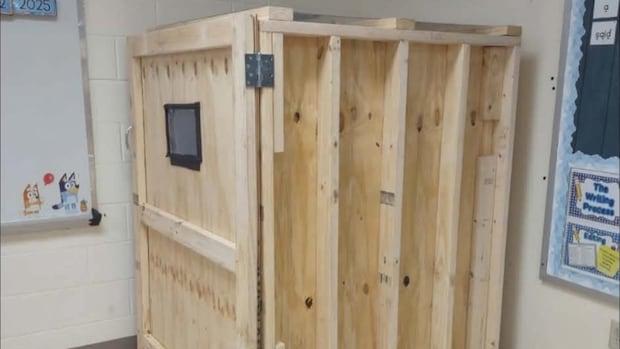
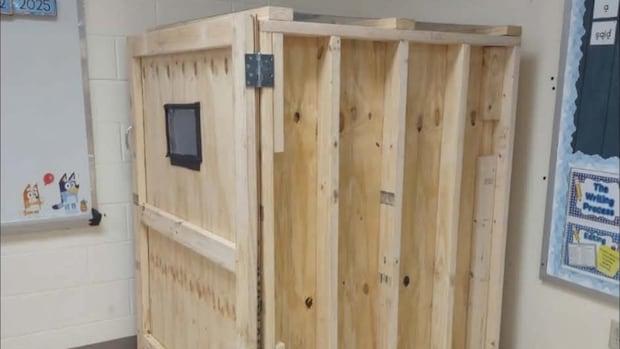
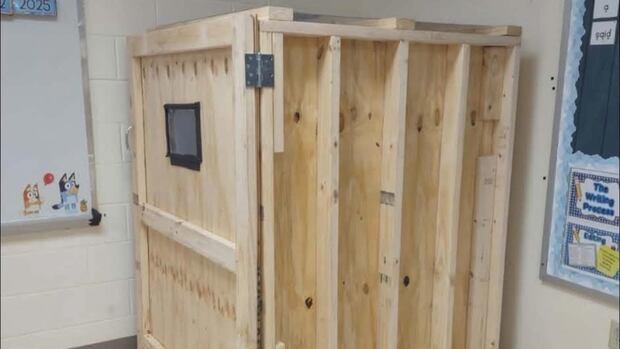
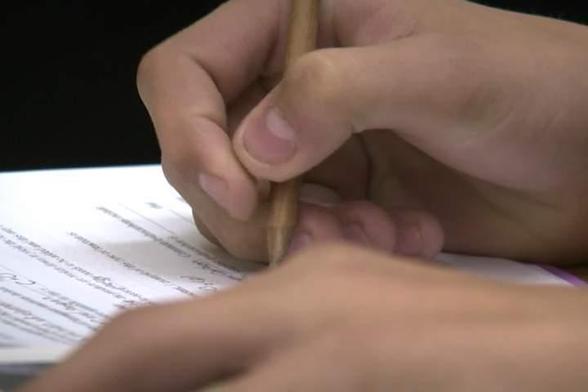
Berens River students back learning, new classroom spaces open
Class is back in session in Berens River. The school in the remote First Nation burned down in January, but community groups have opened up space to be used as temporary classrooms.
https://www.cbc.ca/news/canada/manitoba/berens-river-school-students-fire-class-9.7128424?cmp=rss
Translating, restraining kids, teaching multiple grades at once: Alberta teachers describe complex classrooms
https://www.cbc.ca/news/canada/calgary/classroom-complexity-teacher-voices-9.7099882?cmp=rss
Translating, restraining kids, teaching multiple grades at once: Alberta teachers describe complex classrooms
Data rarely tells the full story. So when CBC News emailed a questionnaire to tens of thousands of Alberta teachers this January, we invited them to share stories to illustrate what classroom complexity actually looks like for them. More than 4,000 teachers participated.
https://www.cbc.ca/news/canada/calgary/classroom-complexity-teacher-voices-9.7099882?cmp=rss
Translating, restraining kids, teaching multiple grades at once: Alberta teachers describe complex classrooms
Data rarely tells the full story. So when CBC News emailed a questionnaire to tens of thousands of Alberta teachers this January, we invited them to share stories to illustrate what classroom complexity actually looks like for them. More than 4,000 teachers participated.
https://www.cbc.ca/news/canada/calgary/classroom-complexity-teacher-voices-9.7099882?cmp=rss
Translating, restraining kids, teaching multiple grades at once: teachers describe complex classrooms
Data rarely tells the full story. So when CBC News emailed a questionnaire to tens of thousands of Alberta teachers this January, we invited them to share stories to illustrate what classroom complexity actually looks like for them. More than 4,000 teachers participated.
https://www.cbc.ca/news/canada/calgary/classroom-complexity-teacher-voices-9.7099882?cmp=rss
Translating, restraining kids, teaching multiple grades at once: Alberta teachers describe complex classrooms
Data rarely tells the full story. So when CBC News emailed a questionnaire to tens of thousands of Alberta teachers this January, we invited them to share stories to illustrate what classroom complexity actually looks like for them. More than 4,000 teachers participated.
https://www.cbc.ca/news/canada/calgary/classroom-complexity-teacher-voices-9.7099882?cmp=rss
The research: A summary of what 6,000 teachers and school staff told CBC about Alberta's classrooms
In January, CBC News took the rare step of emailing teachers directly because of the unprecedented labour situation in Alberta and the teachers' claims about what kids are facing in the province's classrooms. Here’s what we heard.
https://www.cbc.ca/news/canada/calgary/alberta-teachers-questionnaire-9.7112944?cmp=rss
The #ethical consequences of replacing #teachers with #AI in modern #education
The debate over whether AI should replace teachers becomes more urgent each year, especially as #classrooms adopt adaptive learning systems, automated grading tools,
https://juskosave.blogspot.com/2026/03/the-ethical-consequences-of-replacing.html
Temporary classrooms arrive in Tumbler Ridge after mass shooting
The first set of temporary classrooms have arrived after last week's mass shooting at Tumbler Ridge Secondary School, and the province says more are on the way.
#shooting #school #classrooms #TumblerRidge
https://www.cbc.ca/news/canada/british-columbia/temporary-classrooms-arrive-in-tumbler-ridge-9.7097719?cmp=rss

One Source, Multiple Versions, Many Perspectives: Teaching Key Documents in U.S. History – Teaching with the Library

Teaching with the Library Primary Sources & Ideas for Educators

ISSN 2691-6916

Share & Subscribe to this blog

  • One Source, Multiple Versions, Many Perspectives: Teaching Key Documents in U.S. History
  • In Congress, July 4, 1776. The unanimous declaration of the thirteen United States of America.

    One Source, Multiple Versions, Many Perspectives: Teaching Key Documents in U.S. History

    Posted by: Colleen Smith, January 27, 2026

    This blog post is by Lee Ann Potter, director of Professional Learning and Outreach Initiatives at the Library of Congress. 

    At the recent annual meeting of the American Historical Association (AHA) in Chicago, I presented a K-16 teacher workshop titled “Revolutionary History Teaching.”  As the title suggested, I engaged participants with primary sources and teaching strategies related to the American Revolution.

    To introduce an activity focused on the Declaration of Independence, I asked the participating teachers if they invited their students to read the founding document.  They all said yes, doing so was part of their regular approach in both history and civics classes.

    “Which version?” I asked, to which I received few responses and many quizzical looks.

    I proceeded to divide the teachers into smaller groups and provided each with a facsimile of a different version of the Declaration. The versions I shared included:

    I encouraged the teachers to read their versions, to consider their students’ capabilities and background knowledge, as well as their course objectives, and to discuss within their small groups the associated pros and cons of inviting students to read their version rather than simply the document’s text.

    Then we engaged in a larger group discussion about each version.  The group with The Pennsylvania Evening Post was particularly interested in the advertisements that also ran in the edition and discussed how news was shared and spread in the 1770s; the group with the Dunlap Broadside also discussed the sharing of information and noted that the names of most of the delegates to the Second Continental Congress were missing, but they were present on the Goddard Broadside; the Goddard Broadside also prompted curiosity about Mary Katharine Goddard; those reading the rough draft commented on the value of sharing rough drafts with students and suggested that the section related to slavery, that was not included in the final document, would be of particular interest to their students; and the Journal was described as providing an interesting play-by-play of the document and other events and issues from the perspective of Congress.

    Our conclusion after a rich discussion: Sharing multiple versions of the Declaration with students may encourage knowledge of its contents to transform into curiosity about its context.

    Have you tried a similar approach with other seminal documents?  If so, what have the results been? Please share your experience in the comments!

    Do you enjoy these posts? Subscribe! You’ll receive free teaching ideas and primary sources from the Library of Congress.

    Categories

    Continue/Read Original Article Here: One Source, Multiple Versions, Many Perspectives: Teaching Key Documents in U.S. History | Teaching with the Library

    #AmericanHistory #classrooms #democracy #IdeasForEducators #LibraryOfCongress #LibraryOfCongressBlog #ManyPerspectives #MultiplesVersions #OneSource #PrimarySources #Teaching #TeachingWithTheLibrary