Même les salles blanches de la NASA réservent des surprises : 26 bactéries inconnues survivent là où rien ne devait vivre. De quoi douter.
https://trustmyscience.com/bacteries-inconnues-resistent-salles-blanches-nasa-26-nouvelles-especes-identifiees/
#Space #Science #Innovation #Astrobiology #AerospaceEngineering #PlanetaryProtection #NASA

A double standard about contamination is keeping us from verifying signs of Martian life

https://fed.brid.gy/r/https://spacenews.com/a-double-standard-about-contamination-is-keeping-us-from-verifying-signs-of-martian-life/

What Islands Can Teach Us About Planetary Protection

As Charles Darwin explored the Galapagos Islands, he discovered how the different islands allowed for different species to thrive. This is very similar to our current exploration of the Solar System; individual worlds, separated by the vacuum of space. The similarities provide a new insight into predictin planetary contamination risks and improve protection methods. A new paper by Daniel J. Brener and Charlesg S. Cockell uses the spread of life to new islands as a powerful model for rethinking how we prevent Earth's microbes from contaminating other worlds, shifting focus from probability calculations to whether microbes can actually survive in alien environments.

Pure Science News
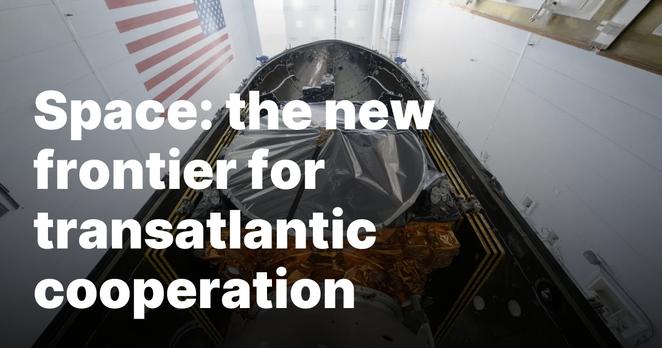
Space: the new frontier for transatlantic cooperation

Despite existing cooperation, fragmented efforts between the United States and the European Union are limiting space security and sustainability. A stronger, unified approach is needed to tackle th…

SpaceNews

A new golden age of lunar exploration is dawning – but as the Moon becomes an increasingly busy place, the question of how to protect areas of scientific value is becoming more urgent.

COSPAR, the International Astronomical Union (IAU) and the Moon Village Association-Global Expert Group on Sustainable Lunar Activities (MVA-GEGSLA) are holding a joint brainstorming call on 29 April 2025 considering Sites of Specific Scientific Interest (SSSI) from scientific and industry perspectives. #SpaceResearch #SpaceScience #LunarExploration #PlanetaryProtection #NewSpace

Would you like to join Athena Coustenis at the #COSPAR2025 Scientific Symposium? It's not too late to submit an abstract, with the new extended deadline of 23 April: https://www.cospar-assembly.org/symposia.php

More info on the event: https://cospar2025.org/ #spaceresearch #planetaryprotection

COSPAR ZARM - Online Abstract Handling

COSPAR Scientific Assembly - Online Abstract Handling

"Protecting Earth, One Asteroid at a Time!

Scientists pioneer tech to:

Detect asteroids on collision course
Knock them off trajectory

Potential game-changers:

Laser deflection
Gravity tractors
Kinetic impactors

Saving humanity, one asteroid at a time!

#AsteroidDefense #SpaceSafety #PlanetaryProtection #NASA #SpaceExploration #solarsystem

: Asteroid
: Earth
: Shield
: Rocket

The future of planetary defense is bright!"

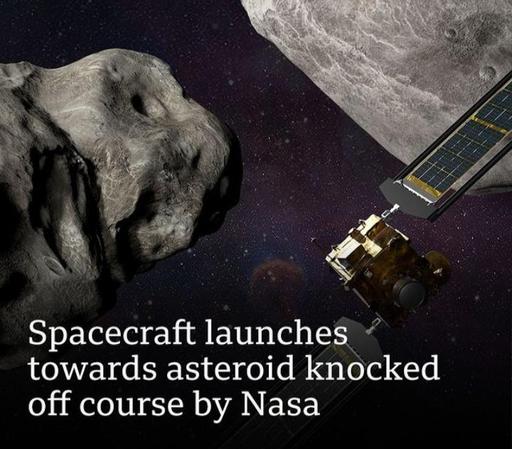
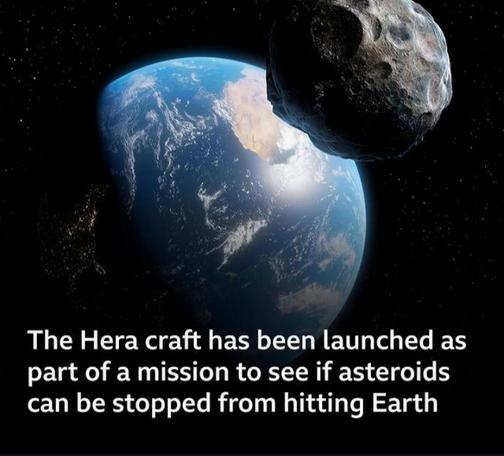
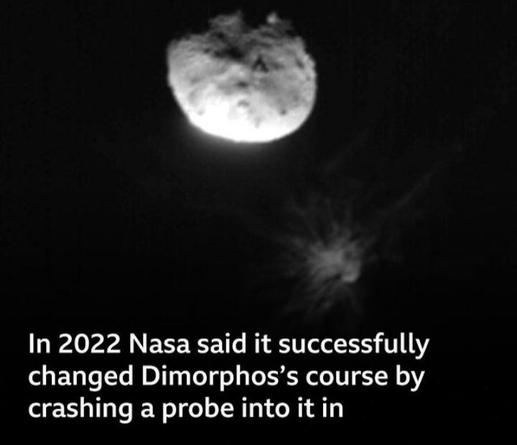
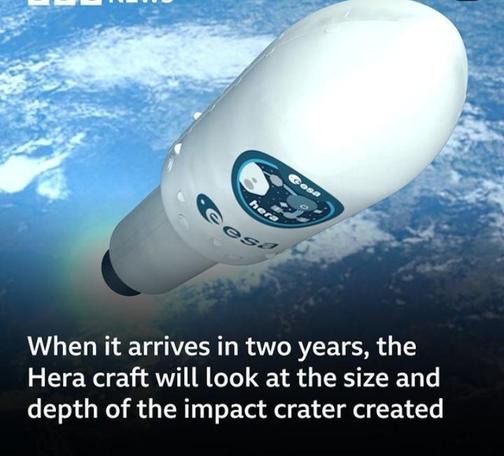
Heute um 16:52 Uhr wird die #Esa Raumsonde #Hera starten. Ihr Ziel ist der Asteroid #Didymos und sein Mond #Dimorphos. Die #Nasa hatte vor 3 Jahren durch einen Impakt auf Dimorphos seine Umlaufbahn um Didymos um ~32 Minuten vermindert. Hera wird die Auswirkungen dieses Experiments nach ihrer Ankunft bei dem Doppelasteroiden 2026 genauer untersuchen.

Zeitlicher Ablauf und Links zu Livestreams (auf englisch): https://www.esa.int/Space_Safety/Hera/Hera_launch_how_to_watch

#Wissenschaft #PlanetaryProtection #Raumfahrt

Hera launch: how to watch

Long before #Rosetta & 67P/C-G, there was Comet Shoemaker-Levy 9 & its devastating 1994 encounter with Jupiter.

I was privileged to be part of the team that made & released the very first images of Fragment A impacting at ~20:15 UTC on 16 July, 30 years ago last night, as seen from Calar Alto in Spain.

The brightness of the impact plume was a huge surprise & the following week saw intense astronomical, media, & public engagement.

#Astronomy #Astrodon #SpaceScience #PlanetaryProtection

Planetary Protection: Why study it? What can it teach us about finding life beyond Earth?

Universe Today has recently investigated a plethora of scientific disciplines, including impact craters, planetary surfaces, exoplanets, astrobiology, solar physics, comets, planetary atmospheres, planetary geophysics, cosmochemistry, meteorites, radio astronomy, extremophiles, organic chemistry, black holes, and cryovolcanism, while conveying their importance of how each of them continues to teach researchers and the public about our place in … Continue reading "Planetary Protection: Why study it? What can it teach us about finding life beyond Earth?"

Universe Today