"Study: EVs cut brake dust by 83% in urban areas" | George Lawrence posted on the topic | LinkedIn

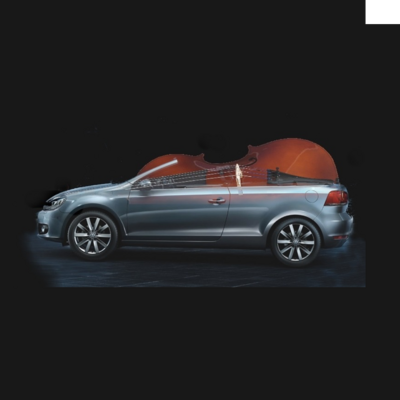
Atmosphere: “Study on non-exhaust emissions in road dust,” Brake dust is radically different from tire wear. Greater penetration of EVs is changing urban air quality in a second beneficial way which has nothing to do with eliminating tailpipe emissions. “A new analysis in London, Milan, and Barcelona shows battery electric cars cut brake dust by about 83% thanks to regenerative braking.” However, the tradeoff is electric cars also tend to be heavier, so they can increase tiny particles from tire wear even as brake dust plummets. “Benedetto Giechaskiel, PhD, European Commission Joint Research Centre (JRCs ), has led peer-reviewed work into how pads, discs, filters, and regenerative braking shape these non-exhaust particles.” EV drivetrains convert velocity or kinetic energy largely back into battery charging, so the friction brakes work less, slashing the dust [as seen in the photo] that otherwise becomes airborne near crosswalks and bus stops. And brake dust tends to produce more airborne fine particles at the curb, which is what drivers, passenger, cyclists + pedestrians inhale. Notably, “only a small fraction of tire wear becomes airborne PM10, with one comprehensive review estimating about 1%.” And most tire fragments settle on roadsides, wash into drains or are cleaned up by street sweeping vehicles. “Particulate matter is not one thing but a mix of sizes and chemistries, and the smallest particles, PM2.5, are the fraction most closely tied to asthma attacks, heart strain, and early death.” Brake dust also carries metals like copper + iron, while tires shed rubbery microplastics + sulfur compounds.” While there is currently a tradeoff, the weight of batteries + motors is trending downwards, so this problem may disappear. Clearly, brake dust is dangerous + an 83% reduction is music to my ears. | 55 comments on LinkedIn

We can't breathe

The Invisible #ClimateChange Effect That Is Most Likely to Kill You

#AirPollution is less dramatic than floods or storms, less inconvenient, and much harder to politicize. It’s also much more deadly.

Liza Featherstone, August 1, 2025

Excerpt: "In #NewYorkCity, I’m lucky enough to enjoy better air quality than many other places. We are only the fiftieth most #polluted city in the world, way behind #Chicago, #Dubai, #Jakarta, #Delhi, and numerous (enormously populous) cities in #China. But for a few days early this week, it was hard to breathe and our phones were buzzing with alerts warning that the most vulnerable—the very young and the very old, and those with poor respiratory health—should stay indoors, due to smoke from Canadian wildfires. But the elderly, the asthmatic, and the babies weren’t the only ones feeling it; my son, a college soccer player, got headaches training outside, as did his friends—all fellow rain-or-shine athletes. Yet for the most part, the problem has gone unremarked.

"Compared to a flood, a fire, or a heat wave, a bad #AirQualityAlert isn’t that inconvenient even when it’s happening. You can still go to work and otherwise go about your day. If you own property, it won’t be damaged. And because #AirPollution lacks visuals, it doesn’t lend itself to morbid #doomscrolling or panicked media coverage.

"Yet compared to floods, fires, and heat waves, bad air is much more deadly. In fact, the danger is barely even comparable. The World Health Organization estimates that air pollution kills about seven million people every year. The direct death toll from heat waves is under half a million, although that’s getting worse. The number of people who die in floods annually is in the thousands, and the direct death toll from wildfires is much smaller than that, though these threats are also getting worse. "

https://newrepublic.com/article/198675/bad-air-quality-deadliest-effect-climate-change?utm_source=firefox-newtab-en-us

#AirQualityAlert #AirQuality #AirQualityIndex #AQI #AirPollution #AirIsLife #ParticulatePollution #ParticlePollution

The Invisible Climate Change Effect That Is Most Likely to Kill You

Air pollution is less dramatic than floods or storms, less inconvenient, and much harder to politicize. It’s also much more deadly.

The New Republic

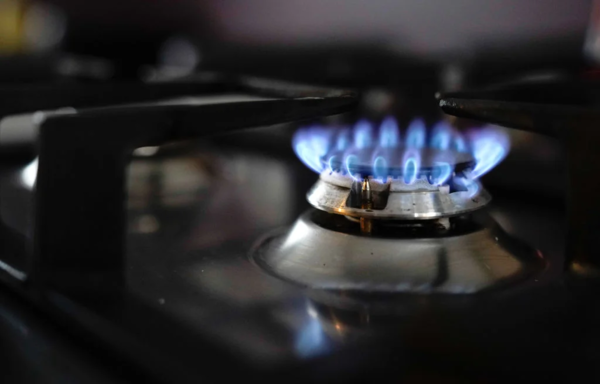
"Gas hob can raise #IndoorAirPollution higher than busy UK road"

https://www.theguardian.com/environment/2025/mar/07/cooking-gas-hob-indoor-air-pollution-uk-road-study

"NO2 exposure from gas cooking in the UK is linked to around 4,000 premature deaths annually, at a cost of £15.1bn per year."

A lot of domestic #Decarbonisation efforts are based on replacing gas boilers with heat pumps, but subsidised replacement of gas cookers with induction would have health benefits too

#AirPollution #ParticulatePollution #NO2

Gas hob can raise indoor air pollution higher than busy UK road, study finds

Research by Which? compared levels nitrogen dioxide and fine particulate matter in homes and street in London

The Guardian

Just one more data point supporting the contention that combustion-based energy is not good, even (especially?) with biomass:

https://www.theguardian.com/environment/2024/dec/13/wood-heating-could-be-worse-than-thought-for-rural-air-study-suggests?CMP=Share_AndroidApp_Other

#AirPollution #ParticulatePollution #biomass

Wood heating could be worse than thought for rural air, study suggests

Research at Slovenian village finds particle pollution once air settles in valley reaches levels of the most polluted cities

The Guardian

Researchers use road tunnel as a fortuitous and convenient means of discerning vehicular particulate emissions from other sources.

Nifty.

#OpenAccess !

#ParticulatePollution

https://www.sciencedirect.com/science/article/pii/S0169809523003927?dgcid=rss_sd_all

Why #tires — not #tailpipes — are spewing more #pollution from your #cars. Wear and tear on vehicles’ tires and #brakes emit fine particles into the air, linked to #heart and #lung disease https://www.washingtonpost.com/climate-environment/2023/07/09/tire-brake-tailpipes-emissions-pollution-cars/ #transportation #healthcare #particulatepollution
Why tires — not tailpipes — are spewing more pollution from your cars

Planning a summer road trip? What to know about two major sources of pollution coming from your car: tires and brakes.

The Washington Post

Also interesting: The Chinese #emissions standards say nothing about #CarbonDioxide (if I missed something please tell me), it's about #AirPollution not #ClimateChange.

But there are proxies, e.g. #NOx emissions (the stuff that leads to #ParticulatePollution that's so bad for your lungs). The EURO6 limits are Diesel: 0.08 g/km; Gasoline: 0.06 g/km. CHINA6b has a Fuel-neutral limit of NOx to 0.035 g/km. This really puts a lid on especially #diesel #cars.

https://theicct.org/sites/default/files/publications/China-LDV-Stage-6_Policy-Update_ICCT_20032017_vF_corrected.pdf

"In 2019, only 0·18% of the global land area and 0·001% of the global population had an annual exposure to PM2·5 at concentrations lower than 5 μg/m^3, with more than 70% of days having daily PM2·5 concentrations higher than 15 μg/m^3. Distinct seasonal patterns were indicated in many regions of the world."
https://www.thelancet.com/journals/lanplh/article/PIIS2542-5196(23)00008-6/fulltext#:~:text=In%202019%2C%20only,of%20the%20world.

#airPollution #ParticulatePollution #airQuality #global #planetEarth #machineLearning #ml

Global estimates of daily ambient fine particulate matter concentrations and unequal spatiotemporal distribution of population exposure: a machine learning modelling study

The high-resolution estimates of daily PM2·5 provide the first global view of the unequal spatiotemporal distribution of PM2·5 exposure for a recent 20-year period, which is of value for assessing short-term and long-term health effects of PM2·5, especially for areas where monitoring station data are not available.

The Lancet Planetary Health

"Natural #gas stoves, which are used in about 40% of homes in the US, emit air #pollutants such as nitrogen dioxide, carbon monoxide and fine particulate matter at levels the EPA and World Health Organization have said are unsafe and linked to respiratory illness, cardiovascular problems, cancer, and other health conditions."

#ChildhoodAsthma #ParticulatePollution #FossilGas
https://time.com/6245607/us-consumer-safety-commission-considers-gas-stove-ban/

U.S. Safety Agency Eyes Ban on Gas Stoves As Health Concerns Mount

Gas stoves emit air pollutants at levels experts say are unsafe and linked to respiratory illness and cardiovascular problems.

Time