The death of #dinosaurs reengineered Earth https://news.umich.edu/your-ecosystem-engineer-was-a-dinosaur/

#Dinosaur extinction can explain continental facies shifts at the #Cretaceous-#Paleogene boundary https://www.nature.com/articles/s43247-025-02673-8

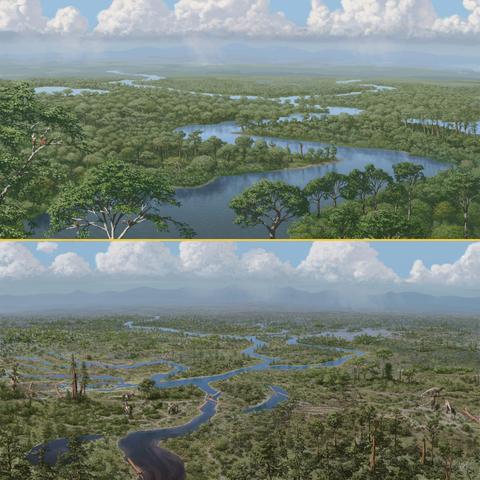
"their sudden #extinction led to wide scale changes in landscapes—including the shape of #rivers—and these changes are reflected in the geologic record... the sudden disappearance of dinosaurs allowed #forests to flourish, helping to trap sediment, build point bars and structure rivers."

Ancient squids dominated the ocean 100 million years ago, fossil discovery technique reveals

Squids first appeared about 100 million years ago and quickly rose to become dominant predators in the ancient oceans, according to a study published in the journal Science.

Phys.org

We interrupt the planned programming to let everyone know we have a new paper out! 🚨
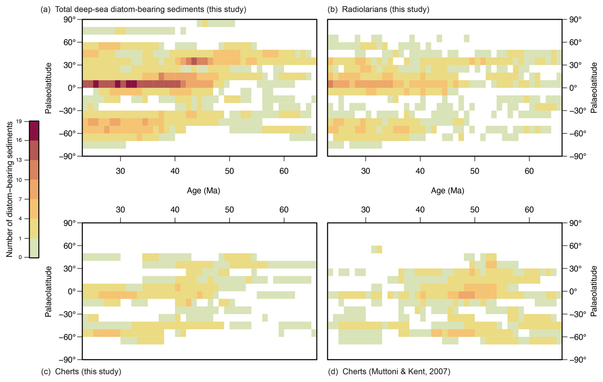
Led by Cécile Figus, this work explores what governs the distribution of deep #sea sediment rich in #diatom across the #Paleogene.

Link: https://bg.copernicus.org/articles/22/3029/2025/

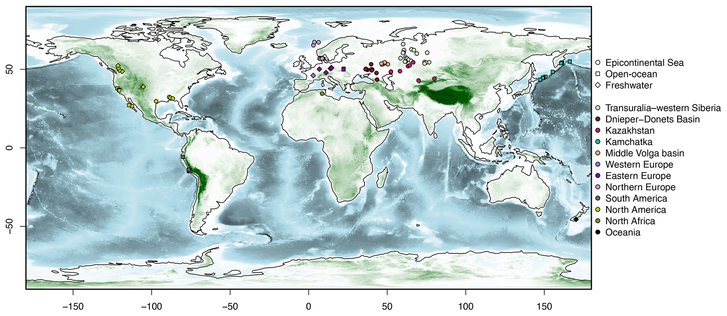
I am very happy to share this new paper led by Cécile Figus, which shows the very complex relationship between #diatom prevalence in #Paleogene epicontinental seas, #tectonics, and global #climate.
https://cp.copernicus.org/articles/20/2629/2024/
Climatic and tectonic controls on shallow-marine and freshwater diatomite deposition throughout the Palaeogene

Abstract. Diatoms play a major role in carbon and silicon cycles, and thus diatom-bearing sediments represent an archive of past climatic and environmental settings. In shallow-marine and freshwater environments, the accumulation of diatom frustules forms a sedimentary rock called diatomite. While most global-scale studies of diatom-bearing sediments focus on deep-sea sites, shallow-marine and freshwater diatomites are studied mainly at a regional level. To address this problem, we present a global-scale compilation of diatomite occurrences spanning the Palaeogene (∼66 to ∼23 Ma). This period was characterized by initial extreme warmth, followed by prolonged cooling, disrupted by short-term climatic events called hyperthermals and by a number of palaeoceanographic and palaeogeographic changes. The aim of this compilation is to determine the response of diatom production to Palaeogene environmental fluctuations by examining the influence of climate, tectonic activity, and ocean circulation on diatomite deposition. Although climatic factors appear to have had an indirect impact, our study suggests that palaeogeographic and palaeoceanographic changes were key drivers of diatomite deposition during the Palaeogene, particularly from the Early Eocene Climatic Optimum (∼53 to ∼49 Ma) onwards. In fact, our compilation suggests the absence of diatomite deposition in epicontinental seas between ∼46 and ∼44 Ma, whereas diatomites did not begin to accumulate in open-ocean environments until ∼43.5 Ma. Moreover, we observe that regional climate and volcano-tectonic activity have had an impact on the deposition of freshwater diatomites.

The #Chicxulub Impactor—the #asteroid that killed the #dinosaurs—had a smaller companion, which formed the #Nadir Crater off the coast of west #Africa and caused an 800m high #tsunami to sweep across the Atlantic: https://bbc.com/news/articles/c62m04v0k0no #science #astronomy #geology #palaeontology #paleontology #cretaceous #palaeogene #paleogene #extinction
Nadir crater: The asteroid that killed the dinosaurs was not alone

A second asteroid hit Earth around the same time causing a "catastrophic" event.

First evidence of life colonizing deep into the bedrock of Greenland https://phys.org/news/2024-09-evidence-life-colonizing-deep-bedrock.html

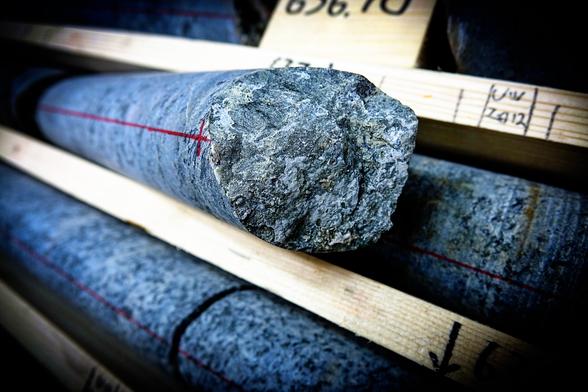
Late #Cretaceous and Early #Paleogene Fluid Circulation and Microbial Activity in Deep Fracture Networks of the #Precambrian Basement of Western Greenland https://agupubs.onlinelibrary.wiley.com/doi/10.1029/2024GC011646

"These ages overlap with tectonic events related to the opening of the Atlantic Ocean... deep fracture networks in western #Greenland opened and were colonized by #microbes, such as sulfate reducers, during these events."

First evidence of life colonizing deep into the bedrock of Greenland

A new study shows that microorganisms lived deep within the fractured bedrock of Greenland 75 million years ago. The work is published in the journal Geochemistry, Geophysics, Geosystems.

Phys.org
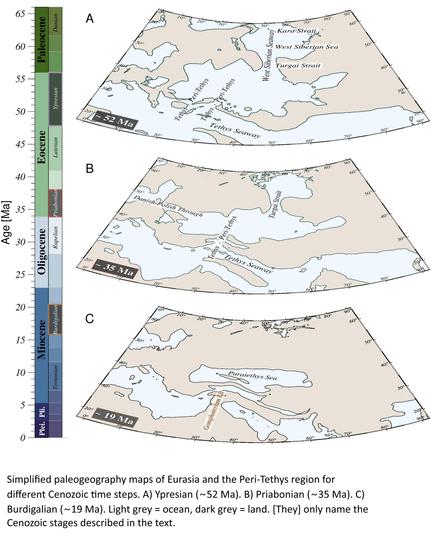
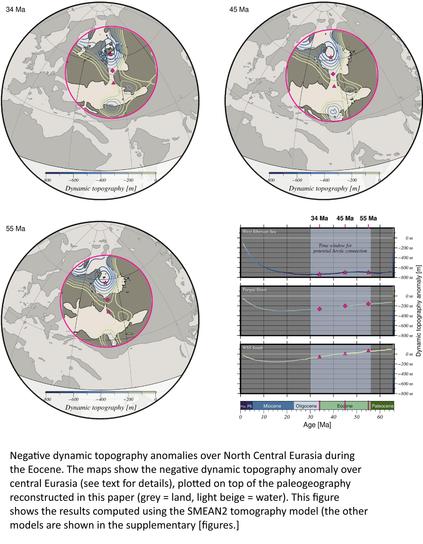
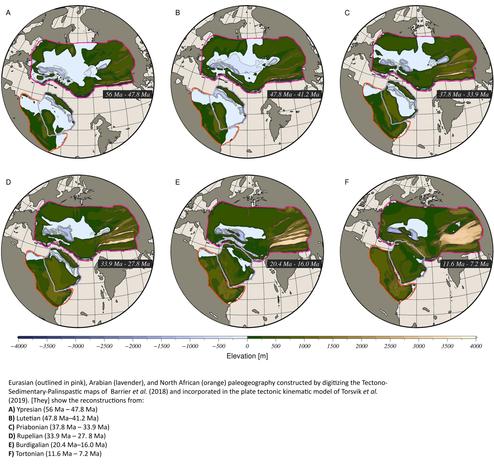
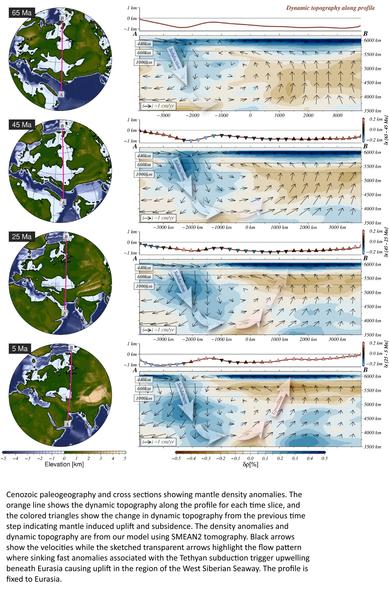
Mantle convection linked to seaway closure that transformed Earth's oceanographic circulation patterns

Continental drift is a concept familiar to many, referencing the movement of Earth's continents due to shifting tectonic plates over millions of years, splitting one globe-spanning supercontinent into the configuration we see today. Alongside this there have been smaller land mass movements that have opened seaways, affecting ocean circulation patterns and climate.

Phys.org

Paleogene (Geological periods 🌍)

The Paleogene Period is a geologic period and system that spans 43 million years from the end of the Cretaceous Period 66 million years ago to the beginning of the Neogene Period 23.03 Mya. It is the first part of the Cenozoic Era of the present Phanerozoic Eon. The earlier term Tertiary Period was used to define the time now covered by the Paleogene Period and subsequent Neogene Period; ...

https://en.wikipedia.org/wiki/Paleogene

#Paleogene #GeologicalPeriods

Paleogene - Wikipedia

My art in 2023 (9/12)

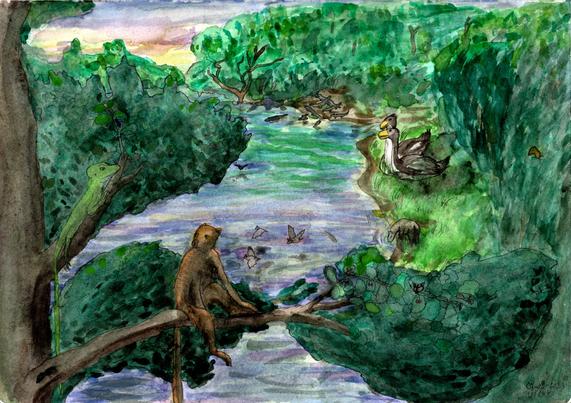
September: Darwinius and Geiseltaliellus’s stare-off. The Paleogene was the last remaining Phanerozoic period I hadn’t done any art of, so I drew this little scene in the Messel Pit formation depicting a Darwininius and a lizard who do not enjoy sharing a tree.

#MyArt #Paleogene #Eocene #Darwinius #Geiseltaliellus #Gastornis #MyArtIn2023 #paleoart

Hi, hive-mind!
How would you call the seaway between India and Eurasia during the Late #Cretaceous and #Paleogene?