South Bridge Public School; the thread about the ups, downs and uncertain future of an inner-city educational establishment

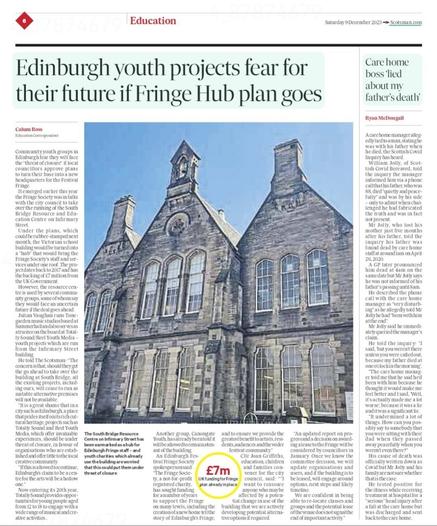
It was in the news this weekend that there is the potential forced loss of accommodation for long-sitting community groups and public services from Edinburgh’s South Bridge Resource Centre to make way for a new multi-million pound home for the Edinburgh Festival Fringe Society means that it’s a good time for a thread on the history of what is the former South Bridge Public School itself. This gives us a useful case study of 150 years of inner city social and economic change in the city’s Old Town.

Scotsman, 9th December 2023.

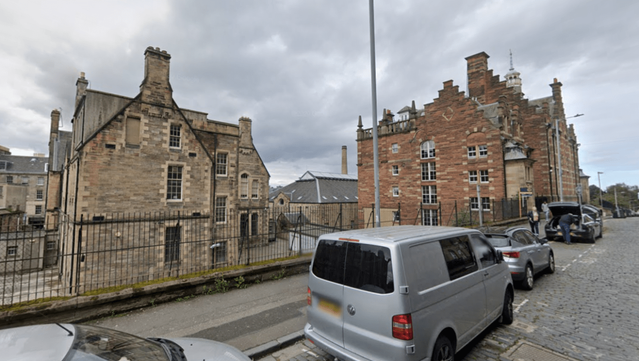
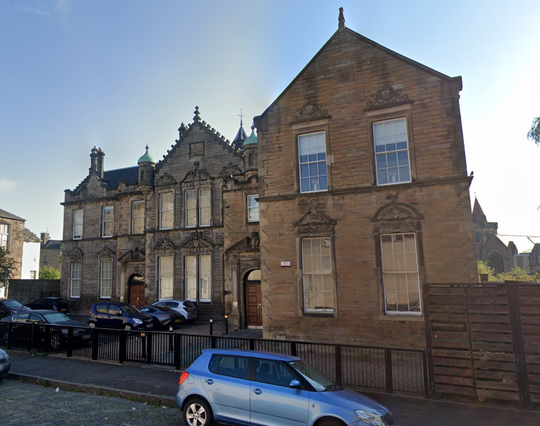
South Bridge Public School was opened by Edinburgh School Board on 2nd November 1886, with the Right Hon. Arthur J. Balfour, then the Secretary of State for Scotland, formally cutting the ribbon. It was designed by the Board’s architect, Robert Wilson, in the Collegiate Gothic style then favoured and cost £7,942 to build, with the total cost of the project including land purchase, staffing etc. being £14,500, which was borrowed from the Scotch Education Department. It had an opening roll of 1,170 children (although not all attended at once); at this time the ESB was falling over itself at this time to build schools to meet the demands of the 1872 act which made Education in Scotland compulsory (but not free!) and a booming inner-city population. It was the first Board school to consist solely of classrooms; prior to this a mixture of school rooms and class rooms had been employed, with various innovative systems of partitions to subdivide spaces as required into smaller teaching spaces. Three infant rooms on the ground floor which could be opened together with partitions, with older children on the first floor.

South Bridge Public School, very much in the collegiate gothic style of the 1870s, but with a modern arrangement of rooms (for 1885) inside

The Head master was Mr Paterson, who transferred from North Canongate School, the head mistress being Miss Brander (also of that establishment), the first assistant Mr Johnston (Canongate too) and the singing-master, Mr Sneddon. The Board also provided evening classes here under Mr Robert Williamson MA, for those seeking personal advancement but also children who could not attend during the day as they were working. As well as a core curriculum, subjects such as shorthand, drawing, bookkeeping etc. were offered to “young men and lads“. Education at this time was segregated (with separate boys and girls classes, playgrounds and school entrances. If you’ve ever been in one of these old Board schools, you’ll know that there’s a curious double arrangement of internal stairs – this was to keep boys and girls separated when moving around the school). Women and girls were offered similar evening classes at this time at Bruntsfield and Torphicen Street schools, and could also take dressmaking, fancy and plain needlework and cookery.

As well as keeping boys and girls apart, the architect struggled to accommodate such a large school on a confined site. This had been bought by the ESB off of the Town Council from the site of the town’s Fever Hospital, which was the original Royal Infirmary building and as well as being constrained by space it was north facing (poor for natural lighting) and hemmed in on all sides which was poor for ventilation.

Comparison (drag the slider) of the 1876 and 1893 OS Town Plans of Edinburgh showing the location of South Bridge School and Infirmaty Street Baths.Reproduced with the permission of the National Library of Scotland

The school was co-located with the Infirmary Street Public Baths, built at the same time, which were the first such public facility in the city (and the only Victorian public bath in Edinburgh not to survive – its empty shell was later re-purposed as the Dovecot Studios). When the school opened, it was ESB‘s first organised purely on the classroom basis. Prior to this, they had used the schoolroom layout, with a small number of large teaching rooms and classes (more like lecture theatres) overseen by a single teacher with help from assistant teachers and “pupil assistants” drawn from the most able of the older students, with smaller rooms off this large space for separated tuition. But just to be sure, the partitions between the classrooms at South Bridge were sliding to allow the spaces to be combined together for this more traditional style of education.

The school was built to relieve overcrowding at the new Bristo (Marshall Street), St. Leonards (Forbes Street) and Causewayside public schools. Milton House and Castlehill schools would also be built in the Old Town in the next decade, allowing most of the older, smaller Heriot Trust schools that the Board had inherited to be closed and sold off. An exception was Davie Street which served the Pleasance district that was retained and expanded as a Board school.

Former Davie Street School, in the distinctive Jacobean style favoured by the Heriot Trust.

The first Headmaster at South Bridge was Mr Paterson, who transferred from North Canongate school, the headmistress Miss Brander (also of that establishment), the first assistant Mr Johnston (Canongate too) and the singing-master, Mr Sneddon (not from Canongate). The school could not keep up with demand and was enlarged in 1892. In 1905-6 an entirely new school was built next door on Drummond Street. for the infant department, with junior schooling staying at South Bridge. The Board’s architect, John Carfrae, used a Renaissance style as favoured in London and exploited the difference in height between Drummond Street and Infirmary Street to make ita full 3 storeys, for reasons of economy.

The close proximity of South Bridge (left) and Drummond Street (right) schools and Infirmary Street Baths between them (now the Dovecot Studios).

In 1907, James Buchanan Tait – aged 13 – received a medal and award for 8 years of perfect attendance at the shool. His older brother William had made it to 9½ years previously and had also received a medal. His sister Marion (11), Robert (9), Christian (7) and Sophia (6) also had perfect attendance at this time. In 1913, his mother recoeved a gold brooch from Dr Shoolbread of the School Board in honour of her eight children’s 60 years total perfect attendance (regarded by the Edinburgh Evening News as a world record). They had also set perfect attendance record at Sunday School and the Good Templar Juvenile lodge. For this, educational publisher George Newnes & Sons of London had presented the family with a crystal clock.

James Buchanan Tait.

The need for education continued to grow in the Old Town and Southside, peaking around 1911 when there were 13 primary schools in the district with a total roll of around 10,000 children (for context, now there are 2 – Royal Mile and Preston Street with a combined roll of 430).

The children of South Bridge came from poor households but were generous. In 1915, they gave concerts raising £27 to sponsor 2 hospital beds in Rouen in France. In 1930 they contributed £20 to the construction of the Simpson Memorial Maternity Pavilion at the Royal Infirmary. In 1943 they contributed £410 for a Wings for Victory wartime savings drive (for reference, a production Spitfire aircraft cost between £9-9,500 at this time). When headmaster Robert H. Tait (no relation to the children with perfect attendance) retired in 1932 after 10 years in charge (and 43 in total teaching), his pupils bought him a walnut writing bureau!. (The teachers presented him with an armchair and the cleaners a smoker’s cabinet).

The retiral of Robert H. Tait in the school playground, 1932

At this time, the combined South Bridge / Drummond Street school was the largest primary school in the city, with 1,271 children on the roll and an annual budget of £12,850. The infant head mistress Catherine M. Watson retired in 1936 after 40 years service, 35 at South Bridge / Drummond Street; Miss Margaret Bliss from Leith Links school replaced her. Tait was replaced by William J. S. Little, vice president of the EIS education union in Scotland. He oversaw the institution of a “Continuation School” at South Bridge, where children leaving Primary education but not destined for Secondary or Higher education could take up classes to prepare them for whatever their futures held.

School leavers at South Bridge School, 1933.

The school celebrated its 50 year jubilee in 1938, the school installed a wireless set to mark the occasion and collected £20 towards the cost of buying a cinema projector. Headmaster Little was very aware of the socio-economic circumstances faced by the pupils at his school and how they impacted their education and life outcomes. He raised this the Justice of the Peace Court in 1938 when it was discussing the approaches to dealing with delinquency. During WW2, the socio-economic conditions faced by pupils became very apparent. In response a welfare committee – the South Bridge School Care Committee – was established in 1941 by Miss Handasyde of the Edinburgh University Settlement. This was modeled on successful schemes in London to look after problems faced by children in the district such as absenteeism, delinquency and nutrition. It is what we might now call a multi-agency partnership, with education, medical and public health professionals working together in an attempt to take the place of the dreaded Attendance Officers.

August 1939, issuing and fitting gas masks to children at South Bridge Primary School.

After the war, despite not having a pitch (or any grass at all!) of their own, the South Bridge School team won the 1949-50 School Board Trophy. Tommy Millar, front right, would go on to played 209 caps at fullback for Dundee United. His brother Jimmy (not shown) scored 91 goals in 197 games for Rangers. Another famous former pupil is the ballet dancer Roddie Patrizio (b. 1969).

1949-50 South Bridge School football team. Back row L-R, Ian Irvine, Davie Williamson, Jimmy Higgins, Alan Mcleod, Bill Robertson, Billy Budge, Ian Christie. Middle row L-R Franny Ferguson, George Brett, Alan Gay, Ernie Lee, Billy Thomson. Front Row L-R Willie Gleming, Tommy Millar (later Dundee United fullback). Teachers L-R are Mr Alexander, Mr Munro, Mr Ross, Mr Stewart.

But the world was changing fast in the Old Town at this time (indeed, it had been since the first big wave of 1920s slum clearances, which had seen five Board primary schools close as they were no longer neccessary, see the table at the bottom of the page for details). In 1951 it was the turn of Castle Hill Primary School to close, becoming a central school of catering and bakery. Most of its pupils displaced to South Bridge, where depopulation already meant that there was surplus capacity there to completely accommodate the roll of the closing school.

Castle Hill Public School, also by Robert Wilson.

In 1952, South Bridge school took part in the first ever Fulbright Scholarship teacher exchange. Elementary school teacher Retta W. Dillon from Noyes, Washington DC, swapped places with Miss Margaret Brownlee from South Bridge. An unusual evening class began to be offered in 1954, when the Edinburgh and District Referees Association opened a school of refereeing!

The school was modernised in 1959 to keep it open – new regulations about toilets meant they now could no longer be outside and all had to be flushing and have hot water for hand washing. This saw some other city schools closed or rebuilt at the time, e.g. Fort Street in Leith. But not even new toilets could stop the forces of urban demographic change. as the inner city continued to be forcably cleared. When South Bridge’s headmaster retired in 1961 he lamented the loss of the “personal touch” of such schools, as communities were dispersed out to the new housing schemes at The Inch and Gracemount. South Bridge, he said, had a reputation as “the Friendly School“.

Clearance at Dumbiedykes in 1959. Within a few years, everything in this photo would be gone. Photo by Adam H. Malcolm, © Edinburgh City Libraries

By 1970 the Drummond Street building was surplus to requirements, so St. Patricks RC school was moved there from St. John’s Hill to allow that district to be cleared. It would close itself just 11 years later (see table at bottom of the page for details).

Drummond Street Infant School, heavily London-influenced inside and out. Even the crowsteps on the gables don’t look Scottish.

During the 1970s, South Bridge School found a new lease of life in the summers when it began to increasingly be used for staging productions at the Festival Fringe – pertinent to the current discussion around its future. When Head Teacher May Beattie left what was now called South Bridge Primary to move to Stockbridge Primary in December 1982, the writing was already on the wall. Not just for her former school, but all of the city’s three remaining Old Town and Southside schools – Lothian Regional Council wanted to shut the lot. Inner city depopulation had proceeded faster than council projections and each school by this point was down to just three composite classes, with fewer than 500 children in schools built with a capacity of over 3,000.

The council’s favoured plan was to shut South Bridge, Milton House and Preston Street and open a “new” school in the old James Clark Technical School (“Jimmy’s“) at St. Leonard’s Hill, saving £80,000 a year. An alternatice scheme offering a lesser reduction of £64,000 could be achieved by merging South Bridge and Milton House and disposing of the James Clark building. This was favoured by the Council’s Labour group and a particularly vociferous campaign against the closure of Preston Street from the parents at that school. It had been intended to close Milton House and move pupils there to South Bridge, but it was recognised that the former school was better located to serve the main centre of population at Dumbiedykes and had a more favourable site in general, so the opposite happened. Statutory notices to this effect were published in November 1982.

November 1982, Statutory Notice announcing Lothian Regional Council’s intent to merge South Bridge and Milton House Schools

And so it was that South Bridge Primary School closed in 1983 and its pupils moved to Milton House on the Canongate. Also a school by Wilson, it was in a red sandstone Scottish Baronial Revival style. The combined new school was renamed to Royal Mile Primary School.

Milton House Public School, now Royal Mile Primary, by Robert Wilson

The last day at Infirmary Street came in May 1983. Pupil Murray Ramsay ceremonially rang the school’s hand bell for the last time. Six year old Sally Atta was overcome at the occasion and had to be comforted by Headteacher Mrs Sturgeon.

Last day at South Bridge Primary School, resale samples from National World

But while it closed as a school, that was not the end of education at South Bridge – Lothian Regional Council reopened it as the South Bridge Resource Centre to serve various outreach services, adult education, youth groups and more. The Old Town Oral History and Old Town Community Development projects moved in, as did the Canongate Youth Project, which has been there since 1984 and is the primary occupant of the building. Various other community and educational projects have come and gone, but the City of Edinburgh Council’s Adult education service are still run from here.

Amendments were put forward by the council’s Green group (and I believe, approved) to make any such changes contingent on first securing the position of the sitting organisations, but news this last week suggests this has not happened (see first paragraph!) But one thing certainly has a precedent – once such buildings are lost from community and education use, they don’t go back to it. The table below shows the fate of all the Old Town and South Side schools since 1911. You can make up your own mind whether or not you think agreeing to such handovers behind closed doors before publicly consulting on the future of resident organisations and coming up with a plan or any money to facilitate that is the right way to do things.

SchoolRoll (1911)Closure as Primary SchoolFate of building after closurePreston Street863––St Leonard’s (Forbes Street)10421932Became James Clark School annexe. Demolished after 1972 closure of latterDavie Street6451918Became James Clark School annexe then Theatre Arts Centre, then converted to flatsBristo (Marshall Street)7921934Became Technical School, then part of Heriot Watt College. Later demolishedCausewaysidec. 7201940Became St. Columba’s R.C. 1925, later School Meals Centre, demolished 1965Drummond Street7001981Became St. Patrick’s R.C. 1970. Converted to flats after 1981South Bridge9491983Education / community useSt. Patrick’s R.C. for boys² (St. John’s Hill)4551970DemolishedSt. Ann’s R.C. for girls² (Cowgate)9091956Education / community useCastlehill700*1951Became Central School Of Bakery and Catering, closed 1970. Later Scotch Whisky CentreMilton House (renamed Royal Mile, 1983)1100*––North Canongate (Infants, Cranston Street)700*1938DemolishedNew Street (Juniors, New Street)730*1938“Venchy” community use, now Brewdog HotelMoray House Demonstration School4791968Thomson’s Land, Part of Moray House School of Education* = these are capacities, rather than actual rolls.
² = note that at this time, Roman Catholic schools were not part of the School Board system

Note to readers: unfortunately in April 2026, a third-party plug-in more than exceeded its authority and broke many of the image links on this site. No images were lost but I will have to restore them page-by-page, which may take some time. In the meantime please bear with me while I go about rectifying this issue.

If you have found this site useful, informative or amusing then you can help contribute towards its running costs by supporting me on ko-fi. This includes my commitment to keeping it 100% advert and AI free for all time coming, and in helping to find further unusual stories to bring you by acquiring books and paying for research.
Or please do just share this post on social media or amongst friends and like-minded people, sites like this thrive on being shared.

Explore Threadinburgh by map:

Travelers' Map is loading...
If you see this after your page is loaded completely, leafletJS files are missing.

These threads © 2017-2026, Andy Arthur.

NO AI TRAINING: Any use of the contents of this website to “train” generative artificial intelligence (AI) technologies to generate text is expressly prohibited. The author reserves all rights to license uses of this work for generative AI training and development of machine learning language models.

#Lochend #Logan #Restalrig #StMargaret
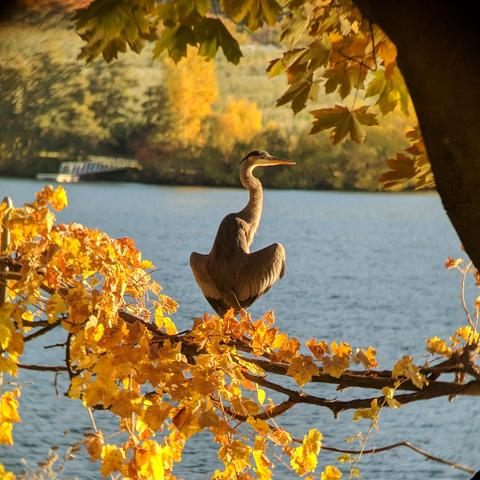
A blue heron perched on a grape vine getting a little sun.

#birds #BlueHeron #BigBird #SunnyDay #November2

I Am Me ‼️🇳🇬✅👍♥️

🌼 #Sunday, #November2, 2025 ✨🙌
Happy 1st Sunday in #November2025 💙
“Always remember that your own resolution to succeed is more important than any one thing.” ✅♥️ #quoteoftheday #sundayfunday #NewMonth #SundayService #HSD #BahdlexEmpire #bahdlex

Political sectarianism and redoubtable mothers: the thread about the Sciennes School Strike of 1925

As often seems to happen, I start off reading a little bit about one thing and then fall unwittingly yet compliantly down a deep rabbit hole with all kinds of unexpected tangents. So let’s unravel a bit of the Sciennes School Strike of 1925.

Sciennes, if you don’t know, is a neighbourhood in Edinburgh. You pronounce it to rhyme with machines (it’s a Scottish corruption of Sienna, after a convent that long ago stood here) and it is home to a school of the same name. To get to the root of our story we go back to 1872, when the Education (Scotland) Act of that year brought responsibility for mandatory schooling in Scotland under the control of local School Boards. For the Burgh of the City of Edinburgh (the formal name of the city) this was the Edinburgh School Board.

The roundel of the Edinburgh School Board, “the female figure of education” dispensing knowledge to the young. Dean Public School, one of the ESB’s first new schools after the 1872 act. © Self

Most of the existing schools at that time were either church, parish or charitably provided and those of the Presbyterian churches (that is the majority of all churches in Scotland at that time) and parishes were transferred directly to the School Boards. Most of these facilities were too small and found to be inadequate as teaching spaces for modern methods, so a crash building programme was initiated. Sciennes School was a product of this program, completed in 1892. Other public schools in the Southside of Edinburgh at the time included the 1877 Bristo School on the long demolished part of Marshall Street, Causewayside School on that street and later Preston Street school of 1896 on the east part of that street.

Sciennes Primary School, CC-BY-SA 4.0 Stephencdickson

Board schools, while largely Protestant in outlook, were strictly speaking non-denominational and there was no direct church control (although the churches had a reserved seat in the board’s membership). Crucially to what would happen in the future though, Catholic schools were not covered by the 1872 act and remained in control of that church, with the Scottish Episcopal Church also choosing to remain independent at this time, fearing the erosion of their denominational, religious education. To provide for a Catholic education in central Edinburgh therefore that Church set up a school, St. Columba’s. It moved around a bit, repeatedly outgrowing a series of unsuitable premises, before settling in a converted townhouse at 81 Newington Road. You can still see where the sign once was.

81 Newington Road, you can see where the sign would have been above the central window.

Edinburgh’s Catholic population was growing quite rapidly at the time with immigration into the city centre from both Ireland and Italy. And then came the 1918 Education (Scotland) Act, which brought the Catholic schools into control of the state sector, with the School Boards rationalised into larger local Education Authorities, with wider responsibilities. Like the old School Board, the Edinburgh Education Authority (EEA) was directly elected by popular ballot and was outwith direct control of the City Corporation or any church; although a system of proportional representation meant a balance of Presbyterian, Episcopal and Catholic members had reserved places on its board. The new authority was unimpressed by the size and quality of the facilities it had inherited off the R. C. Church (actually, it bought them off them under the provisions of the 1918 act) so set about trying to find a better home for St. Columba’s.

The post-WW1 economic slump meant there wasn’t the money to go around to build a new school – particularly a minority school – so the EEA looked to rationalise its public schools in the Southside, which it found had an excess of capacity, and make one of them into a new Catholic school. The plan seemed simple enough; move St. Columba’s to the half-empty Causewayside School and transfer that school’s roll to Sciennes, Bristo or Preston Street schools, whichever alternative was closest to children’s homes.

Causewayside School, architectural elevation by Robert Rowand Anderson, which would later become St. Columba’s

After the numbers were crunched, 154 children were to be relocated from Causewayside to Sciennes, 101 to Preston Street and 66 to Bristo. 291 children were to transfer in turn from St. Columba’s into its new home and 81 Newington Road would be disposed of. All simple enough and making better use of the Authority’s resources, so it should be relatively uncontroversial administrative change, yes?

No. What happened next was the emergent Scottish Protestant League decided to wade into things and try and make it a wedge issue – stirred up in part by local lawyer, political dabbler and green inker, Robert Sterling Craig Esq SSC, known as Sterling Craig. Sterling Craig was nominally a Liberal and therefore opposed to any place for religious education in schools, but it seems clear from his writing and speaking on the subject that he also had a clear anti-Catholic bent. When the Authority announced its decision towards the end of the school term in June 1924 he and a local parish councillor, Mrs Inglis Clark, organised a public meeting in protest “in the strongest way“.

What followed next was a rather predictable series of conflicting arguments by Sterling Craig and Clark, which began to descend into the disingenuous, e.g. the alternatives would be too far, causing 2 or 3 mile walks to school (Sciennes and Preston Street were less than 500m away). The EEA was accused of inflating the roll of St. Columba’s by “stuffing” it with children from the Catholic Home (an orphanage), a claim the Authority flat out denied: they claimed 477 children were being displaced – the Authority said it was 321. Sterling Craig simultaneously claimed that Causewayside was a non-denominational school (it was) but also “Protestant” (it wasn’t, although likely much of the school roll was). His loud and authoritative voice drowned out the views and representations of the parents and children impacted by this. He had previously sat on the Edinburgh School Board and was standing for the upcoming Edinburgh Education Authority election and decided to make this issue a key plank of his campaign. His letters to the Scotsman refer to “the Roman Catholics” and “the Roman Catholic Children” in a very othering tone – they are quite unpleasant to read in places with retrospect.

Sterling Craig was upset that a “central” school (i.e. one serving a wide rather than strictly local catchment) was being located in the Southside of the city; that children would be bused-in (actually, trammed) at the Authority’s expense and that they would be given school meals at the EEA‘s expense (at this time most school children went home for their lunch time) – despite these all being provisions in line with the 1918 act and therefore a legal obligation for the authority. To boil his arguments down to a single sentence, they would be: I’m not anti-Catholic, but can’t they just go some place else? To this extent he suggested wholly inadequate facilities at Old St. Patrick’s in the Canongate (the Authority pointed out that they didn’t own these and so would have to buy and renovate them at its own expense). It was all very not from round here and he and his allies in Mrs Inglis Clark and others began to go rather seriously down the route of sectarian scaremongering. However the EEA, to its credit, stuck to its plans and even managed to get most of the parents would would be impacted by the changes on side. The nay-sayers were not placated however and together with the nascent Scottish Protestant League (SPL) under Alexander Ratcliffe and a number of local Presbyterian churchmen, they organised a “Great Protestant Rally” at the Livingstone Hall on South Clerk Street in January 1925, which was attended by around 500.

Advert for the Great Protestant Rally, Edinburgh Evening News, 3rd January 1925

The meeting denounced the Education Authority as “traitors” and as a result the SPL – which claimed itself apolitical – and Sterling Craig agreed on a platform of trying to take over the Education Authority at the upcoming elections and campaign for repeal those provisions of the 1918 Education (Scotland) Act that they disliked; namely the state provision of R. C. education. Sterling Craig’s words were reported as “the only thing that prevented ‘the Catholics’ walking back to St. Columba’s and the old school going back to Causewayside was the laziness of the ratepayers” (if only people would turn out and vote for him, he would sort it out).

1935 reprint of The Protestant Advocate in Ratcliffe’s own newspaper, the Protestant Vanguard

In case you didn’t realise it by the way – 1920s and 30s Edinburgh local politics was quite a hotbed of anti-Catholicism. The Protestant League stood seven candidates in the 1925 Authority election, Sterling Craig stood himself as an independent. Just one of the those candidates – Alexander Ratcliffe (who styled himself “Scotland’s Modern John Knox” and went as far as to refer in public to St. Columba’s as “the now misnamed St. Columba’s“) – was elected, as was Sterling Craig. Ratcliffe soon turned his ire to the opening of a Carmelite Convent in the city before getting altogether a bit bored of Edinburgh local politics. He would move to Glasgow where he made some inroads with the SPL in that Corporation’s elections of 1931, exploiting and stoking that city’s long-standing sectarian tensions. In Edinburgh it was to be the Protestant Action Society under John Cormack that would later take up the anti-Catholic political mantle. As a party held together purely by a common hatred, it was inevitable that the SPL would eventually become unstable. It split with the Ulster Protestant League in 1933 when Ratcliffe’s wife Mary and another SPL member attacked and defaced a (factually correct) painting in the Northern Irish parliament that showed the Pope celebrating William of Orange’s victory at the Boyne

William III, the Duke of Schomberg, and the Pope (top left, blessing the Protestant monarch from a cloud), by Pieter van der Meulen, c. 1690

After falling out with the UPL, the SPL itself fell apart due to irreconcilable internal divisions. The Scottish protestant mainstream distanced itself from the increasingly extremist and unpredictable Alexander Ratcliffe. The man who had started his political life at the Edinburgh Education Authority moved on to dabbling with the Scottish fascists, who in turn kicked him out as being too extreme for even them. He has been described as “one of the very first Holocaust deniers in the country and perhaps even the world“. He was an extreme anti-Catholic and anti-Semite to his core who thought that Hitler and Mussolini were in league with the Pope to smash Protestantism… This conflicting and thoroughly distasteful man died at his home in Glasgow in 1947.

A wartime anti-Semitic pamphlet issued by Alexander Ratcliffe

But back to Edinburgh and back to 1925, when St Columba’s opened its doors after the summer holidays, the former pupils of Causewayside School instead made their way to Sciennes, Preston Street and Bristo schools. How did this end up in a strike? Well what happened was that – in true local authority style – after winning parents over to its controversial plans the Education Authority went back on its assurances and rightly aggrieved a lot of parents. Sciennes, it said, was actually too full and so 150 or so children who had just recently been settled in at Sciennes would instead need to go to Bristo School.

Bristo Public School on Marshall Street. © Edinburgh City Libraries

This poured salt on a wound that had not yet had any chance to heal and the mothers of the Southside were having none of it. Official phraseology such as “arriving at a more equitable distribution of scholars” just made things even worse. The problem was not just the repeated relocation of children, it was where they were to be moved to. Bristo was notoriously small and dark and dingy on the inside and as you can see from the aerial photo below it had a tiny playground that was penned in on all sides by tall tenements. Furthermore, it was fundamentally on the wrong side of the (tram) tracks for many parents.

Bristo Public School from the air – it is the building in the centre with the flat roof to the rear and the corner tower. You can see how penned in the playground at the back was, and how many of the school windows were in the shadow of neighbouring tenements. From Britain From Above

Without the distraction of Sterling Craig or Mrs Inglis Clark and their anti-Catholic agenda, the mothers of the affected children quickly formed themselves into an effective deputation to the Education Authority. They literally marched strait there and beat on the door – turning up at its offices on Castle Terrace on September 2nd 1925 to demand an audience. For good measure, a flying squad was also send to the home of the Authority’s chairman – Councillor P. H. Allan – to wait for him in case he was there. When it became clear that the Authority was not for budging the mothers organised a public meeting on September 4th, packing out the Nicolson Square public hall. Councillor Mrs Adam Millar tried to cool things down but only inflamed the situation by saying it was not the Authority’s fault but the fault of parents as they had voted for the same EEA (or hadn’t bothered; turnout for the previous election was only around 20%). At the meeting the mothers of around 110 of the affected children agreed to stop sending them to school entirely if they could not send them to Sciennes. The Sciennes School Strike had begun.

Councillor P. H. Allan, Chairman of the Education Authority

On September 8th it was reported there were rumours that the strike would spread as a result of some children from Craiglockhart, Roseburn and Gorgie schools being dispersed to Dalry in the name of a “more equitable distribution of scholars“. The strike did not end up spreading but neither did it go away. The Authority tried to offer an olive branch and say children from the Buccleuch Street area could stay at Sciennes, however those from George Square would still have to go to Bristo. Whether this attempt at strikebreaking was a deliberate ploy to divide and conquer their opposition is unclear, but it failed. By September 15th, the 3rd week of the strike, it was still ongoing with 55 children remaining out of school. The mothers caused uproar in the Authority board room by turning up en masse with their children in tow and “infants in their arms“. But they did have sympathisers on the Authority and Mrs Swan Brunton* spoke out in their favour. At a deadlock, the Authority did what Authorities do best when they don’t know what to do and conceded to set up a Special Sub-Committee on School Congestion to look into the matter further.

Janet Swan Brunton 1882 – 1932. * = The redoubtable Mrs Swan Brunton JP, a suffragette of the Scottish Cooperative Women’s Guild. In 1928 she became only the 5th woman elected to the Corporation of Edinburgh, as a Labour member. She died suddenly in 1932 aged 50, in Glasgow at a meeting of the Scottish Cooperative Wholesale Society, and was buried in North Merchiston Cemetery

September 21st. No resolution was in sight, 58 children were on strike from Sciennes and in total 86 across the city were. On September 24th the Scotsman reported that the Education Authority declared the strike had been broken and most of the children had returned to the schools it had allocated them to. The next day, September 25th, they had to print something of a retraction; the children had not in fact gone back to school and were still on strike. At a public meeting of ratepayers it had been agreed that a general strike of children should be called for in the Central District. Come September 26th the Authority remained unmoved, issuing a statement that it had acted in accordance with its statutory obligations and that if the 42 children on strike were not sent to school then they would start taking legal action to enforce it. But still the strike was not broken and so one month into the walkout, on October 6th, the Authority held an exceptional meeting. Mrs Swan Brunton implored her colleagues to use their common sense and allow the 40 children to go back to Sciennes as they had been promised, with Mrs Mclaren speaking in support. Unfortunately, Mrs Swan Brunton’s motion, seconded by Mrs Mclaren, was voted down. Alexander Ratcliffe blamed the Catholics as usual.

October 14th, five weeks in and the strike dragged on. It was suggested at an Authority meeting that if only the Corporation would repave the street outside Bristo School with wooden setts that the noise of traffic that affected it would be reduced sufficiently to entice the strikers to attend. Chairman Allan tried to force through a resolution to this effect but Mrs Swan Brunton challenged the count on the grounds that it had not reached a quorum of three quarters of members. She prevailed this time and the meeting then collapsed into farce and had to be adjourned. The Authority tried again the next week. One typically bureaucratic proposal that came out of this was to set up yet another sub-committee – the Special Committee on School Areas. Alexander Ratcliffe yet again agitated against “the Catholics” and also this time the Episcopalians, supported by Sterling Craig as seconder. It was agreed to set up the sub-committee and spent the rest of the meeting was spent listening to the extremist ramblings of Ratcliffe .

Eight weeks in on October 26th another meeting was held by the Education Authority. It lasted precisely two minutes before again collapsing into chaos when the chairman over-rode Mrs Swan Brunton’s motion for resolution. He left to the mothers in the gallery crying “Shame!” November 2nd. Week 9. The Chairman called a private meeting restricted to a sub-set of members of the Authority, with the mothers forced to wait outside the offices. The Authority could not bring itself to publicly concede but fundamentally capitulated when it agreed that the 46 children who had been moved from Sciennes to Bristo could instead have their pick of Castlehill, Preston Street, Tollcross or St. Leonard’s schools.

Castlehill School, now offering a very different sort of education as the Scotch Whisky Experience

The mothers decided as one that they would send their children to Preston Street. They were true to their word, and 37 mothers and 46 children arrived at the school door the very next day, November 3rd, exactly 2 months from the start of the strike. The strike was over. Almost: the Authority meeting had ended so late in the day that nobody had bothered to write to the Headteacher at Preston Street to inform them of the decision! The school refused to admit the children and sent them away. It was not until November 4th that the Head was satisfied with the paperwork and the children were admitted to Preston Street School. The Great Sciennes School Strike of 1925 was finally over.

Preston Street School, CC-BY-SA Kim Traynor

Note to readers: unfortunately in April 2026, a third-party plug-in more than exceeded its authority and broke many of the image links on this site. No images were lost but I will have to restore them page-by-page, which may take some time. In the meantime please bear with me while I go about rectifying this issue.

If you have found this site useful, informative or amusing then you can help contribute towards its running costs by supporting me on ko-fi. This includes my commitment to keeping it 100% advert and AI free for all time coming, and in helping to find further unusual stories to bring you by acquiring books and paying for research.
Or please do just share this post on social media or amongst friends and like-minded people, sites like this thrive on being shared.

Explore Threadinburgh by map:

Travelers' Map is loading...
If you see this after your page is loaded completely, leafletJS files are missing.

These threads © 2017-2026, Andy Arthur.

NO AI TRAINING: Any use of the contents of this website to “train” generative artificial intelligence (AI) technologies to generate text is expressly prohibited. The author reserves all rights to license uses of this work for generative AI training and development of machine learning language models.

#Lochend #Logan #Restalrig #StMargaret
November 2

This day in history:

  • 1984 – Capital punishment: Velma Barfield becomes the first woman executed in the United States since 1962.
  • 1914 – World War I: The Russian Empire declares war on the Ottoman Empire and the Dardanelles is subsequently closed.
  • 1912 – Bulgaria defeats the Ottoman Empire in the Battle of Lule Burgas, the bloodiest battle of the First Balkan War, which opens her way to Constantinople.
  • 1973 – Aeroflot Flight 19 is hijacked and diverted to Vnukovo International Airport, where the aircraft is stormed by authorities.

Births:

  • 1941 – Bruce Welch, English singer-songwriter, guitarist, and producer
  • 1990 – Kendall Schmidt, American singer, songwriter, and actor
  • 1865 – Warren G. Harding, American journalist and politician, 29th President of the United States (d. 1923)

Deaths:

  • 1992 – Robert Arneson, American sculptor and academic (b. 1930)
  • 1944 – Thomas Midgley Jr., American chemist and engineer (b. 1889)
  • 1883 – William Morgan, English-Australian politician, 14th Premier of South Australia (b. 1828)

Holidays:

  • International Day to End Impunity for Crimes Against Journalists (United Nations)
  • *Day of the Dead, the second day of Day of the Dead or *
  • All Souls' Day (Roman Catholic Church and Anglican Communion)

Random Article of the day:

Viktoriya Kolotinskaya

Viktoriya Kolotinskaya (born 10 March 1995) is a Kazakhstani handball player. She plays for the club Seikhun-KAM Handball and is member of the Kazakhstani national team. She competed at the 2015 World Women's Handball Championship in Denmark.

November 2 - Wikipedia

Számoljunk mondjuk úgy, hogy három, ami tényleg személyes #november2
Nelly - Wikipedia

Nelly - Wikipedia

The first motor insurance policies were issued in Britain on this date in 1896, but they excluded damage caused by frightened Horses.

10 weird and wonderful things which happened on 2 November:

https://topicaltens.blogspot.com/2022/11/2-november.html

#ThisDayInHistory #otd #onthisday #OnThisDate #2November #November2

2 November

10 weird and wonderful things which happened on 2 November: This date in 1755 saw the birth of  Marie Antoinette , Austrian princess and...

Topical Tens
Maxine Nightingale - Wikipedia