 Andy Arthur - Threadinburgh
South Bridge Public School; the thread about the ups, downs and uncertain future of an inner-city educational establishment
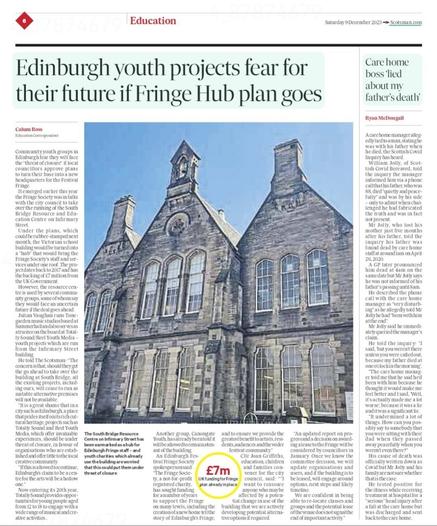
It was in the news this weekend that there is the potential forced loss of accommodation for long-sitting community groups and public services from Edinburgh’s South Bridge Resource Centre to make way for a new multi-million pound home for the Edinburgh Festival Fringe Society means that it’s a good time for a thread on the history of what is the former South Bridge Public School itself. This gives us a useful case study of 150 years of inner city social and economic change in the city’s Old Town.
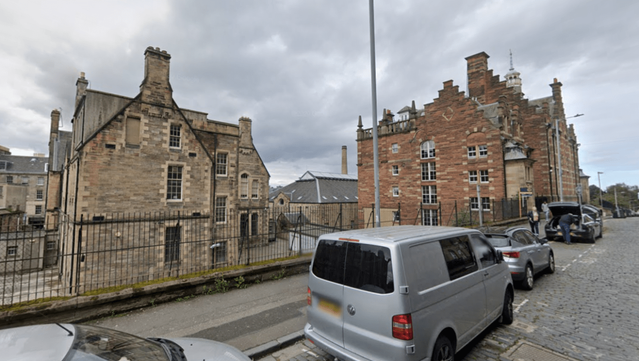
Scotsman, 9th December 2023.South Bridge Public School was opened by Edinburgh School Board on 2nd November 1886, with the Right Hon. Arthur J. Balfour, then the Secretary of State for Scotland, formally cutting the ribbon. It was designed by the Board’s architect, Robert Wilson, in the Collegiate Gothic style then favoured and cost £7,942 to build, with the total cost of the project including land purchase, staffing etc. being £14,500, which was borrowed from the Scotch Education Department. It had an opening roll of 1,170 children (although not all attended at once); at this time the ESB was falling over itself at this time to build schools to meet the demands of the 1872 act which made Education in Scotland compulsory (but not free!) and a booming inner-city population. It was the first Board school to consist solely of classrooms; prior to this a mixture of school rooms and class rooms had been employed, with various innovative systems of partitions to subdivide spaces as required into smaller teaching spaces. Three infant rooms on the ground floor which could be opened together with partitions, with older children on the first floor.
South Bridge Public School, very much in the collegiate gothic style of the 1870s, but with a modern arrangement of rooms (for 1885) insideThe Head master was Mr Paterson, who transferred from North Canongate School, the head mistress being Miss Brander (also of that establishment), the first assistant Mr Johnston (Canongate too) and the singing-master, Mr Sneddon. The Board also provided evening classes here under Mr Robert Williamson MA, for those seeking personal advancement but also children who could not attend during the day as they were working. As well as a core curriculum, subjects such as shorthand, drawing, bookkeeping etc. were offered to “young men and lads“. Education at this time was segregated (with separate boys and girls classes, playgrounds and school entrances. If you’ve ever been in one of these old Board schools, you’ll know that there’s a curious double arrangement of internal stairs – this was to keep boys and girls separated when moving around the school). Women and girls were offered similar evening classes at this time at Bruntsfield and Torphicen Street schools, and could also take dressmaking, fancy and plain needlework and cookery.
As well as keeping boys and girls apart, the architect struggled to accommodate such a large school on a confined site. This had been bought by the ESB off of the Town Council from the site of the town’s Fever Hospital, which was the original Royal Infirmary building and as well as being constrained by space it was north facing (poor for natural lighting) and hemmed in on all sides which was poor for ventilation.
Comparison (drag the slider) of the 1876 and 1893 OS Town Plans of Edinburgh showing the location of South Bridge School and Infirmaty Street Baths.Reproduced with the permission of the National Library of ScotlandThe school was co-located with the Infirmary Street Public Baths, built at the same time, which were the first such public facility in the city (and the only Victorian public bath in Edinburgh not to survive – its empty shell was later re-purposed as the Dovecot Studios). When the school opened, it was ESB‘s first organised purely on the classroom basis. Prior to this, they had used the schoolroom layout, with a small number of large teaching rooms and classes (more like lecture theatres) overseen by a single teacher with help from assistant teachers and “pupil assistants” drawn from the most able of the older students, with smaller rooms off this large space for separated tuition. But just to be sure, the partitions between the classrooms at South Bridge were sliding to allow the spaces to be combined together for this more traditional style of education.
The school was built to relieve overcrowding at the new Bristo (Marshall Street), St. Leonards (Forbes Street) and Causewayside public schools. Milton House and Castlehill schools would also be built in the Old Town in the next decade, allowing most of the older, smaller Heriot Trust schools that the Board had inherited to be closed and sold off. An exception was Davie Street which served the Pleasance district that was retained and expanded as a Board school.
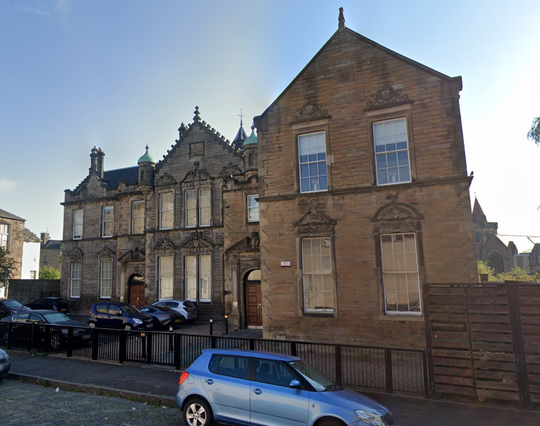
Former Davie Street School, in the distinctive Jacobean style favoured by the Heriot Trust.The first Headmaster at South Bridge was Mr Paterson, who transferred from North Canongate school, the headmistress Miss Brander (also of that establishment), the first assistant Mr Johnston (Canongate too) and the singing-master, Mr Sneddon (not from Canongate). The school could not keep up with demand and was enlarged in 1892. In 1905-6 an entirely new school was built next door on Drummond Street. for the infant department, with junior schooling staying at South Bridge. The Board’s architect, John Carfrae, used a Renaissance style as favoured in London and exploited the difference in height between Drummond Street and Infirmary Street to make ita full 3 storeys, for reasons of economy.
The close proximity of South Bridge (left) and Drummond Street (right) schools and Infirmary Street Baths between them (now the Dovecot Studios).In 1907, James Buchanan Tait – aged 13 – received a medal and award for 8 years of perfect attendance at the shool. His older brother William had made it to 9½ years previously and had also received a medal. His sister Marion (11), Robert (9), Christian (7) and Sophia (6) also had perfect attendance at this time. In 1913, his mother recoeved a gold brooch from Dr Shoolbread of the School Board in honour of her eight children’s 60 years total perfect attendance (regarded by the Edinburgh Evening News as a world record). They had also set perfect attendance record at Sunday School and the Good Templar Juvenile lodge. For this, educational publisher George Newnes & Sons of London had presented the family with a crystal clock.
James Buchanan Tait.The need for education continued to grow in the Old Town and Southside, peaking around 1911 when there were 13 primary schools in the district with a total roll of around 10,000 children (for context, now there are 2 – Royal Mile and Preston Street with a combined roll of 430).
The children of South Bridge came from poor households but were generous. In 1915, they gave concerts raising £27 to sponsor 2 hospital beds in Rouen in France. In 1930 they contributed £20 to the construction of the Simpson Memorial Maternity Pavilion at the Royal Infirmary. In 1943 they contributed £410 for a Wings for Victory wartime savings drive (for reference, a production Spitfire aircraft cost between £9-9,500 at this time). When headmaster Robert H. Tait (no relation to the children with perfect attendance) retired in 1932 after 10 years in charge (and 43 in total teaching), his pupils bought him a walnut writing bureau!. (The teachers presented him with an armchair and the cleaners a smoker’s cabinet).
The retiral of Robert H. Tait in the school playground, 1932At this time, the combined South Bridge / Drummond Street school was the largest primary school in the city, with 1,271 children on the roll and an annual budget of £12,850. The infant head mistress Catherine M. Watson retired in 1936 after 40 years service, 35 at South Bridge / Drummond Street; Miss Margaret Bliss from Leith Links school replaced her. Tait was replaced by William J. S. Little, vice president of the EIS education union in Scotland. He oversaw the institution of a “Continuation School” at South Bridge, where children leaving Primary education but not destined for Secondary or Higher education could take up classes to prepare them for whatever their futures held.
School leavers at South Bridge School, 1933.The school celebrated its 50 year jubilee in 1938, the school installed a wireless set to mark the occasion and collected £20 towards the cost of buying a cinema projector. Headmaster Little was very aware of the socio-economic circumstances faced by the pupils at his school and how they impacted their education and life outcomes. He raised this the Justice of the Peace Court in 1938 when it was discussing the approaches to dealing with delinquency. During WW2, the socio-economic conditions faced by pupils became very apparent. In response a welfare committee – the South Bridge School Care Committee – was established in 1941 by Miss Handasyde of the Edinburgh University Settlement. This was modeled on successful schemes in London to look after problems faced by children in the district such as absenteeism, delinquency and nutrition. It is what we might now call a multi-agency partnership, with education, medical and public health professionals working together in an attempt to take the place of the dreaded Attendance Officers.
August 1939, issuing and fitting gas masks to children at South Bridge Primary School.After the war, despite not having a pitch (or any grass at all!) of their own, the South Bridge School team won the 1949-50 School Board Trophy. Tommy Millar, front right, would go on to played 209 caps at fullback for Dundee United. His brother Jimmy (not shown) scored 91 goals in 197 games for Rangers. Another famous former pupil is the ballet dancer Roddie Patrizio (b. 1969).
1949-50 South Bridge School football team. Back row L-R, Ian Irvine, Davie Williamson, Jimmy Higgins, Alan Mcleod, Bill Robertson, Billy Budge, Ian Christie. Middle row L-R Franny Ferguson, George Brett, Alan Gay, Ernie Lee, Billy Thomson. Front Row L-R Willie Gleming, Tommy Millar (later Dundee United fullback). Teachers L-R are Mr Alexander, Mr Munro, Mr Ross, Mr Stewart.But the world was changing fast in the Old Town at this time (indeed, it had been since the first big wave of 1920s slum clearances, which had seen five Board primary schools close as they were no longer neccessary, see the table at the bottom of the page for details). In 1951 it was the turn of Castle Hill Primary School to close, becoming a central school of catering and bakery. Most of its pupils displaced to South Bridge, where depopulation already meant that there was surplus capacity there to completely accommodate the roll of the closing school.
Castle Hill Public School, also by Robert Wilson.In 1952, South Bridge school took part in the first ever Fulbright Scholarship teacher exchange. Elementary school teacher Retta W. Dillon from Noyes, Washington DC, swapped places with Miss Margaret Brownlee from South Bridge. An unusual evening class began to be offered in 1954, when the Edinburgh and District Referees Association opened a school of refereeing!
The school was modernised in 1959 to keep it open – new regulations about toilets meant they now could no longer be outside and all had to be flushing and have hot water for hand washing. This saw some other city schools closed or rebuilt at the time, e.g. Fort Street in Leith. But not even new toilets could stop the forces of urban demographic change. as the inner city continued to be forcably cleared. When South Bridge’s headmaster retired in 1961 he lamented the loss of the “personal touch” of such schools, as communities were dispersed out to the new housing schemes at The Inch and Gracemount. South Bridge, he said, had a reputation as “the Friendly School“.
Clearance at Dumbiedykes in 1959. Within a few years, everything in this photo would be gone. Photo by Adam H. Malcolm, © Edinburgh City LibrariesBy 1970 the Drummond Street building was surplus to requirements, so St. Patricks RC school was moved there from St. John’s Hill to allow that district to be cleared. It would close itself just 11 years later (see table at bottom of the page for details).
Drummond Street Infant School, heavily London-influenced inside and out. Even the crowsteps on the gables don’t look Scottish.During the 1970s, South Bridge School found a new lease of life in the summers when it began to increasingly be used for staging productions at the Festival Fringe – pertinent to the current discussion around its future. When Head Teacher May Beattie left what was now called South Bridge Primary to move to Stockbridge Primary in December 1982, the writing was already on the wall. Not just for her former school, but all of the city’s three remaining Old Town and Southside schools – Lothian Regional Council wanted to shut the lot. Inner city depopulation had proceeded faster than council projections and each school by this point was down to just three composite classes, with fewer than 500 children in schools built with a capacity of over 3,000.
The council’s favoured plan was to shut South Bridge, Milton House and Preston Street and open a “new” school in the old James Clark Technical School (“Jimmy’s“) at St. Leonard’s Hill, saving £80,000 a year. An alternatice scheme offering a lesser reduction of £64,000 could be achieved by merging South Bridge and Milton House and disposing of the James Clark building. This was favoured by the Council’s Labour group and a particularly vociferous campaign against the closure of Preston Street from the parents at that school. It had been intended to close Milton House and move pupils there to South Bridge, but it was recognised that the former school was better located to serve the main centre of population at Dumbiedykes and had a more favourable site in general, so the opposite happened. Statutory notices to this effect were published in November 1982.
November 1982, Statutory Notice announcing Lothian Regional Council’s intent to merge South Bridge and Milton House SchoolsAnd so it was that South Bridge Primary School closed in 1983 and its pupils moved to Milton House on the Canongate. Also a school by Wilson, it was in a red sandstone Scottish Baronial Revival style. The combined new school was renamed to Royal Mile Primary School.
Milton House Public School, now Royal Mile Primary, by Robert WilsonThe last day at Infirmary Street came in May 1983. Pupil Murray Ramsay ceremonially rang the school’s hand bell for the last time. Six year old Sally Atta was overcome at the occasion and had to be comforted by Headteacher Mrs Sturgeon.
Last day at South Bridge Primary School, resale samples from National WorldBut while it closed as a school, that was not the end of education at South Bridge – Lothian Regional Council reopened it as the South Bridge Resource Centre to serve various outreach services, adult education, youth groups and more. The Old Town Oral History and Old Town Community Development projects moved in, as did the Canongate Youth Project, which has been there since 1984 and is the primary occupant of the building. Various other community and educational projects have come and gone, but the City of Edinburgh Council’s Adult education service are still run from here.
Amendments were put forward by the council’s Green group (and I believe, approved) to make any such changes contingent on first securing the position of the sitting organisations, but news this last week suggests this has not happened (see first paragraph!) But one thing certainly has a precedent – once such buildings are lost from community and education use, they don’t go back to it. The table below shows the fate of all the Old Town and South Side schools since 1911. You can make up your own mind whether or not you think agreeing to such handovers behind closed doors before publicly consulting on the future of resident organisations and coming up with a plan or any money to facilitate that is the right way to do things.
SchoolRoll (1911)Closure as Primary SchoolFate of building after closurePreston Street863––St Leonard’s (Forbes Street)10421932Became James Clark School annexe. Demolished after 1972 closure of latterDavie Street6451918Became James Clark School annexe then Theatre Arts Centre, then converted to flatsBristo (Marshall Street)7921934Became Technical School, then part of Heriot Watt College. Later demolishedCausewaysidec. 7201940Became St. Columba’s R.C. 1925, later School Meals Centre, demolished 1965Drummond Street7001981Became St. Patrick’s R.C. 1970. Converted to flats after 1981South Bridge9491983Education / community useSt. Patrick’s R.C. for boys² (St. John’s Hill)4551970DemolishedSt. Ann’s R.C. for girls² (Cowgate)9091956Education / community useCastlehill700*1951Became Central School Of Bakery and Catering, closed 1970. Later Scotch Whisky CentreMilton House (renamed Royal Mile, 1983)1100*––North Canongate (Infants, Cranston Street)700*1938DemolishedNew Street (Juniors, New Street)730*1938“Venchy” community use, now Brewdog HotelMoray House Demonstration School4791968Thomson’s Land, Part of Moray House School of Education* = these are capacities, rather than actual rolls.² = note that at this time, Roman Catholic schools were not part of the School Board system
Note to readers: unfortunately in April 2026, a third-party plug-in more than exceeded its authority and broke many of the image links on this site. No images were lost but I will have to restore them page-by-page, which may take some time. In the meantime please bear with me while I go about rectifying this issue.
If you have found this site useful, informative or amusing then you can help contribute towards its running costs by supporting me on ko-fi. This includes my commitment to keeping it 100% advert and AI free for all time coming, and in helping to find further unusual stories to bring you by acquiring books and paying for research.
Or please do just share this post on social media or amongst friends and like-minded people, sites like this thrive on being shared.
Explore Threadinburgh by map:
Travelers' Map is loading...If you see this after your page is loaded completely, leafletJS files are missing.
These threads © 2017-2026, Andy Arthur.
NO AI TRAINING: Any use of the contents of this website to “train” generative artificial intelligence (AI) technologies to generate text is expressly prohibited. The author reserves all rights to license uses of this work for generative AI training and development of machine learning language models.
#Lochend #Logan #Restalrig #StMargaret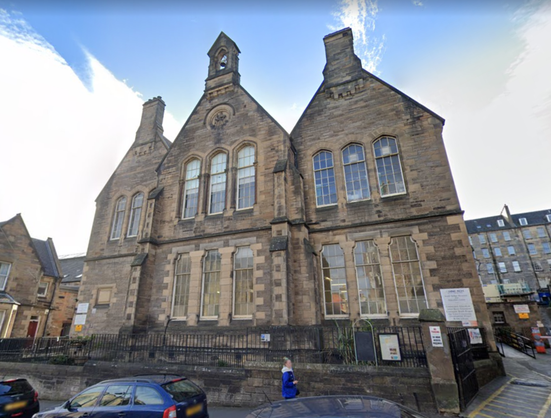
 Tom
Tom
 Bahdlex





 Today in History
 Calibana
 penpusher
 penpusher
 Julie Howlin
