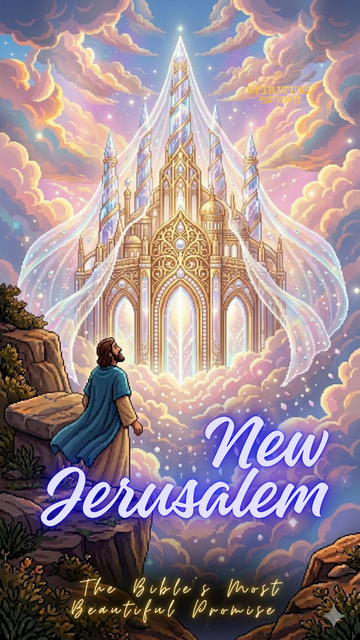
The New Jerusalem Explained | The Bible’s Most Beautiful Promise (Revelation Vision)
What is the New Jerusalem described in the Book of Revelation? In this captivating Bible story, discover the breathtaking vision seen by the Apostle John — a glorious city coming down from heaven where God lives among. More details… https://spiritualkhazaana.com/web-stories/the-new-jerusalem/
Subscribe for more Bible stories explained through animation.
#BibleStories #NewJerusalem #BookOfRevelation #BibleAnimation #ChristianStories

When God Makes All Things New

Thru the Bible in a Year

As we come to the final day of the calendar year, we also arrive at the final chapters of Scripture. Revelation 20–22 does not merely conclude the Bible; it gathers every longing, promise, and unanswered ache of the human story and carries them into God’s eternal future. After pages filled with conflict, judgment, endurance, and costly faithfulness, the Bible ends not in fear but in hope. The closing vision is not of chaos but of a city, not of abandonment but of communion. As one commentator observed, “The Bible begins in a garden and ends in a city, showing God’s intention to redeem not only souls but the whole of human life.” These chapters are meant to steady the reader at the threshold of eternity and to remind us that history is not drifting aimlessly—it is being brought home.

John’s vision of the new Jerusalem in Revelation 21:1–22:5 is intentionally rich with imagery that speaks to both the heart and the mind. The city does not rise from human achievement; it “comes down out of heaven from God.” Redemption is received, not constructed. The absence of sorrow, pain, death, and tears is not presented as wishful thinking but as divine action—“He will wipe every tear from their eyes.” The Greek phrase exaleipsei pân dákryon conveys a deliberate, personal wiping away, not a distant decree. God Himself tends to the wounds of His people. What has marked human existence since Genesis 3 is finally undone. Death, the great intruder, is no longer present, and with it goes the grief that has shadowed every generation.

The description of the city’s structure is equally important. The great wall and twelve gates, named for the tribes of Israel, remind us that God’s promises to His covenant people were never abandoned or replaced. The city’s cubic shape—equal in length, width, and height—echoes the Holy of Holies in the temple, where God’s presence dwelt most fully. Here, the entire city becomes sacred space. There is no separate sanctuary because the Lord Himself is the temple and the light. As G. K. Beale notes, the imagery communicates not architectural detail alone, but theological meaning: God’s immediate presence fills every dimension of life. The splendor of precious stones, pearls, and transparent gold points beyond material wealth to the beauty of holiness and the clarity of unbroken fellowship with God.

Safety and nourishment are also central to this vision. Nothing evil enters the city, not because of exclusionary fear, but because evil itself has been finally judged and removed. Flowing through the city is the river of the water of life, nourishing the tree of life, whose leaves are “for the healing of the nations.” What was barred in Eden is now freely given. Humanity does not return to innocence, but moves forward into restoration. Healing here is not remedial but sustaining—life as God intended it to be, whole and secure. The curse that fractured creation is gone, and God’s servants see His face, the ultimate fulfillment of covenant relationship.

Revelation 22:6–21 brings the Scriptures to a close with urgency and tenderness. John emphasizes that these words are “faithful and true,” grounding hope not in imagination but in God’s character. The repeated promise of Christ’s return—“I am coming soon”—is not meant to provoke speculation but faithfulness. “Soon” speaks to certainty and readiness, not chronology. The closing call is deeply pastoral: worship God alone, hold fast to the truth, and resist the temptation to alter the message for convenience or comfort. The warning against adding to or subtracting from the book underscores how seriously God treats His self-revelation. Grace does not negate truth; it depends on it.

What stands out most to me as a pastor is the final invitation: “The Spirit and the bride say, ‘Come.’” The Bible ends not with a threat but with an open call. Those washed in Christ are welcomed into the city; those outside are still being summoned. Scripture closes as it has spoken all along—with grace offered and a future promised. As Eugene Peterson once wrote, Revelation does not withdraw us from the world but trains us to see it truthfully in light of God’s ultimate victory.

Ending the year in Revelation reminds us that our personal stories are nested within a far greater one. As another year closes, we may carry regrets, griefs, or unanswered prayers, but Scripture assures us that none of these have the final word. God does. The final sentence of the Bible—“The grace of the Lord Jesus be with God’s people”—is not only a benediction for eternity but a blessing for today. We walk into the coming year not with fear of the unknown, but with confidence in the One who declares, “I am the Alpha and the Omega.”

For a thoughtful overview of the hope and assurance found in Revelation’s final chapters, see this article from Christianity Today:
https://www.christianitytoday.com/faith/2020/december/revelation-new-heaven-new-earth-hope.html

FEEL FREE TO COMMENT, SUBSCRIBE, AND REPOST, SO OTHERS MAY KNOW


#ChristianHopeAndEternity #endOfScripture #NewHeavenAndNewEarth #NewJerusalem #Revelation2122 #ThruTheBibleInAYear

This the #picture of #NewJerusalem that Chatgpt #AI #images generated when I fed it with the text in #Revelation 21: 2-21

Looks like a prison.

What John Saw from the Mountain

DID YOU KNOW

Did You Know that John’s visions in Revelation were not physical journeys but movements “in the Spirit,” guided entirely by the Holy Spirit’s revelation?

In Revelation 1:10, John writes, “I was in the Spirit on the Lord’s Day,” signaling that what he was about to experience was not a geographical relocation but a spiritual unveiling. Tales of flying carpets or magical flights make for entertaining legends, but John’s experience was far more wondrous—and far more real. Instead of fantasy whisking a prophet into the clouds, the Spirit of God opened John’s inner eyes, enabling him to see divine realities that would otherwise have been hidden. Ezekiel described a similar moment when he wrote, “The Spirit lifted me up between earth and heaven” (Ezekiel 8:3). Daniel too experienced visions in which God transported him into future scenes (Daniel 8:2). Across Scripture, when God wants to show His people what is coming, He does not need a vehicle—only a yielded heart ready to receive the truth. John’s “transportation” takes place on the canvas of the Spirit, where time, space, and human limitation no longer hinder divine revelation.

What makes John’s experience so remarkable is not merely the content of the visions but the intimacy of the encounter. Revelation is not just a message—it’s a meeting. The Spirit Himself escorts John through visions of worship, judgment, renewal, and the triumph of Christ. This is a reminder that the Holy Spirit is not an impersonal force but a divine Person who teaches, guides, and reveals truth to us, just as Jesus promised in John 16:13 when He said, “When He, the Spirit of truth, comes, He will guide you into all truth.” John was not abandoned to interpret the future alone; the Spirit was his interpreter, teacher, and companion. As you reflect on this, remember that the same Holy Spirit who guided John lives within you as a believer. His role is not simply to give comfort but to reveal Christ in ways your natural eyes could not see.

Perhaps today is a good moment to pause and ask the Spirit to reveal what He wants you to understand—not about the distant future alone but about God’s work in your present life. When you follow His guidance, you are stepping into the same divine flow that carried John into the visions of Revelation.

Did You Know that the high mountain from which John watched the New Jerusalem descend may symbolize God’s victory over Babylon?

In Revelation 21:10, John writes, “And he carried me away in the Spirit to a great, high mountain, and showed me the holy city Jerusalem coming down out of heaven from God.” Many scholars believe that the imagery suggests God building His eternal city upon the ruins of the fallen world system that Babylon symbolizes. Throughout Scripture, Babylon represents pride, rebellion, and the idolatrous powers of the world that stand against God. When Revelation contrasts Babylon’s destruction with the descending New Jerusalem, the message is unmistakable: God will not merely defeat evil—He will establish His kingdom upon the very ground where evil once strutted in arrogance. This echoes Old Testament images of conquered cities being rebuilt for new purposes, such as in Jeremiah 30:18, where God declares He will restore ruins and turn desolation into habitation once again.

John therefore stands on a mountain not simply for a better view but for a richer symbol. This high place reminds us that God’s kingdom is established above all earthly powers. Zechariah 14:4 foretells the dramatic moment when Christ’s feet will stand on the Mount of Olives and the mountain itself will split in two. John sees in vision what prophets long before him had described: the rising of a kingdom no human hands can build and no earthly empire can hinder. From that elevated vantage point, John witnesses what every believer longs for—the world made right, the curse undone, the home of righteousness descending to Earth. The high mountain isn’t just a location; it is a promise that God’s perspective is higher, His victory fuller, and His plans firmer than anything that rises against Him.

Let this remind you that God often calls you to lift your gaze higher, especially when earthly troubles feel overwhelming. From His high mountain, He sees the whole picture—and He invites you to trust the outcome He has already secured.

Did You Know that Jesus Himself promised the Holy Spirit would guide believers into understanding things too weighty to grasp alone?

Before His ascension, Jesus told the disciples in John 16:12–14 that the Spirit would disclose truth they were not yet ready to bear. He said, “He will take what is Mine and declare it to you.” That is exactly what we see happening to John in Revelation. The Spirit becomes the bridge between divine truth and human understanding. While John is receiving visions of events far beyond his lifetime, the Spirit gives him the clarity, strength, and language to record what will one day comfort and instruct generations of believers. The Spirit does not merely transmit information; He shapes understanding. As Revelation unfolds, the Spirit interprets symbols, provides assurance, and reveals Christ’s triumph to strengthen the church through the ages.

This is why John’s visions are so trustworthy—they are not the product of imagination but of revelation. The Spirit of truth carried John into scenes he could never have accessed otherwise. Acts 10:10 describes Peter falling into a trance as the Spirit revealed truth regarding Gentile inclusion. Again and again, Scripture shows us that the Spirit’s role is to open doors of understanding that the human mind cannot unlock alone. The Spirit’s guidance is the antidote to confusion, fear, and uncertainty about God’s plans. And for us today, the same Spirit continues to illuminate the Scriptures, convict the heart, comfort the weary, and empower the faithful.

If you long for clarity—about Scripture, about God’s will, about your journey—ask the Holy Spirit to open your eyes the way He opened John’s. Revelation begins with a man “in the Spirit,” and God can unfold truth in your life the same way when your heart is surrendered and attentive.

Did You Know that John’s visions remind us that God’s future is already secure, even while we stand in the present?

One of the great promises embedded in Revelation is that God’s victory is not pending—it is assured. John is shown a future in which the New Jerusalem descends, Babylon falls, and Christ reigns forever. Yet John receives these visions not to satisfy curiosity but to strengthen the persecuted church. Because the Holy Spirit revealed what was to come, believers could face suffering with hope instead of despair. They could endure trials knowing that their future was anchored in God’s unshakable plan. This is why Revelation is not simply a book of prophecy; it is a book of perspective.

When John saw the holy city descending, he saw the fulfillment of every longing heart. No more sin, no more death, no more tears. This is not fantasy—it is the promised future secured by the Lamb who takes away the sin of the world. Revelation is written not to frighten the faithful but to fortify them. The future shown to John was meant to stabilize the present church, reminding them that no matter how fierce the battle becomes, the war is already won. You and I stand in the long shadow of that same hope. The Holy Spirit still whispers to us that God’s promises are true, His victory is certain, and His kingdom is coming in fullness.

Today, reflect on the fact that the same Spirit who carried John into the future carries you through your daily life. You may not stand on a high mountain or witness visions, but the Spirit is guiding you with the same love, wisdom, and presence. Ask Him what perspective He wants to give you today.

FEEL FREE TO COMMENT and SUBSCRIBE but IF BLESSED, SHARE WITH FRIENDS


#biblicalProphecy #HolySpiritGuidance #JohnInTheSpirit #NewJerusalem #RevelationVisions
Jerusalem began as David’s city but ends as God’s eternal home. In Revelation, it becomes the New Jerusalem — where heaven and earth unite and God dwells with His people forever. ✨
#NewJerusalem #BookOfRevelation #Jesus #BibleStudy
📖 the-Bible.net

New Jerusalem Rapture Prophecy.

Version 4 released.

Read here: http://newjerusalem.wikidot.com/new-jerusalem-rapture-prophecy

Surprising revelation of a gothic band "Sisters of Mercy" song "Dominion / Mother Russia" indicating possible Rapture within 52 weeks of first release (Version 3, 2024/10).

#spirituality #spiritual #lyrics #prophecy #revelation #sistersofmercy #christian #newjerusalem

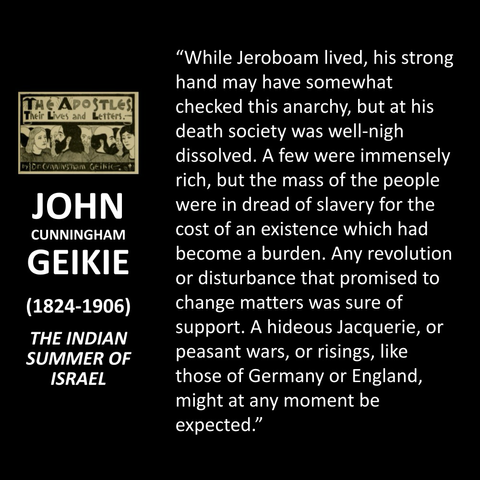
John Cunningham Geikie, Presbyterian missionary, on social inequity under King Jeroboam. Fear of re-enslavement threatened peasant wars.

Wikipedia mentions discontent due to extravagances of Solomon, but says God judged for idolatry. As if leaving people in a dread of slavery is neither a judgement nor cause for judgment.

How can you alleviate fears of the dread of slavery among working people?

#christian #newchristendom #liturgicalliving #hopefilled #newjerusalem

Quote of the day, 8 December: St. Edith Stein

As Christ himself descended to earth from heaven, so too his Bride, the holy church, originated in heaven. She is born of the grace of God, indeed descended with the Son of God himself; she is inextricably bound to him. She is built of living stones; her cornerstone was laid when the Word of God assumed our human nature in the womb of the Virgin.

At that time there was woven between the soul of the divine Child and the soul of the Virgin Mother the bond of the most intimate unity, which we call betrothal.

Hidden from the entire world, the heavenly Jerusalem had descended to earth. From this first joining in betrothal, there had to be born all the living building blocks to be used for the mighty structure: each individual soul awakened to life through grace. The Bridal Mother was to become the mother of all the redeemed. Like a spore from which new cells stream continually, she was to build up the living city of God.

This hidden mystery was revealed to St. John as he stood beneath the cross with the Virgin Mother and was given over to her as her son. It was then that the church came into existence visibly; her hour had come, but not yet her perfection. She lives, she is wedded to the Lamb, but the hour of the solemn marriage supper will only arrive when the dragon has been completely conquered and the last of the redeemed have fought their battle to the end.

Saint Edith Stein

The Marriage of the Lamb: For September 14, 1940 (excerpt)

Stein, E. 2014, The Hidden Life: hagiographic essays, meditations, spiritual texts, translated from the German by Stein, W, ICS Publications, Washington DC.

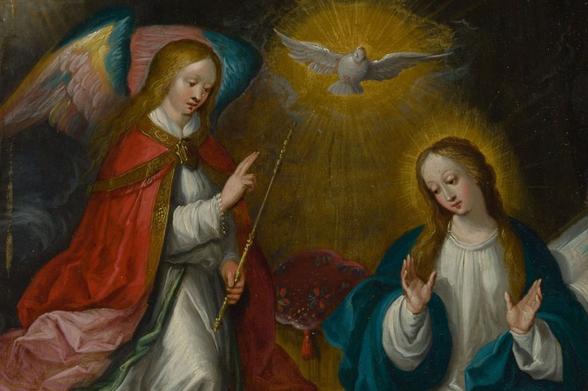
Featured image: This is a detailed view of The Annunciation, an oil on copper painting by Flemish artist Frans Francken II (1581–1642). The painting dates to 1615–1625 and comes from the collections of the Art Institute of Chicago. Image credit: Art Institute of Chicago (Public domain)

#BlessedVirginMary #heaven #JesusChrist #MotherOfGod #mystery #NewJerusalem #StEdithStein #StJohnTheApostle

St. Edith Stein (St. Teresa Benedicta of the Cross)

Marriage in The Resurrection

I shall have to set up some context before getting to the passage I really intend to explain here. First, what passage of Genesis ordains Ma...

“As the thirsty doe longs for the springs of fresh water, so my soul longs for You, O God! My soul thirst for the living God! When will I appear before His face!…” (Ps 42:1–2).

And yet, as “the sparrow has found a home,” and “the turtle dove a nest in which she may lay her young” (Ps 84:3), so Laudem Gloriae has found while waiting to be brought to the holy Jerusalem, “beata pacis visio”—her retreat, her beatitude, her anticipated Heaven in which she begins her life of eternity. “In God my soul is silent; my deliverance comes from Him. Yes, He is the rock in which I find salvation, my stronghold, I shall not be disturbed!” (Ps 62:1–2).

This is the mystery my lyre sings of today! My Master has said to me as to Zacchaeus: “Hurry and come down, for I must stay in your house today…” (Lk 19:5). Hurry and come down, but where? Into the innermost depths of my being: after having forsaken self, withdrawn from self, been stripped of self—in a word, without self.

Saint Elizabeth of the Trinity

Last Retreat, sixteenth day
31 August 1906

Note: Beata pacis visio (Blessed vision of peace) is a phrase found in the first stanza, second line of the hymn Coelestis urbs Jerusalem, which is sung at Vespers for the Common of the Dedication of a Church. Note that having begun her Last Retreat on the sixteenth of August, the “sixteenth day” is 31 August, on which the Dedication of the Churches of Carmel was celebrated.

Elizabeth of the Trinity, S 2014, I Have Found God, The Complete Works of Elizabeth of the Trinity Volume 1: Major spiritual writings, translated from the French by Kane, A, ICS Publications, Washington DC.

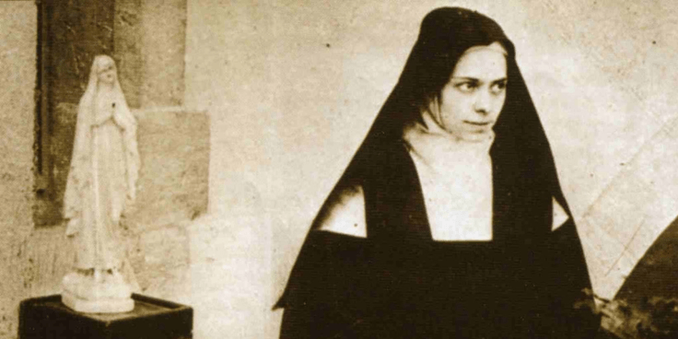
Featured image: This detail from the last photo of St. Elizabeth of the Trinity was taken in mid-October, 1906, less than one month before her death on November 9 in the Carmel of Dijon, France. The statue of Our Lady of Lourdes on the small table next to Elizabeth is the one that she gave to her mother when entering the monastery. In her final illness, the statue returned to Carmel and Elizabeth called her, “Janua Coeli”, meaning “Gate of Heaven.” Image credit: Discalced Carmelites

https://carmelitequotes.blog/2024/08/30/sabeth-lastretr16a/

#CarmeliteSpirituality #contemplation #inspiration #Jesus #LaudemGloriae #NewJerusalem #Psalms #selfDenial #spiritualDirection #StElizabethOfTheTrinity

Bible Gateway passage: Psalm 42 - New Revised Standard Version Catholic Edition

BOOK II (Psalms 42–72) Psalm 42 Longing for God and His Help in Distress - To the leader. A Maskil of the Korahites. As a deer longs for flowing streams, so my soul longs for you, O God. My soul thirsts for God, for the living God. When shall I come and behold the face of God? My tears have been my food day and night, while people say to me continually, “Where is your God?” These things I remember, as I pour out my soul: how I went with the throng, and led them in procession to the house of God, with glad shouts and songs of thanksgiving, a multitude keeping festival. Why are you cast down, O my soul, and why are you disquieted within me? Hope in God; for I shall again praise him, my help

Bible Gateway