Bulletin #7153, Understanding #NativeBees, the Great #Pollinators: Enhancing Their Habitat in #Maine (PDF)

This fact sheet provides information on the native bees in Maine and their habitat requirements. It suggests ways to manage our yards for bees, so that the bees will survive, thrive and reproduce. Food plants, nest sites and appropriate nest materials are critical for enhancing bee habitats.

Includes a list of "some plants known to be attractive to native bees in Maine."

Excerpt: "Finding the Bees in Your Yard

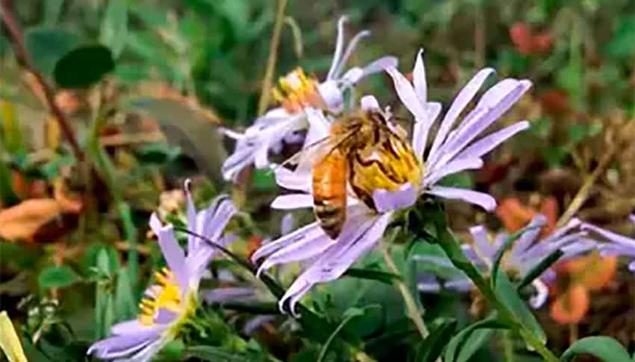
The most likely place to find bees is in the flowers of native plants, when the day is sunny, relatively calm, and the temperature is above 70°F. To be active, fly and feed, bees need to be warm. A few species are active below 60°, but most prefer temperatures above 72°. Wind makes flying more difficult because it requires more energy. Although some species may be active by late February if temperatures are unusually warm, the vernal bee species (those present in the spring) generally become active by mid-April. You may observe them on early blooming flowers, such as willow catkins and dandelions. Some native bee species continue their activities into the autumn until the last asters, dandelions and autumn dandelions die. The greatest diversity and abundance of native bees is in midsummer, unless there is a lack of suitable flowers, perhaps because of drought, heavy rains, or how the landscape is managed.

Other places to find native bees are where they nest. Look at the soil along bare banks with a sunny southern exposure. Look in bramble canes, beetle borings in snags, and in abandoned birdhouses. If you do search for bee nests, remember to be cautious for yourself and respectful of them!"

Read more:
https://extension.umaine.edu/publications/7153e/

#SolarPunkSunday #GardeningForPollinators #PollinatorHabitat #MainePollinators #MaineBees #NativeBees #NativePlants #BeeFriendlyPlants #UMaineExtension #UmaineCooperativeExtension

Bulletin #7153, Understanding Native Bees, the Great Pollinators: Enhancing Their Habitat in Maine - Cooperative Extension Publications - University of Maine Cooperative Extension

This fact sheet provides information on the native bees in Maine and their habitat requirements. It suggests ways to manage our yards for bees, so that the bees will survive, thrive and reproduce. Food plants, nest sites and appropriate nest materials are critical for enhancing bee habitats.

Cooperative Extension Publications

Saw an XXL California bumblebee in the great camas today (bee not pictured). It's a fairly rare urban visitor around here, and this is the third year I've seen it in the yard.

Nice to feel proud of something in my overgrown, neglected garden

#gardening #NativePlantsPNW #camas #NativeBees #GiveBeesAChance

🐝 About 5.6 million bees, an unexpectedly large number 😲, were discovered in a New York cemetery.

🐝 This is one of the largest and oldest colonies found in the U.S.

🐝 Ground nesting bees make up about 70% of native bees in the U.S. and are very important pollinators. Cemeteries are an important habitat for them.

https://www.scientificamerican.com/article/scientists-just-discovered-5-6-million-bees-under-a-new-york-cemetery/

#InsectSaturday #NativeBees #Biodiversity #Pollinators #Insects

Scientists just discovered 5.6 million bees under a New York State cemetery

This whopping bee aggregation is one of the largest and oldest ever recorded, according to a new study

Scientific American
Andrena vaga

Shot on Sony A7 III with Sony 90mm
1/4000, 2.8 and 4.0 for last two shots, Iso 400-1000

#nativebees #safethebees #nature

BEES ARE KEYSTONE

🐝 Researchers in AU estimate far more bee species globally than previously estimated, specifically an 18–25% increase.

🍅 Knowledge of bees supports their conservation and pollination of crops, which is worth roughly A$745 billion per year.

👨‍👩‍👧‍👦🧑‍🧑‍🧒👩‍👩‍👦‍👦 Pollination is also crucial for our diet and wellbeing with 75% of food crop diversity and 35% of total food production benefiting from animal pollination.

🪨 Bees are what’s called a “keystone” group. Removing populations of that group would result in cascading ecological impacts (not in a good way).

https://theconversation.com/science-knows-of-21-000-bee-species-there-are-likely-thousands-more-268195

#InsectSaturday #NativeBees #Nature #Environment #Biodiversity

Science knows of 21,000 bee species. There are likely thousands more

A new paper provides the first statistically derived estimate of bee species richness around the world. But this is about more than bees.

The Conversation
Bees That Come Out of the Ground?!

YouTube
🐝 Gehörnte Mauerbiene (Osmia cornuta), Überfamilie: Apidae, Ordnung:
Hymnoptera
🔭 März-Mai
🍽️ Nektar und Pollen
⭕ Ungefährdet

So, heute ist mal eine der klassischen Wildbienenarten dran: Die Gehörnte Mauerbiene. Sie ist in ihrer Nahrungs- und Nistauswahl ein absoluter Generalist und sehr flexibel. Durch diese Flexibilität ist sie sehr weit verbreitet und in großen Beständen vorhanden. Das liegt auch daran, dass sie gerne Nisthilfe, also "Insektenhotels", annimmt und in den Hohlräumen nistet.
Durch ihre auffällige rote Abdomenfärbung ist sie sehr einfach zu erkennen und auch ohne viel Erfahrung im Feld bestimmbar. Deshalb ist sie eine typische "Einsteigerwildbiene" und oft das Tor in die Wildbienenwelt. Die Männchen schlüpfen ein paar Tagen vor den Weibchen und warten dann vor den Niströhren. Daher brummt es im März immer sehr vor Nisthilfen.
Der Name kommt von zwei kleinen "Hörnchen", die auf dem Clypeus (Kopfschild) der Weibchen sitzen. Man kann die Gehörnte Mauerbiene sehr gut auf Frühblühern und aktuell auf der Weide beobachten. Falls ihr welche entdeckt, sagt uns gerne Bescheid!

Folgt uns für mehr coolen Naturkontent oder kommt zu unseren Aktionen! Nächsten Dienstag treffen wir uns, um ein paar Frühblüher genauer zu untersuchen. Nur so als Denkanstoß 😊

#wildbienen #nativebees #wilderness #bees #nabu
#nabuhsg

2 weeks into spring
4 small Halictus foraging on poppies
13 above average
86F high for day

#nativeBees #climateDiary

🐝 Wald-Sandbiene (Andrena clarkella), Überfamilie: Apidae, Ordnung: Hymnoptera
🔭 März-April, direkt auf dem Unicampus Haarentor!
🍽️ Nektar und Pollen, spezialisiert auf Weiden (Salicaceae)
⭕ Ungefährdet

Die Waldrand-Sandbiene ist eine klassische Frühlings-Wildbiene. Durch ihre Spezialisierung auf die Weide fliegt sie zu deren Blüte, also aktuell!
Wie die meisten Wildbienen baut sie ihre Nistgänge in der Erde. Dafür gräbt sie sich an offenen und sonnigen Bodenstellen in den Boden und legt dort den Nachwuchs an.
Man kann diese wunderschöne Biene sehr gut auf der Sal-Weide bei der Nahrungssuche beobachten. Bei uns auf dem Campus gibt es auch eine kleine Kolonie zwischen ein paar Bäumen in einem Beet. In der Nähe des Bib-Eingangs also vielleicht auf den Wegen bleiben oder genau hingucken, wo man hintritt 🫣😊 Falls ihr sie entdeckt, schickt uns gerne nen Foto!

Folgt uns für mehr coolen Naturkontent oder kommt zu unseren Aktionen! Am Sonntag gibt es zum Beispiel ein Lagerfeuer im Nabu-Garten. Nur so als Denkanstoß, falls ihr noch nichts vorhabt

#wildbienen #nativebees #wilderness #bees #nabu #nabuhsg