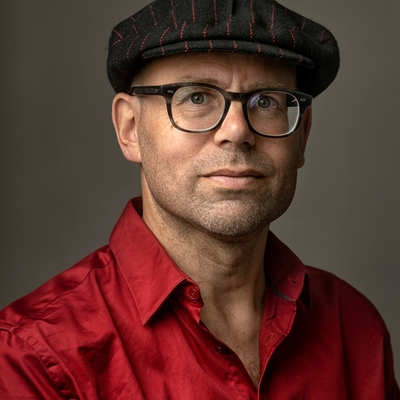
 Gijs Levelt
This Thursday June 11th Haytham Safia, Daniel van Huffelen and I will host the Majam in MAQAM_Amsterdam. The theme is Arab Jazz. Do come and join or hang out!
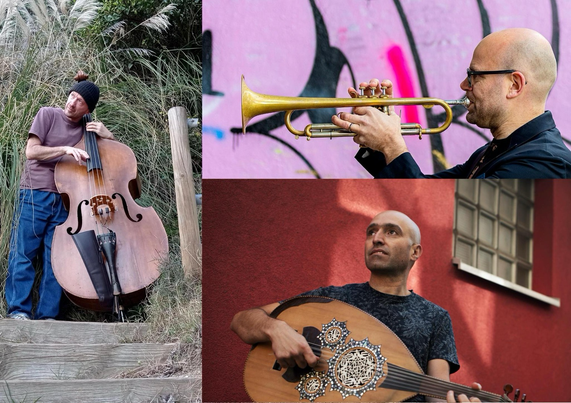
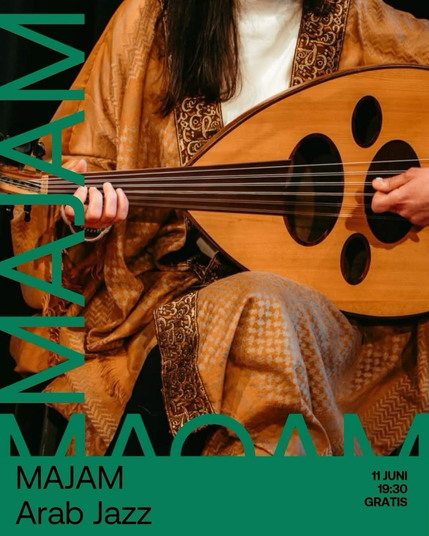
This Thursday June 11th Haytham Safia, Daniel van Huffelen and I will host the Majam in MAQAM_Amsterdam. The theme is Arab Jazz. Do come and join or hang out!
Zin in een bijzonder concert? Met een keur aan liederen met een Iberische of Latijns-Amerikaanse achtergrond, van componisten uit verrassende windstreken. Spaanse en Latin muziek kenmerken zich door een aparte bezieling (el duende, of de Portugese saudade) – en natuurlijk hun bijzondere instrumentatie.
Kom genieten! 14 juni aanstaande. Meer info en kaarten:
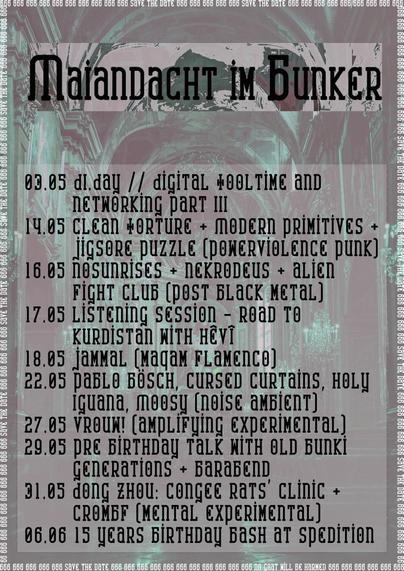
#Bremen Kultur im #Bunker Monatsprogramm
03.05 #DIDAY // Digital Tooltime and Networking Part III
14.05 Clean Torture + Modern Primitives + Jigsore Puzzle (powerviolence #punk)
16.05 NoSunRises + Nekrodeus + Alien Fight Club (post black #metal)
17.05 Listening Session - Road to Kurdistan with Hêvî
18.05 Jammal (#maqam #flamenco)
22.05 Pablo Bösch, Cursed Curtains, Holy Iguana, Moosy (#noise #ambient)
27.05 Vrouw! (amplifying experimental)
29.05 Pre birthday talk with old bunki
generations + barabend
31.05 Dong Zhou: Congee Rats' Clinic + Crombf (mental experimental)
06.06 15 years Birthday Bash at #Spedition
Modal Migration, Maqām Beyond Nation
📍 SOAS, London
📅 17–18 September 2026
Explores cross-border maqām traditions, postnational musical creativities, mobility, decolonial approaches, and modal exchange beyond nation-state canons.
Papers welcome from ethnographic, analytical, archival and practice-based perspectives.
Deadline: 08/05/2026
#MusicStudies #Ethnomusicology #Maqam #DecolonialStudies #Migration
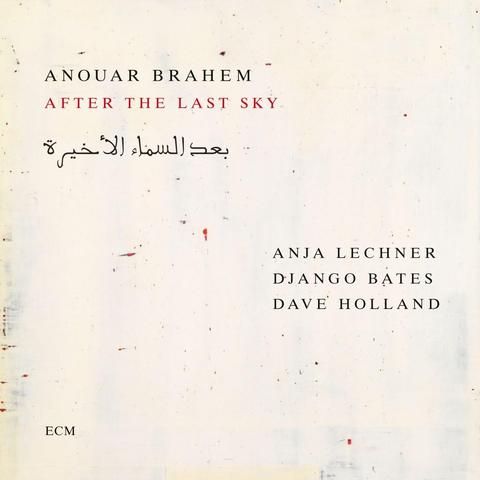
After The Last Sky = بعد السماء الأخيرة by Anouar Brahem, Anja Lechner, Django Bates, Dave Holland , released on ECM in 2025.
Tyran Grillo wrote for ECM Reviews:
After The Last Sky marks the return of oud virtuoso and composer Anouar Brahem to ECM, eight years after Blue Maqams. That groundbreaking album also featured pianist Django Bates and bassist Dave Holland, both of whom are retained here, along with a new addition in cellist Anja Lechner. The result is a culmination of culminations, blending Brahem’s evolving integrations of jazz, European classical music, and, of course, the modal Arabic maqams at their core. Gaza was firmly on his mind leading up to and during the recording, and the titles reflect this awareness in a contemplative way...
https://ecmreviews.com/2025/07/27/anouar-brahem-after-the-last-sky-ecm-2838/
https://www.youtube.com/watch?v=vWnmsOLbO90&list=OLAK5uy_lGzzN8gxHBG9UVgkUQfHoo6vW7zsG40ZQ&index=1
https://www.youtube.com/watch?v=PB_2W8CEMgk
#AnouarBrahem #AnjaLechner #DjangoBates #DaveHolland #Oud #ECM #ECMReviews #Jazz #ThirdStream #Maqam #Music #ArabicMusic
Modal Migration, Maqām Beyond Nation
International conference on post-national, trans-border maqām practices, musical mobility, cosmopolitanism, canon formation, and border-crossing creativity across Africa & Asia. Ethnographic, archival, analytical, practice-based, film & performance approaches welcome.
📍 SOAS University of London
📅 17–18 September 2026
Deadline: 30/04/2026
mailto:[email protected]
https://www.soas.ac.uk/research/maqam-beyond-nation
Het is nog troostrijker om ze zelf te zingen!
(Van 'O Nata Lux' tot 'A Wonderful Christmas')

@Barbarast ! Helemaal vergeten te posten dat we vorige week met #Maqam de mooiste operastukken in een uitverkocht Maldestijn ten gehore mochten brengen.... Een Opera de Mariage.
https://www.maqam.nl/operakoren/
Today's music:
Selin Sümbültepe - Hudey Hudey
#folk #pop #fusion #maqam #turkey #music #np #NowPlaying #MastoMusic

my favorite acoustic guitar album has no guitars
Last month, I shared my favorite acoustic guitar solo and the story of how I discovered it at the public library during my rain-swept misadventures in Olympia, Washington in the winter of 1994–95. But on the same trip to the library, I borrowed another album that also changed the way I thought about what was possible to express on an acoustic guitar.
The album was Eclipse by Hamza El Din — his fourth album, released in 1978, the same year he shared the stage with the Grateful Dead on their Egyptian tour. This explains why most of the people I meet who know of Hamza are old Deadheads and hippies or jazz cats who were into the folk-rock scene of the 60s and 70s. And for my money, Eclipse is the greatest acoustic guitar album ever recorded.
Except it isn’t a guitar. It’s an oud, the pear-shaped lute of the Middle East that is closely related to European lutes from Medieval and Renaissance times that gave birth to the modern guitar. The oud has a shorter neck and no frets, and part of its rich sound comes from the fact that it’s a bit like a 12-string guitar, where each string is doubled with another string of the same pitch (though a 12-string guitar has some pairs of strings in octaves, not identical pitches).
I didn’t know all that when I first pressed “play” on Eclipse. But before I was even two minutes into the first track, I understood that Hamza was talking to me in a musical language I had never heard before but instantly related to on an emotional level. The sense of relatedness deepened with every track. It’s hard to put into words, but I felt like Hamza was painting with colors of joy and sadness on an island of serenity in the midst of life’s storms.
And who would know better about life’s storms than a guy whose village was flooded by the building of the Aswan dam? I didn’t learn that about Hamza until years later, but because of a friend at WCBN-FM in the 1990s — Daniel Rosenberg who did the world music show and traveled to Africa many times to make field recordings, and most recently worked on the Daughters of Donbas: Songs of Stolen Children Ukrainian music project — I scored free tickets to a world music festival in Detroit on the banks of the river with Canada for a backdrop.
I will never forget Hamza’s performance. It was a sunny afternoon, but windy. My girlfriend and I heard so many great bands that day from all over the world. Then Hamza took the stage all by himself in a white robe and got comfortable, sitting alone with his oud. Around him, vases of flowers. While he played the deepest music I have ever heard, the wind kicked up and started knocking over all the vases. Hamza kept playing like it made no impression on him.
From the side of the stage, people rushed out to turn the vases upright and stop the water inside them from spilling. Next to the island of calm Hamza personified, they seemed frantic, caught up with inconsequentials, chasing an order that had nothing to do with what Hamza was laying down. They were a stark contrast to the dude with an oud who paid the weather no mind, the flowers no mind, the chaos no mind. It wasn’t like he was unaware of the wind. It was more like he had known the wind for centuries, learned to tell its story, and had long since found his peace within it.
I spent years digging up all the information I could about oud tunings, Middle Eastern “scales” known as maqams, and other oud players to listen to. I composed and recorded many pieces based on what I discovered and explored. But most importantly, and what only a few people close to me have ever heard me play, are the hours when I could just pick up an acoustic guitar and not worry about playing a traditional pop song or thinking about dominant seventh chords or even entertaining anyone and just focus on playing from that place where Hamza played — a place that can afford to be patient because it is not concerned with the passage of time. Time is simply a rhythm, and we can play anything we desire against it.
Sure, I love to play rock and jazz and all kinds of things that don’t even have names. I love studying chord theory and analyzing the fretboard to death. I love beating a power chord into submission like I’m trying out for Kyuss or Queens of the Stone Age.
But Hamza opened the door to something else entirely, a meditative state, a relaxed way of playing even the heaviest riffs or wailing solos, a personal and intimate experience with an instrument. Because when you play guitar all the time, you eventually get this desire to play… everything! Play as many notes as fast as you can! Show off all your arpeggios! Achieve Maximum Shred!
Then you hear Hamza playing a simple melody, evoking something both ancient and personal, and it makes you take a step back and reconsider what you are trying to accomplish — what you are hoping to experience with an instrument in your hands.
But my memory of the scattered vases is not the end of the tale of Hamza’s show in Detroit. Dan had scored a backstage pass to interview Hamza for his radio show, and he took me with him. Dan recorded his interview while I listened in silent awe, and I was pleasantly surprised when, at the end, Hamza asked me if I had any questions.
Oh hell yes I did. I did not waste a second. I asked him what notes the strings of his oud were tuned to! He took my notebook and pen from me — I carried them everywhere in my early twenties — and he wrote out several of the tunings he most commonly used. I was shocked to discover they were mostly variations on open D tunings, which I mentioned to him. He clarified for me that they were similar, but with intervals that were better suited to the tetrachords in Arabic music — groups of four notes, almost like halves of a scale in western music. Arabic maqam are generally organized in terms of which pairs of tetrachords they combine.
Hamza was the first person to talk to me about tetrachords, and he seemed pleased that I understood what he meant, even though the revelation was obviously blowing my mind, and he seemed especially grateful that I had asked him something about the music itself from the perspective of a student of music. It wasn’t until after the show that I learned he was also a music teacher.
But even Dan noticed how much Hamza’s entire demeanor changed when he was no longer playing the role of “internationally famous music star being interviewed” and was instead posed a meaningful technical question about the music itself and his instrument. I dare say Dan was a little jealous of how much Hamza opened up to me and my little question about tuning!
I kept those notes from Hamza for a damn long time.
I never did get around to composing in his exact tunings, but he launched me into years of studying scales for oud music, and he gave me a major confidence boost that I could access similar moods in double Drop-D tuning or Open C, or even standard tuning with the right use of droning strings. My recording of the title track from Seven Crescents is loosely based on a melody and rhythm from a Turkish tune called Hicaz Oyun Havasi, slowed down and transposed so its root note is on A, where it sounds punchier on an overdriven electric guitar. Hicaz, often spelled hijaz, is the name of a specific maqam whose pitches correspond to a Phrygian Dominant scale: Root, flat nine, major third, fourth, fifth, flat six, flat seven.
But there are two big ideas that usually get lost in translation when matching Arabic maqam and Indian raga to European scales. The first is microtones — notes that fit between the notes of the equal-tempered scales people are accustomed to hearing in Europe and the States for the past few hundred years. A maqam, for example, might include notes that are only half-flatted or quarter-flatted, and the only way to get those tones on a standard fretted guitar is by bending a string or using a slide — familiar techniques to blues guitarists who add a bit of color to their playing by getting outside the rigid scale tones. (You could also add more frets to your guitar between other frets, which sounds crazy but has been attempted many times in various ways over the years.)
The second big idea that gets lost is that an Indian raga is not simply a scale but a collection of ideas of how melodies should be constructed, and how they should be ornamented. Two raga might even have the same “scale tones” as I understand them, but different ideas about how to use those tones. Many raga use one “scale” when playing ascending notes, but a slightly different one when descending. And any of those notes might be ornamented with microtonal embellishments you wouldn’t have keys for on a standard piano or frets for on a standard guitar.
None of that stopped Victor Spiegel from performing his piano solo Taxim, named after the Arabic tradition of improvising on a maqam, much like a raga performance includes improvisation. (You’ll more often see the word spelled taqsim.) Spiegel’s album Evocation also includes two solo piano interpretations of raga.
Just like the maqam Hijaz closely corresponds to Phrygian Dominant (the fifth mode of harmonic minor), some Indian raga can be evoked with modes of the Major scale. And you can absolutely get amazing sounds and brilliant improvisations by thinking only in these scale-based terms. I encourage you to try it and have fun with it! I certainly have. But be aware of how much more there is to these ancient musical traditions than what can be reduced to simple scales.
That’s the tip of the iceberg of what I’ve explored since the first time I heard Hamza’s Eclipse. I haven’t even told you about the time Turkish saz player Abdurahman Baris invited me and my 12-string acoustic to his house to teach me a folk song — which turned out to be playable in E natural minor! Or the time my sax player and I got our minds blown by oud player Rahim AlHaj in a solo performance at an acoustic venue called Fiddler’s Dream in Phoenix and talked to him for an hour outside after the show, learning about his escape from imprisonment and torture by the totalitarian regime in Iraq and also his deep love for the music of his homeland.
Music has a way of bringing people together across cultural divides, of unifying people through an emotional experience and speaking to what it means to be a human being hurtling through space on this ball of rock and water regardless of the social and political environments we find ourselves in. If there is any hope for our species to escape the long-established cycles of bigotry, hatred, and warfare, it is most likely music. There we can share, and learn, and connect — breaking down barriers and discovering what we all have in common.
I’m not the first guitarist to be inspired by Hamza El Din and the sound of the oud. And I certainly won’t be the last.
Rate this:
#acousticGuitar #Detroit #eclipse #guitar #hamzaElDin #maqam #memoir #music #oud #raga #wcbn Eelco Mulder
  🇪🇺
🇪🇺 plague round
 Petr Nuska
 Andi Chorley
 FinbarrF
 Mars Will Send No More