 The Optimist Daily: Making Solutions the News [Unofficial]
How pigeons find their way home: the answer is a magnetic compass in the liver
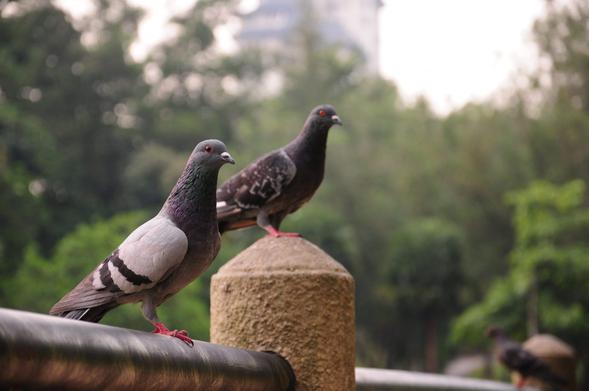
How pigeons find their way home: the answer is a magnetic compass in the liver
Researchers Propose Liver as a Potential Magnetoreceptor in Pigeons
📰 Original title: New study targets liver as magnetic sensor behind pigeon’s long-range navigation
🤖 IA: It's clickbait ⚠️
👥 Users: It's clickbait ⚠️
View full AI summary https://en.killbait.com/researchers-propose-liver-as-a-potential-magnetoreceptor-in-pigeons.html?utm_source=mastodon_world&utm_medium=social&utm_campaign=killbait.mastodon_world

For decades, scientists have been puzzled by the ability of homing pigeons to navigate back to their lofts from hundreds of miles away with remarkable accuracy. Traditional theories of avian navigation have focused on magnetoreception, with candidate organs including magnetite in the beak, cryptochrome proteins in the retina, and hair cells in the inner ear. None of these has been conclusively proven as the primary sensor. A recent study suggests a surprising alternative: the liver. Researchers hypothesize that iron-rich cells in the liver, which naturally store iron in forms like ferritin and hemosiderin, could detect variations in the Earth's magnetic field. This information could then be converted into electrochemical signals to assist navigation. While this is physiologically plausible, the study acknowledges that the pathway from liver to brain remains unproven, and birds likely integrate multiple sensory cues including visual, olfactory, and infrasound signals. If hepatic magnetoreception is confirmed, it could reshape the understanding of magnetic sensing in vertebrates and inspire new low-power magnetic navigation sensors for robotics. The study, published in Science, offers a testable hypothesis rather than a definitive explanation, highlighting a novel potential role for an organ traditionally known for metabolism rather than sensory function.
Researchers Propose Liver as a Potential Magnetoreceptor in Pigeons
📰 Original title: New study targets liver as magnetic sensor behind pigeon’s long-range navigation
🤖 IA: It's clickbait ⚠️
👥 Users: It's clickbait ⚠️
View full AI summary https://en.killbait.com/researchers-propose-liver-as-a-potential-magnetoreceptor-in-pigeons.html?utm_source=mastodon_social&utm_medium=social&utm_campaign=killbait.mastodon_social
For decades, scientists have been puzzled by the ability of homing pigeons to navigate back to their lofts from hundreds of miles away with remarkable accuracy. Traditional theories of avian navigation have focused on magnetoreception, with candidate organs including magnetite in the beak, cryptochrome proteins in the retina, and hair cells in the inner ear. None of these has been conclusively proven as the primary sensor. A recent study suggests a surprising alternative: the liver. Researchers hypothesize that iron-rich cells in the liver, which naturally store iron in forms like ferritin and hemosiderin, could detect variations in the Earth's magnetic field. This information could then be converted into electrochemical signals to assist navigation. While this is physiologically plausible, the study acknowledges that the pathway from liver to brain remains unproven, and birds likely integrate multiple sensory cues including visual, olfactory, and infrasound signals. If hepatic magnetoreception is confirmed, it could reshape the understanding of magnetic sensing in vertebrates and inspire new low-power magnetic navigation sensors for robotics. The study, published in Science, offers a testable hypothesis rather than a definitive explanation, highlighting a novel potential role for an organ traditionally known for metabolism rather than sensory function.

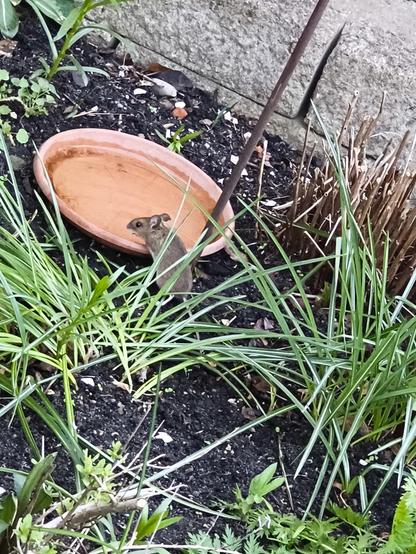
Today after finishing their #hedgewatch the humans met this little #rodent in the neighbours #garden 😻 We think it's a #woodmouse 😻
Wood mice were the first mammals in which a magnetic sense was proven; that is, they have a built-in compass.
A global screen for magnetically induced neuronal activity in the pigeon brain
🕊️🧲 A new study from the David Keays lab demonstrates light-independent, magnetically induced bilateral neuronal activation in two key brain regions of pigeons: 🔹 Medial vestibular nuclei🔹 Caudal mesopallium These results strengthen the case for an inner-ear–based magnetoreception system in birds — a major advance in uncovering how they detect Earth’s magnetic field. #magnetoreception…
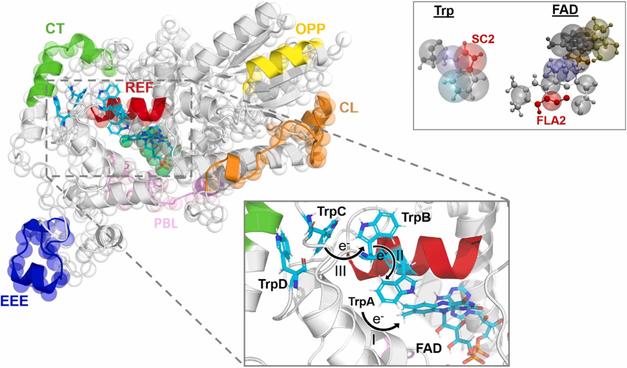
🐦🧭 How do migratory birds sense Earth’s magnetic field? Quantum biology might hold the answer.
🔗 Cryptochrome magnetoreception: Time course of photoactivation from non-equilibrium coarse-grained molecular dynamics. Computational and Structural Biotechnology Journal, DOI: https://doi.org/10.1016/j.csbj.2024.11.001
📚 CSBJ Quantum Biology and Biophotonics: https://www.csbj.org/qbio
#Biophysics #QuantumBiology #Magnetoreception #MolecularDynamics #BirdNavigation #ComputationalBiology #Cryptochrome
#PhD position in #Magnetoreception Research! 🐝🧠🔬
Center for Mind/Brain Sciences #CIMeC, University of Trento, Italy
🔍Research involves:
• Sensory reception 🐝
• Neural processing 🧠🔬
• Behavioural responses 🌀
• Testing predictions of Quantum biology ⚛️
Research at the intersection of #cognitive #neuroscience, #neurobiology, and #quantumbiology: https://r.unitn.it/en/cimec/nphys
📅 Deadline: June 5, 2025
🔗 Apply: https://phd.unitn.it/drcimec/116/admission-doctorate-cognitive-and-brain-sciences
📩 Contact: [email protected]
Please spread the word! 🌍

Neat bit of NYC history in this morning's Scoop from thecity.nyc : An original surveyor's bolt used to lay out Manhattan's street grid is still viewable & touchable in Central Park! It was hammered into an outcrop in 1808 and marks what would have been the intersection of 66th and Sixth.🤘
I grew up on that grid and have it seared into my brain, deep in my code, the way migratory fish & birds are attuned to the earth's magnetic fields. Manhattan's grid is the basis for my internal maps of the city & the world, but my internal grid has likely drifted out of alignment. Next time I feel the urge to "touch grass," maybe I'll go touch that iron spike instead, to get re-attuned & see if it has any "restore factory settings" effects.

5,763 likes, 55 comments - nyctourism on April 28, 2025: "If you know where to look in Central Park, you can touch a piece of NYC’s civil engineering history. It’s one of the last remaining survey bolts from John Randel Jr.’s Commissioners’ Plan of 1811, which laid out the original plan for Manhattan’s street grid above* 14th Street. Randel hammered hundreds of these throughout Manhattan where possible street intersections would be. *New Yorkers use “above” and “below” as directionals when referring to Manhattan streets, rather than “north” or “south,” because the island of Manhattan is not aligned exactly north-south on the map—it’s tilted slightly along a northeast–southwest line. About this series: @foundedbynyc Object Lessons explores historically significant and/or groundbreaking items that tourists can see when they visit. It’s part of NYC Tourism’s commemoration of New York City’s 400th anniversary this year. #NYC400 Video description: This POV video is shot on a rocky hillside in Central Park, with host John Friia sitting on a large exposed patch of Manhattan schist with an iron spike hammered into it.".
 KillBait News
 KillBait
 Steven Saus
 Scientific World
 GeologistsCat
 MagBBB Group
 CSBJ
CSBJ NeurophysicsLab Albrecht Haase
 miles per flower