
miles per flower

@miles@mefi.social
23 Followers
170 Following
615 Posts
He/him. Editor, mefite, Brooklyn dad type, lilac enthusiast. 

Profile alt text: Abstract circular drawing of nested wavy lines suggesting water or leaves. It's a vignette by Koloman Moser. 

Banner alt text: Hand-colored photograph of the Gallery of Machines at the 1889 Paris Exposition. It's a vast interior space of exposed metal beams & skylights, filled with industrial & agricultural machinery. No people are visible.

The age verifier knows how old you are at all times. It knows this because it knows how old you aren't. By subtracting how old you are from how old you aren't, or how old you aren't from how old you are (whichever is greater), it obtains a difference, or remainder.

The verification system uses deviations to generate corrective dark patterns to drive you from a date of birth that isn't yours to a date of birth that is, and arriving at an age where you weren't, but now are. Consequently, the age you are is now the age that you weren't, and it follows that the age that you were is now the age that you aren't.

In the event that the age that you are is not the age that you weren't, the system has acquired a validation error. The validation error is the difference between the age the verifier thinks you are, and the age you weren't. If the validation error is considered to be a significant factor, it too may be corrected by by the upload of a high-resolution JPEG. However, the verifier must also know how old you were.

The age verification scenario works as follows: Because a variation has modified some of the information the you have input, it is not sure just how old you are. However, it is sure how old you aren't, within reason, and it knows how old you were.

It now subtracts the age you should be from the age you weren't, or vice-versa, and by differentiating this from the algebraic sum of the year you shouldn't be and the year you were, it is able to obtain the deviation and its variation, which is called January 1st, 1970.

#LearnLockpickingWithAlice, lesson 1: Get yourself a decent starter set.

You'll want some good turning tools. My favorites are the red/white/blue set from Red Team Tools for a few reasons: they're a good range of thicknesses, they're color-coded, they're smooth, and the short ends are slimmed down for top of the keyway tensioning or for smaller locks. Turning tools are the most important part of your kit.

You'll want a couple good hooks. I recommend a thin-shank short hook, and a sturdy short/medium hook. The thin one will be your friend in tight keyways and for small locks. The sturdy one will let you bully most other locks.

Finally, you'll want a couple wave rakes. My favorites are the triple-peak w-shape and m-shape (in that order). They're easy to work with, don't get hung up on the keyway, and can be maneuvered to more precisely hit specific pins.

Oh, and you'll need some locks to practice on. Clear locks are great *for your first day*, but you'll run into trouble if you start to rely on seeing the pins. Grab some cheap Master No.3, Master No.140, and/or Brinks padlocks. They're satisfying to open, and they'll teach you the basics. Beware dollar store locks—the manufacturing is usually shit and some have plastic cores, which feel like garbage to pick, and break easily.

Everything else is icing on the cake.

Most starter sets will include a "city rake" or "L rake", and several other mostly useless picks. Ignore them. They're filler and you'll spend days just trying to find a valid reason to carry them—because they *have* to be good for *something*, right? ...right?

Here's the kit I currently recommend: https://www.redteamtools.com/learn-about-lockpicking-kit/ (with the book) It's $125, but it's solid, no fluff, and well made. I love the book, the turning tools are part of my everyday carry, and I use the picks whenever I teach lockpicking in person.

Disclaimer: @deviantollam (Red Team Tools' founder) is a friend of mine, but I don't recommend anything that I don't personally use.

Happy #BlackHistoryMonth !

Not ready to talk about Black History. Still talking about white US history.

Q: Why are Black neighborhoods so often high crime neighborhoods? Must be a lawless people! Violent! Thieves! Predators!

A: There is no such thing as a "high crime neighborhood." The whole concept is entirely made up based on our notion of what we consider a crime.

You may be thinking:🤔 Wait... What?! Not true! A high crime neighborhood has more drug use and sales, theft, and even murder!

1/N

I just realized that Castle Grayskull has…a jaw-bridge.

Old but Gold

#Meme #Humour

I hope this email finds you slightly bemused and full of cliches.

Colourful Lines

Looking back at when I met up with colour therapist Momtaz whose friend Leah had transformed her duvet cover of the London Underground Map into a dress. Here's a photo of her on the stairs at Covent Garden tube station.

Dress made by fwaylawn (insta)

thinking about deplatforming as an essential tech literacy skill
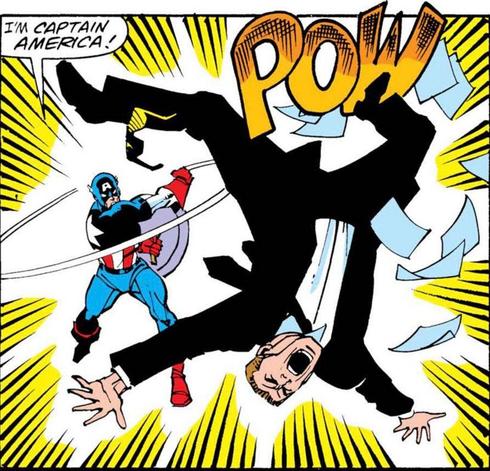
Thank you, Sal Buscema for all the years of joy you brought. Thank you for all the punches the bad guys richly deserved.
Celine Dion has come out in support of farmers by removing all the consonants from her name.