 Your Future Ex
Do you want some Tolkien-inspired #BlackMetal in your life?
#OneOfNine: Dawn of the Iron Shadow
Do you want some Tolkien-inspired #BlackMetal in your life?
#OneOfNine: Dawn of the Iron Shadow
Ordeals – Third Rail Prayer Review
By Spicie Forrest
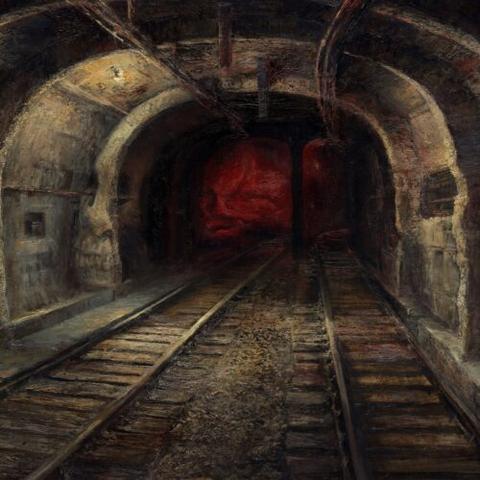
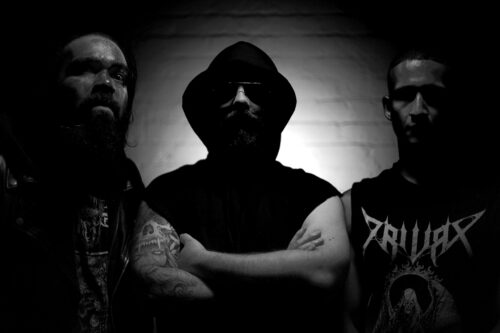
Sometimes called the live rail, the third rail runs alongside the New York City Subway tracks, carrying electrical current enough to power the trains’ motors—or kill those who accidentally touch it. In a political context, the term refers to subjects dangerous enough to ruin careers. I learned this while researching Ordeals’ debut album, Third Rail Prayer. This NYC trio formed in 2011 and released two EPs and a split in the 14 years since.1 Influenced by the Australian scene, Ordeals promises a serpentine, subterranean blend of black and death metal, garnished with quiet grandiosity. Will Third Rail Prayer jumpstart their burgeoning career, or are they dead on arrival?
What Ordeals lacks in recognition, they offset with strong musicianship. Blackened riffs, courtesy of bassist/guitarist Illuminated, roil and surge like a sturgeon just beneath the surface, constantly shifting and reappearing through tempo shifts and key changes (“Throes”). Tremolo-heavy passages like those on “Suffer Cursed Ordeals” invoke Abominator and instill a sense of urgency and desperation. The bass most often acts as foil for the guitar, adding depth and texture to each track, but there are moments, like the back half of Skeletonwitched “Emerge,” where it takes center stage. Drummer Bellum loves a good blast beat, but he has a wealth of percussive techniques at his disposal. His kitwork is dynamic and energetic, and he drives the album with a varied and masterful hand. Bellum sets the tone (“Scorn Ceremony”), guides transitions (“Third Rail Prayer,” “Suffer Cursed Ordeals”), and keeps the album moving at an enjoyable and engaging pace.
A sectarian, ritualistic energy pervades Third Rail Prayer. Rather than high-pitched rasps, Zealous Hellspell mostly employs full-throated roars and shouts like Uada or Rotting Christ, evoking clandestine religious ceremonies or the recitation of some dark magic (“Triumph,” “Suffer Cursed Ordeals”). Though Ordeals bills themselves as blackened death, my ears hear a fair—and quite competent—share of doom, as “Throes” and “Triumph” build delightfully unsettling tension with stately Candlemass-esque riffcraft. The patient bass and inexorable drums of “Scorn Ceremony” paint a picture of evil sacraments and recall the backwater cult vibes of Choir. Ordeals releases that tension to great effect, too. In conjunction with Hellspell’s fanatical roars, Illuminated and Bellum often end songs by whipping each other into a spiraling dionysian fervor reminiscent of Kvaen’s “The Funeral Pyre” (“Third Rail Prayer,” “Throes,” “Emerge”). Contrary to my expectations, crafting this ceremonial, almost liturgical atmosphere is where Ordeals truly excels.
The atmospheric, doom-laden high points of Third Rail Prayer make for an ironic prime criticism. When Ordeals channels Solitude Aeternus or Solstice, their measured, dignified songcraft and palpable atmosphere far outstrip anything else on the album. Make no mistake, Third Rail Prayer is an enjoyable ride front to back, but Ordeals’ blacker, deathier portions feel lackluster by comparison. While Zealous Hellspell’s rapturous howling helps stretch that atavistic spirit over the whole album, the same can’t be said of Illuminated and Bellum’s contributions. When Ordeals’ focus shifts from doom to another subgenre, I’m left impatiently waiting for their focus to shift back. The synergy and flow in those Sabbathian passages is so comprehensive, it’s ultimately frustrating that there’s not more of it here.
Third Rail Prayer employs a kitchen sink approach, showing off a little bit of everything the band can do. Ordeals plays good black metal and good death metal, but they play great high (blackened) doom. On Third Rail Prayer, Ordeals treats their best characteristic as just another tool in their belt. This debut serves as a 40-minute proof of concept, albeit an unfocused one.2 If they can hone in on their strengths—stately, doomy songcraft and palpably ceremonious atmosphere—and use them as a solid foundation moving forward, they’ll create something great in a sea of good. Ordeals is not a band to be slept on, and I have high expectations for them in the future.
Rating: 3.0/5.0
DR: 8 | Format Reviewed: 320 kbps mp3
Labels: Eternal Death
Websites: Bandcamp | Facebook | Instagram
Releases Worldwide: September 26th, 2025
#2025 #30 #Abominator #AmericanMetal #BlackMetal #BlackSabbath #BlackenedDeathMetal #Candlemass #Choir #Daethorn #DeathMetal #DoomMetal #EternalDeath #Kvaen #Ordeals #Review #Reviews #RottingChrist #Sep25 #Skeletonwitch #SolitudeAeternus #Solstice #ThirdRailPrayer #Uada
By ClarkKent
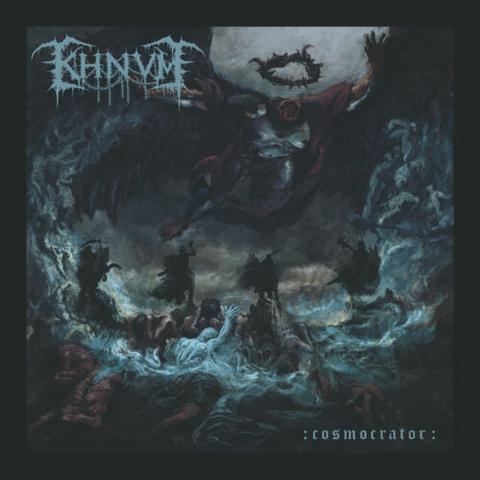
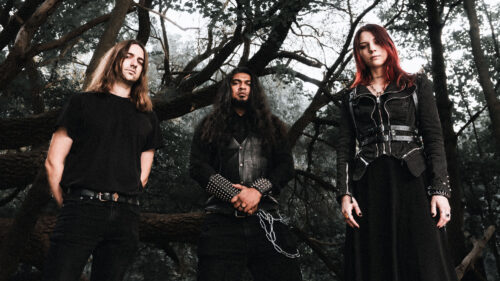
While it looks like a jumble of consonants, KHNVM actually has an easy pronunciation: Kha-noom. Their sinister new album, Cosmocrator, derives its title from a Greek word that roughly translates to “ruler of the world” and can also refer to Satan. However, these guys aren’t Greek. Rather, KHNVM is based out of Germany, and frontman Obliterator was born in Bangladesh. Though there are three members pictured in the band photo below, Obliterator does the Billy Corgan thing and records everything but the drums.1 KHNVM released their first album, Foretold Monuments of Flesh, in 2019, and now six years later, Cosmocrator marks their fourth record. In that short span of time, KHNVM has gradually shifted from putrid death metal to a more nuanced death-doom sound. It’s time to find out if KHNVM goes kaboom!
Cosmocrator alternates between speedy death tremolos and slow, sludgy guitar riffs. The result comes off somewhat like Mother of Graves or Tomb of Finland minus the melodicism. “Fetid Eden” best illustrates this death-doom dance. Its bookends contain up-tempo drumming and tremolos amidst Obliterator’s low, whispery growls, but the middle of the song slows to a near funeral doom pace. This makes for a varied, interesting listening experience, and one that’s particularly rewarding when KHNVM ramps up the energy following a bout of doom. Opener “Purgatorial Pyre” similarly straddles this line to great success. Once you get past the lengthy instrumental passage,2 the song gets the heart pumping with some energetic riffs and a Kvaen-like chorus in “Pyre! Purgatorial pyre!”
KHNVM also toys with progressive song structures, which is wise considering four of the seven tracks are over five minutes long. While the progressive structure prevents them from growing stale to repetition, not all movements within each song are equally compelling. This leads to some inconsistent songwriting. For example, “Cosmocrator” has a rough start but ends well. The early dissonant counter-harmonics play out awkwardly, yet the latter half shifts to blast beats and tremolos that create a smoother, more enjoyable listen. On the other end of the spectrum is the longer “Venom Spawn.” The first five minutes are easily my favorite on Cosmocrator. It opens with riffs of an Eastern tinge and plays at a slow but enjoyable plod. Unfortunately, the final two minutes lose the hook and become a tedious plod. I admire the desire to change it up, but when you have a good thing going, it’s best not to mess with it.
At a DR 8, the sound quality is admirable, yet the mix produces some questionable choices. The guitar plays loudly and drowns out some of the other elements. This is most noticeable on “Haunting Blight,” where the bass features prominently in the early goings and combos nicely with the drums. Yet when the lead guitar starts up, the bass disappears. Sometimes, the guitar even muffles Obliterator’s own voice—I strained to pick up his growls on “Fetid Eden.” The loudness also amplifies the awkwardness of the dissonant notes. I found these notes jarring, but not in a way that enhanced the songs. The use of dissonance seems to be a new skill set added to Obliterator’s repertoire, and I felt those were the parts that worked the least. Outside of that, the instruments sound good, and Obliterator and drummer Autokrator handle them with skill. They deftly weave between death and doom, and when the bass is able to shine through the haze of the guitars, everything sounds that much better.
KHNVM has plenty of good things going for them, and they keep the album nice and short at 36 minutes. Unfortunate inconsistencies hold Cosmocrator back, but I admire Obliterator’s ambition. Stripped of the dissonance and some pointless instrumental portions, Cosmocrator could have been a good or very good record. A jarring dissonance risks snapping listeners from their reverie if not done correctly. Amidst the varied tricks Obliterator employed, it was the one that stuck out like a sore thumb. At times, it felt like KHNVM was trying too hard to create a menacing sound when they already had all the elements needed to create a solid record. KHNVM has room to bring more boom, and I believe they can.
Rating: 2.5/5.0
DR: 8 | Format Reviewed: 320 kbps mp3
Label: Testimony Records
Websites: Bandcamp | Facebook
Releases Worldwide: August 29th, 2025
#25 #2025 #Aug25 #Cosmocrator #DeathDoom #DeathMetal #DoomMetal #GermanMetal #KHNVM #Kvaen #MotherOfGraves #Review #Reviews #TestimonyRecords #TombOfFinland
Lite märkligt med tanke på vilka band som spelar, men det finns tydligen biljetter kvar till Close-Up Båten som avgår ikväll, för de som inte vet vad de ska göra i helgen och gillar metal.
https://www.tallink.com/sv/hitta-resa/kryssning/specialkryssningar/close-up-metal
#CloseUp #Cruise #TheHaunted #Witchery #Kvaen #MurderSquad #Wormwood
Sarastus – Agony Eternal Review
By Kenstrosity
If you follow the Finnish, or even the wider Scandinavian black metal scene, you might know about Finnish trio Sarastus. I would never have known about them, though, if it weren’t for AMG Hisselves telling Dr. A. N. Grier to listen to them and cover this. Of course, because I’m an opportunistic bastard with a ravenous appetite for shenanigans—and because Grier slept on the promo pool until he was sunburned to a smoking chunk of stinky charcoal—I swiped it right from under his nose. Sucks to suck, loser! Now I’m here, spinning Sarastus’ third opus, Agony Eternal, and reveling in the fact that I stole something that just happened to be worth stealing from not one, but two upper management. You’re welcome.
Undergoing some lineup changes between records before finalizing the current spread in 2023, Sarastus comes alive on Agony Eternal, bursting with vitality and verve. The sonic format at its core remains unchanged from what already exists in the black metal arsenal: blast beats, frigid tremolos, buzzing production, fierce rasps, and fiery melodies. Rarely, though, in the modern school at least, do these ingredients coalesce into a record as blistering and infectious as Agony Eternal. Reminiscent of Kvaen and Rimfrost in its infernal lustiness and musical effervescence, all of Agony Eternal’s nine tightly written tracks offer an array of sharp hooks, meaty riffs, and standout vocal performances that put Sarastus far ahead of the majority of their peers.
Agony Eternal serves as a prime example of a record that doesn’t need to do anything new to make a big splash. Even if opening duo “Gravelust” and “Agony Eternal” snatch my attention with a staggering immediacy—credit for this goes to a surprisingly black n’ roll riffset, dynamic songwriting, and a swaggering sense of confidence—it’s “Into Eternity” and “Where Cruelty Never Ends” that catch my adoring gaze. The melodies that lift me into the stratosphere in both songs create a euphoric state that never fully dissipates. Remarkably smooth transitions in rhythm and structure activate an animal instinct in my brain that ensures headbanging and windmilling at extreme intensities. In concert, these characteristics generate an immense momentum that bestows gravity and heft to the slower mid-paced stomp that pounds “No Horizon” deep into my skull. With all manner of screeches, riffs, leads, and patterns to guide my way forward, the remainder of Agony Eternal follows through on the promise that “Into Eternity” and its neighbors aren’t just a white-hot flash in the pan. Later highlights “Metamorphosis,” “Into the Lair,” and massive closer “1644” stand tall as fast and free explosions of joyous, blackened revelry that recalls Vimur in their vicious attack and vicarious spirit.
Dispensing with a compartmentalized evaluation of its constituent numbers, Agony Eternal still shines. Put another way, Agony Eternal is a nonstop party. With almost poppy energy, Sarastus captured with remarkable simplicity and undeniable effectiveness the passion and conviction that made black metal of this kind a sensation. But, when I listen to songs like “From Pride, to Shame, to Misery,” I can hear more than just black metal purism. I hear a confident, exuberant soul rooted in rock n’ roll rebellion, forged in timeless techniques, and steeped in metallic traditions across the spectrum. In this way, Sarastus honor the great many talents across history that allowed a record like Agony Eternal to exist. In that spirit, this feels like a loving tribute not just to black metal itself, but to the greater community of artists and audiences that laid the groundwork.
Even so, Agony Eternal is imperfect, but only slightly. There are one or two brief moments where the vocals break my immersion by breaking a bit themselves (see the very end of “Where Cruelty Never Ends”), though this disruptive effect dulls with repeat spins and a little patience. I also wish that, despite the wonderfully roomy and natural mix and master, the bass was beefier still and the vocals pulled back just a smidge. Additionally, opener “Gravelust” might be the only song that, mostly in retrospect, doesn’t meet the same lofty standard of its album mates. It’s got all the right attributes, but the execution feels lacking by comparison. As a final nitpick, after a dozen focused listens, I do think a few riffs here and there undergo one or three too many repetitions, especially when they are more than strong enough to stand out with fewer (“1644”). No matter. At the end of the night, Agony Eternal is a resounding success, and I wholeheartedly recommend any metal fan to give it your ear (and your soul)!
Rating: Great!
DR: 10 | Format Reviewed: 320 kb/s mp3
Label: Dominance of Darkness Records
Websites: sarastus.bandcamp.com | facebook.com/sarastusjaikuisuus
Releases Worldwide: July 1st, 2025
#2025 #40 #AgonyEternal #BlackMetal #DominanceOfDarknessRecords #FinnishMetal #Jul25 #Kvaen #MelodicBlackMetal #Review #Reviews #Rimfrost #Sarastus #Vimur

Rétrospective 2024 personnelle musicale en streaming de l’année #kinawuka #knopfler #aara #kvaen #ledzeppelin #chapelofdisease #metal #soul #rock #deathmetal #blackmetal
January 11, 2025 at 08:21AM
via Instagram https://instagr.am/p/DErT440ICOd/


0 likes, 0 comments - szamcha on January 10, 2025: "Rétrospective 2024 personnelle musicale en streaming de l’année #kinawuka #knopfler #aara #kvaen #ledzeppelin #chapelofdisease #metal #soul #rock #deathmetal #blackmetal".
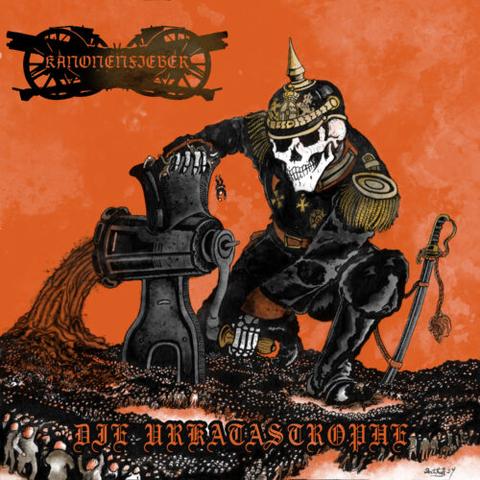
Kanonenfieber – Die Urkatastrophe Review
By Carcharodon
When I wrote up Menschenmühle, the debut full-length by Germany’s Kanonenfieber, in late 2021, I described it as “stunning.” The storytelling arc that it achieves, opening with the almost enthusiastic bombast of the early days of the Great War, through to the exhausted horror of No Man’s Land, is incredible. Cast in shades of blackened death metal, I ended up crowning it my Album of the Year, calling it a “masterpiece.” So how does one write the follow-up to a masterpiece? When I sat down with anonymous Kanonenfieber mastermind1 Noise in 2023, I asked. He admitted to “having some struggles […] I don’t know, I’ve written the album four times over now but somehow, I just don’t like any of it.” Scroll forward a year and I finally got my sweaty little fanboy fins on Die Urkatastrophe. Did Noise get through his struggles to produce a worthy successor to Menschenmühle?
Like its predecessor, Die Urkatastrophe (which translates as something like “The Original Disaster”) focuses on the tragedies of the Great War, taking its inspiration from reports, letters, and other documents created by the soldiers who fought in that conflagration. It is uncompromising and brutal. Whether it’s the tale of the suicidal member of a mining team, tunneling under the front (“Der Maulwurf”)2 or the grinding battle that saw Austria-Hungary retake Lviv / Lemberg from the Russians (“Lviv zu Lemberg”), there’s an almost frantic energy to Kanonenfieber that is both vicious and beautiful. Simultaneously heavier and more melodic than what went before, Die Urkatastrophe flits between taking in the whole, awful scale of the War, panning across its fronts (“Gott mit der Kavallerie”), while at others zooming in on specific horrors (“Verdun” and its counterpart “Ausblutungsschlacht” ).
Kanonenfieber has developed an immediately identifiable sound and sense of individuality that sets it apart from the many reference points I could cite. Sure, the likes of Bolt Thrower and 1914 still feature strongly in Kanonenfieber’s work but Die Urkatastrophe is much more diverse. A blackened thrash edge creeps into Skeletonwitch territory in places (“Gott mit der Kavallerie”), while “Panzerhenker” and “Waffenbrüder” (the latter featuring Maik Weichert of Heaven Shall Burn) draw Kvaen into the mix. The infectiously catchy “Ritter der Lüfte” evokes Panzerfaust. While all those references and more are valid, the truth is that from Noise’s razorwire rasps and snarling growls—now expanded to include funeral doom-esque roars (“Panzerhenker”)—to his crystalline tremolos and killer death riffs, Kanonenfieber is now a touchstone in its own right. Part of what makes that true, and what distinguished Menschenmühle, is the skillful incorporation of samples and original recordings. These give Kanonenfieber the weight of authenticity, which is taken to the next level on Die Urkatastrophe. The threads of its stories of bloodshed, death, and despair are tied together by perfectly integrated battlefield effects and spoken word pieces, which feel organic and an integral—even essential—part of the whole. The tension built into opener “Grossmachtfantasie,” as the first rumbling riffs rise beneath a crackling recording is enough to give me goosebumps.
Noise’s vocal performance, already a selling point previously, is the strongest he’s ever given. This is amplified by the multi-tracking deployed across the record, as well as adornments, like the choral backing vocals on “Ausblutungsschlacht,” giving its ending an appropriately grand, symphonic feeling, as it details the slaughter at Verdun. As ever, the production is fantastic, although on this occasion Noise had assistance from Kristin Kohle of Kohlekeller Studio. The stellar guitar tone is hard to put into words. Whether it is the tremolo assault of “Menschenmühle” or the gorgeous percussion-free lament two-thirds of the way into “Lviv zu Lemberg” (recalling “Die Schlacht bei Tannenberg” from the previous album), the sound is organic and effortless, like a blackened Opeth in their heyday. The bass is also much more prominent in the mix, which is welcome, adding richness to the sound. My single critical comment is that Kanonenfieber tried to repeat a trick from the last album, ending with an acoustic semi-ballad. However, for me at least, Noise comes up very slightly short here. “Verscharrt und Ungerühmt” from Menschenmühle was lightning in a bottle; it tore out my heart and stamped it into the blood-soaked mud. Here, “Als die Waffen kamen” is a good song in its own right but lightning rarely strikes twice.
Die Urkatastrophe is more than I dared hope for. I’ve had this thing for nearly two months and must have listened to it fifty-plus times. The sole flaw is that its closing track doesn’t quite match the magic of its debut counterpart. Everything else is at least as good, and often better, with “Der Maulwurf,” “Lviv zu Lemberg,” and “Waffenbrüder” forming among the strongest three-track runs I’ve ever heard. The textures Kanonenfieber weaves into the sound, coupled with the subtle tempo and stylistic shifts, give this album an almost languid fluidity and make it a heart-wrenching joy to listen to. The skill and attention to detail that went into crafting this record are outstanding, while the one-man performances by Noise are phenomenal. What makes this record truly iconic, however, is the storytelling and Noise’s ability to tailor his chosen sound to each horror he is conveying, be it the insanity of the war as a whole (“Menschenmühle”), suicidal desperation (“Der Maulwurf”) or otherwise.3
In a review of Non Est Deus, I said that I would, reluctantly, have to pass on the reviewing baton for Noise’s projects. I lied. Obviously.4
Rating: 5.0/5.0
DR: 7 | Format Reviewed: 256 kbps mp3
Label: Century Media Records
Websites: noisebringer-records.bandcamp.com | noisebringer.de | facebook.com/Kanonenfieber
Releases Worldwide: September 20th, 2024
#1914 #2024 #50 #AtmosphericBlackMetal #BlackMetal #BlackenedDeathMetal #BoltThrower #CenturyMediaRecords #DeathMetal #DieUrkatastrophe #GermanMetal #Kanonenfieber #Kvaen #MelodicBlackMetal #MelodicDeathMetal #Opeth #Panzerfaust #Review #Reviews #Sep24 #Skeletonwitch

For #BlackMetalMonday by @HailsandAles:
#InAphelion: The Fields in Nadir
As @neurothing said recently, The Formless Fires by KVAEN is a glorious and epic album. Which is also playing here now... 🖤🔥
The Ancient Gods, on invidious/youtube here:
https://yt.artemislena.eu/watch?v=iN_uHzlAd18
https://www.youtube.com/watch?v=iN_uHzlAd18
The full album on bandcamp is here:
https://kvaenblacklion.bandcamp.com/album/the-formless-fires

Buy here: http://www.metalblade.com/kvaen Follow Kvaen: https://www.facebook.com/officialkvaen https://www.instagram.com/officialkvaen There are many great extreme metal bands in Sweden, but only one from Kalix. This remote beauty spot near the Finnish border, on the northernmost shores of the Baltic, is home to Jacob Björnfot, creative mastermind behind melodic black/death metal project, KVAEN. Video production by Daniel Wahlström at Heavy Groove Media A sumptuous but bitingly intense exploration of beauty and violence, KVAEN’s "The Formless Fires" is a melodic black metal masterwork radiating an inspirational sense of place. Even more than 2020’s folky, speed metal-infused debut "The Funeral Pyre" or 2022’s compelling, expansive follow-up, "The Great Below", the vast pine woods and icy lakes are powerfully evoked in the elemental gloom riffs, chilly melodies, and windswept solos running through these eight mighty songs. Assisting in this record’s immersive sweep are Björnfot’s fascinating lyrics. Like many Swedish songwriters, his use of English reveals a love and care for the language that few native speakers even bother to rival. If this album seems less intimate and more universal than the raw candor of its predecessor, it’s only because Björnfot’s knack for allegory has improved. Illuminating some of the lyrical themes, Björnfot asserts “I love mythology. ‘Basilisk’ is, for example, the king of serpents but is rarely mentioned by the mainstream. ‘The Perpetual Darkness’ is about being born different from those who are ‘normal.’ It is also about being a lone wolf and banished from society. That song has become a personal favorite of mine.” Additionally, ‘De Dödas Sång (Song Of The Dead)’ tackles the disturbing theme of Ättestupa, the ancient Norse suicide ritual whereby elderly villagers jump to their deaths from sheer precipices. KVAEN: Jacob Björnfot – everything KVAEN Live Lineup: Jacob Björnfot – vocals/guitars Kristian Gustavsson – guitars Rasmus Rova – guitars Per Lindström – bass Fredrik Andersson – drums
#TheMetalDogArticleList
#BraveWords
Today In Metal History 🤘 July 3rd, 2024🤘 RATT, JIM MORRISON, SUICIDAL TENDENCIES, CRYPTOPSY, IN FLAMES
#Ratt #JimMorrison #SuicidalTendencies #Cryptopsy #InFlames #TheRollingStones #TheDoors #Free #Sodom #Nile #Kataklysm #IcarusWitch #Periphery #TheWordAlive #Boris #BuryTomorrow #Haunt #HenryDerekElis #Jesu #Khemmis #Poltergeist #Powerwolf #Sunburst #FuManchu #Noroth #Cavalera #CryptSermon #Wormed #Phantom #Kvaen #Sibirr #Accept


TALENT WE LOST R.I.P. Lewis Brian Hopkins Jones (THE ROLLING STONES) - February 28th, 1942 – July 3rd, 1969 (aged 27) Brian Jones was discovered motionless at the bottom of his swimming pool at his Cotchford Farm in Hartfield, East Sussex the night of July 2/3, 1969. The coroner's...

 Angry Metal Guy

 SamInsta

 sariash
 🤘 The Metal Dog 🤘