Stuck in the Filter: August and September 2024

By Kenstrosity

I am a stubborn bitch. I work my underlings hard, and I won’t let up until they dig up shiny goodies for me to share with the general public. Share might be a generous term. Foist upon is probably more accurate…

In any case, despite some pretty intense setbacks on my end, I still managed to collect enough material for a two-month spread. HUZZAH! REJOICE! Now get the hell away from me and listen to some of our very cool and good tunes.

Kenstrosity’s Turgid Truncheons

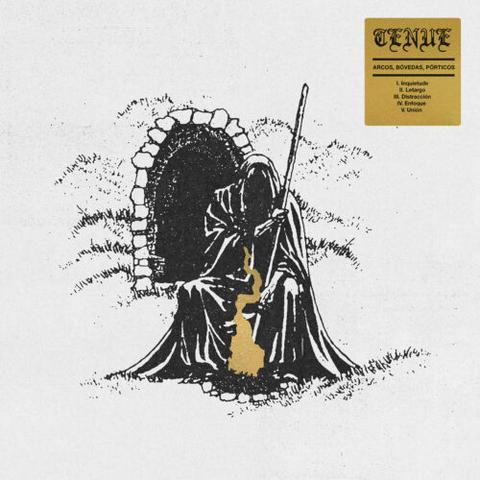
Tenue // Arcos, bóvedas, pórticos [August 1st, 2024 – Self-Release]

Spanish post-black/crust/screamo quartet Tenue earned my favor with their debut record, Anábasis, back in 2018. Equal parts vicious, introspective, and strangely uplifting, that record changed what I thought I could expect from anything bearing the screamo tag. By integrating ascendant black metal tremolos within post-punk structures and crusty attitude, Tenue established a sound that not only opened horizons for me taste-wise but also brought me a great deal of emotional catharsis on its own merit. Follow-up Arcos, bóvedas, pórticos deepens that relationship. Utilizing a wider atmospheric palette (“Distracción”), a shift towards epic song lengths (“Inquietude, and a greater variety of instrumentation (observe the beautiful horns on long-form opener “Inquietude”), and a bluesier swagger than previous material exhibited (“Letargo”), Tenue’s second salvo showcases a musical versatility I wasn’t expecting to complement the bleeding-heart emotional depth I knew would return. This expansion of scale and skillset sets the record apart from almost anything else I’ve heard this year. Even though one or two moments struggle to stick long-term (“Enfoque”), Arcos, bóvedas, pórticos represents an affecting, creative, and ridiculously engaging addition to my listening schedule. And for the low low price of NYP, it ought to be a part of yours as well.

Open Flesh Wound // Vile Putrefaction [August 28th, 2024 – Inherited Suffering Records]

Thicc, muggy slam with a million pick scrapes. Who could ask for anything more? Not I, and so it is with great pleasure that I introduce to my AMG fam Pennsylvania’s very own Open Flesh Wound and their debut LP Vile Putrefaction. Essentially the result of Analepsy’s and Devourment‘s carnal lovemaking, Vile Putrefaction is a nasty, slammy, brutal expulsion of chunky upchuck. Only those with the most caved-in craniums will appreciate the scraping swamp-ass riffs showcased on such slammers as “Smashed in Liquids” and “Cinder Block to the Forehead,” or the groove-laden thuggery of death-focused tracks like the title track, “Fermented Intestinal Blockage” and “Body Baggie.” Vile Putrefaction’s molasses-like production is an absolute boon to this sound as well, with just enough gloss to provide a deliciously moist texture which imparts an unlikely clarity to especially gruesome details in “Stoma Necrosis” and “Skin Like Jelly.” It’s dumb as hell, and isn’t doing anything new, but is an overdose of good, dirty fun. Simple as.

The Flaying // Ni dieu, ni ma​î​tre [September 5th, 2024 – Self Release]

I’ve been singing Canadian melodic death metal quartet The Flaying’s praises for almost six years now. And still to this day not enough people choose to sing with me. Why? Because they wouldn’t know sickeningly fun death metal if it hacked their faces right off. That’s okay, because The Flaying do hack faces right off regardless, and it feels so good to watch the faces of those who don’t heed my call get hacked right off. Third onslaught Ni dieu, ni ma​î​tre proves that once again, The Flaying are an unstoppable force of bass wizardry, riff mastery, and hook-laden songwriting. Opener “Le nécrologiste” perfectly encapsulates The Flaying’s particularly addicting brew of Cannibal Corpse, The Black Dahlia Murder, and De Profundis influences, shaken and stirred until the resulting cocktail blooms with a flavor all its own. Technical and brutally fast, follow-up track “L’enclave” continues the deadly rampage, featuring noodly bass lines guaranteed to elicit stank face in the even most prim and proper elite. A trim twenty nine minutes, spread over ten tightly trained tracks, Ni dieu, ni ma​î​tre boasts unbeatable replay value. Highlights “Ni dieu, ni ma​î​tre,” “Les Frondes” “La forge,” and “Noyau sombre” seal the deal by providing sharp hard points and memorable landmarks to which any listener would look forward. Simply put, this record rocks my socks and further proves that I am right about The Flaying, and those who ignore my recommendation are wrong.

Dolphin Whisperer’s All-Seeing Affirmations

Eye Eater // Alienate [August 1st, 2024 – Self Release]

In a post-Ulcerate world, the modern output of atmosphere-minded death metal has grown exponentially. With ringing dissonant chords and slow post-informed builds taking center stage, bands like New Zealand’s unheralded Eye Eater borrow plenty from the Destroyers of All sound. However, while many acts would be content to dial in the space or ramp up the dissonance to try and put their own twist on this growing post-death movement, Eye Eater looks to the laser-precise melodic tones of progressive, core-borrowing names like Fallujah and Vildhjarta to carve an identity into each of Alienate’s album eight sprawling tracks. Swinging sustained brightness in one hand about the grizzly chug-crush of the other, burly bangers like “Other Planets” and “Failure Artifacts” find churning, djentrified grooves that amplify the swell of the blaring melodies that swirl above the low-end clamor. And though the main refrains of “Alienate” and “Everything You Fear and Hope For” sound like loving odes to their Kiwi Forebears, the growth into sonorous and lush-chorded peaks lands much closer to the attraction of turn of the 10s progressive death/metalcore luminaries The Contortionist had they stayed closer to their heavy-toned, hefty-voiced roots. As an anonymous act with little social presence, it’s hard to say whether Eye Eater has more cooking for the future. With their ears tuned to the recent past for inspiration, it’s easy to see how a band with this kind of melodic immediacy—still wrapped in the weight of a brooding, death metal identity—could easily play for the tops of underground charts. To those who have been following the twists and turns of both underground and accessible over the past decade or so, Eye Eater may not sound entirely novel. But Alienate’s familiarity in presence against its quality of execution and fullness of sound makes it easy to ensnare all the same.

Dissolve // Polymorphic Ways of Unconsciousness [September 20th, 2024 – Self Release]

From the sand-blasted, monochrome human escaping the floor of Polymorphic Ways’ cover to the tags of technical, progressive, death that adorn the Bandcamp tags, it’s easy to put a band like Dissolve in a box, mentally. But with the first bent guitar run that sets off “Efficiency Defiled” in a run like Judas Priest more than Spawn of Possession, it’s clear that Dissolve plays by a different set of rules than your average chug and run tech death band. Yet true to their French nature, the riffs that litter Polymorphic Ways of Unconsciousness possess a tangible groove following the footsteps of lesser-known tricksters Trepalium and Olympic titans of metal Gojira (“The Great Pessimistic,”1 “Polymorphic Ways of Unconsciousness,” “Vultures”). And while too Dissolve finds a base in the low-end trem assault of Morbid Angel (“Ignorance Will Prevail”), there’s a thrash and bark energy at play that nets a rambunctious and experimental sound recalling the warped Hetfield-ian (Metallica) scrawl of Destroy Erase Improve Meshuggah, right down to the monstrous bass tone that defines Sonny Bellonie’s (Sanctuary, ODC) growling, extended range performance. As a trio it’d be easy for guitarist Briac Turquety (Smerter, ex-Sideburn) to rely on overdubs for saturation of sound and complexity of layers—and for solo cut-ins he definitely does—but equally as often his choice to let certain chords and notes escape a thrashy muting to ring in distorted harmony against snaking bass lines. And speaking of solos, Turquety’s prowess ranges from bluesy shred (“The Great Pessimistic,” “Ropes of Madness”) to noisy, jazzy explorations (“Polymorphic…,” “Shattered Minds of Evolution”) to Satriani on Slayer whammy abuse (“Bonfire of the Vanities”)—a true treat to lovers of tasteful shred. Turquety, Bellonie, and Quentin Feron (on drums, also of Smerter) sound as if they’ve been playing together for much longer than the year that Dissolve has existed. With a debut this polished, it’s anyone’s guess as to what kind of monster will emerge from the talent that appears so effortless in assembly.

Obsidian Mantra // As We All Will [September 27th, 2024 – Self Release]

Sometimes, a tangled and foreboding cover sits as the biggest draw amongst a crowd of death metal albums alight with splattered zombie remains, illegible logos, and alarm-colored palettes. And in the case of Obsidian Mantra, it doesn’t hurt that lead single “Cult of Depression” possesses a devastating, hypnotic groove that recalls the once captivating technical whiplash of an early Decapitated. However, rather than wrestle with tones that incite a pure and raw violence like that cornerstone act (or similar Poldeath that has followed in its legacy like Dormant Ordeal), Obsidian Mantra uses aggressive and bass-loaded rhythmic forms to erupt in spacious and glass-toned guitar chimes to create an engrossing neck-snapping (“Slave Without a Master,” “Condemned to Oppression”). Whether we call these downcast refrains a dissonant melody or slowly resolving phrase, they grow throughout each track in a manner that calls continual reinforcement from a rhythm section that can drop into hammering blasts at a dime and a vocal presence that oscillates between vicious snarl and reverberating howl. In its most accessible numbers (“Chaos Will Consume Us All,” “Weavers of Misery”), Obsidian Mantra finds an oppressive warmth that grows to border anthemic, much in the way like beloved blackened/progressive acts like Hath do with their biggest moments. As We All Will still never quite reaches that full mountainous peak, though, opting to pursue the continual call of the groove to keep the listener coming back. Having come a long way from the Meshuggah-centered roots where Obsidian Mantra first sowed their deathly seeds, As We All Will provides 30 minutes of modern, pulsating, and venomous kick-driven pieces that will flare easy motivation for either a brutalizing pit or a mightily-thrusted iron on leg day.

Thus Spoke’s Cursed Collection

Esoctrilihum // Döth-Derniàlh [September 20th, 2024 – I, Voidhanger Records]

We complete another orbit around the Sun, and Esoctrilihum completes another album; such are the inalterable laws governing each 365.25 Earth day period in our Solar System. Possessed by some mad, restless spirit, it seems they cannot be stopped. Ever the experimenter, sole member Asthâghul now picks up an acoustic guitar, a nickelharpa, and warms up his throat for more clean vocals to further bizarre-ify his avant-garde black metal. As we travel into the cosmos for Döth-Derniàlh, Esoctrilihumisms abound in the see-sawing strings and echoes of chanted singing and throaty snarls. The addition of more acoustic elements does bring some weird delicacy to moments here and there (“Zilthuryth (Void of Zeraphaël),” “Murzaithas (Celestial Voices)”), and it adds layers of beauty in addition to those already harmonious passages. it’s striking how well these new instruments blend with the overall sound: so well, in fact, that it almost feels like Esoctrilihum hasn’t evolved at all. This isn’t even a bad thing, because Döth-Derniàlh still feels like an improvement. Past albums have always had at least sections of perfection, where the scattered clouds of self-interfering chaos or repetition blow away and the brilliant light of the moon shines strongly. Döth-Derniàlh has more of these than ever, some extending to whole, 16-minute songs (“Dy’th Eternalhys (The Mortuary Renewal),”).2 If you have it in you to listen to one (more) album over an hour long, and you don’t already know you hate Esoctrilihum, sit down with a drink, and maybe a joint, and go where Döth-Derniàlh takes you.

#2024 #Alienate #AmericanMetal #ArcosBóvedasPórticos #AsWeAllWill #AtmosphericDeathMetal #Aug24 #AvantGarde #BlackMetal #BrutalDeathMetal #CanadianMetal #CannibalCorpse #DeProfundis #DeathMetal #Decapitated #Dissolve #DormantOrdeal #DöthDerniàlh #Esoctrilihum #EyeEater #Fallujah #FrenchMetal #Gojira #GrandMagus #GrendelSSÿster #Gygax #HarcorePunk #IVoidhangerRecords #InheritedSufferingRecords #JethroTull #JudasPriest #MelodicDeathMetal #Meshuggah #Metallica #MorbidAngel #NewZealandMetal #NiDieuNiMaîTre #ObsidianMantra #ODC #OpenFleshWound #PolishMetal #PolymorphicWaysOfUnconsciousness #PostDeathMetal #PostMetal #postPunk #ProgressiveDeathMetal #ProgressiveMetal #Punk #Sanctuary #Screamo #SelfRelease #Sep24 #Sideburn #Slam #Slayer #Smerter #SpanishMetal #SpawnOfPossession #StuckInTheFilter #StuckInTheFilter2024 #TechnicalDeathMetal #Tenue #TheBlackDahliaMurder #TheContortionist #TheFlaying #ThinLizzy #Trepalium #Vildhjarta #VilePutrefaction #WishboneAsh

Stuck in the Filter: August and September 2024 | Angry Metal Guy

Weather the storm of quality metal releases with Angry Metal Guy's August/September Filter double threat!

Angry Metal Guy

Record(s) o’ the Month – September 2024

By Angry Metal Guy

I have a theory about the music industry. My theory is that, like the hotel industry in ski country, everyone crosses from the red into the black because of one season.1 Because of that, Autumnal releases have become more prominent over time. While summer brings festival season and blockbusters at the movie theater, and the winter holidays make it unlikely that anything of consequence will receive a December release, September, October, and November—and particularly September and October—are when the biggest bands will release the biggest albums of the year. That a big band releases an album doesn’t mean it will be the Record o’ the Month, but the tendency for lists to be Fall Heavy during #Listurnalia is right in line with this. That said, when looking at my lists throughout the years, the only #1 spot from September was Aeternam’s mighty Heir of the Rising Sun in 2022. In the top 5, we’ve had Haken’s Magnum Opus The Mountain (2013) and Archspire’s Relentless Mutation (2017). This result surprised me.

September of 2024, however, reminds me of another crazy September that we’ve had here. Right before our impending doom—in September of 2019—there were two Record(s) o’ the Month that went on to be staff favorites, while several seriously high-profile releases didn’t even make the list. Fvneral Fvkk and Disillusion’s The Liberation were both released in September of 2019, along with Opeth’s In Cauda Venenum [8 on RotY list], Borknagar’s True North, in addition to bangers from Cult of Luna and White Ward.

With a bumper crop of excellent records released in September—though, maybe not on September 2019 levels—this has been one of the most difficult R(s)otM posts for me to write. And yet, such is my fate. Alas, that these evil days should be mine.


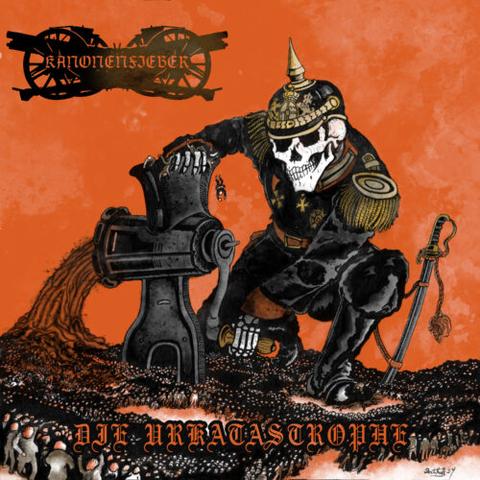
Die Urkatastrophe (released on the 20th of September, 2024 [Bandcamp] by Century Media)—translated as “the original catastrophe”2—is used by German scholars to refer to the monumental impact of World War I as the foundational disaster that set the stage for many of the 20th century’s subsequent conflicts and upheavals, including WWII. For many. this record will be their first exposure to the German black metal phenom known as Kanonenfieber and as far as first impressions go—shall we say, Der UreindruckDie Urkatastrophe does a bang-up job of showcasing a band firing on all cylinders. For those of us already familiar with the Kanonenfieber’s work, Die Urkatastrophe features Noise doing what he does best: crafting brilliant riffs, matching them with the intense emotions of war, and sprinkling that combination with the best use of samples since Velvet Darkness They Fear. For Carcharodon, Die Urkatastrophe was “more than [we] dared hope for. The textures Kanonenfieber weaves into its sound, coupled with the subtle tempo and stylistic shifts, give this album an almost languid fluidity and make it a heart-wrenching joy to listen to. What makes this record truly iconic, however, is the storytelling.” Sometimes an album can be iconic.

Runner(s) Up

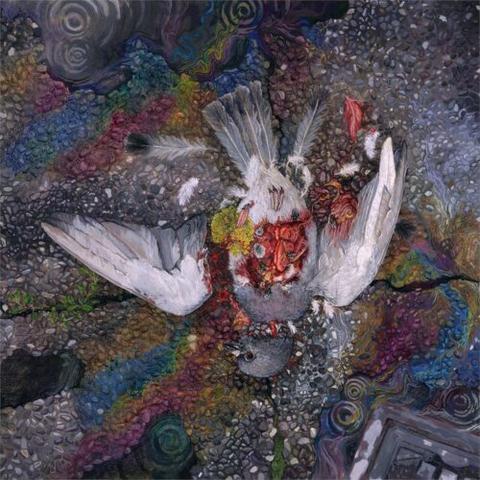
Pyrrhon // Exhaust [September 6th, 2024 | Willowtip Records | Bandcamp] — Pyrrhon has garnered fawning praise from writers at AMG before. With an abstract, aggressive, dissonant sound and the best cover art in the biz, it was unsurprising that when Exhaust got a secret release, there was an ecstatic response in the AMG Slack. While I urged care and caution, a busy Metal Cognoscenti went into overdrive to explain why Exhaust was going to be the Record o’ the Year. I could not have anticipated that despite my inclinations, I also enjoyed this album. There’s a ferocity and cathartic air covered in the exhaustion and everyday tragedy featured on its gorgeous cover. Doing his best Kronos impression, our own Dolphin Whisperer gushed unapologetically: “For an album dedicated to burnout, a theme all too appreciable to those on the wrong side of twenty-five, Pyrrhon charges forth with an experimental vigor and practiced ambition untarnished by time. Hunger steers Pyrrhon. Struggle defines Exhaust. Though far from the most avant, unpredictable set in the Pyrrhon registry, Exhaust billows with the fury of defeat and determination—damn fine music for a downfall.”

Oceans of Slumber // Where Gods Fear to Speak [September 13th, 2024 | Season of Mist | Bandcamp] — Oceans of Slumber has become a strangely divisive band in the scene, a fact with which I struggle. The Texas-based five-piece has a unique and progressive voice in metal, and they have consistently shown growth, experimentation, and maybe most importantly, fearlessness in their adventurous compositions. With a truly transcendent Voice in Cammie and a consistently ’90s-tinged gothy vibe that underpins venturesome—yet introspective—composition, Where Gods Fear to Speak is a triumphant album and potentially their very best album to date. Kenstrosity was thoughtful and effusive as he heaped praise upon Where Gods Fear to Speak. “With a core sound that cannot be replicated, any new record by these Texans is a celebration of artistry and the unique artist’s voice. While every Oceans of Slumber album has showcased aspects of that artistic voice, Where Gods Fear to Speak refines everything that came before into something epic and new. Where Gods Fear to Speak is the culmination of everything Oceans of Slumber is, everything they have been, and hopefully just the beginning of what they’ll become.”

Endonomos // II – Enlightenment [September 27th, 2024 | Argonauta | Bandcamp] — Heavy, slow, unbearable. These are descriptions of both EndonomosII and life. And that’s what makes II special, what Steel Druhm called a “shockingly mature and intoxicating blend of classic doom, post-metal, and death that’s powerful, emotional, and captivating,” the ability to represent the slow march of suffering and the realization that all that’s waiting is more suffering. This is also known as Enlightenment. Druhm pulled no punches when he gushed: “Endonomos find that elusive sweet spot between heavy and melodic and craft a collection of songs that allows them to punch far above their weight. II – Enlightenment is easily one of the best doom albums of 2024 and one of the best of the last few years. If 2024 has yet to deliver the doom your masochistic heart longs for, this is it.” And then after saying it was one of the best doom metal records in years, he gave it a 4, because praise is for n00bs and poseurs.

#2024 #AngryMetalGuy #AngryMetalGuySRecordSOTheMonth #BlogPost #DieUrkatastrophe #Endonomos #EndonomosIIEnlightenment #Exhaust #Kanonenfeiber #OceansOfSlumber #Pyrrhon #RecordSOTheMonth #Sep24 #TheatreOfTragedy #VelvetDarknessTheyFear #WhereGodsFearToSpeak

Record(s) o' the Month - September 2024

Only a month late! Joyous days are these!

Angry Metal Guy

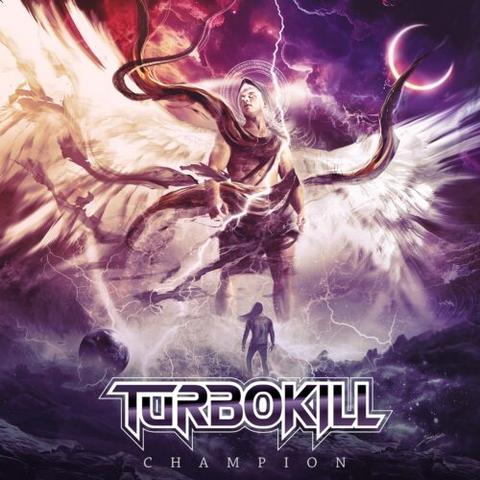
Turbokill – Champion Review

By Steel Druhm

Written By: Nameless N00b 86

1.86.0-BILQJP4UXGWEFLOT4LOZ66CPRA.0.1-9

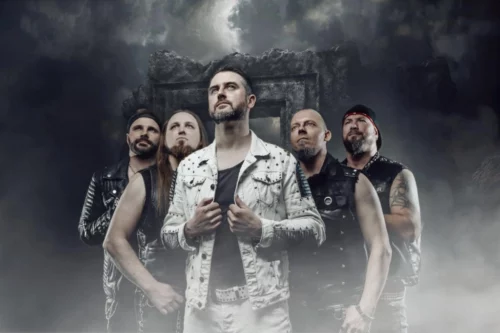
There can be no doubt where Turbokill’s sights are set with a name like Champion. Formed in 2017 after singer Stephan Dietrich’s departure from Alpha Tiger, the group only managed to release debut album Vice World in 2019 before the pandemic forced them–and virtually everyone else–to take a break for a few years. Now they re-emerge into a post-plague world with their sophomore offering which promises three things: catchy hooks, sing-along choruses, and uplifting lyrics. These traits are hardly uncommon in power metal, but the results can be electrifying when executed properly. Time to put Champion to the test in a crowded playing field.

It quickly becomes clear that Turbokill has few tricks or twists up its sleeve to help differentiate itself from the pack. Instead, its approach is to expand its borders into lofty power metal territory while keeping one foot in the more straightforward heavy metal style of the debut. The first proper track “A Million Ways” is a good representation of what’s to come, blending the galloping riffs of HammerFall with the sweeping, grandiose choruses of Freedom Call. They sometimes borrow from less traditional power metal variants like Theocracy (“Time to Wake” and “Overcome”) and Brothers of Metal (“Sons of the Storm”), however, most of the music will feel comfortably familiar to fans of typical Euro-power cheese.

Champion is not quite as consistent in quality as it is in style. Stephan Dietrich has the type of nasally voice that lends itself better to the more trad-metal songs, such as the title track. Unfortunately, he seems to strain a bit on the higher notes, so he’s unable to make some of the power metal choruses (“A Million Ways,” “Go Your Way” and “Sons of the Storm”) really soar. Overall, though, his delivery is effective and charismatic, and it’s easy to see why he’s the most prominent piece of the group’s identity. That said, Turbokill doesn’t bet all its chips on Dietrich. Daniel Kanzler and Ronny Schuster take every opportunity to step on the accelerator with their guitar shredding. The problem comes when they sometimes Kill the Turbo at strange times. For example, a guitar solo starts in the middle of “Time to Wake” only to sputter out after a few seconds to make way for a slower, extended bridge. When the guitar soloing reasserts itself afterward, it’s lost some of the momentum that a performance of this caliber deserves.

The 54-minute runtime is another impediment holding Champion back from its full potential. There’s a lot of solid material here that would have hit harder if the more mediocre songs like “Mirage Mirror” and “Tear It Down” were cut. The reprise of a melody from the intro at the end of album finale “Overcome” is a nice detail but it’s easy to miss because of how much time elapses in between. I have to acknowledge the heroic efforts of drummer Kevin Käferstein to liven up the drier moments, particularly in the verses of “Go Your Way” and the chorus of “Overcome.” Marco “Fox” Grünwald’s bass is just audible enough to add much-needed crunch, though I wish his presence on Champion was at the same level as it was in Vice World.

Turbokill accomplish much of what it set out to do. Champion has plenty of high-octane lines and meaningful hooks. In the end, though, it plays way too safe for way too long. This makes me struggle to find reasons to return to this over any of the other bands I’ve referenced above the next time I have a cheese craving. A small shift in songwriting emphasis from simple, sugary choruses to the dexterous instrumental prowess evident here would do wonders for Turbokill’s memorability. For now, sadly, this aspiring Champion will have a hard time making it out of the play-in tournament.

Rating: 2.5/5.0
DR: N/A | Format Reviewed: Stream
Label: Steamhammer/SPV
Websites: Bandcamp | turbokill.de | Facebook
Releases Worldwide: September 27th, 2024

#2024 #AlphaTiger #Champion #FreedomCall #GermanMetal #Hammerfall #PowerMetal #Review #Reviews #Sep24 #SteamhammerSPV #Theocracy #Turbokill

Turbokill - Champion Review | Angry Metal Guy

A review of Champions by Turbokill, available worldwide September 27th via Steamhammer/SPV.

Angry Metal Guy

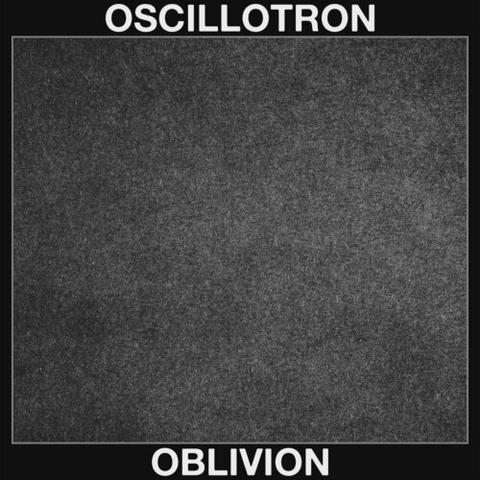
Oscillotron – Oblivion Review

By Dear Hollow

Look, Dave. Buddy. Pal. I love drone, but you’re making it really difficult. When I sat and listened to Sunn O))) for like an hour and a half, my colleagues mocked me. They said, “Wow Dear Hollow, doing laundry at work, huh?” before laughing and gorilla-hooting in my face all the way back to the Fvneral Fvkk cvbicle. I persisted, even when Steel Druhm played screaming rooster videos while I played Nadja’s Radiance of Shadows and I thought it was the advent of vocals I had missed before—I even spilled my coffee. But even then, I turned the other cheek. I persisted. Even when Dr. A.N. Grier called me an idiot as loudly as possible to drown out Horseback, making him sound like the deranged lap-steel-abusing cowpoke I know he is. My point is: Dave, my man, you gotta help me out here.

Oscillotron is a project of David Johansson, frontman of Steel Druhmgorilla-themed Swedish doom rock act Kongh, and live guitarist for Cult of Luna since 2013. If you’re hoping that Oscillotron incorporates any of that shit, aside from thick-as-booty-cheeks heavy, you’ll be sorely disappointed. Oblivion is Johansson’s first offering under the moniker in eight years, promising more drone-influenced sprawls than the atmospheric doom and electronic emphases of 2016’s Cataclysm or 2012’s Eclipse. In this way, Oblivion lives up to its name—mightily. Your ears will be greeted by an hour-long track composed of an unceasing wall of noise made of droning guitars and Moog synthesizers. Without a serious pair of headphones or an ounce of masochism, Oscillotron will offer you the album to drift off to. It’s about as exciting as you can imagine.

Oscillotron is meticulous in its sound design, with each layer of density and shuddering radiant carefully constructed and included. In true drone spirit, Oblivion’s spotlight is on the heft. Oscillotron offers no vocals or percussion and no chord progressions in a stark (and tragic) departure from their Sunny genremates. It’s one sprawling and unmoving beast whose only sign of life is some periodic strumming movement, the electronic warbles and beeps from the synth, or the gradual collapse of the wall somewhere near the forty-five-minute mark. Johansson steers away from the Sabbathian orange fuzz of Earth, the dynamics of early Boris, and the evocative movements of Nadja. It’s truly Oblivion, an emptiness that envelopes the ears in encompassing saturation of total emptiness. It’s almost astounding, as repeated listens grant layers of noise peeled back with each iteration, a trip to the void that feels ruinously apathetic and aphotic. It will drive you mad, for better or for worse.

Perhaps most obviously, Oscillotron is drone—stubbornly more-vacant-than-usual-drone—for a whole fuckin’ hour with nothing going for it. Good drone is meant to swallow you whole, but Oblivion is so devoted to expansion that it neglects any form of accessibility or, dare I say music. Distortion is front and center, and for funsies you can sing along by humming the same note for a whole fucking hour. As such, there is no direction or defined purpose, no beginning, middle, or conclusion, aside from the shuddering density. Oblivion cannot stand on its own, as there isn’t even a lead-in or a fade-out—it just starts abruptly and ends abruptly. I can admire Oscillotron’s motives to create something rawer and more visceral than the cinematic facades constructed in years past, but to turn away from the very basics of music into truly a sprawling static stand-still of noise? That is truly puzzling.

I will use Oscillotron’s breed of noise-mongering as background noise for reading or sleep aid, but Oblivion is minimalist decadence for absolutely no one’s benefit. It lacks basic musical wherewithal and earns its status as “just noise.” Yeah, I love drone, but I also like drone to feel a bit more like, I don’t know, music? I can see its uses and get lost in the labyrinth where all walls look the same, but Dave, my guy, I’m gonna be made the laughingstock of AMG HQ if you keep this up. At least put in a couple more chords, a sustained high note, drums, vocals—something. If not, the ADHD Metal Guy, Second Most High Gorilla, Idiotic Cowpoke Grier, and the other Fvneral Fvkking bastards are coming for me. For my sake. Be a friend. Please.

Rating: 1.0/5.0
DR: 3 | Format Reviewed: 320 kb/s mp3
Label: Self-Released
Website: oscillotron.bandcamp.com | facebook.com/oscillotron
Releases Worldwide: September 20th, 2024

#10 #2024 #AmbientNoise #BlackSabbath #Boris #CultOfLuna #DoomMetal #Drone #DroneMetal #Earth #Horseback #Kongh #Nadja #Noise #Obligion #Oscillotron #Review #Reviews #SelfRelease #Sep24 #SunnO_ #SwedishMetal

Oscillotron - Oblivion Review

David Johansson’s Oscillotron returns with Oblivion, an hour-long drone-filled journey. Is it just a clever name? Or will you find yourself staring into the abyss?

Angry Metal Guy

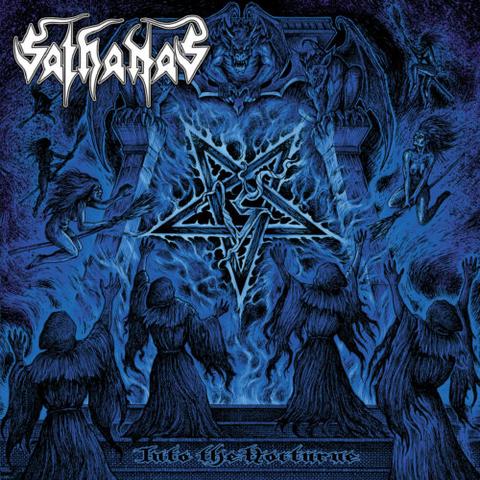
Sathanas – Into the Nocturne Review

By Mark Z.

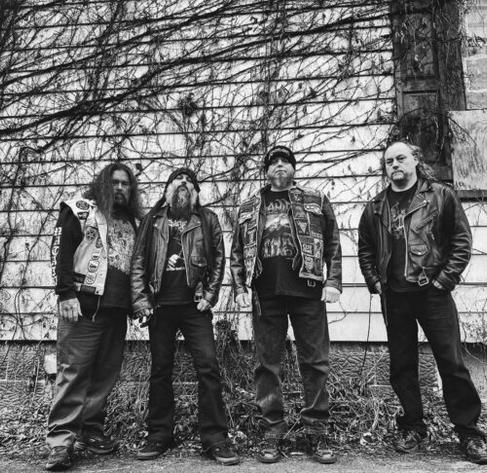
They always said consistency and hard work pay off. I’m starting to think they fucking lied. Pennsylvania quartet Sathanas have been peddling their witch’s brew of black, death, and thrash metal since 1988, yet the poor saps still have less than 1,000 monthly listeners on Spotify at the time of this review. That’s not for lack of trying, either. Over the years the group have released eleven full-length albums, along with a shitload of splits and even a few EPs. After listening to their back catalog, I’ve started to think that the group’s unwavering devotion to the old school makes them their own biggest enemy. Since their formation, the band have been practically militant in their refusal to progress beyond crunchy mid-paced songs that sound a bit like Hellhammer with whiffs of 90s black and death metal mixed in. Other than improvements in production, there is virtually no development throughout their discography, let alone many hooks or standout riffs. A lack of highlights was certainly my main gripe when I reviewed the band’s tenth album Necrohymns in 2018, but has the group finally upped their game with their twelfth record Into the Nocturne?

Opener “Beyond the Witch” certainly offers something slightly different. While the band’s typical primitive riffs and mid-paced rhythms are still here in full force, the track also features frosty chords that carry a more prominent than usual influence from 90s black metal. “Raise the Chalice” kicks off the record’s second half in similar fashion, with chilly and reflective progressions that are augmented by a catchy half-time thrash break and anthemic snarls of the track title. A slightly different strain of black metal appears on “There Will Be Demons,” with the song marching forward on stomping riffs that sound like a devolution of Bathory’s Hammerheart era. The vocals, which are presumably once again performed by guitarist Paul Tucker, consist of a biting and evil rasp that perfectly captures the wicked spirit of these songs.

Sadly, other than the aforementioned tracks, Into the Nocturne is largely business as usual for Sathanas. As before, many of these songs simply coast along on languid riffs that sound like transitional moments between better ideas that never actually come. “Reaperlord,” for example, is full of stock progressions that haven’t excited anyone since 1985, and the song’s shouts of the track title are hardly enough to redeem it. Much of the album also becomes monotonous, with many of these tracks featuring overly similar vocal patterns, riffs, and tempos.

While some attempts at diversity work, often they don’t go far enough. On songs like “To Bring the Sabbat,” drummer James Strauss (ex-Acheron) throws in a few brief blast beats, but doing so adds little energy to the proceedings and instead just feels like a halfhearted attempt to add variety. Closer “Where Death and Darkness Entwine” is more successful in this regard, with its peppier beats offering a sense of urgency and inspiration that’s lacking elsewhere. The album’s production also works well, with a sharp guitar tone, a clear overall sound, and a wide dynamic range that gives everything plenty of space. And, with the album moving through its ten tracks in just 33 minutes, neither any song nor the record as a whole feels too long.

This is exactly the kind of review I hate to write. Sathanas seem like a devoted bunch of dudes, and I can’t imagine they’re playing this music for any reason other than their love of it. They’re also competent musicians, and Paul’s raspy voice sounds more venomous and evil than many of his peers. Unfortunately, I just don’t find myself particularly excited about this record. If I want to experience this type of primitive extreme metal, I’d much rather listen to Gravewürm, who have a similar style but with far more catchy material in their spellbook. Though Sathanas have certainly put in the work over the years, it seems their steadfast devotion to a very specific sound has become their undoing. Into the Nocturne is, unfortunately, simply the latest example of this. Thus, despite a few decent moments, this album is ultimately not something I can heartily recommend.

Rating: 2.0/5.0
DR: 10 | Format Reviewed: 192 kbps mp3
Label: Moribund Records
Websites: sathanas666.bandcamp.com | facebook.com/sathanasmetal
Releases Worldwide: September 27th, 2024

#20 #2024 #Acheron #AmericanMetal #Bathory #BlackMetal #DeathMetal #Gravewürm #Hellhammer #IntoTheNocturne #MoribundRecords #Review #Reviews #Sathanas #Sep24 #ThrashMetal

Sathanas - Into the Nocturne Review | Angry Metal Guy

A review of Into the Nocturne by Sathanas, available September 27th worldwide via Moribund Records.

Angry Metal Guy

Crypt of Reason – Stargazer Review

By Maddog

Written by: Nameless_N00b_90

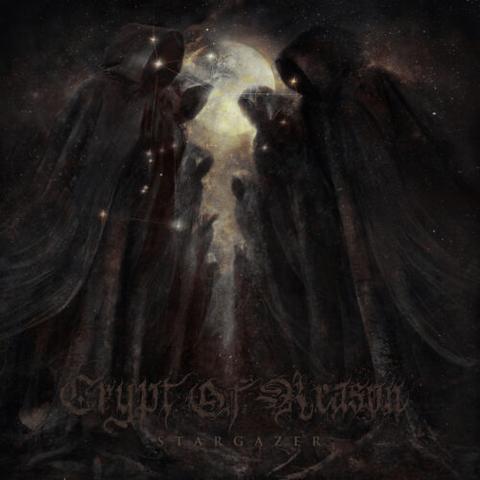
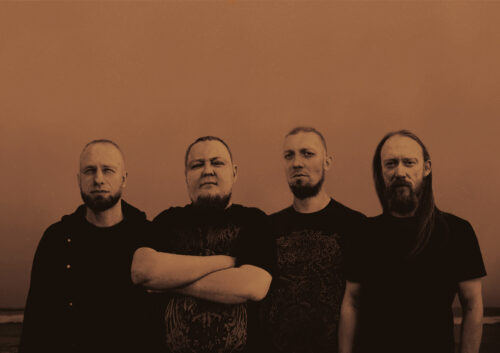
The death of a friend or loved one can spark an artist to pour their heart out. Swallow the Sun recorded the emotionally devastating When a Shadow Is Forced into the Light following the death of lead guitarist Juha Raivio’s partner, and Korn released their most mature and gut-wrenching album, The Nothing, following the death of Jonathan Davis’s wife.1 Belarussian Crypt of Reason joins this tradition with their debut album, Stargazer. Stargazer is an album 8+ years in the making, delayed by the sudden death of the band’s lead songwriter, Pavel Minutin, in 2016. Doom is a fitting genre for ruminating on death, yet Crypt of Reason doesn’t play straight-up doom. Will their blend of genres hit you in the feels?

Unlike Swallow the Sun, Crypt of Reason did not compose their album for the deceased but completed his mostly-written album using drafts and demos. Pavel’s vision was a dissodeath band in the vein of Ulcerate mixed with a healthy dose of doom. Stargazer’s first few songs mimic Ulcerate’s intensity, and vocalist Alexander Naumenko’s throaty growls are more than adequate. But Crypt of Reason is not just an Ulcerate clone. They play at the trudging tempo typical of doom but often switch it up with crunchier guitars and spunkier drums. On top of death/doom, Stargazer is shot through with a post-metal feel and hints of industrial. The guitars become whiny, and the vocals lose their edge in favor of a quiet wispy sound. These disparate genres sometimes blend within songs (“Lemma”), while other songs go completely one way or the other. “The Origin Curse,” with its soft guitar tone and minimalist sound, contains none of the trappings of a doom song, while “Argon,” with its discordant drum beats, goes full disso-doom.

The first three songs of Stargazer give the impression the album will be straight-up disso-doom, so it’s a shock when “Lemma” switches gears. Naumenko begins performing what I can only describe as a growly mumble rap. Then halfway through, he switches to his harsh vocals and the band plays some of the album’s best doom. Was the strangeness just a blip? Then “Savior” begins and it’s clear that the tone has shifted. This is no longer disso-doom, but a sort of post-nu-metal with hints of Mushroomhead.2 The drum beats become sparser and the lead guitars and synths more repetitive. Crypt of Reason even experiments with unusual sound effects, like a metronome in “The Origin Curse” and what sounds like a washboard in “Savior.” From here on, the album becomes like Dr. Jekyll and Mr. Hyde. Jekyll performs his growls and heavy doom, only for Hyde to come out of hiding to terrify you with his nu-metal and mumbling.

Sadly, even the doom doesn’t pull its weight. The compositions are underwhelming, lacking the emotional heft one might expect. It’s not a problem with the musicianship. The guitars by Alex Sedin are competent, and his solos played with a delicate touch, are lovely. Vladimir Izotov handles the drums with confidence,3 seamlessly switching tempos and anchoring Crypt of Reason’s sound. The fault lies in the production and mixing. The drums often sound flat and muted.4 The guitars switch from being crunchy and intense to dull and whiny. The vocals sometimes drown out the instruments and sometimes fade into the background. Worst of all, the instruments and vocals often feel disjointed, like they aren’t playing together but atop one another. As a whole, that’s the feeling I get from this album: the pieces don’t quite fit together.

Due to its odd mix of genres and struggles with production, Stargazer might struggle to land. Fans of doom will be confounded by the elements that don’t belong on a doom album, while fans of post-metal (if you can call it that) won’t find the compositions strong enough to give their full attention. Even for fans of industrial or nü-metal, only a few songs fit that bill. Crypt of Reason would have been better served by focusing on death/doom. That said, it takes tremendous effort to put together a complete album, and to do so in the aftermath of the death of a friend is even more daunting. While I must rate the music on its own terms, my heart goes out to the band, and I hope they achieved the catharsis that they sought.

Rating: 1.5/5.0
DR: 4 | Format Reviewed: 320 kb/s mp3
Label: Self-Released
Websites: cryptofreason.bandcamp.com | facebook.com/CryptOfReason
Releases Worldwide: September 24th, 2024

#15 #2024 #BelarusianMetal #CryptOfReason #DoomMetal #IndependentRelease #Mushroomhead #Review #Reviews #Sep24 #Stargazer #Ulcerate #Unsigned

Crypt of Reason - Stargazer Review | Angry Metal Guy

A review of Stargazer by Crypt of Reason, available September 24th worldwide via independent release.

Angry Metal Guy

Calcarata – Der Müde Mensch Review

By Thus Spoke

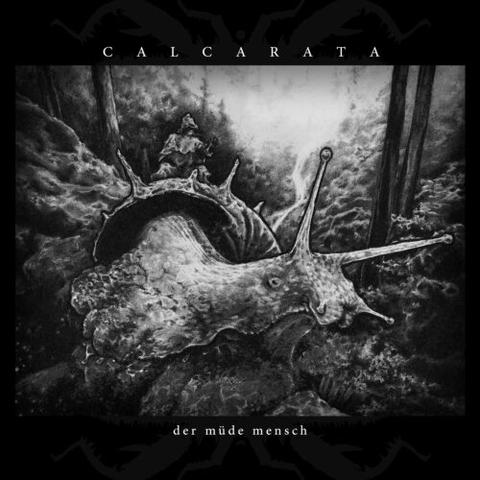
Calcarata is only the second metal band I’ve encountered with a conceptual connection to the Mollusca phylum.1 Admittedly, their debut, Der Müde Mensch, incorporates the gastropod more in the mythic sense than the literal, as it purports to “follow the giant snail of slumber up and down the slopes of the mind.” And yet the creature’s prominence—from the cover art to the music itself—proves to be a key motif for the album. Exploring realms of dreams and death in word, Calcarata’s hazy atmospheric black metal experiments with them in musical expression too with mollifying, slow-moving soundscapes. Music evoking the essence of liminal states of consciousness, deliberately measured and hypnotic in its sway, treads the fine line between effectively immersive, and simply soporific. Der Müde Mensch falls very firmly on one side of this line.

Der Müde Mensch—The Tired Person—turns out to be very aptly named. The mellow ethereality that wafts across its runtime (particularly in opener “Calcarata,” and ending title track) is reminiscent of a dreamlike state of semi-consciousness, listlessness. In fact, much of the black metal on display would fall neatly into the DSBM camp (“Heilung,” title track) were it not for that hopeful thread inhabiting the melodies, both in guitar and clean-vocal form. Many such melodies, if not gripping, are pleasing and ambient, working well against both faltering shrieks as low-tuned “mmmms” and “ahhhs” (“Morgenrot im Totental”). The whole thing has a kind of easy familiarity embodied by layered tremolos repeating vaguely melancholic refrains and fades naturally into the background.

Der Müde Mensch is characterized by placid, uninspired themes, with exceptions to this rule few and far between. The “sprawling psychedelic solo” teased in the one-sheet and delivered in the back half of “Heilung,” is undoubtedly the album’s high point. While nothing spectacular in itself, its warbling, wobbling meander is a sudden explosion of color amidst the grey, monotonous surroundings. There are times when the vocals gain an impassioned power, and the guitars a lilting melancholia (“Morgenrot im Totental,” title track) that seems to capture the ghost of feeling. But it’s difficult to appreciate these assets when Calcarata take a decidedly snail-like approach to composition that drags already tired refrains out to unbearable lengths, where they dry up and wither. The pay-offs that consist mainly of a simple escalation of the central melody, and screams, could be powerful, were it not for the fact that one has had to wait ten-plus minutes for them. Even then the denouement is unambitious and lukewarm; neither intricate and mesmerizing, nor punchily affecting through deceptive simplicity.

The overall absence of dynamism makes Der Müde Mensch a slog to get through, despite its reasonable 47-minute runtime. Far too often a melody enters only to leave undeveloped. With the notable exception of “Heilung”‘s five-minute solo, the best it gets is a flicker of urgency coming through a more mournful iteration of the theme (“Morgenrot im Totental”). The percussion is similarly anaemic, with only a few moments of genuine flourish (“Heilung,” title track), and entirely lacking the assertiveness which would mitigate the monotony of the monosyllabic tempos. If there’s one thing Calcarata deserve praise for, it’s their production choices. Der Müde Mensch would have turned out far worse had the duo opted for a traditional raw or atmo-black mix. Thankfully, they did not, and so the melodies and percussion are comparatively crisp and layered. One can only imagine the heights of beauty the music could have reached with a more ambitious template.

I want to like Der Müde Mensch more than I do, but Calcarata don’t make it easy. Rather than using an interesting concept to inform deep, intriguing soundscapes, the duo seem uninterested in musically exploring the metaphorical worlds they center their art around or taking their listener on any kind of journey. They just end up putting you to sleep.

Rating: Disappointing
DR: 7 | Format Reviewed: WAV
Label: Naturmacht Productions
Websites: Bandcamp | Artist Site
Releases Worldwide: September 27th, 2024

#20 #2024 #AtmosphericBlackMetal #BlackMetal #Calcarata #DerMüdeMensch #GermanMetal #NaturmachtProductions #Review #Reviews #Sep24

Calcarata - Der Müde Mensch Review | Angry Metal Guy

A review of Der Müde Mensch by Calcarata, available September 27th worldwide via Naturmacht Records.

Angry Metal Guy

Liljevars Brann – Helja Kor Review

By Mystikus Hugebeard

They say that 75% of a Finnish park ranger’s job is finding black metal bands that got lost in the woods shooting album covers. Suppose the park rangers in Germany had a similar issue. In that case, I imagine they would have the hardest time finding atmospheric black metal newcomers Liljevars Brann, given how musically deep into the woods they seek to take us in their debut album Helja Kor. Written in a fictional blend of German and Norwegian languages and dubbed “mystical black metal with a folkloric edge,” is Helja Kor a strong debut that conjures grasping roots to drag you into the heart of the forest, or are these woods still too close to the parking lot?

Liljevars Brann weaves together slow-tempo black metal with winding acoustic guitar passages. It worked when heavier bands like Panopticon or Ulvik did it,1 and it works here in Helja Kor. Melancholic guitar riffs plod beneath high-pitched harmonizing guitar wails like a reborn The 3rd and the Mortal with a harsher, black metal edge, regularly interspersed with panoramic acoustic sequences. Liljevars Brann excels at folk music; the guitars have a satisfying pluck and pace that happily reminds me of Uaral. The vocals, by frontman Sjelvindur, are one of the most compelling parts of Helja Kor. His clean vocals marry a mysterious folksiness with a warbling gothic cadence, and some of the album’s best moments come from Sjelvindur’s percussive intonation in the outro of “Helja Kor” and the somber shakiness of the beginning of “Krieglande.” Between the winning combination of black metal and folk music with the added edge of Sjelvindur’s unique vocals, the components of a great album are all here.

Unfortunately, Helja Kor struggles to truly find its footing due to meandering songwriting that begins to drag early on. Low intensity is one thing, but Helja Kor is also low energy, which makes it difficult to stay engaged. From the opener “Helja Kor” to the second-to-last “Krieglande,” every song is in the same torturously slow 3/4 time signature with minimal evolution or differentiation between songs. Even the rare black metal sections of the primarily acoustic “Sjelvind” feel melodically identical to those of the more predominantly heavy “Krieglande.” A 3/4 time signature isn’t an issue by itself, but after 40 minutes of overtly similar riffs in a stagnant tempo, it’s impossible not to crave variation. That comes in, blessedly, in “Brannstjeringen,” which ends the album on a miraculously high note through dynamic songwriting in a refreshing 4/4 time signature. “Brannstjeringen” builds towards an exciting, emotionally charged apotheosis that highlights how the remainder of Helja Kor lacks meaningful direction in its song structure, devoid of stirring peaks that move me like “Brannstjeringen” does.

Helja Kor touts a mystical, woodsy atmosphere, and this atmosphere is strong enough to partly compensate for what the songwriting lacks. The folk guitars are effectively paired with Sjelvindur’s vocals, and they just ooze arboreal mysticism. It’s a shame that an excess of melodic/harmonic repetition and languid structure permeate Helja Kor, because by themselves, the guitar harmonies in “Dansa Mej Brodar I Fyre” and “Krieglande” are enjoyable. It boggles the mind, then, how much the drums clash with Helja Kor’s atmosphere through a distracting mix that fails to effectively integrate them. The strength of Liljevars Brann’s acoustics is frequently undone in “Helja Kor,” “Dansa Mej Brodar I Fyre,” and “Sjelvind” by the incessant ting-ting-ting of the cymbals. Even towards the end of “Brannstjeringen,” the drums leave a stain on the song’s highest point with loud, off-tempo blast beats. It’s clear that Liljevars Brann has put a lot of thought into the unique atmosphere they want to create, but it unravels at almost every turn through songwriting that doesn’t support it and a mix that dilutes it.

Helja Kor is the type of record where it’s easier to appreciate what Liljevars Brann is trying to do than enjoy its execution. There are glimpses of a compelling folkloric atmosphere to be found, but Helja Kor flounders in excessive repetition, frequently dissatisfying structure, and irritating production choices. And yet, I abhor the thought of abandoning Liljevars Brann for good because there is a real vision here, and I want to see it realized. Helja Kor has enough individually solid aspects—Sjelvindur’s vocals, the Uaral-esque acoustics, the black metal harmonies, the peaks of “Brannstjeringen”—to compel me to keep my eye on Liljevars Brann in hopes that their next release finds me more lost in the woods than a mere park ranger can handle.

Rating: Disappointing
DR: 8 | Format Reviewed: 320 kb/s CBR MP3
Label: Argonauta Records
Websites: facebook | bandcamp
Releases Worldwide: September 27th, 2024

#20 #2024 #ArgonautaRecords #AtmosphericBlackMetal #BlackFolkMetal #BlackMetal #GermanMetal #HeljaKor #LiljevarsBrann #OctoberFalls #OctopusRising #Panopticon #Sep24 #The3rdAndTheMortal #Uaral #Ulver #Ulvik

Liljevars Brann - Helja Kor Review

Discover Liljevars Brann’s debut Helja Kor, a mystical black metal journey blending folklore and deep atmospheric soundscapes.

Angry Metal Guy

The Flight of Sleipnir – Nature’s Cadence Review

By Maddog

The Flight of Sleipnir’s 2021 opus Eventide made ripples in the underground and grabbed my attention. The album blended stoner doom, acoustic folk, and post-metal, hardly groundbreaking elements. But Eventide distinguished itself by assembling them into a cohesive, beautiful whole, albeit one that hasn’t stuck with me. While we haven’t covered The Flight of Sleipnir since 2014’s V., I nabbed Nature’s Cadence as soon as I could, hoping it could catapult the band from goodness to greatness. Either way, I knew it’d be a breath of fresh air, and its gorgeous cover art was irresistible. Is Nature’s Cadence as memorable and moving as I hoped, or merely an interesting specimen?

While Nature’s Cadence doesn’t mimic any other band, it draws from a wide range of influences. The Flight of Sleipnir’s backbone consists of mid-paced stoner doom riffs wrought from simple melodies. These ideas branch in countless directions. At times, the guitarists Jeremy Winters and Clayton Cushman augment these stoner riffs with soaring melodies reminiscent of Elder. Other sections marry minimalist doom with a hypnotic post-rock aesthetic that resembles Amenra (“Vingthor”). Meanwhile, The Flight of Sleipnir infuses every track with folk elements that feel distinctively American. Placid acoustic guitar parts abound, while Cushman’s pedal steel adds subdued beauty. Accordingly, the vocals alternate between droning cleans and blackened screams. Even this laundry list doesn’t do justice to Nature’s Cadence’s diverse sound; the closer “Wanderer” alone deserves a treatise on its blend of foreboding spaghetti Western melodies, Maiden-esque guitar harmonies, and otherworldly Bergtatt escapades. Despite its variety, Nature’s Cadence never flaunts its uniqueness as a gimmick and never leaves any element underdeveloped.

Nature’s Cadence excels in its folky beauty, with mixed success in its heavier moments. The acoustic track “The Woodsman” showcases this best, gripping me through its narrative flow and its somber melodies. Clean sections of other songs hit just as hard; the opener “North” marries sparse Agalloch strumming with guitar leads that evoke David Gilmour on downers. Conversely, the doomy segments sometimes lose me. Some of The Flight of Sleipnir’s stoner riffs are too simplistic to make a mark (“Madness”), while others start strong but outlast my attention (“Vingthor”). As a result, Nature’s Cadence’s climaxes feel less explosive than they should. Still, the album’s redeeming moments make it hard to complain. The Flight of Sleipnir isn’t the next Kyuss, but the creative riffs and soaring leads of “North” are a stark reminder of their potential.

Nature’s Cadence’s greatest strength is how neatly it welds its pieces together. The seam between the album’s metal bangers and its serene folk elements is invisible. This is partly a result of melodic continuity, such as when “North” follows up a sparse acoustic passage with a doom rendition of the same melodies. Winters and Cushman’s guitar harmonies allow them to both mirror each other and establish striking contrasts, most notably on the spectacular “Wanderer.” Meanwhile, Dave Borrusch’s confident bass performance elevates Nature’s Cadence throughout both its peaks and its valleys. By laying down lead melodies during calmer moments (“The Woodsman”), enriching songs through subtle variations (“North”), and adding depth even with simple backing (“Vingthor”), the bass helps maintain continuity through the album’s stylistic about-faces. While the record’s longer tracks would benefit from more cohesion between different sections, The Flight of Sleipnir’s songwriting is impressive. Armed with a wide range of ideas and a dogged insistence on combining them thoughtfully, Nature’s Cadence stands out without sticking out.

Nature’s Cadence is a meditative experience that lives up to its ambitious title. On paper, folky stoner post-doom sounds like a prospective disaster. But The Flight of Sleipnir shines by placing fluidity first, resulting in a tight 39-minute record that does justice to its influences without sounding like a split. Punchier riffs would help the album hit harder during its heftiest moments. As it stands, while Nature’s Cadence won’t top my 2024 list, it’s a unique and rewarding listen for music fans of every ilk.

Rating: 3.5/5.0
DR: 10 | Format Reviewed: 320 kb/s mp3
Label: Eisenwald
Websites: theflightofsleipnir.bandcamp.com | facebook.com/theflightofsleipnir
Releases Worldwide: September 27th, 2024

#2024 #35 #Agalloch #Amenra #AmericanMetal #Doom #DoomMetal #Eisenwald #Elder #Folk #FolkMetal #IronMaiden #Kyuss #NatureSCadence #PinkFloyd #PostMetal #Review #Reviews #Sep24 #Stoner #StonerDoom #StonerDoomMetal #StonerMetal #TheFlightOfSleipnir #Ulver

The Flight of Sleipnir - Nature's Cadence Review | Angry Metal Guy

A review of Nature's Cadence by The Flight of Sleipnir, available September 27th worldwide via Eisenwald.

Angry Metal Guy

Lizzard – Mesh Review

By Dolphin Whisperer

Back when 2020 was turning the page to hopefully a better year, I caught a podcast of a little-spread act, Lizzard, and their freshly forthcoming album Eroded. They chatted with a nervous excitement about their fairly organic and elegant approach to producing a lush and layered form of prog-minded sounds influenced by memories of 90s radio rock. Memory can be fickle. I have plenty of memories of alternative radio from that time and the early 00s, most not particularly fond. If you wander through a neighborhood grocery store you can still relive these recordings, a gentle drop of an infectious yet placid Train chorus or forlorn, funky croon of Incubus or Radiohead. And though the predictable structure of this music—that is Mesh or some of its distant inspirations—may not seem readily appealing, the precise twists of tone or delicate experimentations that these aged tunes possess hold a certain charm that can often be missing in the resonance of today’s rock music scene.

That’s not to say that Lizzard shares nothing in common with the sounds of modern progressive acts. The material off prior releases 2014’s Majestic or 2018’s Shift reveal the same kind of Tool-ish syncopations and gazey, post-leaning Deftones grooves that smatter about contemporaries like Wheel or Hippotraktor. But Lizzard arrives loaded instead with warm, vibrant guitar tones; well-framed, shifting rhythms; and crushing, sing-song bass rattling that comes together against hypnotizing and emotive refrains. Despite pushing an audible gloom, guitarist and vocalist Mathieu Ricou doesn’t possess a powerhouse sadboi voice,1 falling into the Jonas Renkse (Katatonia) school of growth by iterative force, pushing the bounds of a crinkling pathos against glistening and glowing melodies (“Home Seek,” “Minim,” “The Beholder”). Mesh wears in plain sight the cracked color vocal palette of its inspirations—the fragile skip of Thom Yorke (Radiohead), the fluttering falsetto of Ian Kenny (Karnivool, Birds of Tokyo). Though, importantly, with that same lyrical atmosphere Lizzard rides the waves of their reverberating melancholy to brighter pastures with practiced aplomb (“Elevate,” “Home Seek,” “The Beholder”).

The captivating strength of Lizzard’s lead drives gives Mesh the power to hook no matter the manner of attack. Whether amp-blowing riff (“Unity”), nasally bass warble (“New Page,” “Home Seek”), or united rocking thrust (“Black Sheep”), each successive passage builds in subtle ways on the last. It’s simple—Lizzard wears the verse-chorus-verse-chorus-bridge-chorus tried and trusted pattern well. This adherence to The Beatles method of elegant accentuations within the box of the AABA allows Ricou to step back and use looped or steady patterns to let Will Knox’s wide bass slips and slides be a voice that flitters about in near harmony to Ricou’s poetic recitals (“New Page,” “Mad Hatters”). And elsewhere, Knox and drummer Katy Elwell maintain a thundering pulse to allow Ricou’s tension-loaded scale explorations evolve into post-rock-inspired bright chord crescendos, with “The Unseen” even featuring a gaze-drenched-yet-snappy solo.

The consistency that runs through Mesh allows each song’s peaks and flairs to weave the experience into a cohesive whole. At first blush, it’s easy to parse Mesh as a collection of great songs. But in the presence of its individually structure nature, the cyclical flow of bursting intro to playful melodies to sweeping codas spills over into the atmosphere between each number. Hard-hitting, riff-loaded jams have full-brake resolutions (“Unity,” “Black Sheep,” “The Unseen”). Other songs that steer with crystalline arpeggio hooks and cymbal-splashed ceilings segue with a shimmered reverb harmonic that maintains the somber mood. And the closing trio functions as one extended thought, with “The Beholder” intentionally starting with hard-panned bass and guitar to mimic the division of it all until the first chorus unites the duo.

Predicting that which will deeply resonate within our listening hearts stands as an effort futile, misguided by the things we want rather than need. I never could have predicted that 2021 would deliver me Lizzard’s Eroded, a modern classic in my head canon. And though Lizzard’s back catalog remains loaded with smart tune after smart tune, Mesh still had no guarantee of landing as a success. Mesh is not the definitive and downcast cry that drilled Eroded deep into my listening heart. But it is steady, lush, and hopeful. Mesh is not an album that revels in virtuosic spectacle or deeply layered narrative. But it is so finely woven in execution—exacting and exuberant—that Mesh too has embedded itself as necessary progressive listening.

Rating: 4.0/5.0
DR: 72 | Format Reviewed: 320 kbps mp3
Label: Pelagic Records | Bandcamp
Websites: lizzardband.bandcamp.com | facebook.com/lizzardmusic
Releases Worldwide: September 27th, 2024

#40 #AlternativeRock #ArtRock #BirdsOfTokyo #Deftones #Eroded #FrenchMetal #Hippotraktor #Incubus #Karnivool #Katatonia #Lizzard #Mesh #PelagicRecords #PostRock #PostMetal #ProgressiveRock #Radiohead #Review #Reviews #Sep24 #TheBeatles #Train #Wheel

Lizzard - Mesh Review | Angry Metal Guy

A review of Mesh by Lizzard, available via Pelagic Records worldwide on September 27th.

Angry Metal Guy