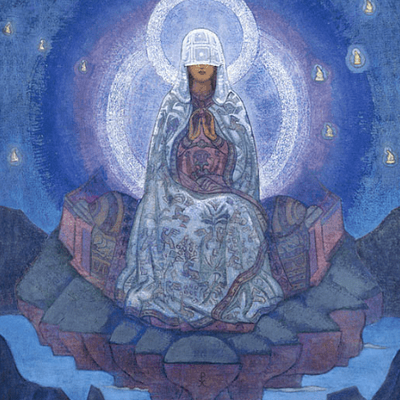
 Spirituality & Religious Studies
The Kumari
Also known as Kumari Devi, or the Living Goddess. Kumari means young girl or unmarried in Sanskrit.
This is a uniquely Hindu & Buddhist practice. It’s primarily observed in Nepal & parts of adjacent India, which centers on the worship of a prepubescent girl as a living goddess & a manifestation of the divine feminine energy.
Shakti, the Indian religious worship monotheistic god’s multi-morphic avatar manifestation of genderless formless god into human forms including worshipping women as goddess in various forms such as worship of daughters as Kumari, wife as Lakshmi, women as skilled Saraswati & empowered Durga (who as Kali exterminates evil).
A key concept in Hinduism’s Shaktism tradition which venerates the feminine aspect of the genderless formless Absolute God Brahma. A Kumari is considered to be the living embodiment of the goddess Taleju Bhawani (a form of devi Durga), the venerable powerful manifestation of divine woman power, ingraining Hindus & Buddhists to treat their females, moms, sisters, wife, & daughters with respect as goddesses.
A Kumari is a prepubescent girl chosen from the Shakya clan of the Napali Newari Buddhist community. It’s believed that the girl is possessed by the goddess Taleju or Durga.
When her 1st period starts, it’s thought that the deity leaves her body. Serious illness or a major loss of blood from an injury also causes loss of deity. The chosen female child is typically worshipped from a prepubescent age, with her tenure as the divine vessel concluding with her 1st period, or a significant loss of blood (like from an injury). This signifies the departure of the goddess’s spirit.
The veneration of the young girl reflects the Hindu reverence for women as embodiments of the goddess. This girl is often chosen from the Newar Buddhist Shakya community, in the Kathmandu Valley.
There are several Kumaris throughout Nepal. Some cities have several, but the best known 1 is the Royal Kumari of Kathmandu. This particular Kumari lives in the Kumari Ghar, a palace in the center of the city.
The selection process for the Royal Kumari is especially rigorous. As of 2025, the Royal Kumari of Kathmandu is Aryatara Shakya, aged 2. She was selected in September 2025. Unika Bajracharya, was selected in April 2014 as the Kumari of Patan, is the 2nd most important living goddess.
The Kumari tradition is a particularly prevalent practice in the Kathmandu Valley. It is followed in the cities of Kathmandu, Lalitpur (a.k.a. Patan), Bhaktapur (a.k.a. Bhadgaun), Sankhu, & Bungamati.
This tradition is primarily rooted in the Malla Dynasty (12th-18th centuries), which ruled the Kathmandu Valley. The most prominent legend involves King Jaya Prakash Malla, the last Malla king of Kathmandu.
It’s said that the goddess Taleju would visit the king in his chamber to play a game of dice (tripasa). One night, the king looked at the goddess with lustful intent. Enraged, she disappeared, saying she wouldn’t ever return in her divine form. After the king begged for forgiveness, she agreed to return. But only by manifesting in a young, “pure” girl from the Shakya clan.
Historically, the Kumari was the source of a king’s right to rule. During the annual Indra Jatra festival, the king of Nepal would kneel before the Kumuri to get a tika (a forehead mark of blessing). Without this blessing, the king’s authority was considered spiritual void.
Even after the Shah dynasty overthrew the Mallas in 1768. Even after Nepal abolished its monarchy in 2008, the tradition persists, with the President of Nepal now receiving the blessing.
The word “Kumari” is derived from Sanskrit meaning “princess.” The festival is celebrated during Kumari Jatra, which follows the Indra Jatra religious ceremony. The procession is similar to Indra or Sakra, taking Indrani to his celestial home as his bride. The Kumari is also reversed & worshipped by some of Nepal’s Hindus.
The Kumari tradition is a rare bridge between Vajrayana Buddhism & Hinduism. The Kumari always chose the Newar community (the indigenous people of the Kathmandu Valley), specifically from the Shakya or Bajracharya class. Both of which are high-caste Buddhist lineages.
The worship of the goddess in a young girl represents the worship of divine consciousness spread over all creation. As the supreme goddess is thought to have manifested this entire cosmos out of her womb, she exists equally in animate as well as inanimate objects.
While worship of an idol represents the worship & recognition of supreme through inanimate materials, worship of a human represents veneration & recognition of the same supreme in conscious beings.
In the Shakta text Devi Mahatmyam, or Chandi, the goddess is said to have declared that she resides in all female living beings in this universe. The ritual of Kumari is based on this verse. But for the purpose of worshipping a goddess, a young girl is chosen over a mature woman because of her inherent purity & chastity.
The selection of a “Royal Kumari” (the most senior of the several Kumaris in the valley) is an exhaustive process led by high priests. The candidate must be between 3 & 5 years old & process the Battis Lakshan, or 32 physical perfections, which include:
- A neck like a conch shell
- Eyelashes like a cow
- Thighs like a deer
- A voice as clear as duck’s
- A body like a banyan tree
- Unblemished skin & no history of serious illness
During the festival of Dashain, the potential goddess must pass a “test of fearlessness.” She’s placed in a darkened room filled with the severed heads of 108 sacrificed buffaloes & goats. While men in masks dance & make terrifying noises. If the child stays calm & serene, it’s believed the spirit of Taleju has truly inhabited her.
Once chosen, the girl’s life changes immediately. She first moves into the Kumari Ghar. She must wear red, her hair is tied into a top knot, & a “fire eye” (agni chakchuu) is painted on her forehead. Her feet must never touch the “impure” ground. She’s carried on a palanquin or on the arms of her caretakers. While she grants darshan (divine glimpse) to followers, she has to stay expressionless. It’s believed that if she cries, laughs, or trembles, it portends disaster, illness, or death, for the person seeking the blessing.
Hindu scriptures, like the Jnanarnava Rudrayamala tantra, assigns names to a Kumari depending on her age:
- 1 year old: Sandhya, consort of Surya, the Sun god
- 2 years old: Saraswati, 1/3 part of the Tridevi
- 3 years old: Tridhamurti
- 4 years old: Kalika, a.k.a. Kali, consort of Shiva
- 5 years old: Subhaga
- 6 years old: Parvati/Uma, 1/3 part of the Tridevi
- 7 years old: Malini
- 8 years old: Kubjika
- 9 years old: Kaalasandarbha
- 10 years old: Aparajita
- 11 years old: Rudrani, consort of Rudra
- 12 years old: Bhairavi, 1 of the 10 avatars of the mother goddess
- 13 years old: Mahalakshmi, 1/3 part of the Tridevi
- 14 years old: Pithanayika
- 15 years old: Kshetragya
- 16 years old: Ambika, form of the supreme goddess of Hinduism
In Nepal, Kumaris are only worshipped for a day. The above names are only assigned while the ritual lasts, often a few hours. Usually one can’t be a Kumari after 16 years old because of their 1st period(s). In Bungamati, the Kumari reigns until her 1st baby teeth/tooth falls out.
Even today, a mom’s dream of a red serpent is believed to be an omen of her daughter’s future position as the Royal Kumari. The power of the Kumari is perceived to be strong that even a glimpse of her is thought to bring good fortune.
Crowds of people wait below the Kumari’s window in the Kumari Chowk, or courtyard, of her palace, hoping that she’ll pass by & glace down at them.
Some petitioners visit the Kumari in her chambers, where she sits on a gilded lion throne. Many visiting her are people suffering from blood or menstrual disorders since the Kumari is believed to have special power over such illnesses.
Petitioners usually bring gifts & food offerings to the Kumari, who gets them in silence. Upon arrival, the Kumari offers the petitioners her feet to touch, or kiss, as an act of devotion. During these audiences, the Kumari is watched closely.
Her actions interpreted as a prediction of the petitioners’ lives, such as:
- Crying or loud laughter: Serious illness or death
- Weeping or rubbing eyes: Impending death
- Trembling: Imprisonment
- Hand clapping: Reason to fear the king
- Picking at food offering: Financial losses
If the Kumari stays quiet & impassive throughout the audience, her followers leave elated.
Traditionally, the Kumari received no formal, mainstream education. This is because she’s widely considered to be omniscient. Modernization has made it necessary for her to have an education because she re-enters mortal life.
Kumaris are now allowed to attend public school & have a life inside the classroom that’s no different from that of other students. Many kumaris, like the Kumari of Bhaktapur, attend school. Others, like the main Kumari in Kathmandu, get their education through private tutors.
Make a one-time donation
Your contribution is appreciated.
Donate
Make a monthly donation
Your contribution is appreciated.
Donate monthly
Make a yearly donation
Your contribution is appreciated.
Donate yearly
#12thCentury #1768 #18thCentury #2008 #2025 #Ambika #Aparajita #April2014 #AryataraShakya #Bajracharya #BattisLakshan #Bhadgaun #Bhairavi #Brahma #Buddhist #Bungamati #Chandi #Darshan #Dashain #Devi #DeviMahatmyam #haktapur #Hindu #Hinduism #Indian #IndraJatraFestival #Indrani #JnanarnavaRudrayamala #Kaalasandrabha #Kali #Kalika #Kathmandu #KathmanduValley #KingJayaPrakashMalla #Kshetragya #Kubjika #Kumari #KumariDevi #KumariGhar #KumariOfPatan #Lakshmi #Lalitpur #LivingGoddess #Mahalakshmi #Malini #MallaDynasty #monotheistic #Nepal #Newar #Parvati #Patan #Pithanayika #RedSerpent #RoyalKumariOfKathmandu #Rudra #Rudrani #Sandhya #Sanskrit #September2025 #ShahDynasty #Shakti #Shaktism #Subhaga #Surya #Taleju #TalejuBhawani #Tika #Tridevi #Tridhamurti #Uma #VajrayanaBuddhism

 Lektorat Wengorz (Pixelfed)
 The News Lens
 VR LIVE CHANNEL
 Nepal Alternative Treks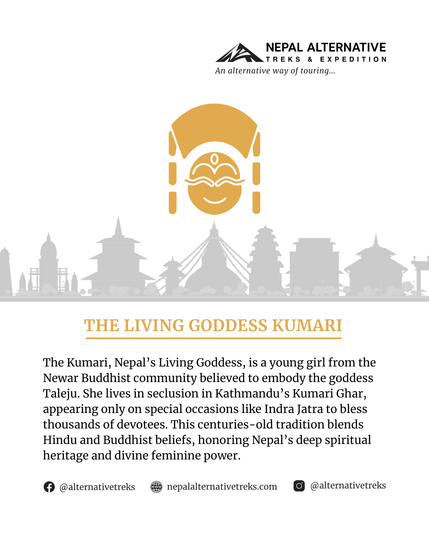
 MKM Modelwerx

 Things David Likes
 fantasyguide
