 Scy_25
Kai'SA K/DA
#LeagueOfLegends #Kaisa #KDA #Skin #Nude #NSFW #Wataa #Chudai #AI #Ass
If you are looking for costume ideas for Halloween, and you like libraries and librarians, hear me out.
#Hilda #Kaisa #library #librarian #animation #animation2d #Halloween
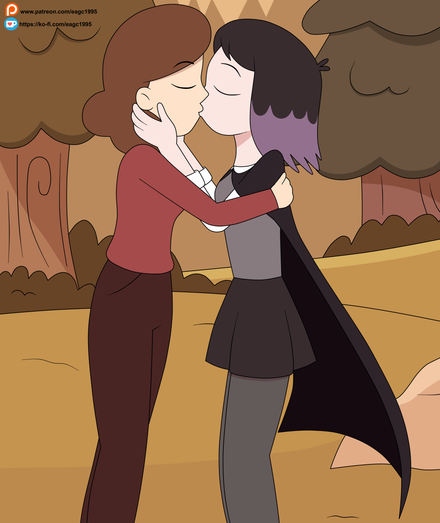
Johanna X Kaisa
For Alonso Lupercio
If you would like to support my work, feel free to support me on either
Patreon: www.patreon.com/eagc1995
Ko-Fi: https://ko-fi.com/X8X0WRTV

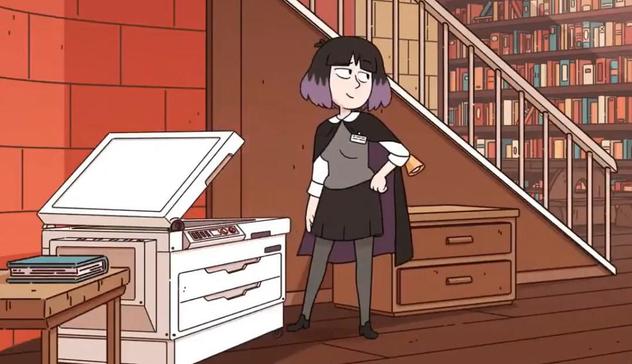
Lending libraries for Nissa, Nowhere Space, and Kaisa in “Hilda”
Kaisa smirks during a scene in the final season of HildaHappy February! In early December 2023, Hilda aired its third, and final, season. It was a fitting end to an animated series which could (and should) have been longer. Unfortunately, Kaisa, the fan-favorite mysterious gothic librarian, got a short shift, as she had in Hilda the Mountain King. Even so, there are many library themes to discuss when it comes to the episode with her most prominent appearance, creation of a lending library by the protagonists, and connections to previous posts about her, Hilda, other series, and library concepts.
In the seventh episode of the final season, entitled “Chapter 7: Strange Frequencies”, Hilda holds the hand of Tonto as they chase a nissa through nowhere space. They jump out of a card catalog, go running through the Trolberg library stacks, and jump inside a copier (also a portal into Nowhere Space) to the bewilderment of Kaisa, at first, before her eyes and body movement give the message that this is something she is used to. Later in that same episode, Hilda sets up a lending library for the nissa, so they can borrow items for a certain period of time, basically functioning like a public library. It seems to work well, from what I can tell.
While it is not directly stated, there is no doubt in my mind that Hilda and her friends learned about this thanks to Kaisa. It would have been better to give Kaisa some speaking lines and have her directly. Perhaps this was originally included, but since the season was only seven episodes, and one special (the movie), it was half of the proceeding seasons, which had twelve episodes each! Such cuts by Netflix were confirmed by show director Andy Coyle.
As I described her back on December 14, 2023, which some fans call “Kaisa Day”, she is a White female librarian (and witch) who is feisty, with unmatched, and extensive, knowledge of cemeteries and mystical items, with 170+ fan fics featuring her, ship her with Johanna (known as Sketchbook), Entrapta in She-Ra and the Princesses of Power, or draw parallels between her and Cassandra in Rapunzel’s Tangled Adventure. She has strict bosses, is skilled, but bashful,shown to be experiencing burnout and fatigue, even downplaying her personal knowledge at times, and has a unique style which fits with her personality, which can be calm, but also strict or stern. Even so, she clearly has insecurities and can feel like an outcast.
Additionally, she engages in duties which resemble reference librarianship, likely believes that librarians are responsible for patrons’ safety, challenges established systems, and may even be working class, even as she holds herself back in other instances. The library’s classification may resemble those from the human world. She definitely looks content in the series finale when she eats a bag of Jorts given to her by David, and smiles, even after David’s Jorts are taken away, showing the strong friendship between them. Even so, she is possibly queer, as I noted in a blogpost some time ago.
The episodes in Hilda are a night-and-day difference from the stereotypical evil librarian (who is dedicated to shushing her patrons) in Hamster & Gretel, who only serves as a plot device for Gretel to realize her brother is a hero. Funny enough, the librarian is voiced by the talented voice actress, Cree Summer, known for roles like Princess (then Queen) Kidagakash “Kida” in Atlantis: The Lost Empire and Atlantis: Milo’s Return, Catwoman in DC Super Hero Girls, andPeabo in The Proud Family (and the reboot/revival).
To add more detail to the aforementioned librarian in Hamster & Gretel, a middling all-ages Disney animated series, she is an old White lady wearing glasses dedicated to keeping the library quiet, shushing people when they make too much noise. In the episode, Kevin, and his sister, Gretel, make it to the periodical room where no electronics are allowed. Kevin finds out that the librarian wants to shush everyone in town for being too noisy. His voice is taken away by her Shushinator machine (created by Dr. Doofenschmirtz). She shushes the entire town but is stopped thanks to what Kevin read…in a library book. He is successful, Gretel and her animal companion, Hamster, assist him, and she punches the librarian.
This makes you think. Did the episode writer (Joshua Pruett) or episode director (Erik Kling) have a bad experience in a library? Why would a show like that include such a sexist stereotype? Compared to Hilda, it makes clear which show wants to buck typical depictions and create more holistic characters, and which do not. Pruett is well-known for working on series like Milo Murphy’s Law, Onyx Equinox, and Phineas and Ferb. Erik Kling, another White man, directed episodes of animated series like Madagascar: A Little Wild. You would think that these talented people could avoid such stereotypes.
Hilda surprised to see a running NissaWhat the librarian in Hamster & Gretel did or any of the other atrocious examples of stereotypical librarians, especially those who excessively shush patrons, Kaisa would never do. She wants to uphold rules, but she would never go around and shush people. Instead, she’d be enjoying coffeehouse light jazz, or if in other moods, indie folk (Bon Iver), indie rock (Shoegaze), reggae (Ghost), heavy metal (Slipknot, the HU, Ministry, Bathory), alternative rock (Nirvana, Pearl Jam, Siouxsie and the Banshees), gothic rock (Joy Division, Bauhaus), or Steven Universe and Adventure Time soundtracks, as some fans suggested.
All in all, I hope other characters in the future can have such an impact as Kaisa and promote the importance of librarians and libraries while both remain under attack more than ever.
© 2024-2025 Burkely Hermann. All rights reserved.
#burnout #CassandraTangled #CreeSummer #Entrapta #HamsterGretel #Hilda #HildaAndTheMountainKing #Kaisa #LGBTQ #librarianStereotypes #librarianStyle #MiloMurphySLaw #music #PhineasAndFerb #RapunzelSTangledAdventure #SheRaAndThePrincessesOfPower #shushing #visualImpairment #WhiteLibrarians #WhiteWomen

This article is about one of the episodes from the Netflix-exclusive television series.You may be looking for the graphic novel series of the same name. Strange Frequencies is the seventh and penultimate episode of the third season, and the thirty-third episode overall, of the Hilda TV series. It was released on December 7th, 2023 on Netflix. Frida holds a town hall meeting to figure out why the nisse keep stealing from each other while Hilda tries to decode her radio's cryptic messages...
Knowledge, research, zoologists, and beyond in fictional libraries of yore
Riko’s large library shown in the beginning of the sixth episode of Yohane the Parhelion: Sunshine in the MirrorWhen I originally wrote about Yohane the Parhelion: Sunshine in the Mirror on this blog, I believed there was only episode focusing on libraries in this idolish anime fantasy series, a Love Live! Sunshine!! spinoff. I could not be more wrong, as I learned in the sixth episode. I’ll talk about the role of libraries in this series and connect it to other posts on this blog. This may also require some plot summary.
At the end of the second episode, “My Job”, there is a short library scene. During that scene, a scholar realizes that the animals are in danger, after looking at a book showing the effects of an evil virus, with the protagonist in danger. This is followed up in the sixth episode, “The Harmony of the Shy”. In that episode, the scholar is revealed to be a zoologist named Riko. She has a huge library and is researching the strange behavior of animals in Numazu. As such, she is drawn to unique/rare animals and life forms. She even travels to the Administrative Bureau, which has all the information on the town, and talks to Dia about the strange incidents affecting the animals (and the town by extension). After this, Riko declares she is leaving the town the next day, surprising them all. Late at night, Riko reads more books about the calamity which is affecting the town and the animals.
It is later revealed that she moved around a lot when she was little, and stopped trying to make friends. As such, after a bog she bonded with was returned to its owner, she didn’t want to deal with the sadness caused by separation, causing her to begin loving to read books about animals, then researching animals. All the while, she didn’t want to get involved with anyone or make any memories. Yohane (the anime’s protagonist and namesake) and Mari comfort her. Ultimately, Riko tells them she is going to stay in town for a “little longer”, saying she will help out, if her skills as a researcher can benefit those in the town.
I liked this aspect of the episode as is showed that the books and research she is doing is being put to a good use. More than that, considering that Riko likely organized the books herself, she is a bit of a defacto librarian. However, considering that librarianship itself involves those who work professional within a librarian, providing either instruction on information literacy or access to information, Riko is not that at all. Furthermore, not everyone who works in a library is a librarian, as there are pages, library associates, library assistances, branch managers, cataloging staff, and so on, all while librarians receive low wages, are not quiet places, and have an organizational system for the books. While you can argue that Riko is helping Yohane, Lailaps (Yohane’s wolf companion), and Mari find information, she is the researcher. She is not facilitating them to conduct “research for personal and professional use.” [1]
This series is not unique in showing characters research in the library. Characters in the series Adventure Time, Cleopatra in Space, She-Ra and the Princesses of Power, Stretch Armstrong, Let’s Make a Mug Too, Bravest Warriors, LoliRock, Trollhunters, and Hilda, and films like Solaris, to name a few, do the same, conducting research within libraries. In a few cases, like Adventure Time, the new She-Ra, Trollhunters, and Hilda, there are librarians, specifically Turtle Princess, George and Lance, Blinky, and Kaisa. This differs from Yohane the Parhelion, as that series has a librarian. There isn’t much more to say at this point, unless libraries have more of a role in episodes beyond the aforementioned ones.
The library reappears throughout the series, including in the episode “What’s a Girls’ Night?” when Riko is shown briefly in her library and isn’t sure about going to a girls’ night. It is even a place or refuge as made clear in the 12th episode, “Farewell, Lailaps”. In that episode, Yohane shelters in the library while her wolf gets better, with Riko, and a little girl comes in worrying about Sakura (a pig) who ran way. It finally appears in the series finale, “Once Again Today.” In that episode, the library becomes a shelter of sorts for people and their animals, with Riko worried about Yohane. Mari is there too and is trying to listen for Yohane. The associated game may have scenes in the library as well, but I can’t say for certain.
That’s all for now. Next week’s post will be on a witch, a vampire (cat), and a magical library in Morgana and Oz!
© 2023-2024 Burkely Hermann. All rights reserved.
Notes
[1] Hargreaves, Abby. “Being a Librarian: Expectations vs. Reality,” Book Riot, Nov. 3, 2021; “What Librarians and Library Media Specialists Do,” Bureau of Labor Statistics, Occupational Outlook Handbook, accessed Jul. 31, 2023. Yohane, Riko, and Mari are known as “Guilty Kiss” when singing in Love Live! Sunshine!!, and sing an insert song in the sixth episode.
#AdventureTime #animals #BravestWarriors #CleopatraInSpace #definitions #Hilda #Kaisa #LetSMakeAMugToo #LGBTQ #LoliRock #LoveLiveSunshine #MorganaAndOz #pigs #research #SheRaAndThePrincessesOfPower #SheRaFranchise #SolarisFilm #StretchArmstrong #Trollhunters #YohaneTheParhelionSunshineInTheMirror #yuri
Josee, a sea of books, and reading to library patrons
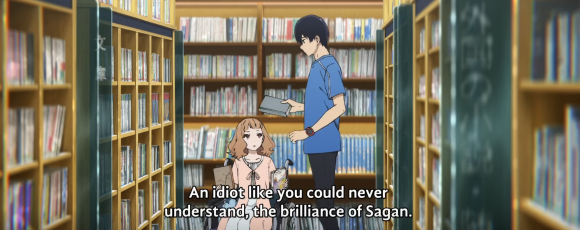
Josee (in the wheelchair) tells her caretaker that he doesn’t know the brilliance of Sagan and implies that he is missing outWhen I began watching Josee, the Tiger and the Fish, a 98-minute romantic comedy film, I had no idea how central libraries, and librarians, would be to the story. I knew already that there was a librarian in the film, but I wasn’t sure how vital her role would be the story. In this post, I’ll relate scenes in the film to other fictional examples and other topics.
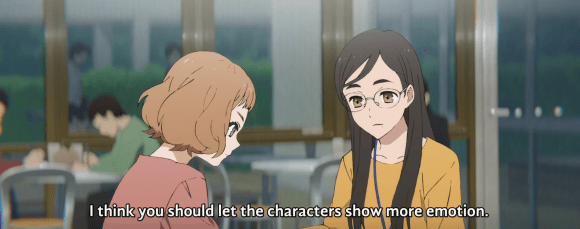
More than 30 minutes into the film, Josee (voiced by Kaya Kiyohara), a physically disabled girl who uses a wheelchair, goes to the public library with her caretaker, Tsuneo Suzukawa (voiced by Taishi Nakagawa). She is amazed by the sea of books. She finds some books by Françoise Sagan, an author she likes, and the librarian, Kana Kishimoto (voiced by Lynn), happily asks if she is a fan, with Josee quietly admitting what book she likes. Not long after, Kana also asks if Tsuneo is her boyfriend, causing her to blush, as she is embarrassed, as the librarian sees the romantic sparks between Tsuneo and Josee. They check out the books. Interestingly, the librarian, Kana, is 24, just like Jose’s, and they quickly become friends, waving to one another.
Before moving onto the rest of the film, one aspect that struck me was how personable Kana’s character was. Compared to many of the other librarians I have profiled on here, either those of Asian descent, or those with the common hair bun, she is a good representation of a library worker in Osaka. In some ways, I see a parallel to Isomura, a library curator in Let’s Make a Mug Too!, who is just as helpful to the protagonists. The difference is that she is much more than an information provider, but is atypical, in her character type, because she becomes friends with the protagonist and ventures outside the library, making her an important part of the film.
Even positive depictions of librarians are often stuck inside the library and are never shown outside the walls of the institution. Some exceptions include Kaisa in Hilda, many of the student librarians in anime. Whether you see the film as having “little fresh” when it comes to disability, criticize it for being primarily through the perspective of her caretaker, praise it for its perspective on disability, Kana remains a key part of the film, something which reviewers appear to miss, for the most part, except to note that she doesn’t exist in the manga. [1] However, the review in Anime Feminist, by Zeldaru notes that when Josee goes to the library she has the “opportunity to become part of a fully public community” and she is able to see, for the first time, people coming together “with a similar purpose”, resulting in her befriending Kana, allowing her to “pursue her burgeoning interest in art”!
The fact that Kana is welcoming of Josee indicates the openness of the library to all patrons, including those which are physically disabled. Kana also helps Josee realize her feelings for Tsuneo after Josee said that she didn’t need him. She even encourages Josee to read The Little Mermaid to children in the library, but she is nervous, and kids leave. Although the reading doesn’t go well, Kana encourages her to display her art online and she is nervous and embarrassed by that. She later tells Tsuneo about her reading to the children and how she did it badly. She says she wants to try harder and be an illustrator.
There are so many scenes I could have shown here, either one at minutes 40-41, and the key scene beginning at 1 hr 15 minutes, but this seemed like one of the best ones, as in this scene, more than 1 hr and 15 minutes into the film, Kana is helping Josee write a story. Right before this, she brings library books to her, presumably about writing.This isn’t all that Kana does in the film. She helps Josee work with Kana to write a love story so as to convince Tsuneo to stay with his dream. Not long after, Josee is reading a story to those in the library, which she wrote to cheer up Tseuno. The story is her personal adaptation of a Little Mermaid, which had references to what happened in her relationship with her caretaker. It is something that gets him out of his funk and he claps at the end,after crying during the story. After everyone claps, and blushes at the praise, and smiles. This gives the caretaker the motivation to begin physical therapy so he can walk again. She watches him day after day as he gets better.
Although some have said that this story is “uncomfortably close” to the story where a disabled person teaches an able-bodied person an “important lesson”, I tend to side with what Anime Feminist says about it, that she is trying to inspire Tsuneo “and those around her,” assembling the community she built, even organizing a picture book reading time for her book with help of Kana. This reveals her “devotion to art and to community” and it is a difference between her first reading at the library as Josee is more “confident in her work and herself and everyone is enraptured, highlighting her growth.” [2]
Later on, Tsuneo asks Kana about Josee but she isn’t at the library and hasn’t seen her. They later reunite in the end and kiss. In a scene during the credits, the librarian tearfully embraces Josee. She appears to help her by teaching her computer skills. It is also shown that the book Josee made is used by the librarian to read to children. As a result, Kana has a more fully rounded characterization than is the case for other characters. As the film’s director, Kotaro Tamura, stated, Kana was added to the film to give character development for Josee:
…I figured out the themes that would be appropriate for a feature-length film…I thought that Josee’s only way to connect with society is through Tsuneo. That’s where Josee in this film starts off at as well. But because she starts to go out more because of Tsuneo, she makes a friend named Kana. Though it’s not a huge leap, she’s able to become a bit more sociable.
However, I would argue that Kana is much more of a character than that, through facilitating reading like the librarians in the Witches Crest Library in Somali and the Forest Spirit but not as directly as Amity Blight in The Owl House, to give two examples. As an aside, Kana’s voice actress, Lynn, is very talented, known for leading roles in Keijo!!!!!!!!, Fuuka, Engage Kiss, and Mobile Suit Gundam: The Witch from Mercury, along with other roles in Märchen Mädchen, Ms. Vampire Who Lives in My Neighborhood, Kandagawa Jet Girls, Manaria Friends, The Aquatope on White Sand, and Oshi no Ko, to name a few.
In the future, I would like to compare this film to the original short story by Tanabe or 2003 Japanese live-action film of the same name, noting how libraries are portrayed. With that, this post comes to a close. Until next time. As always, comments are welcome.
© 2023-2024 Burkely Hermann. All rights reserved.
Notes
[1] Osmond, Andrew. “Josee, the Tiger and the Fish fails to make a splash with a rote teen romance,” BFI, Aug. 11, 2021; Clarke, Cath. “Josee, the Tiger and the Fish review – beautiful-looking anime takes a trip to the zoo,” The Guardian, Aug. 12, 2021; Cassidy, Tom. “Josee, the Tiger and the Fish,” Common Sense Media, Jul. 29, 2022; joyousmenma93, “Firechick’s Manga Reviews: Josee, The Tiger, and The Fish,” Livejournal, Sept. 22, 2022.
[2] Zeldaru. “Overcoming Barriers: Mobility limitation; ‘inspirational’ disability; and Josee, the Tiger, and the Fish,” Anime Feminist, Aug. 26, 2022.
#AmityBlight #AnimeFeminist #atypicalLibrarians #disabledPatrons #femaleLibrarians #Hilda #informationProvider #Isomura #JapaneseLibrarians #JoseeTheTigerAndTheFish #Kaisa #LetSMakeAMugToo #LibrariansOfColor #libraryPatrons #MärchenMädchen #MsVampire #reading #SomaliAndTheForestSpirit #students #TheOwlHouse #voiceActors #wheelchairs
 Ygor
Ygor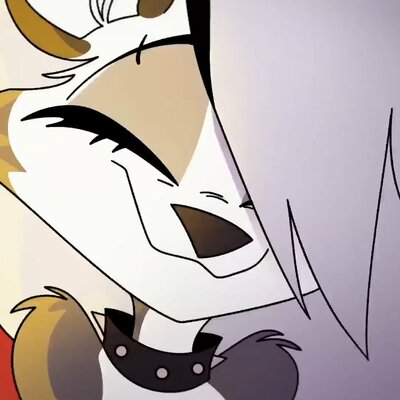 Betos Garcia
 Stormdragonblue⛈
 Pop Culture Library Review
 AnimeGirlyGirls
 Charles Chin