RESEÑA

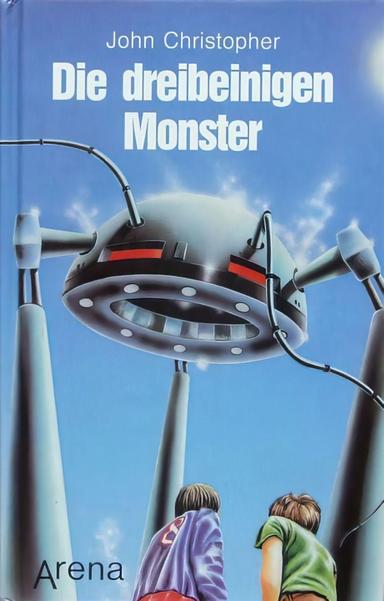
La Tierra fue conquistada por los Trípodes mucho antes de que Will Parker tuviera uso de razón. Los enigmáticos alienígenas se desplazan por tierra, mar y aire en robots gigantescos e insertan placas a los humanos cuando cumplen catorce años, con objeto de volverlos sumisos. Will escapa de su destino y llega a las Montañas Blancas, donde se reúne con la resistencia.

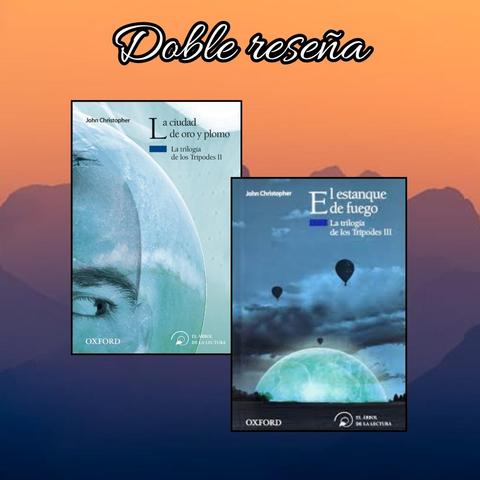
En la segunda y tercera parte, Will y sus amigos se adentran en la ciudad de los Trípodes en calidad de esclavos. Allí la vida es dura, sometidos a una presión terrible y con unas escafandras para poder seguir respirando aire humano en un entorno demasiado cálido para ellos. Tras encontrar los puntos vulnerables de los Amos, escapan y trazan un plan con la resistencia para hacer caer las ciudades.

Si bien la trilogía empezó muy prometedora (han pasado muchos años hasta que he podido leer la segunda y tercera parte), se desinfla a medida que avanza hasta el final. Aunque los Trípodes y sus desconocidas costumbres resultan fascinantes, no es creíble la forma que tienen los protagonistas de resolver un conflicto mundial. Se diría que John Christopher tuvo prisa por acabar una historia que podría haber dado mucho juego, en parte gracias a su prosa. El autor describe las tribulaciones de los personajes como nadie, se esfuerza en diferenciarlos, y contagia su pasión por los Trípodes al lector. Sin embargo, la conclusión de la historia resulta decepcionante, y ya lo lamento, porque es una de mis novelas de ciencia ficción favoritas de la infancia.

#reseñasdelibros
#lostripodes
#johnchristopher

What pre-1985 science fiction are you reading? + Update No. XXVII

What pre-1985 science fiction are you reading or planning to read next month? Here’s the October installment of this column. A selection of read volumes from my shelves If I’m …

Science Fiction and Other Suspect Ruminations

What pre-1985 science fiction are you reading? + Update No. XXVII

What pre-1985 science fiction are you reading or planning to read next month? Here’s the October installment of this column.

  • A selection of read volumes from my shelves

If I’m feeling a bit unmotivated to write about science fiction, I always end up on Fanac or another online repository of fanzines/newspapers exploring all the old historical fannish debates. I especially enjoy their reports on various conventions and the community (from accepting to reactionary) that emerges. For example, the details I uncovered about a lost Philip José Farmer speech titled “SF and the Kinsey Report at the 11th World Science Fiction Convention (Philcon 2) in Philadelphia (September 1953) and Pat M. Kuras and Rob Schmieder’s article “When It Changed: Lesbians, Gay Men, and Science Fiction Fandom” (1980) on the first Worldcon panel with an openly LGBTQ topic: “The Closed Open Mind: Homophobia in Science Fiction Fantasy Stories” moderated by Jerry Jacks, one of the “early openly gay fans.” I recently edited a friend’s article for academic publication on the role of conventions in forming feminist and political activism. Conventions sound like fascinating places, at least from my historically-minded vantage point and lens.

However, as visitors to the site probably know, I’ve never attended a science fiction specific con (I’ve attended Gencon twice as its in my current hometown and tons of academic conferences earlier in my career). For fear of revealing too much of my psychological profile (muahaha), I enjoy the self-created illusion of being an outsider. The scholar who writes from the shadows. I often tell myself “I’m a historian, not a fan.” Of course, both can be true… I know cons cover a vast variety of topics beyond contemporary science fiction (which does not interest me in the slightest, alas). There are frequently panels on all the topics, authors, and themes I enjoy. And of course, all the friendships with fans with similar interests… As meeting authors? Not my thing, sorry. Well-meaning readers of my website often attempt to invite me to participate on panels on historical topics. Thank you! Maybe at one point I will. I really should.

I’d love to know why you, lovely readers, enjoy attending cons.

Also, before we get to the photograph above and the curated birthdays, let me know what pre-1985 SF you’re currently reading or planning to read! 

The Photograph (with links to reviews and brief thoughts)

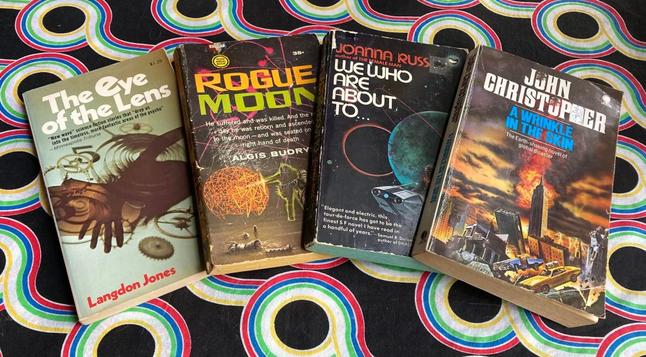
  • I suspect I’ve featured Langdon Jones’ wonderful collection The Eye of the Lens (1972) before. It’s an example of the exuberant (and successful) elements of the New Wave movement. “The Hall of the Machines” (1968) represents what I enjoy most lates 60s SF.
  • Algis Budrys’ Rogue Moon (1960). A good one! I wish I managed to write a full-length review.
  • Joanna Russ’ We Who Are About To…. (1976). Remains my favorite Russ novel.
  • John Christopher’s A Wrinkle in the Skin (variant title: The Ragged Edge) (1965). I preferred this post-apocalyptic nightmare to The Death of Grass (1956). The scene with the tanker stranded in the dried-out English Channel, top notch…
  • What am I writing about?

    I recently restarted my series on translated SF short fiction—after a lull on my part–with Rachel S. Cordasco over at Speculative Fiction in Translation. We thoroughly enjoyed Izumi Suzuki’s “Terminal Boredom” (1984). Up next– a story from Germany!

    Despite a slow writing month, I did manage to put together my first full-length review of Octavia E. Butler’s Clay’s Ark (1984). My favorite of her novels so far! There’s some solid early 80s SF out there.

    What am I reading?

    My reading of various forms of American leftist politics continues. Finished Mathew Hild’s Greenbackers, Knight of Labor, and Populist: Farmer-Labor Insurgency in the Late-Nineteenth-Century South (2007). There’s a larger incubatory SF-related writing project looming that will connect to late 19th century attempts to challenge Southern Democrats. Simultaneously, as I teach college-level American History courses I felt that that portion of my classes needed some work. Stay tuned!

    Most of my reading has been related to the scholarship related to my unnamed writing project. However, I finally finished my Kim Stanley Robinson novel and should (I know, I promised the same thing a while back) have a review up soon(ish). A vampiric cloud of despair–generated by American politics, the challenges of my job, etc.–continues to consume my energy.

    A Curated List of SF Birthdays from the Last Two Weeks [names link to The Internet Speculative Fiction Database for bibliographical info]

    November 15th: William Hope Hodgson (1877-1918). I recently acquired a copy of The House on the Borderland (1908).

    November 15th: J. G. Ballard (1930-2009). A favorite of mine.

    November 16th: Candas Jane Dorsey (1952-). There’s a copy of Machine Sex and Other Stories (1988) judging me from the shelves.

    • Diane and Leo Dillon’s cover for the 1971 1st edition

    November 18th: Suzette Haden Elgin (1936-2015). I’ve reviewed At the Seventh Level (1972) and Furthest (1971).

    November 18th: Margaret Atwood (1939-).

    November 18th: Frederick Turner (1943).

    November 18th: Alan Dean Foster (1946-).

    November 18th: Graham Charnock (1946-). One of the British voices of the New Wave movement. I’ve only read “The Chinese Boxes” (1970).

    • Mark Salwowski’s cover for the 1989 edition

    November 18th: Michael Swanwick (1950-). I read my first Swanwick novel last year–In the Drift (1985).

    November 19th: Wolfgang Jeschke (1936-2015). A Czech-born German SF author whom I really should read… I own his translated novel The Last Day of Creation (1981, trans. 1982).

    November 20th: Molly Gloss (1944-). The Dazzle of the Day (1997) is supposed to be a really great take on the generation ship premise (outside of my date range, alas).

    November 21st: Artist Vincent Di Fate (1945-).

    • Ken Laidlaw’s cover for the 1977 edition

    November 22nd: William Kotzwinkle (1938-). Doctor Rat (1976) still unsettles me.

    November 23rd: Wilson Tucker (1914-2006). Huge fan of The Long Loud Silence (1952, rev. 1969) — one of the better nuclear-war themed 50s novels. I must get to more of his work in 2026…

    November 24th: Editor T. O’Conor Sloane, Ph.D. (1851-1940). The editor of Amazing between 1929-1938.

    November 24th: Spider Robinson (1948-).

    November 25th: Amelia Reynolds Long (1904-1978). An earlier female SF pioneer, I’ve only read Long’s “Omega” (1932). Unfortunately, my dislike of 30s SF informs my comments — regardless, she’s a historically important figure.

    November 25th: Poul Anderson (1926-2001). One of the authors of the first years of my website. I’ve covered eleven novels and twenty-six of his short stories. Most recently I featured “The Troublemakers” (1953) in my generation ship review series.

    November 26th: Leonard Tushnet (1908-1973)

    November 26th: Artist Victoria Poyser (1949-).

    November 27th: L. Sprague de Camp (1907-2000).

    November 27th: C. C. MacApp (1917-1971)

    • Uncredited cover for the 1965 edition

    November 27th: Dave Wallis (1917-1990). I thoroughly enjoyed his sole SF novel Only Lovers Left Alive (1964).

    November 27th: Artist Josh Kirby (1928-2001). Perhaps best known for his Discworld covers, Kirby was a prolific contributor of art for a vast variety of authors.

    November 28th: Richard R. Smith (1930-). A prolific contributor to the magazines in the 1950s, I’ve yet to read his work.

    November 28th: Artist Walter Velez (1939-2018).

    • MacGowan’s interior art for Gregory Benford’s “Nobody Lives Around There” in Vertex: The Magazine of Science Fiction (February 1974)

    November 28th: Editor and author Donald J. Pfeil (1937-1989). Best known for editing Vertex (1973-1975).

    November 29th: C. S. Lewis (1898-1963).

    November 29th: Madeleine L’Engle (1918-2007). If you haven’t read about the L’Engle great cover mystery, you should!

    November 29th: Kevin O’Donnell, Jr. (1950-2012).

    November 29th: Artist Doug Beekman (1952-).

    For book reviews consult the INDEX

    For cover art posts consult the INDEX

    For TV and film reviews consult the INDEX

    #1950s #1960s #1970s #algisBudrys #avantGarde #bookReview #bookReviews #books #fiction #joannaRuss #johnChristopher #langdonJones #paperbacks #reading #sciFi #scienceFiction #writing

    Innen-Illustration von Peter Burchard für
    "Man of Destiny" von John Christopher
    aus Galaxy, May 1951

    #scifi #sciencefiction #GalaxyMag #JohnChristopher #PeterBurchard

    Wow, that was a crap ending. I was enjoying the book a lot, but the ending just left so many loose ends. It was so unsatisfactory. I can only excuse it if there's a sequel, otherwise that was the crappest ending I think I've ever read. Wow.

    #books #johnchristopher #theguardians

    What pre-1985 science fiction are you reading? + Update No. XXIV

    • A selection of read volumes from my shelves

    What pre-1985 science fiction are you reading or planning to read next month? Here’s the June installment of this column.

    I adore teaching American History for college credit. Every summer I ponder what to change and improve. And this year, I want to integrate a few science fiction stories!

    My 1950s unit in the spring semester could be modified with a few science fiction short stories. Considering my ongoing fascination with media landscapes of the future, I want to integrate one story on fears over television and one on nuclear horror (which would fit nicely with a group of assignments I have using song lyrics about atomic panic). Feel free to suggest a story that you would include or wish was included in your own US college course (or advanced high school course). No novels unfortunately. I have access to a range of syllabi and a TON of ideas but I always love to hear your selections.

    Before we get to the photograph above and the curated birthdays, let me know what pre-1985 SF you’re currently reading or planning to read! 

    The Photograph (with links to reviews and brief thoughts)

  • Arthur C. Clarke’s The City and the Stars (1956) was a childhood favorite of mine. I think it was on the shelf of SF my dad had in his teens. There’s something relentlessly compelling about the conceptual breakthrough premise — i.e. child discovers the true nature of the world.
  • Despite the miserable cover to my edition, the Robert Silverberg edited The New Atlantis (1975) is a nearly perfect anthology with three hard hitters by Ursula K. Le Guin, James Tiptree, Jr., and Gene Wolfe. Highly recommended!
  • John Christopher’s The Death of Grass (1956). I bounced off this one. I only managed a short review.
  • Anders Bodelsen’s Freezing Down (1969, trans. 1971) is a harrowing collision of SF tropes and the emotional landscape of Scandinavian noir. I particularly adored Bodelsen’s use of an increasingly restrictive space in which the characters interact. Highly recommended.
  • What am I writing about?

    I posted an extensive interview with Chukwunonso Ezeiyoke, author of Nigerian Speculative Fiction: The Evolution (2025). His book, the first ever on Nigerian speculative fiction, argues that the forces of canon creation in Nigeria (often with the soft power of the CIA) simultaneously obfuscated awareness of speculative voices and also prevented their popularity.

    I will be continuing my interviews with authors of recent SF scholarship for two primary reasons: 1) I read a ton of SF scholarship and would like to share some of it with you 2) While I will not only cover books published recently, I would like to see more academic works received Hugo Award nods for Best Related Work. Jordan S. Carroll, whom I interviewed back in January, received a Hugo nomination for Speculative Whiteness: Science Fiction and the Alt-Right (2024).

    Continuing the big project I started this summer: I reviewed the second of 116 issues I plan on cover in my Galaxy Science Fiction magazine read-through. The second issue contained the magazine’s first masterpiece (in my opinion).

    Finishing out my productive month, I posted full reviews of two novels: Zoë Fairbairns’ Benefits (1979) and George Hay’s Flight of the “Hesper” (1952) (for my generation ship series).

    And a rare Adventures in Science Fiction Cover Art post as well — The Flowering Bodies of Attilio Uzzo.

    What am I reading?

    After reading Chukwunonso Ezeiyoke’s Nigerian Speculative Fiction: The Evolution (2025) (above), browsed through the rest of the volumes in the Studies in Global Genre Fiction series out from Routledge Press. Agnieszka Gajewska’s Holocaust and the Stars: The Past in the Prose of Stanisław Lem (2012) jumped out at me. I plan on reading it soon.

    I plan on a Galaxy issue this month as well. Beyond that, I’ll keep it under wraps. My fall semester stars tomorrow and all plans will be contingent on early semester exhaustion and stress.

    A Curated List of SF Birthdays from the Last Two Weeks [names link to The Internet Speculative Fiction Database for bibliographical info]

    July 13th: Monique Wittig (1935-2003). Known for her feminist SF novel Les Guérillères (1969)

    July 14th: Christopher Priest (1943-2024). A favorite of mine — if he’s new to you check out the wonderful short stories in An Infinite Summer (1979). And if you want to read a novel instead, Inverted World (1974) ranks amongst my 70s favorites.

    • Depouilly’s cover for the 1968 French edition of D. F. Jones’ Colossus (1966)

    July 15th: D. F. Jones (1918-1981). I went ahead and put Colossus (1966) on my to acquire list. Adapted as Colossus: The Forbin Project (1970).

    July 16th: Sheri S. Tepper (1929-2016).

    July 16th: Robert Sheckley (1928-2005).

    July 16th: Joseph P. Martino (1931-2022).

    July 17th: Italian SF author Vittorio Catani (1940-2020). Other than one late story from 2014, everything he wrote remains untranslated into English.

    July 17th: Influential French SF editor and author Michel Demuth (1939-2006). None of his fiction has been translated into English. He edited the French SF magazine Galaxie from 1970-1977.

    July 18th: Editor Charles G. Waugh (1943).

    • Concept art by Syd Mead for Blade Runner (1982)

    July 18th: Syd Mead (1933-2019).

    July 18th: Artist Gerry Daly (1957).

    July 19th: Richard E. Geis (1927-2013). Influential fan voice (and writer of erotic novels)… loved to rail against hi-brow SF. I don’t think we’d have been on the same critical side of things.

    July 19th: SF Critic and scholar Darko Suvin (1934-).

    July 20th: M. P. Shiel (1865-1947).

    July 21st: Italian and editor Ugo Malaguti (1945-2021). All of his work remains untranslated — alas.

    July 22nd: Dean McLaughlin (1931-).

    • Bodé’s cover for his graphic novel Sunpot (1971)

    July 22nd: Artist Vaughn Bodé  (1941-1975).

    July 22nd: Eric C. Williams (1918-2010).

    July 23rd: Katharine Burdekin (1896-1963). Known for Swastika Night (1937), which I acquired a few years back but have not read.

    • Finlay’s interior art for Raymond F. Jones’ “The Memory of Mars” in Amazing Stories, ed. Cele Goldsmith (December 1961)

    July 23rd: Virgil Finlay (1914-1971). The master of interior art line work — love his stuff.

    July 23rd: Editor and author Gardner Dozois (1947-2018). I can’t shake the horror of “Horse of Air” (1970).

    July 23rd: Artist Eric Ladd (1949-).

    July 24th: John D. MacDonald (1916-1986). New to his SF? Check out “Flaw” (1949) and “Spectator Sport” (1950).

    July 24th: Barry N. Malzberg (1939-2024). A favorite of mine… For a sense of his fiction, check out my reviews of Revelations (1972) and The Gamesman (1975).

    July 24th: Gordon Eklund (1945-).

    • Tom Barber’s cover for Amazing Stories (March 1976)

    July 24th: Artist Tom Barber (1946-).

    July 25th: Evelyn E. Smith (1922-2000). Still haven’t read any of her short fiction.

    July 25th: Kendell Foster Crossen (1910-1981).

    July 25th: Author and scholar Brian Stableford (1948-2024). His research on early French SF is indispensable. Less a fan of his functionalist adventure-oriented science fiction, so far…

    July 26th: Aldous Huxley (1894-1963).

    July 26th: M. John Harrison (1945-). If you’re new to his fiction, check out my reviews of The Committed Men (1971) and The Pastel City (1971). He’s another favorite of mine.

    July 27th: Artist Mel Hunter (1927-2004).

    July 27th: Sydney J. Van Scyoc (1939-2023). I featured her first three published short fictions for my series on female authors I should know more about: “Shatter the Wall” (1962), “Bimmie Says” (1962), and “Pollony Undiverted” (1963). The final of the three was particularly interesting.

    • Adamov’s cover for the 1982 French edition of Vladimir Colin’s Babel (1978)

    July 27th: French SF artist Philippe Adamov (1956-2020).

    For book reviews consult the INDEX

    For cover art posts consult the INDEX

    For TV and film reviews consult the INDEX

    #1950s #1960s #1970s #AndersBodelsen #ArthurCClarke #avantGarde #bookReviews #books #fantasy #fiction #GeneWolfe #JamesTiptreeJr #JohnChristopher #paperbacks #sciFi #scienceFiction #writing

    What pre-1985 science fiction are you reading? + Update No. XXIII

    A selection of read volumes from my shelves What pre-1985 science fiction are you reading or planning to read next month? Here’s the May installment of this column. In my interview with Jarosl…

    Science Fiction and Other Suspect Ruminations

    I'm now reading The Guardians, by John Christopher.

    It's a YA story set in the UK, about a sort of dystopian future, where the working class (Conurbans) and the gentry (the County) live completely segregated lives. We follow the life of Rob, a Conurban schoolboy. I'm enjoying it so far.

    I read an extract of it from an old English Lit study book decades ago, and now I finally have a chance to read the whole story!

    #yafiction #teenfiction #books #JohnChristopher

    Holiday #reading for #Scotland trip arrived. Note to self… ‘offensive’ language not allowed when giving feedback on eBay! I altered ‘idiot’ to ‘buffoon’ and that was OK apparently. In hindsight I prefer that! Going to use it more.
    #Tripods #JohnChristopher #Books