Who Does God Love? [Sermon]
When I was young, I once told a leader in my church that I wish that we could have an island where all of us Christians could go to be away from people who were not Christian.
We were the good people, and non-Christians were not good people. Clearly, God loved us and not them.
I’ve also heard that the United States is a Christian country, set aside by God for Christians.
Let’s go to God in prayer.
God of wisdom, may the words that I speak, and the ways they are received by each of our hearts and minds, to help us to continue to grow into the people, and the church, that you have dreamed us to be.
Amen.
Here is some news from the past week:
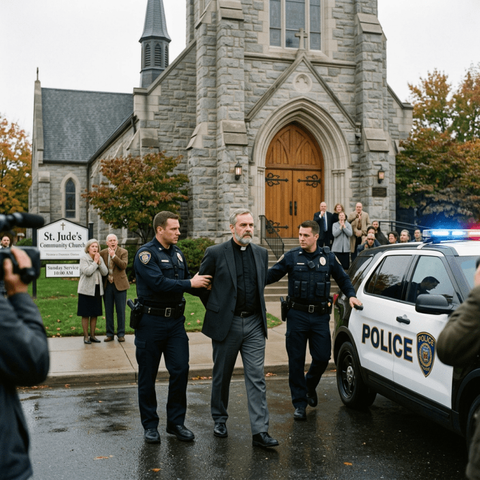
Nurul Amin Shah Alam was a Rohingya refugee from Myanmar, formerly Burma. Rohingya people are predominately Muslim, and have been persecuted for over five decades by Buddhists in Myanmar.
Starting in 2016, there was a government crackdown on Rohingya people, leading over a million people to flee.
Some came to the United States.
Shah Alam was in police custody for a year on weapons and assault charges. After a plea deal, he was released on bail. Immigration authorities issued a detainer on him. He was released to Federal authorities on February 19.
His lawyer reported him missing last Sunday, February 22.
After Federal authorities realized his refugee status meant he could not be deported, they released him at a closed coffeeshop after 7:00 PM.
There is surveillance video.
None of his relatives were notified.
Five days later, Nurul Amin Shah Alam – who was nearly blind – was found nearly 6 miles from the coffeeshop,
He was frozen to death.
Who does God love?
In Kansas, a bill was passed to require birth certificates and drivers’ licenses to show sex assigned at birth. Prior to this, transgender people could have their gender marker changed.
The bill was vetoed by the governor, but the legislature overrode it.
The Kansas Department of Revenue sent letters to 300 people who had changed the gender marker changed, promising more letters on the way. The letters read
“Please note that the Legislature did not include a grace period for updating credentials. This means that once the law is officially enacted, your current credential will be invalid immediately, and you may be subject to additional penalties if you are operating a vehicle without a valid credential.”
It will cost $8 and a trip to the Department of Revenue Drivers’ services to get a “corrected” license or ID. They will need to get a ride.
Birth certificates will cost $20.
Who does God love?
The US and Israel have attacked Iran, killing supreme leader Ali Khamenei, and according to Iran over 100 girls in an elementary school near a military base.
Iran has responded. Six people have died near Jerusalem. Three people in the United Arab Emirates have died. Three US servicemembers have been killed.
Who does God love?
We white Christians don’t often think about it, but what we call Christianity was based on a Jewish teacher. This was originally a Jewish sect.
Non-Jewish Christians were let into the faith. We did not originate it.
So when we see the sign
JOHN 3:16
in the stands at the world series or Superbowl, it’s referring to a verse that says
“For God so loved the world that he gave his only Son, so that everyone who believes in him may not perish but may have eternal life.”
John 3:16, NRSVUe
Not just the Jews, but the world. That’s how we got included.
We don’t get to exclude Rohingya people without excluding white people.
We don’t get to exclude transgender people without excluding cisgender people.
We don’t get to exclude people in Iran without excluding people in the United States.
As we sit in churches where everyone has nearly the same skin color, it’s easy to think that God loves people who look like us.
And while that is true, it’s not because we’re God’s default choice. It’s because God’s inclusive love brings us into relationship with God, even though we’re not unhoused Jewish teachers from Galilee.
We can’t keep the teeming masses out of Christianity because we ourselves are the teeming masses. We don’t get to shut the gate because we had to enter through that open gate.
And while Christians are condemning immigrants, transgender people, other nations, unhoused people, and any sort of people that are not white, straight, cisgender male US citizens, John 3:17 says
“Indeed, God did not send the Son into the world to condemn the world but in order that the world might be saved through him.”
John 3:17, NRSVue
If we are really followers of Jesus, we should be loving who God loves: We should be loving the world.
And I get it. It’s hard.
There are people who are really difficult to like.
Most people are all of these things, at one time or another.
I’m not going to say “hate the sin, love the sinner.” That’s been used to hate who someone is, and love who we wish they were.
But maybe we can love the person, even if we don’t like the behavior.
Maybe we can look at the world and, even if we can’t bring ourselves to love it, recognize that God does love this world. All of it.
And if we’re seeing every person as God’s beloved child, maybe it will give us a chance to pause before we take an action that will actually harm that person. Maybe we will even be moved to do something that will help that person.
My challenge for this week, and I hope we will all really do it, is to be vigilant for times when we feel negative feelings toward a person, or a group of people, and to take a new look at them as someone that God loves just as much as God loves us.
Perhaps it will change our perspectives.
Amen.
Let’s sing NCH 485 O Love That Will Not Let Me Go
* Scripture quotations marked NRSVue are taken from the New Revised Standard Version Updated Edition. Copyright © 2021 National Council of Churches of Christ in the United States of America. Used by permission. All rights reserved worldwide. https://www.friendshippress.org/pages/about-the-nrsvue
* Scripture quotations marked KJV are taken from the King James version of the Bible.
#John316 #love

The NRSV Updated Edition (NRSVue) is informed by the results of discovery and study of hundreds of ancient manuscripts, such as the Dead Sea Scrolls, in the more than thirty years since the first publication of the NRSV. The National Council of the Churches of Christ in the USA (NCC) partnered with the Society of Bibli
When the Door Closes, Grace Opens
On Second Thought
The rain falling against the window feels heavier than weather. It matches the weight pressing against her chest as the echo of the closing door replays in her mind. Loss has a way of doing that—turning ordinary sounds into final verdicts. Her words, whispered more to herself than to the room, reveal a familiar instinct: I have made it on my own before, and I will do it again. It is the language of survival, not of hope. Yet even as resolve forms, another voice intrudes, quieter but more honest, asking questions she cannot silence. How will I live? Where will I go? How do I begin again?
This tension between self-reliance and surrender is as old as the human story, and it stands at the center of John 3:1–17. Nicodemus, a man of learning, status, and religious accomplishment, comes to Jesus at night. He does not arrive broken in the obvious ways others do, yet his visit reveals the same unsettled hunger. Jesus does not meet him with moral instruction or religious affirmation. Instead, He speaks of beginning again. “Very truly I tell you, no one can see the kingdom of God unless they are born again” (John 3:3). The Greek word anōthen carries a double meaning—“again” and “from above.” Jesus is not offering Nicodemus a revised version of his current life, but an entirely new origin.
This is where the promise of John 3:16 finds its full depth. “For God so loved the world that He gave His only begotten Son, that whoever believes in Him should not perish but have everlasting life.” The verse is often recited, but rarely lingered over. The love described here is not abstract affection; it is costly giving. God’s response to human brokenness is not distance or condemnation, but self-giving presence. The word believes (pisteuō) in John’s Gospel implies trust, reliance, and ongoing commitment—not mere intellectual agreement. Eternal life, in this sense, is not only future hope but present transformation.
The woman at the window, like Nicodemus, reaches a moment where self-sufficiency collapses under the weight of reality. Her prayer is hesitant but genuine: If You are there, please come into my life and help me start over. Scripture is filled with people who approach Jesus at precisely this point. The Samaritan woman brings relational shame. The man born blind carries lifelong limitation. Mary Magdalene bears spiritual torment. John and Andrew leave behind certainty to follow an unknown path. Each comes seeking a solution, but what they receive is a Savior who redefines the problem. Jesus does not simply repair what is broken; He recreates what has been lost.
Theologically, this is the heart of new birth. It is not self-improvement but divine intervention. Paul later echoes this truth when he writes, “If anyone is in Christ, the new creation has come: The old has gone, the new is here!” (2 Corinthians 5:17). New beginnings in Scripture are rarely neat or painless, but they are always anchored in God’s initiative. Human resolve may carry us through a season, but only Christ can carry us through transformation.
There is also mercy in the timing of new beginnings. Jesus does not shame Nicodemus for coming at night. He meets him where he is. Likewise, God does not demand that grief be processed before grace is received. The woman’s prayer does not require polished theology or spiritual maturity. It requires honesty. The Psalms remind us that “The LORD is near to the brokenhearted and saves the crushed in spirit” (Psalm 34:18). Brokenness, in God’s economy, is not a barrier to renewal but often its doorway.
When we trust Christ with our heartache, something quiet but enduring begins to take shape. Yesterday’s pain is not erased, but it is reinterpreted. God has a way of taking what wounds us and weaving it into wisdom, compassion, and deeper dependence upon Him. Each day, Scripture assures us, is an invitation to begin again—not by forgetting the past, but by refusing to let it define the future.
On Second Thought
Here is the paradox that often escapes us: we long for new beginnings, yet we resist the very conditions that make them possible. We ask God for restoration while clinging tightly to the illusion of control. Nicodemus wanted clarity without vulnerability. The woman wanted strength without surrender. Most of us do the same. On second thought, new beginnings are rarely about gaining something new; they are about releasing something old. Jesus does not tell Nicodemus to add belief to his existing framework. He tells him he must be born from above, which means allowing God to determine both the starting point and the outcome.
There is also a hidden kindness in how God unfolds new beginnings slowly. If transformation were instant and painless, we might mistake it for our own achievement. Instead, God often allows us to feel the full weight of our need so that we recognize the depth of His grace. Eternal life, as Jesus describes it, is not an escape from difficulty but a reorientation of trust. It begins the moment we stop saying, I will make it on my own, and start praying, I cannot do this alone.
On second thought, perhaps the greatest gift of a new beginning is not the removal of sorrow, but the presence of Christ within it. The door may have closed behind her, but grace opened another she could not yet see. That is the quiet promise embedded in John 3:16—not merely that we are loved, but that we are invited to live differently because of that love. Each day with Christ truly is a new beginning, not because yesterday did not matter, but because God is still at work today.
FEEL FREE TO COMMENT, SUBSCRIBE, AND REPOST, SO OTHERS MAY KNOW
#bornAgainFaith #ChristianHope #GodSLoveAndGrace #John316 #newBeginningsInChrist #spiritualRenewal
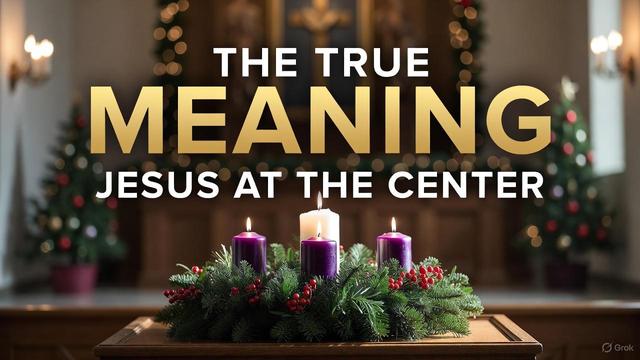
🎄 Merry Christmas! The greatest gift isn’t under the tree—it’s JESUS living in your heart! ❤️
Watch the full message 👇
https://zurl.co/yQdLa
#MerryChristmas #JesusAtTheCenter #TrueMeaningOfChristmas #ChristCandle #John316 #PeaceInChrist #ChristianJoy #HopeInJesus #PastorJustinWixon #MaranaAZ #ChristmasDay
He Comes to Make Us Worthy Before the Day Begins
As the Day Begins
The heartbeat of the gospel is captured in the quiet but sweeping claim that God’s love does not wait for worthiness; it creates it. “For God so loved the world that He gave His one and only Son, that whoever believes in Him shall not perish but have eternal life” (John 3:16). This familiar verse is often heard so frequently that its scandal can be missed. God’s giving is not a reward for moral progress but a rescue rooted in divine initiative. The Greek verb ēgapēsen (ἠγάπησεν), “He loved,” points to a decisive, self-giving action rather than a passing sentiment. Love here is not reactive; it is generative. Ezekiel Hopkins’ observation rightly frames the matter: Christ comes not because we are worthy, but in order to make us so. The gospel does not flatter the human condition; it redeems it.
This same logic of love is echoed in 1 John 4:9–10: “This is how God showed His love among us: He sent His one and only Son into the world that we might live through Him. This is love: not that we loved God, but that He loved us and sent His Son as an atoning sacrifice for our sins.” The phrase “atoning sacrifice” translates hilasmos (ἱλασμός), carrying the sense of covering, reconciliation, and restored relationship. Worthiness, then, is not achieved through effort but bestowed through grace. Like a child adopted into a family, the believer receives a new name, a new standing, and a new future—not because of merit, but because of love freely given. This reframes how we begin the day: not striving to earn God’s favor, but learning to live out of it.
As morning light settles into our routines, this truth reshapes our inner posture. Many begin the day already burdened by inadequacy—regrets from yesterday, anxieties about today, uncertainties about tomorrow. The gospel speaks directly into that space. God’s love precedes our performance. The Hebrew idea behind worthiness often ties to kavod (כָּבוֹד), meaning weight or substance. In Christ, our lives are given weight and meaning not by what we carry, but by who carries us. Beginning the day in this awareness invites humility without despair and confidence without pride. We move forward not trying to prove ourselves to God, but trusting that God has already claimed us in love.
Triune Prayer
Heavenly Father, as this day begins, I come before You aware of my limitations and grateful for Your unchanging love. I thank You that Your love does not rise and fall with my faithfulness, but remains steady because it flows from Your character. You see me fully and love me completely. As I step into the responsibilities and relationships of this day, anchor my heart in the truth that I am received, not rejected. Shape my thoughts so that I respond to others with the same grace You have shown me, and help me walk in quiet confidence rooted in Your steadfast care.
Jesus the Son, I thank You for coming into the world not to condemn but to redeem. You entered our unworthiness and bore it upon Yourself so that I might stand forgiven and renewed. Teach me today to live in the freedom You secured, resisting the pull to define myself by failure or success. Let Your sacrificial love guide my decisions, soften my words, and steady my reactions. As I follow You through this day, may my life reflect the love that first reached me when I had nothing to offer but need.
Holy Spirit, I welcome Your presence as my guide and comforter. Make the truth of God’s love active within me, not merely known but lived. When self-doubt or distraction threatens to take root, gently redirect my attention to Christ’s finished work. Cultivate in me discernment, patience, and courage, that I may walk attentively and obediently. Empower me to bear witness—through actions and attitudes—to the love that makes the unworthy whole. I yield this day to Your shaping work, trusting You to lead me faithfully.
Thought for the Day
Begin today resting in this truth: God’s love does not wait for you to become worthy; in Christ, He already has.
Thank you for beginning your day in God’s presence. May His love steady your steps and give meaning to all you do.
For further reflection on God’s initiating love, see this article from The Gospel Coalition: https://www.thegospelcoalition.org/article/god-love-defined/
FEEL FREE TO COMMENT, SUBSCRIBE, AND REPOST, SO OTHERS MAY KNOW
#1John4 #graceAndRedemption #John316 #LoveOfGod #morningDevotional #worthinessInChrist
Finding God’s Steadfastness in the Pause, Overflowing in Generosity
1,202 words, 6 minutes read time
Have you ever felt suspended in a moment, waiting for what seems like an eternity? Whether it’s for an answer to a heartfelt prayer, the healing of a loved one, or simply the unfolding of your next step, the experience of waiting can often feel challenging, even disheartening. In these in-between times, it’s easy to question God’s presence and wonder if He has forgotten us. Yet, within these very moments of pause, lies a profound opportunity to encounter the steadfast faithfulness of our Creator. And as we learn to trust Him in the quiet, a beautiful response blossoms within us: a desire to reflect His generous heart through our own giving.
Scripture:
“The Lord is good to those who wait for him, to the soul who seeks him.” (Lamentations 3:25, ESV)
“You will be enriched in every way to be generous in every way, which through us will produce thanksgiving to God.” (2 Corinthians 9:11, ESV)
Reflection/Teaching:
The scriptures are filled with stories of individuals and entire nations who experienced significant periods of waiting. Abraham patiently awaited the promised heir, his faith tested through decades of longing (Genesis 15-21). The people of Israel cried out for deliverance from slavery in Egypt, their cries eventually met with God’s mighty hand (Exodus). David, anointed as king, endured years of running and hiding before ascending his rightful throne (1 Samuel). Even in the New Testament, Simeon and Anna, with hearts fixed on God’s promise, waited faithfully for the arrival of the Messiah (Luke 2). These accounts remind us that waiting is not foreign to God’s plan; in fact, it often plays a crucial role in the unfolding of His purposes.
During these seasons of waiting, God is not inactive. As many insightful resources like those from Desiring God and Cru point out, these times can be profound opportunities for spiritual growth and a deepening of our reliance on Him. It is in the quiet moments that our character is refined, our understanding of God’s sovereignty expands, and our faith is tested and strengthened. We learn that His timing is not our timing, and His ways are often beyond our comprehension. Yet, His promises remain true, and His faithfulness endures through every delay.
Parallel to this experience of waiting is the transformative power of generosity. Our God is the ultimate giver, showering us with blessings beyond measure (John 3:16). As followers of Christ, we are called to reflect this divine attribute in our own lives. The Apostle Paul, in his letter to the Corinthians, encourages us to give not out of obligation but from a heart that is willing and cheerful (2 Corinthians 9:7). This act of giving, whether it involves our finances, our time, or our talents, is not merely a transaction; it is an act of worship and an acknowledgment of God’s provision in our lives.
The beauty lies in the interconnectedness of these two themes. When we are actively trusting God in our waiting, a spirit of generosity often arises within us. Instead of being consumed by our own needs and desires, we begin to see the needs around us. Giving becomes an expression of our faith – a tangible demonstration that we trust God to provide, even as we pour out what we have to bless others. As organizations like World Vision and Compassion International highlight, our generosity has the power to meet practical needs and to be a powerful testament to God’s love in the world. By focusing outward in generosity, we can find a deeper sense of purpose and even a measure of joy amidst our own seasons of waiting.
Application:
Consider the areas in your life where you are currently in a season of waiting. Instead of allowing anxiety or doubt to take root, actively choose to anchor yourself in the promises of God. Spend time in prayer and in His Word, reminding yourself of His past faithfulness. Simultaneously, look for opportunities to extend generosity to those around you. Perhaps it’s a financial gift to a ministry you believe in, volunteering your time to a cause close to your heart, or simply offering a word of encouragement to someone in need. Let your acts of giving be a living testament to your trust in God’s provision and a reflection of His generous spirit.
Prayer:
Heavenly Father, we thank You for Your unwavering faithfulness that sustains us through every season, especially in times of waiting. Forgive us for the moments when doubt creeps in and we lose sight of Your steadfast love. Strengthen our hearts to trust in Your perfect timing and grant us the courage to wait with hope and expectation. Lord, we also ask for a generous spirit, that we may freely and joyfully give as You have so abundantly given to us. Open our eyes to the needs around us and equip us to be Your hands and feet in a world that longs for Your love. May our waiting be marked by a deepening trust in You, and our lives be characterized by a generous outpouring of Your grace. Amen.
Closing Thoughts or Call to Action:
Remember, dear friend, that the pause is not a period of abandonment but an opportunity for God’s power to be revealed in your life. As you wait with expectant faith, allow the wellspring of God’s generosity to overflow through you. Embrace the joy of giving, knowing that in doing so, you are not only blessing others but also deepening your own connection with the heart of God.
Stay Connected and Grow in Faith!
Would you like to receive more devotionals like this, along with inspiring stories and practical ways to deepen your walk with God? Subscribe to our newsletter today and join a community of believers seeking to live out their faith with intention and joy. Sign up now and let us walk this journey together!
D. Bryan King
Sources
Disclaimer:
The views and opinions expressed in this post are solely those of the author. The information provided is based on personal research, experience, and understanding of the subject matter at the time of writing. Readers should consult relevant experts or authorities for specific guidance related to their unique situations.
Related Posts
#2Corinthians97 #activeWaiting #BibleStudy #biblicalGiving #biblicalPrinciplesOfGenerosity #blessingsOfGenerosity #blessingsOfGivingBack #characterDevelopment #cheerfulGiver #ChristianDevotional #ChristianInspiration #ChristianLiving #dailyDevotion #dailyEncouragement #examplesOfWaitingInTheBible #expressingFaith #faithAndGenerosity #faithInWaiting #faithJourney #faithfulGod #findingPurposeInWaiting #findingStrengthInWaiting #generosityAsWorship #generosityInFaith #generousLiving #giveCheerfully #givingAndReceiving #GodSFaithfulness #GodSPromises #GodSProvision #GodSUnwaveringLove #hopeInWaiting #impactOfGiving #John316 #joyOfGiving #Lamentations325 #learningToWait #livingGenerously #Malachi310 #meetingNeeds #offerings #overcomingDoubt #patienceInWaiting #Psalm2714 #sacrificialGiving #seasonsOfWaiting #spiritualDependence #spiritualDisciplines #SpiritualGrowth #supportingMinistry #theHeartOfGenerosity #thePowerOfGiving #tithing #trustAndObey #trustInGod #TrustingGodSTiming #trustingInHisPlan #waitingOnGod #waitingWithHope
The LORD’s Covenant With Abram - After this, the word of the LORD came to Abram in a vision: “Do not be afraid, Abram. I am your shield, your very great reward.” But Abram said, “Sovereign LORD, what can you give me since I remain childless and the one who will inherit my estate is Eliezer of Damascus?” And Abram said, “You have given me no children; so a servant in my household will be my heir.” Then the word of the LORD came to him: “This man will not be your heir, but a son who is your own flesh and blood will be your heir.” He took him outside and said, “Look up at the sky and count the stars—if indeed you can count them.” Then he said to him, “So shall your offspring be.”
Norman Macleod, Church of Scotland moderator, considers Cain’s “Am I my brother’s keeper?” from Genesis 4:9. God united us together so that none can live for self alone. Indifference to another’s suffering will return to punish ourselves.
Scrooge, OTOH, says, “I wish to be left alone.” Is this the modern anthem?
How can you consider yourself your brother’s keeper?
John Truair, a Congregationalist minister working with the American Seamen's Friend Society, laments plight of sailors. They can lose a year’s wages upon in hours of shore leave, from prostitutes and swindlers.
Is he merely saying we need harsher sermons on money management directed at sailors, or, must sometimes ministry involve admonishing the (external) abusers of your flock?
How can you help maritime workers today?
#christian #feedthepeople #freethechildren #john316 #doforothers