 Bug Bounty Shorts
From a Silent Math Error to Certificate Bypass: Uncovering an Integer Overflow in a TLS Parser
This article details an integer overflow vulnerability within a Transport Layer Security (TLS) parser. The flaw allowed attackers to bypass certificate checks due to improper validation of parsed values. When the server received maliciously crafted client hello messages containing excessively large extensions, it failed to handle the unexpected data size. As a result, an integer overflow occurred, leading to buffer overflows and arbitrary code execution. The researcher exploited this vulnerability by sending a specially crafted TLS handshake request with extended client hello payloads that contained large, incorrectly parsed values. By modifying the length of extension fields, they tricked the parser into interpreting non-existent data as valid, causing unintended execution of malicious code and certificate bypass. The exploit resulted in a high severity vulnerability (CVE-2018-0204) with a CVSS score of 9.8. The researcher was awarded $36,000 for their findings, and the vendor promptly released patches to address this issue. To prevent similar issues, developers should perform rigorous input validation and limit the size of parsed values during TLS handshake processing. Key lesson: Proper input validation is crucial in TLS parsing to avoid buffer overflows and other security vulnerabilities #BugBounty #Cryptography #TLS #IntegerOverflow #BufferOverFlow

 TiTiNoNero
Io credo che l'integer overflow non gestito sia uno dei bug più comuni del mondo informatico.
Ieri mezza fabbrica si è fermata per quasi un giorno intero a causa di questo. In realtà non avendo accesso al sorgente e non essendoci errori nei log ho fatto una diagnosi puramente comportamentale, ma Rockwell ha confermato la correttezza delle assunzioni dopo poche ore.
In pratica a partire da una data specifica una certa funzione si è bloccata contemporaneamente su più server. Anche in ambiente di DEV. La funzione veniva chiamata, presentava una finestra che flashava e scompariva. Sul log indicava alla stessa data e ora l'attivazione e l'annullamento, che in realtà non c'era.
Ma c'era.
Questa finestra fa partire un timer che aspetta per la sua durata, configurabile, dopodiché annulla l'operazione. Non si può disattivare, e i nostri geniali ingegneri hanno comunemente deciso di popolare quel parametro con un valore di "99999h:59m:59s". Adesso vi lascio immaginare cosa sia successo a partire da ieri.
Spoiler
OK, se hai fatto il conto, manchiamo il bug 2038 per qualcosa come 8000 e rotte ore, meno di un anno, però non sappiamo come questo timeout venga impastato con altri parametri e in quale punto esatto l'intero si rompa. Potrebbe anche essere un integer underflow per quello che ne so, ma rimane il fatto che la finestra si chiude e l'operazione si annulla perché la condizione del timeout viene considerata soddisfatta.
La morale è sempre quella
Fai merenda con girella.
Qualche zucchero in più non fa male se devi usare il cervello.
Se poi sviluppi software, oltre a imparare da uno bravo, controlla i tuoi interi e se invece lo smanetti e basta non usare MAI valori limite, ma mettici la testa: non ha senso un timeout di 10 anni. Considerato tutto, in questo caso, 1 settimana sarebbe sufficientemente cautelativa.
 kriware
Rediscovered an 11‑Year‑Old libpng Vulnerability
A beginner in secure code review reintroduced CVE‑2014‑9495 by fuzzing width * bit-depth overflow
 rawe
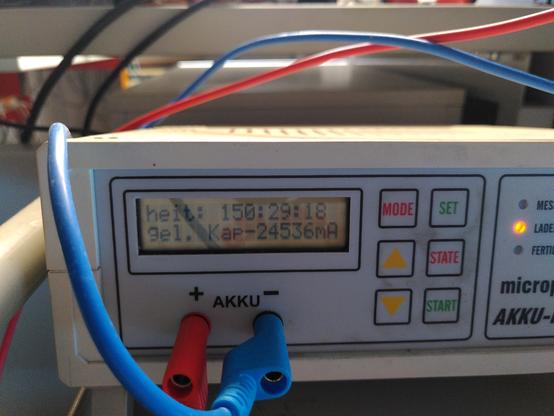
raweInteger overflow! Integer overflow!
The battery is labeled 44Ah.
The charger shows -24534 mAh.
Assuming this thing uses an int16 to store the charged capacity its now at 41 Ah charged, which is totally fine for a "dead, to be scrapped" car battery.
(Yes I am doing silly off-grid stuff again)
 Grant Hutchinson
Recent addition to the Newton Glossary describing the “Year 2040 Problem”.

 Talya (she/her) 🏳️⚧️✡️
my #Duolingo streak resets tomorrow
https://invite.duolingo.com/BDHTZTB5CWWKSPZ3LKYJG3KDQE?v=sp


 PhilSalkie
@Configures ...And Red Lion has released updates for Crimson 3.1 and 3.0 if you don't want to upgrade, or for hardware that needs older versions.
Lesson to all coders - when you use a computer to count, take a moment to think about what happens when you run off the end of what you're counting with. Different languages and systems do different things, it may not be a problem - but spend the time to think about it, rather than just assuming it will count forever. #RedLion #Epoch #IntegerOverflow
 🛡
🛡 
Apple Products Remote Code Execution Vulnerability Report CVE-2024-1580 Integer Overflow in dav1d AV1 Decoder
Date: February 16, 2024
CVE: CVE-2024-1580
Sources: CVE.mitre.org, GitHub Advisory Database
Issue Summary
CVE-2024-1580 identifies a critical integer overflow vulnerability within the dav1d AV1 decoder. This issue arises when processing videos with large frame sizes, potentially leading to memory corruption within the decoder.
Technical Key findings
The vulnerability specifically affects the decoding process for large video frames in the dav1d AV1 decoder, where improper handling of size calculations can lead to integer overflow.
Vulnerable products
All versions of the dav1d AV1 decoder before 1.4.0 are affected by this vulnerability. Including but not limited to:
- macOS Sonoma 14.4.1
- macOS Ventura 13.6.6
- Safari 17.4.1
But also
- VideoLAN Project (VLC player)
Impact assessment
Successful exploitation could result in memory corruption, which might allow an attacker to execute arbitrary code or cause a denial of service (DoS) condition on the targeted system.
Patches or workaround
Users are advised to upgrade to version 1.4.0 or later of the dav1d AV1 decoder to mitigate this vulnerability.
Tags
#CVE-2024-1580, #dav1d, #AV1decoder, #integerOverflow, #Apple #VLC #videolan
@Configures
Red Lion released an update to the latest version of their Crimson 3.2 configuration software last night, less than 24 hours after the rollover event. That fix will be backported to previous versions by mid-next-week.
Kudos to Red Lion for their quick response - now it's time to start installing updates!
#RedLion #Epoch #IntegerOverflow
Red Lion released an update to the latest version of their Crimson 3.2 configuration software last night, less than 24 hours after the rollover event. That fix will be backported to previous versions by mid-next-week.
Kudos to Red Lion for their quick response - now it's time to start installing updates!
#RedLion #Epoch #IntegerOverflow
 Scarab
Red hot news on clock reset (32-bit unsigned integer overflow): Today, Red Lion automation controls system HMI clock issue! Users of certain Red Lion terminals are finding their units have frozen. When reset, they're coming back like it's Jan. 1, 1997, causing incorrect logs and other issues. The vendor is Red Lion and they are investigating. Customers may have to schedule service calls (in the field) to fix the issue. #RedLion #Epoch #IntegerOverflow Busy times for #Jenariah!