Hemodynamic initial-dip reflects local spiking activity.
🧠 Initial-dip: transient HbR increase.
🔍 More spatially specific than hemodynamic response.
📉 HbT decrease leads to capping HbR.
🔄 Biphasic HbR with early decrease, late rebound.

#fNIRS #Neuroimaging #Hemodynamics #Neuroscience #Pub2Post https://tnyp.me/l3nndrWk/m

Frontiers | The hemodynamic initial-dip consists of both volumetric and oxymetric changes reflecting localized spiking activity

The initial-dip is a transient decrease frequently observed in functional neuroimaging signals, immediately after stimulus onset, believed to originate from ...

Frontiers

'Hemodynamic Evaluation of an Enhanced External Counterpulsation Strategy for Coronary Heart Disease with a Geometric Multiscale Model' - a new article published in 'Cardiovascular Innovations and Applications' on #ScienceOpen 🔓🔗 https://www.scienceopen.com/hosted-document?doi=10.15212/CVIA.2025.0020

#CoronaryHeartDisease #EECP #Hemodynamics #ComputationalModeling #CardiovascularResearch

Hemodynamic Evaluation of an Enhanced External Counterpulsation Strategy for Coronary Heart Disease with a Geometric Multiscale Model

ScienceOpen

The previous consensus on circulatory shock and hemodynamic monitoring was brilliant. I have a talk for the residents of our ICU which is almost entirely based on this paper.

https://link.springer.com/article/10.1007/s00134-014-3525-z

#Hemodynamics #Monitoring #CriticalCare #Shock #FOAMcc

Consensus on circulatory shock and hemodynamic monitoring. Task force of the European Society of Intensive Care Medicine - Intensive Care Medicine

Objective Circulatory shock is a life-threatening syndrome resulting in multiorgan failure and a high mortality rate. The aim of this consensus is to provide support to the bedside clinician regarding the diagnosis, management and monitoring of shock. Methods The European Society of Intensive Care Medicine invited 12 experts to form a Task Force to update a previous consensus (Antonelli et al.: Intensive Care Med 33:575–590, 2007). The same five questions addressed in the earlier consensus were used as the outline for the literature search and review, with the aim of the Task Force to produce statements based on the available literature and evidence. These questions were: (1) What are the epidemiologic and pathophysiologic features of shock in the intensive care unit? (2) Should we monitor preload and fluid responsiveness in shock? (3) How and when should we monitor stroke volume or cardiac output in shock? (4) What markers of the regional and microcirculation can be monitored, and how can cellular function be assessed in shock? (5) What is the evidence for using hemodynamic monitoring to direct therapy in shock? Four types of statements were used: definition, recommendation, best practice and statement of fact. Results Forty-four statements were made. The main new statements include: (1) statements on individualizing blood pressure targets; (2) statements on the assessment and prediction of fluid responsiveness; (3) statements on the use of echocardiography and hemodynamic monitoring. Conclusions This consensus provides 44 statements that can be used at the bedside to diagnose, treat and monitor patients with shock.

SpringerLink
Effects of CPAP and FiO2 on respiratory effort and lung stress in early COVID-19 pneumonia: a randomized, crossover study - Annals of Intensive Care

Background in COVID-19 acute respiratory failure, the effects of CPAP and FiO2 on respiratory effort and lung stress are unclear. We hypothesize that, in the compliant lungs of early Sars-CoV-2 pneumonia, the application of positive pressure through Helmet-CPAP may not decrease respiratory effort, and rather worsen lung stress and oxygenation when compared to higher FiO2 delivered via oxygen masks. Methods In this single-center (S.Luigi Gonzaga University-Hospital, Turin, Italy), randomized, crossover study, we included patients receiving Helmet-CPAP for early (< 48 h) COVID-19 pneumonia without additional cardiac or respiratory disease. Healthy subjects were included as controls. Participants were equipped with an esophageal catheter, a non-invasive cardiac output monitor, and an arterial catheter. The protocol consisted of a random sequence of non-rebreather mask (NRB), Helmet-CPAP (with variable positive pressure and FiO2) and Venturi mask (FiO2 0.5), each delivered for 20 min. Study outcomes were changes in respiratory effort (esophageal swing), total lung stress (dynamic + static transpulmonary pressure), gas-exchange and hemodynamics. Results We enrolled 28 COVID-19 patients and 7 healthy controls. In all patients, respiratory effort increased from NRB to Helmet-CPAP (5.0 ± 3.7 vs 8.3 ± 3.9 cmH2O, p < 0.01). However, Helmet’s pressure decreased by a comparable amount during inspiration (− 3.1 ± 1.0 cmH2O, p = 0.16), therefore dynamic stress remained stable (p = 0.97). Changes in static and total lung stress from NRB to Helmet-CPAP were overall not significant (p = 0.07 and p = 0.09, respectively), but showed high interpatient variability, ranging from − 4.5 to + 6.1 cmH2O, and from − 5.8 to + 5.7 cmH2O, respectively. All findings were confirmed in healthy subjects, except for an increase in dynamic stress (p < 0.01). PaO2 decreased from NRB to Helmet-CPAP with FiO2 0.5 (107 ± 55 vs 86 ± 30 mmHg, p < 0.01), irrespective of positive pressure levels (p = 0.64). Conversely, with Helmet’s FiO2 0.9, PaO2 increased (p < 0.01), but oxygen delivery remained stable (p = 0.48) as cardiac output decreased (p = 0.02). When PaO2 fell below 60 mmHg with VM, respiratory effort increased proportionally (p < 0.01, r = 0.81). Conclusions In early COVID-19 pneumonia, Helmet-CPAP increases respiratory effort without altering dynamic stress, while the effects upon static and total stress are variable, requiring individual assessment. Oxygen masks with higher FiO2 provide better oxygenation with lower respiratory effort. Trial registration Retrospectively registered (13-May-2021): clinicaltrials.gov (NCT04885517), https://clinicaltrials.gov/ct2/show/NCT04885517 .

SpringerOpen
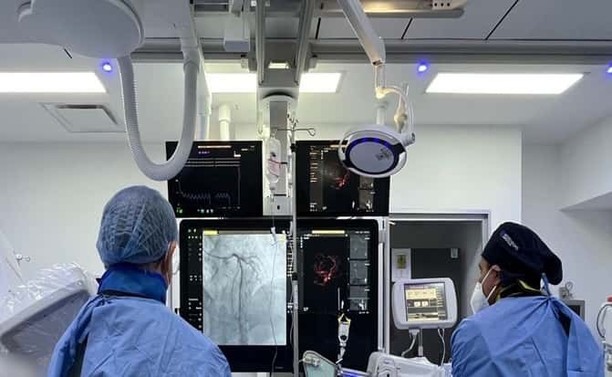
Avances médicos en el IMSS Poniente: Sala de Hemodinamia transforma la atención cardíaca

Los primeros dos pacientes se intervinieron, exitosamente, por medio de cateterismo cardiaco

Toluca Noticias | De Hoy

#Albumin Should Be Remembered When Patients With #SepticShock Are Resuscitated

“Although no significant difference in 28-day mortality rate or 90-day mortality rate was observed between the use of albumin and #crystalloids, #colloids appeared to be more effective than crystalloids in stabilizing hemodynamic end points”

I couldn't agree more. Sometimes you have to find what to do at the moment. It is safe and may help.

https://journal.chestnet.org/article/S0012-3692(23)00654-2/fulltext

#FOAMcc #CHEST #CriticalCare #Sepsis #Hemodynamics

Nice work by Jon-Emile Kenny et. al emphasizing that a significant amount of fluid challenge in ED are ineffective to improve flow, therefore can’t have any positive effect at all.

https://jintensivecare.biomedcentral.com/articles/10.1186/s40560-023-00655-6

#JIntensiveCare #FOAMcc #CriticalCare #Physiology #Hemodynamics

The time cost of physiologically ineffective intravenous fluids in the emergency department: an observational pilot study employing wearable Doppler ultrasound - Journal of Intensive Care

Background Little data exist on the time spent by emergency department (ED) personnel providing intravenous (IV) fluid to ‘responsive’ versus ‘unresponsive’ patients. Methods A prospective, convenience sample of adult ED patients was studied; patients were enrolled if preload expansion was indicated for any reason. Using a novel, wireless, wearable ultrasound, carotid artery Doppler was obtained before and throughout a preload challenge (PC) prior to each bag of ordered IV fluid. The treating clinician was blinded to the results of the ultrasound. IV fluid was deemed ‘effective’ or ‘ineffective’ based on the greatest change in carotid artery corrected flow time (ccFT∆) during the PC. The duration, in minutes, of each bag of IV fluid administered was recorded. Results 53 patients were recruited and 2 excluded for Doppler artifact. There were 86 total PCs included in the investigation comprising 81.7 L of administered IV fluid. 19,667 carotid Doppler cardiac cycles were analyzed. Using ccFT∆ ≥  + 7 ms to discriminate ‘physiologically effective’ from ‘ineffective’ IV fluid, we observed that 54 PCs (63%) were ‘effective’, comprising 51.7 L of IV fluid, whereas, 32 (37%) were ‘ineffective’ comprising 30 L of IV fluid. 29.75 total hours across all 51 patients were spent in the ED providing IV fluids categorized as ‘ineffective.’ Conclusions We report the largest-known carotid artery Doppler analysis (i.e., roughly 20,000 cardiac cycles) in ED patients requiring IV fluid expansion. A clinically significant amount of time was spent providing physiologically ineffective IV fluid. This may represent an avenue to improve ED care efficiency.

BioMed Central

Commentary: #Cerebral #hemodynamics in symptomatic anterior circulation intracranial stenosis measured by angiography-based quantitative flow ratio: association with CT perfusion. (Yuki Shinohara)

#EuropeanRadiology

🔗 https://link.springer.com/article/10.1007/s00330-023-09660-7

Editorial comment: Cerebral hemodynamics in symptomatic anterior circulation intracranial stenosis measured by angiography-based quantitative flow ratio: association with CT perfusion - European Radiology

SpringerLink

I would have bet on cardiogenic pulmonary edema

#CriticalCare #Monitoring #Hemodynamics #HeartFailure #ARDS