AR4366 verabschiedet sich. Aufnahme von gestern. #sonne #halpha #astronomy #gimp
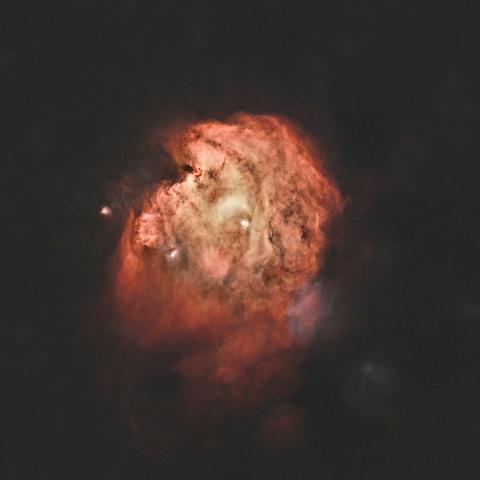
File:NGC 1068 (53934853599).png - Wikimedia Commons

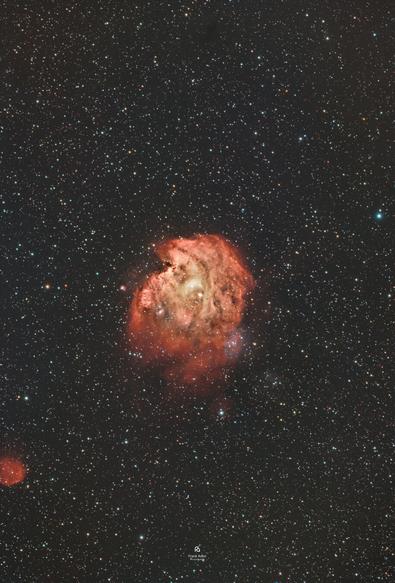
The Monkey Head Nebula
======================

NGC 2175 is a glowing star-forming region in Orion, about 6.400 light-years away. It belongs to the wider Sh2-252 complex (often discussed alongside NGC 2174) and spans a surprisingly large patch of sky.

Powered by the hot O-type star HD 42088, ultraviolet light makes hydrogen shine while dark dust lanes carve the familiar “monkey” silhouette. A stellar nursery in motion, shaped by radiation and winds as new stars emerge.

Scope: Askar 103APO
Lens: Askar 0.6x Reducer
Camera: ZWO ASI 294MC Pro
Filter: Antlia Tri-Band RGB Ultra
Mount: SkyWatcher AZ-EQ5-GT
Guiding: SkyWatcher Evoguide 50ED with ZWO ASI 224MC
Controller: ZWO ASIAir Pro
Focusser: ZWO EAF

Integration time: 5hrs 35min

Full version and print available at:
https://adfr.io/astro/20260118_ngc2175

#astrophotography #astrophoto #astrophotographer #deepsky #deepskyphotography #deepskyobject #deepskyastrophotography #nebula #deepspace #space #nightsky #astronomy #cosmos #stargazing #spaceisart #Narrowband #SpacePhotography #BackyardAstronomy #AstronomyLovers #starchild #cosmicwonder #spaceart #universetoday #instaastro #NGC2175 #MonkeyHeadNebula #Sh2-252 #OrionConstellation #Halpha #OIII
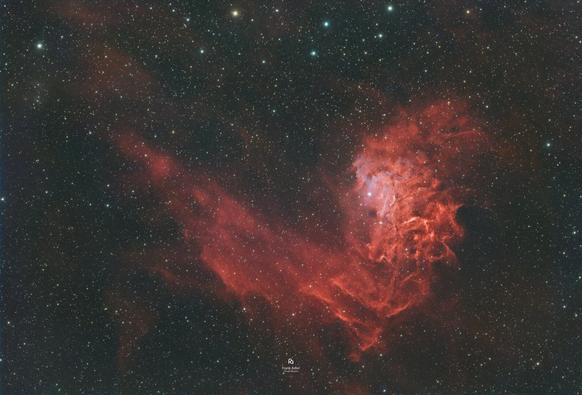
The Flaming Star Nebula
==================

This is IC 405 (also known as Sharpless 229) in the constellation Auriga, around 1,500 light-years from Earth.

This dramatic deep-sky object is shaped by the powerful radiation of AE Aurigae - a massive runaway star speeding through a cloud of gas and dust. As it moves, its intense UV light causes hydrogen to glow in deep red H-alpha while surrounding dust reflects blue starlight, creating the nebula’s iconic flame-like appearance.

A rare combination of emission and reflection nebula, Sh2-229 reveals fine filaments, turbulent structures, and shock fronts carved into the interstellar medium. Long exposures bring out the delicate details hidden within this dynamic star-forming region of the winter sky.

Captured from deep space to your screen - a reminder that even the cosmos is shaped by motion.

Scope: Askar 103APO
Lens: Askar 0.6x Reducer
Camera: ZWO ASI 294MC Pro
Filter: Antlia Tri-Band RGB Ultra
Mount: SkyWatcher AZ-EQ5-GT
Guiding: SkyWatcher Evoguide 50ED with ZWO ASI 224MC
Controller: ZWO ASIAir Pro
Focusser: ZWO EAF

Integration time: 7hrs 20min

Full version and print available at:
https://adfr.io/astro/20260111_sh2-229/

#Sh2229 #IC405 #FlamingStarNebula #Astrophotography #DeepSkyAstrophotography #NebulaPhotography #Space #Universe #Cosmos #NightSky #Auriga #RunawayStar #Halpha #LongExposure #Astronomy #AstroPhotography
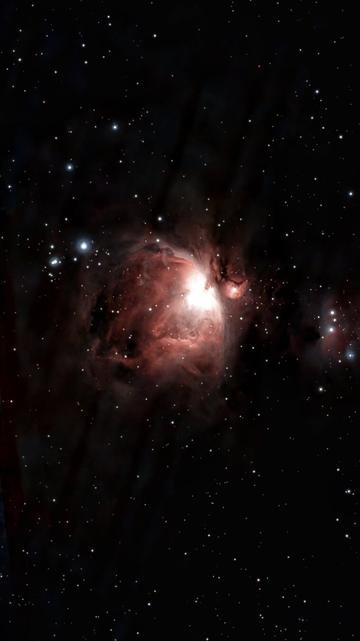
M42 / The Orion Nebula (Orion)
A nearby H II region and stellar nursery dominated by H-alpha emission from ionized hydrogen.
The bright core hosts the Trapezium Cluster, whose massive young stars energize the surrounding gas, while dark lanes of interstellar dust sculpt the nebula’s structure.
To the right M42, M43 and the faint reflection nebula NGC 1977 (Running Man) are visible.

Integration: 1h 5m (stacked)
Rig: DWARF 3
Location: Berlin
Bortle: 8 😬

#astrophotography #deepsky #M42 #orionnebula #emissionnebula #Halpha
#trapezium #orion #dwarf3 #berlin
停!

Back to my stroll. which was on November 17th, where I roamed around the block as usual with 35mm and modified camera, and Hα filter on lens.
This stop sign is just in the corner out of my neighborhood and I've tried to shoot it in various angles (and tried to raise my arm to be in level with it). The final outcome here had been cropped to a large extent actually, mainly to remove the bright sky. It was shot at f/1.4 to keep the background blurred. What I don't recall here is this black splash on the sign; I don't think it was there when I shot this, and it could be a result of the filter (sometimes filters make the invisible visible for sure).
The biggest struggle here was to increase the contrast in such a way to make the words on the sign be clear. Because the filter is already in the red tones, the sign was almost washed out and nothing was visible there (except for the black area of course).

#stroll #walk #sign #stop #halpha #filter #abstract #street #urban #urbanexploration #explore #road #roadsign #goodmorning
Before 6 A/M. (2)

So, similar to yesterday's post, this one was shot right after it. However, yesterday's post was shot at f/1.4 (widest aperture for this 35mm lens), while this one was shot at f/11 and fixing the lens manually according to the hyperfocal distance principle. Something to note here is that I didn't notice the car at all when I shot this, but noticed it after effect!

#city #urban #urbanexploration #explore #morning #dawn #Halpha #blue #goodmorning
Before 6 A.M.

So, now with another series made from strolling around the block back on November 17th, 2025. In this stroll, I've used my 35mm again (feels like it's my new favorite now) and using my modified camera, while fitting the lens with H-alpha filter. H-alpha filters are used mainly in astrophotography, but since I couldn't do much in that field, I've started to use it artistically for regular shooting. Even though it's not quite an infrared filter, but it yields images that look like low-threshold infrared images, where some color seeps into the image (the higher the threshold, the more monochromatic the image becomes).
I've shot this neighborhood a lot (just around the corner from home). Maybe this is the first time to do it in H-alpha? Could be!
While shooting, I've fixed the ISO on Auto (the last thing I wanna worry about while shooting) and the mode on Av (aperture priority). Yet, there were instances when the shutter was relatively too slow for the handshake!

#neighborhood #urban #urbanexploration #halpha #filter #35mm #street #road #morning #dawn #goodmorning
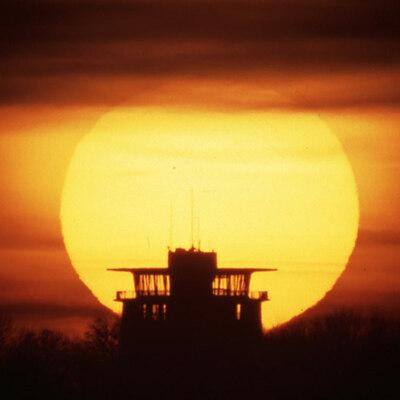
This Mind-Blowing Photo Shows a Skydiver Transiting the Sun

It was an extremely challenging shot to pull off.

PetaPixel
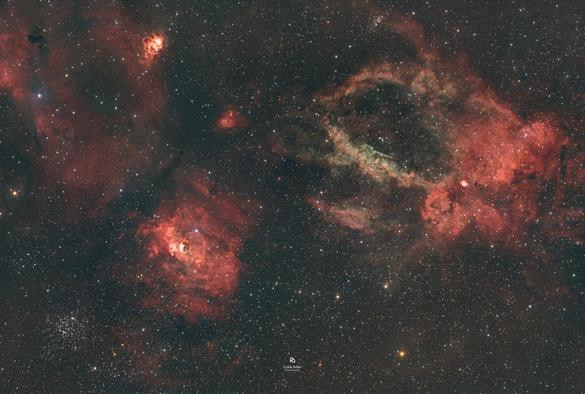
The Lobster Claw and Bubble Nebulae
============================

This wide-field image captures the stunning Bubble Nebula (NGC 7635) in the constellation Cassiopeia, illuminated by the intense stellar winds of the massive star BD+60°2522. The bubble-shaped emission nebula spans about 7 light-years and glows with vibrant reds and subtle blues from ionized gas, creating a dramatic cosmic scene. Nearby, the intricate filaments of the Lobster Claw Nebula (Sh2-157) weave a delicate pattern of star-forming hydrogen gas, while the open cluster Messier 52 sparkles with young stars, adding depth and contrast to the celestial landscape.

This region beautifully showcases the powerful forces at work in stellar nurseries — where energy from massive stars sculpts gas and dust into breathtaking shapes that tell a story of ongoing star birth and evolution. Capturing this interplay of cosmic elements in one frame is a true astrophotography challenge and a tribute to the artistry of the universe.

Scope: Askar 103APO
Lens: Askar 0.6x Reducer
Camera: ZWO ASI 294MC Pro
Filter: Antlia Tri-Band RGB Ultra
Mount: SkyWatcher AZ-EQ5-GT
Guiding: Svbony SV165 with ZWO ASI 224MC
Controller: ZWO ASIAir Pro

Integration time: 6hrs 30min

Full version and print available at:
https://adfr.io/astro/20250920_sh2-157/

#astrophotography #astrophoto #astrophotographer #deepsky #deepskyphotography #deepskyobject #deepskyastrophotography #nebula #deepspace #space #nightsky #astronomy #cosmos #stargazing #stellarevolution #spaceisart #Narrowband #HSOpalette #Halpha #OIII #SII #SpacePhotography #BackyardAstronomy #AstronomyLovers #TelescopeLove
#Cassiopeia #LobsterClawNebula #BubbleNebula #Messier52 #WolfRayet