Author Spotlight: Queer Gothic author Alice G. Brooks

Alice G. Brooks (they/she), formerly published under Alice Brooks, is a sapphic indie author writing LGBTQIA+ fiction, heavily focused on deep-seated trauma and pain. When they’re not writing, they enjoy hiking, videogames, rewatching the same shows over and over again, and reading queer books.

AUTHOR LINKS:

Links to All Books: relinks.me/AliceBrooks
“The Ink Eater” Preorder: mybook.to/theinkeater
Website: alicegbrooks.com

IG, Threads, and Tiktok: @alicebrookswrites

Book Pitch for Readers/Book Clubs:

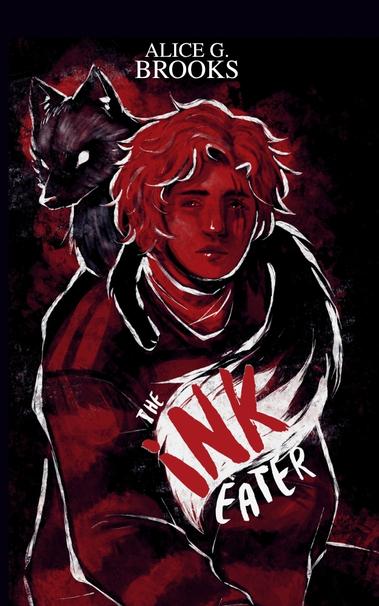
“The Ink Eater” is a gothic romantic tragedy in which the world of an immortal young man who eats stories to survive is turned upside down when one of his stories escapes and unearths the most painful parts of his past, ultimately leading to question whether everything he has ever lived for is worth the pain; or whether choosing himself had ever been an option.

“The Ink Eater” Preorder: mybook.to/theinkeater

Your book The Ink Eater is a queer Gothic romantic tragedy, featuring an immortal who creates and eats his stories, and a shapeshifting ink creation who escapes containment, perfect for fans of Sunyi Dean’s The Book Eaters and readers of Gothic fiction craving asexual representation. Tell us about your influences for this book, and where the ideas came from?

This book was partially inspired by “Don’t let the forest in” by C.G. Drews, partially by a beta read of an unpublished book by Wren Blackburne, and most importantly by my own need to share my own spin of the “sentient house” trope, while displaying a nice, slightly hidden critique of generative AI and adding a form of asexual representation that I don’t see nearly enough. Writing this story has squeezed my heart and unveiled parts of my soul that even I didn’t know existed.

What rep will readers find in The Ink Eater, and can you tell us more about why is that rep important to you?

Firstly, there’s a gay pairing between the two main characters. More importantly, the protagonist of this novel, Baird Cardall, is asexual. With asexual representation, it’s common to see it displayed as being unable to fall in love, hating touch, or being portrayed as childish or cold.

Baird is none of those things. He’s asexual and homoromantic, he falls in love, he adores physical touch (once he trusts), and he’s anything but cold. I think that media needs more of that sort of representation. It’s partially based on my own experience and displays a part of the ace-spec that many people don’t even know exists. I also rarely see the split attraction model being represented anywhere, so I wanted to include this as well, seeing as I’ve made my own experience with that.

Was it a conscious choice to write a romantic tragedy, or did the plot bend that way during the writing process?

A conscious choice. I’d gone in with the intention to write based on the story structure of Freytag’s Pyramid, which builds from exposition to the climax and the falling action; but it doesn’t end there. It ends with a catastrophe. I try to be very upfront about the fact that, yes, this book is tragic. It is not a romance, even though it contains one. It is not a happy story. I always knew exactly how Baird’s story was going to have to unravel, and I would argue that there’s a lot of potential for discussion and interpretation about the ending.

Tell us about your main characters, Baird and Hemming. How did you go about developing them, and where did the seeds of inspiration for these characters come from?

Baird existed first. I knew I wanted someone who eats stories and who survives off them, as long as they carry meaning and heart.

Hemming, originally, was intended to be a sort of paranormal investigator or something like that. I scrapped the idea when I came up with a story that escaped from the ink.

I’m a pantser, which means my stories are largely not outlined before writing them, so I discover a lot about my characters as I go. They developed on their own; I like to say that I merely write protocol for what they get up to.

Baird just naturally grew to be someone who loves nature, who talks to the animals and the plants, and who has a giant heart for everything around him but himself. He’s terrified of leaving the sentient manor he’s bound to, and hasn’t done so in the past 241 years. Why? You’ll have to read it to find out.

Hemming, on the other hand, is a bit of a snarky diva, but he cares deeply. He came to life through the story; he isn’t the story itself, but a being made of magic and ink who has been with Baird for a long time but didn’t develop a conscience until he took the name Baird created for a shapeshifter in his story and left the paper to be Baird’s friend. That’s his sole mission: make Baird happy. But that doesn’t mean he’s one-dimensional or lackluster, in fact, I think he’s one of my most complex characters. He’s the one who opens Baird’s eyes to the trauma he went through without truly realizing it, and without him, the whole story would’ve never happened.

What drew you to make the manor the main antagonist, and how did its role and character develop as you went through the drafting process?

I just really like sentient houses. At first, I didn’t have the manor in mind as an antagonist. It was just sort of a plot device, a secondary background character that made Baird’s existence more interesting and explained his curse. But then, as I was writing, its voice became clearer to me. And it does, in fact, have a voice. It talks to Baird; he refers to the voice as “his insides” throughout the stories, a voice that is “physical but also not”. It can control him to an extent, he’s the only one who can hear it, and he has a sort of codependent bond to the manor.

As I went through my latest editing rounds, the manor’s voice became darker and more manipulative, demanding in its wants and needs, and adding lore to Baird’s background. I’m very excited to see what people will think of Cardall Manor.

Was the sentient manor based on/inspired by any real/fictional buildings, and if so, what were they? If not, how did you go about designing it in your head as the setting for the book?

It wasn’t. The only room I had in mind was the story room, where Baird consumes his tales. I’d been picturing a gothic manor, but it can really be whatever you want it to be. The manor was built “so long ago” that nobody remembers when exactly it was created. But it changes and evolves with time, providing warmth in winter and coolness in summer. It has no plumbing but can draw a warm bath if one asks nicely enough.

The rooms of the manor were added as I was writing. The piano room and Lilith’s old bedroom were added later on, the foyer has been there since almost the start, and I had no precise image in head for the manor. Then, I had a friend draw it, and now that’s what it looks like in my head. There’s some art for it on my Instagram page, if anybody would like to see that.

What is your favourite piece of reader feedback or reviews for this series so far?

I’ve not yet had any reviews at this point, but my wonderful editor Sebbie [they/she/he] of Silver Press Edits has brought up so many interesting pieces of feedback and given me comparisons to different mythologies and tales that my story draws similarities to. It made me see the story in a whole new light.

Get Your Copy #AuthorInterview #AuthorSpotlight #gothicHorror #queerAuthor

Check out my latest post on Substack, where you can subscribe to get updates sent directly to your email. This drop talks a bit about how my works are interconnected, and lays out a bit of the plans for my volumes of Shadowed Memories: Dark Shadow, which I'm currently working on outlining.

https://open.substack.com/pub/evanderlfragoso/p/the-story-timeline?r=5d3dar&utm_campaign=post-expanded-share&utm_medium=web

Don’t forget to breath, enjoy what you can, and bask Meraki’s cosmic waves of wonder and creativity,
~E.L.F.

Explore books & socials: ELFlinks.Weebly.com
Subscribe: EvanderLFragoso.Substack.com

#WritersBlog #Writer #Author #Substack #SubstackBlog #SelfPublished #UrbanFantasy #GothicHorror #VampireHunterD

A friend recommended his favorite story to listen to (he does audiobooks), so I've been reading it, and the story itself is interesting so far, but the writing is killing me. It's a serialized story on Webnovel where the author released about two chapters a day for four years, with the story having a big fanbase. Since then, the author has gone on to work on other things, but my gosh is it depressing to read. The story isn't bad, or the subject matter depressing, but I'm 49 chapters in and the writing is still so very amateurish. I can acknowledge that it's great to be able to write this continuous story, releasing so much on a daily basis, but there's ridiculously repetitious paragraphs, and there are crazy little things like introducing someone holding a "rapier sword." A rapier is a type of sword!
Anyway, the point is, I understand that we live in an on-demand world where everything has to be quick and punchy, and that's how people are able to write things like this and get away with it (not to mention the horrendous declining literacy rates...) but that doesn't mean I have to settle.
I'm sticking with my plan, plotting out the volumes for my continuation to Shadowed Memories. I may be weighing my options on putting out rough drafts of chapters out there, with plans to publish them on my Substack for paid subscribers on top of other behind-the-scenes content while I think about going back to Inkitt, but I don't plan on compromising my worlds.
I’ll try and use some of this anguish and disdain for more chapter plotting.
Don’t forget to breath, enjoy what you can, and bask Meraki’s cosmic waves of wonder and creativity,
~E.L.F.

Explore books & socials: ELFlinks.Weebly.com
Subscribe: EvanderLFragoso.Substack.com

#WritersBlog #Writer #Author #Substack #SubstackBlog #SelfPublished #UrbanFantasy #GothicHorror #VampireHunterD

Creative Writing: … and Stormy Night

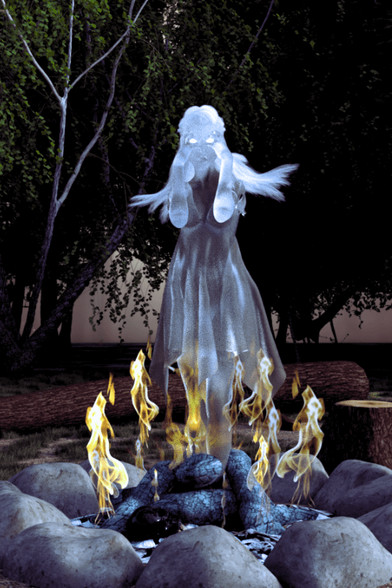
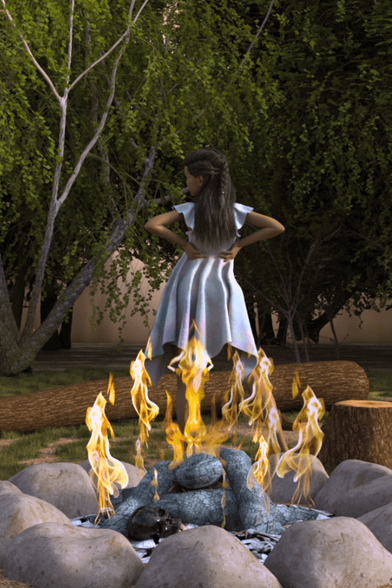
“If only they would tell the truth,” the lost girl mused. Katie watched as the teens in the group wandered into the woods. “If these children knew my story, they would never come out here.” Only a few would be returning, and they wouldn’t be returning whole. She knew this from the moment she issued the challenge over a hundred years ago. She was killed right here, in the woods, at the very spot where she used to tell the story and where the challenge always began. This firepit […]

https://ceriashwardauthor.wordpress.com/2026/05/25/creative-writing-and-stormy-night/

Creative Writing: The Darkened…

The night, dark and stormy as always, felt cliché. And the first person who could find the totem left behind would be the winner of this strange game. They decided to play a game based on the stories they told as kids as a joke. The ones that made you think twice before sleeping in the dark of your bedroom. The spooky stories that were certain to give you a slight fright. But this little game was not based on any old story. It had its origins in an actual event that occurred nearby, in the […]

https://ceriashwardauthor.wordpress.com/2026/05/24/creative-writing-the-darkened/

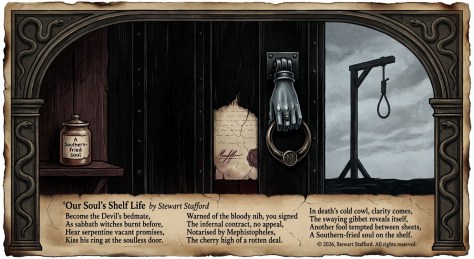
Our Soul’s Shelf Life


Our Soul’s Shelf Life
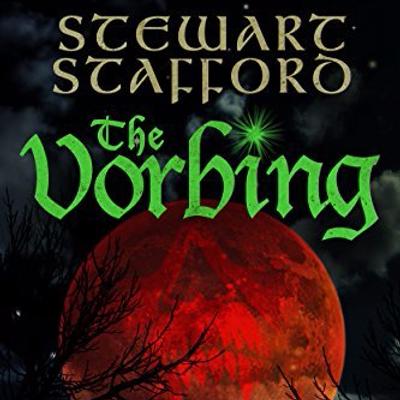
by Stewart Stafford

Become the Devil’s bedmate,
As sabbath witches burnt before,
Hear serpentine vacant promises,
Kiss his ring at the soulless door.

Warned of the bloody nib, you signed
The infernal contract, no appeal,
Notarised by Mephistopheles,
The cherry high of a rotten deal.

In death’s cold cowl, clarity comes,
The swaying gibbet reveals itself,
Another fool tempted between sheets,
A Southern-fried soul on the shelf.

© 2026, Stewart Stafford. All rights reserved.

#DealWithTheDevil #Evil #Faust #FaustianPact #GoodVsEvil #Gothic #GothicHorror #GothicPoetry #Horror #Occult #Poem #Poetry #Power #Satan #Satire #SellingYourSoul #SouthernGothic #StewartStaffordPoems #TheDevil #Witch #Witches

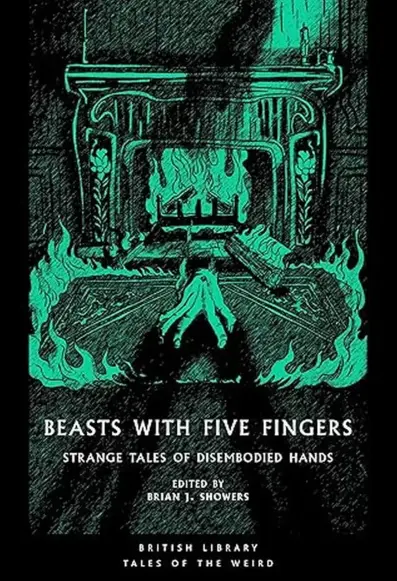
Beasts with Five Fingers (British Library Tales of the Weird #73) by Brian J. Showers
Release Date May 21, 2026
#Horror #ShortStories #Anthology #PsychologicalHorror #GothicHorror

https://www.risingshadow.net/book/90711-beasts-with-five-fingers

The Bride! and The Angry Black Girl and Her Monster dilute the Gothic tradition through maximalist pastiche, superficial empowerment rhetoric, and loopholes that evade the finality of death itself.
#Frankenstein #MaryShelley #TheBride #TheAngryBlackGirlAndHerMonster #GothicHorror #FilmCriticism #Horror #Cinema #ScienceFiction #MovieReview
https://pablohoneyfish.wordpress.com/2026/05/15/stitched-together-and-falling-apart-the-high-concept-failure-of-modern-frankenstein-reimaginings/
Stitched Together and Falling Apart: The High-Concept Failure of Modern Frankenstein Reimaginings

One of the most enduring misconceptions regarding Mary Shelley’s 1818 masterpiece, Frankenstein; or, The Modern Prometheus, lies in its perceived elasticity — its ostensible capacity to be recontex…

JP

Sugar Beets

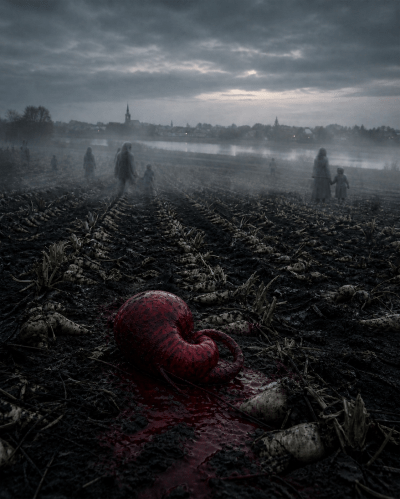
They planted sugar beets over the dead.

This was the first thing the old woman told me, and she said it without looking at me, as if the sentence itself were a window she dared not face.

We were standing at the edge of the field beyond Demmin, where the earth sank and rose in shallow, uneven swells. It was late autumn. The beet leaves lay dark and rubbery against the soil, wide as tongues, veined like the hands of the very old. Beyond them the river moved with the dull patience of something that had learned not to answer questions.

“You are writing a history?” she asked.

“A story,” I said.

“That is worse.”

Her name was Frau Ilse Kröger, though she had been a child when the town burned and the people went down to the water. Her coat was buttoned to the throat. Her hair, white and thin, had been pinned so tightly that her face seemed pulled backward by memory.

“You must not make ghosts of them,” she said.

“I thought perhaps they already were.”

At that she turned to me. Her eyes were pale, not weak, but faded by long endurance.

“No,” she said. “Ghosts are the dead who cannot leave. These were the living who were not allowed to remain.”

The wind moved through the beet leaves. They rustled low to the ground, not like plants, but like a crowd whispering with its face in the dirt.

I had come to Demmin because of a sentence in an old magazine, a line in a later book, a footnote beneath a national silence. Some said seven hundred. Some said a thousand. Some said more. The numbers rose and fell like bodies seen through river water. There had been war, terror, propaganda, vengeance, collapse. There had been flames in the town and soldiers in the streets and stories told so often in fear that fear itself became a door. Mothers carried children to the river. Men tied themselves to stones. Families vanished into reeds. The Peene, the Tollense, the Trebel—all waters became witnesses.

And afterward, when the new order came, the dead were inconvenient.

So they let grass grow high.

Then they plowed.

Then they planted sugar beets.

There is a peculiar obscenity in sweetness drawn from such soil.

I asked Frau Kröger if she remembered the field.

“I remember my mother’s hand,” she said. “I remember the smoke. I remember how the sky looked too low, as though God had leaned down to see and then could not bear to look any longer.”

We walked along the furrows. The earth clung to our boots in black-red lumps. Here and there the beets pushed up from the ground, pale shoulders emerging from darkness. They resembled skulls that had changed their minds and decided to become vegetables.

“Did anyone speak of it later?” I asked.

“Not aloud.”

“But in homes?”

She stopped.

“In homes most of all we did not speak.”

The field seemed to hear this and approve.

That night I stayed in a small room above an inn where the wallpaper peeled in long strips like shed skin. The radiator hissed. The window looked toward the rivers, though I could not see them, only a blackness where the land dropped away.

Near midnight, I woke to the smell of wet soil.

At first I thought I had dreamed it. But the smell thickened—earth, roots, river mud, and beneath it a faint sweetness, cloying and raw, like sugar spilled in a cellar.

Then came the sound.

Scraping.

Not at the door. Not at the window.

Under the floor.

I sat up.

The boards beneath the bed gave a soft, deliberate creak, though I had not moved. Then another. Then many small sounds together: scratching, pressing, shifting. Like roots growing upward. Like fingernails beneath wood.

I lit the lamp.

Nothing.

The room was ordinary again, ordinary in the way a corpse can be ordinary once the scream has left it.

I did not sleep. Toward dawn I looked from the window and saw, in the paling gray, a line of figures walking beyond the last houses toward the fields. They were indistinct, blurred by mist, and moved slowly, not like soldiers, not like mourners, but like people following instructions they no longer understood.

At breakfast, I asked the innkeeper whether there was a memorial nearby.

He wiped the counter though it was already clean.

“There is a stone,” he said.

“A stone?”

“For those who need stones.”

“And for those who need truth?”

He looked at me then with a kind of pity.

“Truth?” he said. “Truth is heavy. People say they want it, but mostly they want a stone small enough to walk past.”

Later I returned to the field alone.

The beets had been harvested in part. Great heaps stood near the road, pale and earthen, piled like bones awaiting judgment. A truck had left deep tracks in the mud. Crows hopped among the clods.

Near the center of the field I found a place where nothing grew.

It was not large. A rough oval of bare ground. The soil there was darker than the rest and soft despite the cold. I knelt and pressed my fingers into it. Water welled up at once.

Not rainwater.

River water.

It rose around my hand, cold and brown, though the rivers lay some distance away. I pulled back, startled. The little hollow filled silently, reflecting the sky. In its surface I saw, not my own face, but the white blur of beet roots hanging downward, though there were no plants above it.

Then a voice behind me said, “Do not dig.”

Frau Kröger stood at the edge of the furrow.

“I wasn’t.”

“You were thinking of it.”

That was true.

She came closer, slowly, leaning on her cane. “There were men who dug after the war. Men who made lists. Men who counted what could be counted and buried what could not. But later the counting became dangerous.”

“Because it accused someone?”

“Because it accused everyone.”

The wind pressed her coat flat against her body.

“The dead asked too many questions,” she said. “Why did you believe the lies? Why did you fear more than you loved? Why did you stay silent? Why did you come too late? Why did you plant over us?”

A crow called from the beet heap.

“And now?” I asked.

“Now they ask nothing. That is worse.”

From the hollow in the ground came a faint sound like breathing.

Frau Kröger heard it too. Her face tightened.

“When I was a girl,” she said, “we stole beets from this field. Children are always hungry after wars. My brother carried one home under his coat. My mother slapped him when she saw where it came from. Not because he stole. Because he brought it into the house.”

“What happened?”

“She cooked it.”

I stared at her.

“What else could she do? We were hungry.”

Her mouth trembled. Not with tears, but with a terrible, bitter smile.

“It was sweet,” she said. “That was the worst of it.”

The hollow had widened.

Water slipped along the furrows now, thin shining lines threading through the field. The beet leaves stirred though the wind had fallen. From beneath the soil came a low murmur, not words, but the sound of many people speaking with mouths full of earth.

Frau Kröger gripped my arm.

“You wanted your story,” she whispered. “Here it is. This town did not bury the dead. It buried the question of why the living could be driven to the water. It buried fear. It buried shame. It buried the terror of armies and the poison of the Reich and the helplessness of mothers and the guilt of neighbors and the convenience of silence. Then it planted sugar over all of it and called the sweetness harvest.”

The ground shuddered.

One beet near my boot loosened itself. Its root twisted upward, slick with mud. For one instant it looked horribly like a hand.

Then another rose.

Then another.

All across the field the sugar beets began to lift from the earth, not quickly, not violently, but with the slow resolve of the dead being remembered. Soil broke. Leaves trembled. Pale roots emerged, round and blunt, each carrying clots of black mud. The heaps by the road shifted and rolled, collapsing outward.

The air filled with sweetness.

Too much sweetness.

The kind that coats the throat and makes breathing difficult.

From the direction of the river came bells. Not church bells. Smaller. Duller. As if stones were striking beneath water.

Frau Kröger began to pray, but not in words I knew. Perhaps no language survived intact in her after that year. Perhaps prayer, after such things, becomes only the soul refusing to be silent.

The water in the furrows deepened. It ran around our boots. The field had become a map of rivers, every row a tributary, every hollow a mouth.

Then I saw them.

Not ghosts exactly.

Figures in the mist, standing among the beets. Women in dark coats. Children with pale faces. Old men bent beneath invisible burdens. They did not accuse. They did not plead. They only stood where the earth had held them, gazing toward the town that had gone on living.

Their silence was unbearable.

I wanted them to speak. I wanted a curse, a revelation, a sentence to carve onto stone. But they gave none.

That was their judgment.

They had been made into numbers, then rumors, then taboo, then crops. They had been reduced to a place one passed without lowering one’s voice. Now they returned not to frighten the living, but to make evasion impossible.

Frau Kröger stepped forward into the water.

“I remember,” she said.

The figures did not move.

“I remember,” she said again, louder.

The mist thickened around her.

“I remember my mother’s hand. I remember smoke. I remember the river. I remember the field. I remember that we ate what grew here. I remember that we did not speak. I remember.”

At that, the sweetness in the air broke.

Not vanished. Broke.

Like a fever.

Like a spell.

The beet roots sank back into the soil. The water withdrew into the furrows. The figures faded, though their absence remained visible, like the shape left on a wall after a picture is removed.

Frau Kröger stood very still.

When I helped her back to the road, she was weeping soundlessly.

“Will you write it?” she asked.

“Yes.”

“Then do not make it beautiful.”

I looked across the field. Dawn had begun to rise, gray and reluctant. The town lay beyond us, roofs dark, windows catching the first weak light. Somewhere a church bell rang the hour. Somewhere bread was being sliced. Somewhere children were waking without knowing what slept beneath the ground that fed them.

“I don’t know how to write such a thing without beauty,” I said.

She nodded, as if this were the oldest failure of language.

“Then make the beauty ashamed of itself.”

Years later, when I think of Demmin, I do not first think of death.

I think of sugar.

White crystals in a bowl. Sweetness stirred into coffee. Cakes dusted for weddings. Beet fields under a low northern sky. The ordinary miracle by which earth becomes food.

And I think of what the earth remembers when we do not.

For every country has its sugar beet field.

Every people has some place where the dead were covered, where the official mouth closed, where the plow passed over grief and called it necessity. Every age plants something over its horror and prays the harvest will be useful.

But beneath the sweetness, the roots know.

Beneath the furrows, the waters wait.

And sometimes, when the wind lies down and the mist comes low over Demmin, the field begins to whisper—not to the dead, who already know, but to the living, who still pretend they do not:

Remember us before we rise.

#aftermathOfWar #buriedMemory #collectiveTrauma #darkGothicFiction #Demmin #DemminGermany #EastGermany #forgottenDead #Germany1945 #ghostStory #GothicHorror #gothicLiterature #gothicTale #grief #hauntedFields #haunting #historicalFiction #historicalHorror #literaryHorror #massSuicide #memoryAndSilence #moralHorror #NevermoreAndOtherShadows #PeaceGroovesFiction #PeeneRiver #postwarGermany #sugarBeetField #SugarBeets #symbolicHorror #tabooHistory #tragicHistory #warTrauma #WorldWarII