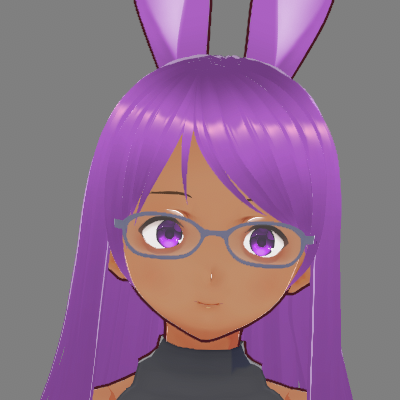
 Alrecenk
I've updated the #GLTF model loader in #WorldFabric to read morph targets, which means I can parse out #VRM avatar expressions.

GoBlend — мост между BLENDER и GODOT
Если вы работаете в Blender, а потом переносите сцены в Godot вручную, то знаете, как это выматывает. Материалы едут, коллизии надо выставлять заново, иерархия ломается. Год за годом одна и та же байда. Недавно вышел Goblend — двунаправленный import/export-мост, который позволяет экспортировать сцены из Blender в Godot буквально одной кнопкой. Главная идея была сделать так, чтобы сцена попадала в Godot с минимумом правок, сразу с прицелом на производительность. ⬅️ ⬇️ ➡️ ➡️ + Z
me: "what's The Hotness for interchanging between modelling software and #godot (or other engines)?"
the godot matrix room: #GLTF (well, #gltf2 )
this article is excellent.
https://godotengine.org/article/we-should-all-use-gltf-20-export-3d-assets-game-engines/#collada
(i just wish it didn't have that "old therefore bad" scare banner up top. something something churn fetishization something something)
Three.js 184 is out! Lots of great enhancements, and a tiny tweak from me!
You can now use webp textures across the whole GLTF pipeline.
All changes: https://github.com/mrdoob/three.js/releases/tag/r184
Example: https://threejs.org/examples/?q=gltf#misc_exporter_gltf
Also: ambient type generation from #glTF scene data and Needle components in those for type safe scene access everywhere.
(Still experimenting with syntax/names/formats)

I consider to #transcode the #gltf generator of #OSM2World from #Java to #Rust, by #AI of course. What tools (free tools!) are recommended?
There are many web tools to convert single sources. And the comments are great, default traits get used etc.
But to convert a directory or a (GitHub) project may need a payed account.
I once just used #ChatGPT for a 40-file-project, but there may be better ways now. May be GitHub includes such features, does it?
The Khronos 3D Formats Working Group has launched an Education, Insights, and Outreach (EIO) Subgroup to help developers and creators get the most from #glTF and #KTX — closing the gap between specification and real-world practice.
The Subgroup's first public webinar takes place tomorrow, April 7: Gaussian Splats: Use Cases & Next Steps for glTF Standardization.
https://www.khronos.org/blog/from-specification-to-practice-unlocking-gltfs-full-potential
#Khronos #OpenStandards #GaussianSplatting
Khronos Group is hosting a free webinar on Gaussian Splats in glTF — featuring speakers from Cesium, XGRIDS, and the Smithsonian on real-world use cases in geospatial, capture workflows, and cultural preservation.
April 7 | 7:00 AM PDT | Free, online
https://www.khronos.org/events/gaussian-splats-use-cases-next-steps-for-gltf-standardization
#GaussianSplatting #glTF #3DStandards #OpenStandards
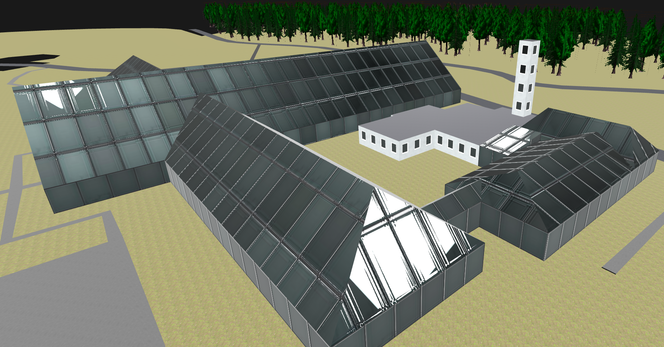
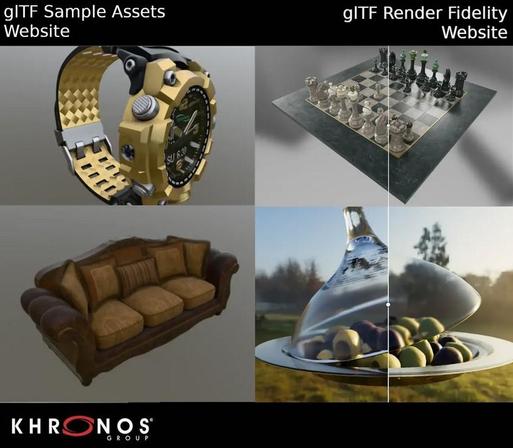
The glTF Working Group at Khronos is excited to announce two significant website upgrades at the center of the glTF developer ecosystem:
- A new landing page for the glTF Sample Assets GitHub repository provides a polished and powerful new web front-end.
- The glTF Render Fidelity Comparison website has undergone a modern redesign to deliver clear, side-by-side render fidelity comparisons.
Learn more: https://khr.io/1nj
#glTF #sample #render #fidelity #3Dgraphics
Calling all programmers!
Khronos Group is hosting "3D on the Web" -- an evening of talks, demos & networking around #WebGL #WebGPU, #glTF & #Gaussian splats.
March 11 · 5:30-9:30 PM PDT
Easy 12 minute walk from GDC in
San Francisco
Learn more and register: https://khr.io/1ne
#WebDev #3D #OpenStandards #GDC2026

 Habr
Habr
 AdamRGrey
 Boris
Boris
 Marcel Wiessler
 -karlos-
 Khronos Group