Episode 59: Who’s our Jeff Goldblum?
Compsognathus in a handbag. Microraptor as a pet crow. Sauropod methane energy. You’re welcome.
We sit down with Professor Amy Brock-Hon from the University of Tennessee at Chattanooga — Alyssa’s old alma mater — to talk caves, karst, and why a good geology degree might be the most versatile qualification you’ve never considered. Then we dig into a 2025 paper claiming scientists have found original collagen inside a 66-million-year-old Edmontosaurus hip bone — and ask what that means for the long-running soft tissue debate. Which leads us, naturally, to de-extinction — what we’d bring back, why, and whether Colossal Biosciences hatching chickens from synthetic eggs means we’re closer to an answer than we’d like to admit.
Tuinstra et al. (2025), “Evidence for Endogenous Collagen in Edmontosaurus Fossil Bone,” Analytical Chemistry. DOI: 10.1021/acs.analchem.4c03115
Fossils and Fiction is kept ad-free by our members. Join The Fossil Record via our website, or grab some merch from our Fourthwall store. Fossils and Fiction is a production of Extinction Media.
Transcript
Travis Holland (00:08)
Hi there, it’s Fossils and Fiction. My name is Travis Holland. I’m a journalist and science communicator of sorts. My co-host is Alyssa Fjeld who’s a real palaeontologist. Hi Alyssa.
Alyssa Fjeld (00:15)
you
Hello
Travis, how are you today? It’s cold and it’s Australia.
Travis Holland (00:23)
It’s not too cold. I am coming to you from a brand new location. I know I changed locations a lot, but I have set up a new home studio in my new city of Canberra. So here on Ngunnawal and Gnambri country, in, well in the Australian Capital Territory but in the southern part of New South Wales. So south of Sydney and famously between Sydney and Melbourne, because the two of them couldn’t agree on the location for the capital city.
for those who are international so you get a little bit of history of Canberra and how we came to where our capital is located.
Alyssa Fjeld (00:59)
And it’s like a pre-designed city as well, so it’s meant to be like the city of circles It’s meant to be really beautifully built as well because it was very intentional,
Travis Holland (01:07)
Yeah, that’s right. So it’s designed, the whole city is designed in these great big intersecting circles with avenues or lines that come down from the middle and connect to each other and to the larger circles. And that also includes a man-made lake that sits in the middle of the city. There’s supposed to be several other bowls which were never quite created as part of the lake, but Lake Burley Griffin is also this in part circular lake that
is in the center of the city and of course being the capital , Parliament House, is the kind of central feature to all of that as well. So yeah if you’ve not visited or don’t have much to do with Canberra it’s actually quite a nice city and I I think bureaucracy towns can be painted as boring sometimes but yeah it’s quite a nice place and I’m happy to be here.
Alyssa Fjeld (01:52)
I’ve heard nice things about Canberra as a convenient location as kind of a home base for getting between Melbourne and Sydney as well, especially if you don’t really want to do the really long train ride that you can do between Melbourne and Sydney. It’s a little bit less of a hectic time.
And there’s also access to the GSA Core Library, so Geosciences Australia does have a little outpost in Canberra, which is really exciting for folks like me who are interested in early Cambrian geology because a lot of our deposits tend to be offshore, they’re brought in with these massive cores of sediment, and if you’re really lucky you get to spend an afternoon picking them over. So someday, hopefully maybe, we could do a little shoot of us going out there, having a look at some of the cores, talking to someone, but yeah, if I ever come to visit you Travis, that’ll be my main excuse.
used to come see you.
Travis Holland (02:36)
Geoscience does have a public museum and display gallery, and they also have a collection of rocks, which they have arranged in a 1.1 kilometer walk called the Geological Time Walk around the facility. And so I have done that walk. I have been into the museum. I have taken a bunch of photos. There was also a moon rock. So ⁓ astrogeology is also there. And,
Alyssa Fjeld (02:58)
So dope.
Travis Holland (03:02)
the
moon rock you can touch. And so, actually I put photos this week up on our Instagram so people can go back, find the Geoscience Australia gallery that I’ve put up on our Instagram and, and access those photos. Anybody would think that was planned, but here we are.
Alyssa Fjeld (03:17)
on the topic of geosciences today, the interview that we’re bringing you has a little bit less to do with the biology side of what I’m interested in and more to do with the geology side. Just to give a little bit of a preamble to this, I talk about it in the interview as well, but as many of you know, I graduated from the University of Chattanooga, which is, I have a little map here of it. We have otters at our aquarium.
Travis Holland (03:37)
If we couldn’t tell by the accent, yep.
Alyssa Fjeld (03:39)
Yes, surprisingly a lot of us sound like this, but depending on where you’re at, we might sound more like this.
That’s where I did my undergraduate degree. I had a fantastic time in the geology department at UTC in part because like a lot of localized in-state colleges that offer these kinds of courses, it was incredibly comprehensive. I felt able to choose like a lot of the courses that I wanted to do. And even though I did have a very disillusioning experience with wanting to go on to grad school, I guess I don’t talk enough about like the positive experience that I had in undergrad. And it’s also a case of like, you know, I just selfishly wanted to chat with someone
for my old alma mater, but also, we’re currently facing a dire situation in the geosciences kind of around the world and especially in these westernized countries where a lot of schools are seeing a drop in attendance for things like geology A levels in the UK or an interest in AP geology courses in the US. I’m sure there’s an equivalent metric measuring Australia, Ireland, and as a result a lot of universities are cutting funding for full undergraduate geology programs and that includes places like my master’s university,
which has a beautiful, nearly fully functional geology lab that is perfect for teaching students exactly this kind of stuff that they just can’t use anymore because they don’t have the program.
So I thought it would be good to highlight these kinds of courses, what use they might be to some of the students who listen to this podcast, and what you could do to maximize the most out of getting a local geology degree. You would be surprised how many places need a good geologist. And actually, if you pay attention to the background of lot of popular films, you’ll notice there’s usually at least one of us hanging around at like, know, McMurdo or on the giant drill they send into the earth. You know, we’re a useful bunch and there should be more of us.
Yes, so that’s my interview.
Travis Holland (05:20)
I think those, ⁓ that,
that the pair of asteroid films from the 90s probably had geologists involved,
Alyssa Fjeld (05:25)
Yes!
They bring at least two of them to Mars and Kim Stanley Robinson’s Mars. And Amy Brock-Hon Professor Amy Brock-Hon is the person we’ve interviewed for this. She is absolutely the person I think we will someday send to Mars as a geologist. She’s really cool. She’s had a lot of experience as somebody who moved to Chattanooga from, I think it was New York. And she has a great, like a lot to say about the kind of community that you can find in smaller states and the kinds of communities you can find at these local colleges.
as well as just what it’s like to be kind of a badass geoscientist. I have a lot of respect for the kind of work she does, so scientists like Amy are the kinds of people that you would absolutely send to the asteroid.
Travis Holland (06:06)
And so with that, here is Professor Amy Brockhorn and Alyssa’s interview with Amy for Fossils and Fiction.
Alyssa Fjeld (06:14)
Today we’re going to be talking with Professor Amy Brock-Hon from the University of Tennessee at Chattanooga. Keen listeners may recognize this as my alma mater. I’ve actually got the sweatshirt right here if you’re watching this on YouTube.
Like a lot of folks from my generation currently in paleontology, I completed my undergraduate at a local university that offered a comprehensive geology major for a bachelor’s degree in science. I was also at times not the best student and among the patient professors and adjuncts who put up with my shenanigans included at the time doctor, now professor Amy Brock-Hon. Dr. Brock-Hon has been with UTC since at least the 2010s, teaching courses like physical geology, mineralogy, geomorphology, soils, and our senior seminar courses.
which is kind of our variation of an honors program. People like Professor Brock-Hon can speak to the value of the types of programs like this one and how people in our generation can keep these programs relevant and engaging for young people. So Professor Brock-Hon, thank you so much for joining us today. How are you?
Amy Brock-Hon (07:14)
Good, thank you. It is really nice to be here. It’s a really nice day in Chattanooga. It’s early in the morning, but that’s okay, because I’m an early morning person. I enjoy the mornings. I think it’s when my brain’s most active. So thank you for agreeing to do this early for me. It’s nice out, school’s out, so it’s kind of quiet on campus. And yeah, it’s a lovely day here.
Alyssa Fjeld (07:29)
You
It’s very funny, despite it being on the other side of the world from you and it being the totally opposite season, we’re heading into a warm fall and it’s late at night, which is when I get most of my work done as a grad student.
Professor Braakhan, how has this semester been? What have you noticed that’s trendy among the students? What are they interested in learning about?
Amy Brock-Hon (07:56)
goodness. It was a great semester. It was a busy semester. They feel like they get busier every semester. What’s trending? Well, you know, what I appreciate about appreciate about our students here is they have a varied interest in things. I can talk about some interesting like non academic trends that I see, which
Alyssa Fjeld (08:18)
Yeah, sure.
Amy Brock-Hon (08:19)
surprise
me, which makes me really happy in a way. And that’s there’s a lot of crocheting going on. Back to the, you know, the the craft. So, you know, you see students coming in with crocheted animals that they share with their friends in class. You know, if they’re sitting and listening, somebody is doing something active with their hands. I think that’s really cool.
kind of, to me, I see it working their brain in multiple ways. So I appreciate that they’re doing what they need to like take in the material. And if that’s being active with their hands, that’s cool. Back to the academic side of, I don’t know why that was the first thing that popped in my head. I just see crocheting everywhere. And I, and actually I’ll make one more comment about that. It, I can’t do it. So,
Alyssa Fjeld (08:59)
you
So fair.
Amy Brock-Hon (09:08)
And I’ve tried and my mom was a home economics teacher and has a sewing business and everything and I cannot do it for the life of me. So I think I notice it more. I’m jealous I think. But academically as I was mentioning at the start, know, we’ve got students with such a varied interest in kind of what they want to do. I think what’s interesting is I see a lot of students coming in knowing what they want to do.
Alyssa Fjeld (09:18)
You
Amy Brock-Hon (09:34)
a little earlier on. Now there’s still some students that, you know, are like, they want to take classes to help them figure it out a little bit more, but I do see students come in saying, you know, this is my plan. This is what I wanna do. And I don’t know, you know, if they’re just getting more information early on. I think maybe social media, if they’re even remotely.
interested in something they maybe can follow an influencer say in geology like in Iceland and maybe that’s influencing them I don’t know where that’s coming from but that’s something I think I’ve noticed is a little different
Alyssa Fjeld (10:09)
Yeah, I remember, so for listeners at home, I went through the geology program at UTC between 2010 and 2015, so over a decade ago now. And I remember not knowing really anything about geology when I sat through, sat in my first physical geology class where Dr. Rockon broke down all of the different careers you could have at the end of geology. And that was something that was really crucial that I didn’t know as a student coming in. And I’m guessing students now, yeah, are just better informed about
what’s out there for them. And in Tennessee we have a lot of like unique things that you can go into for geology. For example TVA is one thing that leaps to mind but what are some of the careers that you see kids pursuing after they’re done at UTC?
Amy Brock-Hon (10:53)
the thing about being in Chattanooga is a lot of people don’t want to leave Chattanooga. It’s a really nice place to live, I’ll admit. I’ve enjoyed living here. There’s so much stuff to do if you’re an outdoors person. You’ve got almost everything at your fingertips. And so, you know, we have students, a lot of our students tend to go into the geotech field or
Alyssa Fjeld (10:58)
It’s a really nice city.
Amy Brock-Hon (11:16)
environmental consulting with those groups. And we have a number of students who work for TVA, who work for these geotech and environmental companies. We also have students who work at the city, the local level, and the state, like with TDOT, Tennessee Department of Transportation. And then even some of like,
Alyssa Fjeld (11:33)
True.
Amy Brock-Hon (11:38)
We’ve got, I think someone at the BLM, we’ve got Army Corps of Engineers, you know, so, and we’ve got students in graduate school preparing for what they want to do next. So we’ve got students in a lot of places, a lot of them around here because they don’t want to leave this great place. But we also have students who have decided to, like we have a mining,
Alyssa Fjeld (11:55)
you
Amy Brock-Hon (12:01)
Mining geologist. I think he does a lot of his work in Canada and Alaska. He came back and talked to the geology club last semester. It was fascinating to hear what he’s doing up there. So, yeah.
Alyssa Fjeld (12:06)
the dream.
Yeah.
Well, one of the things that I was reading about
In preparation for this, we talked in an episode with somebody from University of New South Wales about the decline in enrollment in geology courses around the world and what people are doing to kind of circumvent that or correct for that. And one of the things that I always really appreciated about UTC geology, and I’m assuming other schools that are local are like this as well, but it was a real emphasis on the landscape around us. And it drew in these researchers whose specialties had a lot to do with the landscapes in Tennessee, the geology that we find there.
My question for you is what drew you to the south? What flavor of geology are you interested in researching now?
Amy Brock-Hon (12:57)
I came to Chattanooga because it’s where my husband and I could live together. Yeah, so we decided to get married. I was living in Illinois at my first teaching job and Kevin was in South Carolina and this job came up and I was like, I’ve never lived in the Southeast. And, you know, I’d spent time in Nevada.
Alyssa Fjeld (13:04)
Yeah.
Amy Brock-Hon (13:19)
during graduate school, so out west. And Kevin knew something about Chattanooga. He was like, yeah, that’s great.
Chattanooga’s great, let’s look at it. I applied, I got the position. And so for me, it was a real learning, like steep learning curve. I had to learn the geology of the area so that I could teach well, I could relate to the students, I could go on field trips, right, and make sure I had good examples of what we’re learning in class. And I’ve actually really come to enjoy learning.
myself about the geology of our region. We have a really great place to learn geology in that we sit at the junction of two physiographic provinces in Tennessee. That is the Cumberland Plateau where the rocks essentially flatten out from the Appalachian Mountain Building event and that junction between where the rocks flattened out where that all crunching stopped to where the
the crunching of the rocks happened, which is the valley and ridge. And just a couple of hours away, we get into the Blue Ridge, which was, you we began to get in the core of the Appalachian. So we can, yeah, we’re all sedimentary rocks here, which I’m fine with, you know. But, you know, when we’re tired of that, and if we want to show our students other things, we can just go a couple of hours east.
Alyssa Fjeld (14:34)
Yes.
Amy Brock-Hon (14:45)
and we’re into metamorphic rocks, igneous rocks like down in Atlanta. And so we have the ability to kind of teach local, right? Teach our students what, if they choose to stay here and work in, they get good information about what they’re working in and what rocks and what materials, therefore, what are the concerns, what are the hazards, what are the problems with contamination, related to all that, to other.
other things if they choose to go, you know, beyond. We also make sure that we have classes that take them outside of our area. And so we’ve been long running the Desert Southwest field trip. And so we fly into Las Vegas, do a whole tour for 10 days. And so students have the opportunity to learn, you know, Western geology as well. So they’re not just stuck in our region. They have the opportunity to learn.
Alyssa Fjeld (15:24)
Yes.
Amy Brock-Hon (15:38)
outside of it as well. And we also have international opportunities.
Alyssa Fjeld (15:42)
Yeah,
that was something that was brought in, I think, really close to, no, before I graduated, but there were no international travel opportunities in the gap when I came in. Now, I think long before either of us were at UTC, there may have been a Costa Rica trip, but…
Amy Brock-Hon (15:59)
Yeah, so Costa Rica went for decades. So it alternates with the Desert Southwest trip. they stopped going to Costa Rica, think, probably around when you graduated. And then they went to Spain. And then we started going to Scotland. So I’ve taken students to Scotland.
Alyssa Fjeld (16:15)
Yeah. ⁓ I was so jealous of that trip. ⁓
Amy Brock-Hon (16:24)
You talk about some history of geology, like that’s the birthplace of our science. And that is a fantastic trip. So students can, you know, opt into those if they like as well. Yeah.
Alyssa Fjeld (16:26)
my God.
Right, like
a lot of the schools around in Australia tend to have this economic geology focus because that tends to be where most of the jobs are, but there seems to be a lot more interest from the students in having these comprehensive degrees that have more than just the offerings of here’s a precious ore and how to get it out of the earth. And I also think there’s something to be said, as you’re saying, about also looking at the ethics of what we’re doing as well, like the hazards to the people that are extracting the material, but also, you know, how
much economic geology the price of going into oil and gas, sort of thing. And so I guess I’m just wondering, how do you strike the right balance with students in today’s world?
Amy Brock-Hon (17:16)
present it all to them and let them decide. You know, we’re scientists, we are trained. What we’re doing and what I tell students is like, when you graduate with a degree with us, you are trained as a scientist. Therefore, you can technically be successful in anything you need to think through a problem.
because that’s what the scientific method is, is properly evaluating a problem, making a decision off of the facts from that method. And so I think the best thing we can do for our students in that respect is present them with everything, all the facts, and from both sides, and let them ultimately make the decision. I think that’s the best thing that we can do.
Alyssa Fjeld (17:54)
as you say they’re going into so many different fields I hadn’t even considered but geologists at t-dot of course you want geologists in our region which for listeners at home, Tennessee is very car
you’re building structures, the famous example that I remember from Braakhan’s classes was, where are you building your house if you’re near a river? And in Tennessee, we are always at the will of various rivers that flow through our state. Rivers tend to have a cut.
cut bank and a point bar. The point bar is where the material gets deposited, the cut bank is where it erodes, and you don’t want to build your house on the eroding side. But many people who do not hire geologists don’t think about how many places geology comes up in your day-to-day life.
Amy Brock-Hon (18:35)
Yeah, absolutely. I do want to add, you know, here at UTC, I don’t know if you’ve heard, in late 2024, we were donated a cave.
Alyssa Fjeld (18:46)
A whole cave?
Amy Brock-Hon (18:48)
a cave, we own a And this is such an exciting opportunity for our students and it’s related to what we’re talking about here. Tennessee has the most caves than any other state in the US. We are a karst.
Alyssa Fjeld (18:49)
god.
Amy Brock-Hon (19:03)
Like we have a lot of karst topography. And for those of you who don’t know, karst topography is the landscape of sinkholes, disappearing streams, caverns, caves. you know, in fact, we’re kind of the center of a caving region called TAG. I know it’s really generic. It stands for Tennessee, Alabama, Georgia. But it’s just kind of the central region of all this cave activity.
Alyssa Fjeld (19:22)
You
Amy Brock-Hon (19:27)
And the fact that we now own a cave that we can use in teaching and research, we are directly able to teach our students around karst issues. you know, groundwater. Karst aquifers are very different than regular aquifers. So aquifers, know, where groundwater flows, where we extract groundwater resources from. It is very different in how contaminants move.
how you build structures. And so we now have that ability to directly teach our students like hands-on in a cave and where they don’t just see it in pictures in the class, but we can go like I taught a course this semester. I co-taught it with a biology colleague introduction to cave geology and biology and we wild caved like crawled scooted helmets, headlamps,
Alyssa Fjeld (20:16)
⁓
Amy Brock-Hon (20:19)
So we got to actually see everything we were talking about in terms of how caves form, what are the features, how they evolve over time, and then on the biology side, the unique cave environment from the biological perspective and ecological perspective. And so to do that gives our students a leg up too in our region because that’s such a critical part of our regional geology, therefore.
what influences what happens on the surface and how people interact with the landscape.
Alyssa Fjeld (20:52)
Right! A high percentage of caves and aquifers also means that Tennessee has a large amount of fresh water and the high amount of fresh water, our temperate environments means that we have a very high species diversity in all of these different cave environments. So, you know, I guess when I was an undergraduate people would work at the caves for fun or we’d go as tourists. It’s so cool that you finally have a research station there.
Amy Brock-Hon (21:09)
Looks like you got locked up.
Travis Holland (21:23)
Alyssa, that was a really great interview with your former professor, Amy Brock-Hon at UTC. And, as you mentioned, there’s been this bit of crisis building in geoscience. So really ties into that.
interview that episode that we had episode 55 only a few months back when we spoke to Indrani Mukherjee from University of New South Wales around geoscience and what we need to do to ensure that the geosciences, which of course paleontology is, you know, if not a geoscience itself is very strongly intersecting intersecting with geoscience. So, ⁓ very important conversations to have in these spaces.
Alyssa Fjeld (21:39)
Yeah.
Yeah.
Definitely, and I think there’s a lot of like older academics in paleontology who would regard having an undergraduate in geology as being the most important type of undergraduate degree to have in part because historically if you had that geology degree to fall back on if Paleontology didn’t work out for certain periods of time it means that you’re still getting experience hands-on working with the types of field tools and materials that you would get access to as a geologist That you would still build skills in paleontology through
mean, you if you’re out there with a hammer chipping away at limestone, it’s still a useful thing to experience and get experience in. And you know, it’s also a case that being a good geologist helps you visualize the types of deposits where you can find the fossils, how the fossils have interacted with the sediments they’re buried in. So it’s a tremendously useful amount of knowledge to have. And I kind of agree with this argument. And the interview with Amy, unfortunately, is cut off a little bit due to some issues with Australian internet.
But one of the things I wish we’d talked more about was this way that comprehensive geology education is less valued by a lot of industry because a lot of places like mining industry or the jobs that you get on oil rigs that involve geologists would rather just have someone trained up with like the practical skills as opposed to the kind of theory and the ethics behind what we do that you get in these more comprehensive four-year degrees. So the argument becomes do we just offer two-year trade degrees in geology so that people in industry can get people for
for
these mid-range jobs, or do we continue to insist that those people go through extensive training to get the kind of decision-making skills as to whether or not working for an oil and gas company to begin with is something they even want to be doing? So there’s a lot of discussion around that to be had. I hope that this conversation is something that you guys are having as an audience and thinking about, especially if you’re interested in doing a four-year degree. So yeah, hopefully all of that was useful for you guys.
Travis Holland (23:55)
Thank you for bringing us that interview, Alyssa. Now I want to move on to for some science news, a paper that was actually published early last year. That’s early 2025, but has been doing the rounds again, along with some incredible puns in various newspaper titles and news article titles. And this paper is called evidence for endogenous collagen in Edmontosaurus
Alyssa Fjeld (24:14)
Mmm.
Travis Holland (24:21)
fossil bone. It’s from the journal Analytical Chemistry and the authors are Twinstra et al. and we’ll put a link to the article in the show notes. they took an Edmontosaurus sacrum, which is the hip bone. It was excavated in 2019.
from the Hell Creek formation in South Dakota. Edmontosaurus, for those who need their memory jogged, was this duck-billed dinosaur, hadrosaur. It lived alongside T. rex and Triceratops and whatnot, those very famous, iconic dinosaurs at the end of the Cretaceous. And using three independent analytical methods, chemistry-based methods, the team found evidence that there were…
degraded filaments of the original collagen surviving inside this 66 million year old fossil. in their view. It cannot be modern contamination, but actually remnants of the dinosaurs own structural protein. And they say this is the first time collagen has been quantified, not just detected in a mesozoic dinosaur and the first time
that these particular techniques have been combined with protein sequencing on fossil bones. So it’s, quite a finding that there is soft tissue in dinosaur bone This has been contested for a while. There have been other claims about this. Mary Schweitzer claims similar for T-Rex in 2005 or thereabouts skeptics have
Argued that these were probably contamination or bacterial biofilm or something similar But this addresses that head-on they argue that if the signals were contamination the amounts would be larger and the sequences that they found would be more complete and also they compare it to Modern bones. I think a modern turkey bone was used in the paper as a comparison to sort of demonstrate How well that breaks down or not?
Alyssa Fjeld (26:05)
Mm.
Travis Holland (26:09)
So in certain burial conditions and with certain types of microscopic bone there may be stable chemical environments that slow the protein breakdown and leave it supported or leave it available for us to access millions of years later. What do you make of this paper?
Alyssa Fjeld (26:26)
So I think there’s been a lot of interest in the past decade or so into getting this kind of not DNA from dinosaurs, but evidence of soft tissue from different types of prehistoric animals. One person that I’d really love to talk to at some point on the podcast in our own backyard here in Australia is Aaron Kamrens, which is a researcher. He is a researcher at Flinders University who studies this kind of stuff for megafauna. So looking at the types of preserved
organic material from megafauna here in Australia or New Zealand. we are able to look further back in time in terms of this type of research than we’ve ever been able to due to advances in technology. There are a lot of exciting claims around this stuff getting made. And I think it’s interesting that they’re using this kind of cross-polar microscopy technique to confirm the results because I guess to summarize a longer argument, there’s been a lot more interest in using
that kind of crystallography or cross-polar microscopy as a way of determining material composition in very recent years. this is a team of chemists that have come in from outside the field of paleontology that are using some of the more modern techniques in paleontology to evaluate the specimen and make these determinations. And I think when you get that kind of thing happening, you often get a lot of, I guess, territorial behavior from both sides, right?
historically in paleontology when people come in from outside our field and try to make huge sweeping assertions about new discoveries There’s a lot of resistance to this because a lot of times when you have teams from outside paleo coming in There’s this sense of like you don’t really understand the nuances of what we do or what types of confounding factors might exist in this case I think you you do need to consider the place where the specimens are coming from so historically
Historically Museum of the Rockies was one of the first museums to do destructive sampling with dinosaur material. And, you know, we can say a lot of things about a certain research scientist who pushed for that at Museum of the Rockies at the time.
I think there’s a lot to be said about a lab that pioneered these kinds of sampling techniques, maybe having a good idea of how to do it without contamination. But I would also say that based on what I know about the type of biomolecule research that was done at McCrory, which was a slightly different kind, they were looking for different things than these researchers were looking for.
If you collect these specimens without your gloves on, in our case, because they’re so small, the oils from your hands will have already penetrated the specimen and because you need to drill into it, all of the stuff on the surface would contaminate what’s inside it.
And so the person I knew who was working on that project had a bugbear of a time. And every time I’ve seen people do that kind of sampling, from the minute you get it out of the ground to the minute it makes it to that lab, the specimen has to not be handled with bare hands. Nobody’s face can be on it. You can’t rest it on your stomach while you’re like wrestling it into a cast. Not that everybody’s going around shirtless doing that kind of stuff in paleontology. It’s just that when you’re in the field, like it’s really hard to keep track of like if you’re
leaves are rolled up and you’ve had to bear hug a rock into a truck, you know? ⁓ So I think the risk of there being some kind of contamination in that case is not something that I think you could control for given the way that they ran that type of experiment, but I don’t know enough chemistry to say that for sure, and I want to be able to bring back dinosaurs, so I just want it to be true really bad.
Travis Holland (29:30)
Mm.
What you say about people from outside the field coming in as I think a really valid point because as you say, they, in this case, they’re chemists. They’ve done a really good job, presumably of controlling for things within the chemical space, but they’re maybe not considering the realistic processes of actually digging the bones and handling them and how those kinds of things happen. The other thing I’d say about that is it reminds me a little bit of the
Alyssa Fjeld (30:05)
Yeah.
Travis Holland (30:16)
T-Rex encephalization quotient paper that went around a few years back, which argued that T-Rex is incredibly smart. I think on the level of primates, maybe specifically baboons, they were talking about just sort of based on brain case size. And it didn’t really look at additional or relevant studies that had already occurred in paleontology in that space. And so there was very strong pushback from paleontologists with that expertise to say, well, actually, no, you’re, you’re not really addressing all the evidence here.
But the flip side of that is that sometimes people from outside the field can bring in a perspective that may have been missed through orthodoxy or through whatever reasons. And so, you know, here I want to point to the Alvarez’s who identified the Chicxulub impactor in the first place. And they were, I think, a physicist and a geologist father and son team. So yes, geology again, very close, but the physics
Alyssa Fjeld (30:56)
100%.
Yes.
Travis Holland (31:12)
was really what unlocked the astrophysics was really what unlocked the key there to the Chicxulub impactor actually being an impactor, right? Actually, actually depositing the radiation around the world. So yeah, sometimes it’s helpful, but it’s also, this is where collaboration is really important. It’s just useful to work with people who have different expertise, who bring in different perspectives from across
various scientific disciplines to try and ensure that you have the most robust findings that you can possibly have. but it’s still pretty exciting. We always, we always love the idea of soft, soft tissue preservation in a dinosaur.
Alyssa Fjeld (31:43)
Yeah.
Thank
Yes,
anything that’s pushing the field forward, even if it’s from outside the field, like I didn’t mean to come across as a curmudgeon, I definitely think that’s how we advance. it’s also like, paleontology is a field that is just a homunculus of several other sciences, like we live like Kirby, kind of swallowing in other fields as we go. It’s nice when they help us along with that process.
Um, the chemist are valid, the physicist are valid, um, please continue to participate in paleo, please continue to bring new ideas into the field so that we can bring back dinosaurs because we all, I know it would be a terrible idea a little bit, but like, think of the questions we could answer, you know?
Travis Holland (32:29)
So despite trying not to get over hyped about these findings about
finding potential soft tissue preservation in dinosaurs. Let’s just spool it out a little bit and say, what if we could do the Jurassic park thing and use soft tissue preservation to bring dinosaurs back? What would you bring back?
Alyssa Fjeld (32:45)
Yeah.
Yes, okay, so I reckon we both have a list of a couple of dinosaurs that we would bring back. I have little justifications for why I picked each of them, so maybe I’ll say one and you could say the next one that’s on your list.
Travis Holland (33:04)
Sounds great.
Alyssa Fjeld (33:05)
Okay, okay, so first of all, I’m basing part of my answer on the John Conway dinosaur pet guide because it’s very cute. And they make like a very good argument for either Compsognathus or Hypsilophodon and I think Compsognathus looks cuter because it looks like if a ferret and a kitty were a dinosaur and I would want to put it in my purse and take it to the bar.
Travis Holland (33:13)
You
Okay, so, yep. Look, I can see this,
the flip side of this argument for me is that compsognathus is of course a carnivore. ⁓ so you want to be really careful there. Even, even a little carnivore could be problematic. That said, we keep little carnivores in our houses already anyway in the form of cats and dogs. So who knows?
Alyssa Fjeld (33:37)
Yes.
Exactly.
Travis Holland (33:52)
Your Jurassic
Park compsognathus are vicious little creatures though.
Alyssa Fjeld (33:56)
Yeah,
yeah, but like we know that show’s not meant to be accurate. It’s about the folly of man. They’re cute in my dinosaur games.
Travis Holland (34:04)
They are pretty cute. They are pretty cute. There’s also a paper out there that arguing compsognathus is not a species that it’s actually they’re all junior junior Tyrannosaurids
Alyssa Fjeld (34:06)
you
⁓
Well, I guess we could find out, couldn’t we? Yeah.
Travis Holland (34:17)
by bringing one back. ⁓ okay.
So yeah, okay. I can see this. I can allow it. I think they would be as trainable as your average monitor lizard or cat.
Alyssa Fjeld (34:25)
It’s just-
Yeah, yeah,
I think we could get it to shit in a box.
you
Travis Holland (34:37)
Fair. Okay.
similar theme then I’m going to go if, if it comes, if a compie is your, Mesozoic equivalent to a cat, I’m going to suggest the Mesozoic equivalent to just your average cockatiel and that’s going to be a microraptor right? It’s a little, it’s a little dromaeosaur. It’s got four wings. It’s going to look really spectacular.
Alyssa Fjeld (34:56)
Yes!
Travis Holland (35:03)
You could easily just keep it in a cage and feed it mice or something You know, I think that’d go I think that’d be great and super cute
Alyssa Fjeld (35:12)
Yeah,
and they have like beautiful like we kind of know the color of Microraptor feathers and they’d be kind of crow colored So I reckon you’d get the same experience like of training like a crow to be your friend where like occasionally it might just look you dead in the eye and make a human sound and you’re like, Okay, and then the rest of the time it’s just happy to eat some peanuts
Travis Holland (35:33)
Yeah, but I think that would work pretty well. You know, Microraptor would be, would be a good one to have. So, okay, get out there and find some collagen in Microraptor for me, please. And thank you.
Alyssa Fjeld (35:37)
Yeah.
While you guys
are at it, have a look around. know we get just, so thinking about the odds of like one that we could actually get because we just have like a metric ton of them. I reckon we bring back psittacosaurus Let’s find out if all of these like pigmentation papers are true. Is that really what it looks like? How is it? Is it nice? Is it like a deer or is it like a menace?
Travis Holland (35:58)
Mm-hmm.
Alyssa Fjeld (36:09)
I guess deer can be menaces. But you know, like, what a strange looking fellow. And we could, we could, you know, see how accurate some of our predictions were because we know so much about it.
Travis Holland (36:19)
Yeah, so the psittacosaurus is this basal ceratopsian right? It looks like a little, it’s a little pig face thing with it’s relatively small like dog size That could work. I can definitely see that. I guess some major drawbacks is being a ceratopsian it’s gonna have a hard beak so it could nip a finger off pretty easily.
Alyssa Fjeld (36:23)
Yeah
True.
Same as our
Microraptor, right you have like, it’s just got a bolt cutter kind of attached to its face and that means that you can’t really contain it very well. I mean, where are you putting your psittacosaurus for the evening? I don’t think you can put it in a puppy cage.
Travis Holland (36:47)
Hmm.
he’s going to break, is going to break out of there. okay. I’m going to, these have all been pretty small so far. So mine, the one I’m going to suggest next is given again, we’ve got a ton of them and this is one we’d literally, we’ve just discussed the collagen in its bones. So I feel like it’s the most realistic option and that’s an Edmontosaurus. Let’s just get, let’s just get Edmonto roaming around the neighborhood. Now these are huge though, right? Like
You think this is the thing with some dinosaurs is you go, yeah, that’s like, like a triceratops roughly the same size as a rhino, right? But like, no, it’s elephant sized or like bigger. And the same with Edmontosaurus is you go, yeah, maybe what horse size, but no, it’s much, much bigger than that, They’re, they’re, they’re absolutely massive. Nonetheless, I reckon, you know, having a bunch of these running around in the grasslands would be pretty amazing.
just to see a big herd of Edmontosaurus grazing somewhere.
Alyssa Fjeld (37:53)
Yeah.
So I had the exact same thought, but my boy, my honkler of choice, has always gotta be the one that I struggle to pronounce the way that people think I should, Parasaurolophus, Paralys. I’m gonna give up, but he’s my favorite one. And it would either be him or Magnapaulia because I think both of them just have morphologies that look very silly. And I think I would like to see if one, how they move in the wild, how do they graze, how do they, you know, do they move in herds, but also.
If you were gonna ride one like a horsey, where would you put the saddle? I wanna know. I desperately wish to like hear them honk as well. Like could you imagine the dulcet tones of a forest of like beautiful duck-billed dinosaurs?
Travis Holland (38:37)
Yeah.
Parasaurolophus is one of my lifetime favourite dinos and yeah I think the sounds that could come off a herd of paras would be would be amazing.
Well, we’ve already had a couple of carnivores, if not smaller ones. I, I, you know, everyone would love to see a T-Rex, but I just, I’m going, no, no, I don’t want to, I don’t want to see a T-Rex, but if we’re going to go Mesozoic lizards or reptiles, I could go for a Mosasaur. I don’t swim in the ocean as it is, but
Alyssa Fjeld (38:57)
Right.
Okay.
yeah, yeah.
Travis Holland (39:20)
I think a mosasaur would be pretty cool.
Alyssa Fjeld (39:22)
Well, imagine what they could do to the underwater internet cables that the sharks are chewing on, you know what I mean?
Travis Holland (39:27)
⁓ right.
And they would be really, their attraction or reaction to those cables would be really interesting because they would have not had time to think about it. To learn.
Alyssa Fjeld (39:38)
Right! I mean, think of…
What if they take beef with the Great Pacific Garbage Patch? You maybe this is our solution, is just to give the mosasaurs microplastics?
Travis Holland (39:49)
they could clean it up. You never know. Maybe Mesozoic life is the key to resolving modern trash systems.
Alyssa Fjeld (39:50)
you
So on that note,
had, so I was thinking what would be a useful one to bring back and I’m thinking like, okay, okay, what if we just brought back one of the really big ass sauropods, you know? And we, because sauropods must, I would think, have produced a bunch of methane and like maybe, you know, they could, they could, we could harness that for energy or something or maybe they could eat a bunch of like,
plants that we don’t, that are invasive, you know? Like maybe we could, you know, if we’re already genetically engineering a dinosaur, why not have it eat milkweed or something, you know? Like, think of it. Hanzu.
Travis Holland (40:31)
I have heard
and seen a lot of proposals about, you know, sauropods being good for farming, for dragging logs and whatever. But I don’t think I’ve ever thought about them being potentially an energy source for their farts. Just a methane plant, a methane gas plant running off sauropod farts.
Alyssa Fjeld (40:41)
True!
you
I’m sorry everyone!
Welcome to Jurassic Fart.
you
Travis Holland (41:00)
Hey,
boy
Alyssa Fjeld (41:01)
I’m sorry.
I’m imagining the theme song, but you know, armpit fire.
I promise I’m an adult. I promise.
Travis Holland (41:08)
All right. I think we, I think we’ve got some good options there. We’ve got a good, we’ve got a good spread. who wouldn’t love to see a sauropod in the distance, know, let alone, let alone if it was one that had some flames, uh, shooting out.
Alyssa Fjeld (41:15)
Yeah!
A reverse dragon, if you will. Yes. ⁓
Travis Holland (41:24)
Yeah, exactly.
the other thing that I want to mention is, know, it is all fun and games to talk about de-extinction but there is a company out there that’s trying to do this. And we’ve talked about them a couple of times before, colossal biosciences. And, you know, I do have a lot of issues with the way that they’re going about what they’re trying to do. And the fact that it’s basically all press release over science, like that is very, it’s very InGen
Alyssa Fjeld (41:34)
Mm-hmm.
Yeah.
Travis Holland (41:49)
in many ways. It’s very get the word out there and put on a big show and uh and then try and make money out of it somehow. That’s very much what Colossal is trying to do. So they’ve they’re trying to de-extinct the woolly mammoth and the thylacine and they’re also trying to work on de-extincting the moa. So this week uh just a couple of days ago as we record this Colossal talked about
Alyssa Fjeld (41:50)
Where?
Right.
Travis Holland (42:17)
hatching 26 healthy chickens from synthetic eggs and so the idea is that those eggs will be of use in actually breeding moa and breeding other extinct animals using synthetic eggs. So it has a silicon membrane inside this hexagonal cup that sort of does the gas exchange thing
It seems like a pretty foundational step toward their effort in de-extincting Dodo’s and Moa, but it’s very hard to know. It’s very hard to know how much of this has actually occurred because again, they kind of focus on the press release and the big splash without focusing on or without explaining how it’s actually happening. You know, patenting science is a, again,
Alyssa Fjeld (42:56)
Yeah.
Yeah.
Travis Holland (43:08)
to go back to Jurassic Park Ian Malcolm slaps the desk at one point and says you know before you even knew what you had you patented it and slapped a sticker on it and you sold it now you’re selling it so and that very much strikes me what Colossal is doing is exactly that but nonetheless it’s happening and so there’s gonna have to be some very serious conversations about this information so we know that they hatched 26 chicks
Alyssa Fjeld (43:19)
Yep.
Yeah.
Travis Holland (43:36)
or that they claim to have hatched 26 chicks, but you know, out of how many attempts would be one question there. Are you losing thousands or hundreds out of that? At this point, there’s no peer reviewed paper or public data sets. So scientists can’t evaluate the methodology. And it’s essentially, yeah, their own press release. So it would be good to know more information about what Colossal is up to.
Alyssa Fjeld (43:40)
Yeah.
Travis Holland (44:02)
I think we’re past the point at which we can write them off as a joke.
Alyssa Fjeld (44:07)
I think it was early 2000s, there was a Korean company that was, or a lab in Korea that was trying to get in on the ground floor for human cloning. And they made a lot of huge claims about what they were doing and what they were able to do.
And it was a very similar situation where there were very few press releases and because the scientist in charge of the experiments was so beloved as a national figure, there was very little criticism from the agencies that were giving him a lot of money. And the question that I think kind of gets asked in these cases by scientists is, is it Pandora or Piltdown Man or Prometheus?
You know, is this going to turn out to have all been flashing bang? And the only way that we as scientists really can evaluate it is if you give us the freaking eggs and the things you’re hatching out of them and access to how you did it all. We can’t evaluate what you’re doing if you keep it so locked down. And at what point does that become like…
that meme that keeps going around of like, this science fiction story tells you about how the torment nexus was like a terrible idea and you shouldn’t invent it. Tech CEO, good news, we’ve invented the torment nexus.
the big question then becomes if we’re doing a Jurassic Park, who’s our like charismatic mathematician that’s gonna come in in a silken shirt with three buttons undone and slam a fist on the table and be like, you know what I mean? Like, who’s our Jeff Goldblum? Who’s our Ian Malcolm?
Travis Holland (45:33)
Yeah.
I don’t have that charm unfortunately. And on that note, this has been Fossils and Fiction. Fossils and Fiction is kept ad free by the support of our members. So jump over onto our fourth wall store via our website and purchase a membership or purchase some merchandise to keep us going and we’ll chat to you next time. Thanks Alyssa
Alyssa Fjeld (45:37)
Hahaha!
See you guys,
#AmyBrockHon #ColossalBiosciences #deExtinction #edmontosaurus #geoscience #geoscienceEducation #hadrosaurus gempa HQ
 Paul Giulan
 The Orkney News [Unofficial]
 Dr Micha Campbell
 Jesper Dr.amsch
 Travis Holland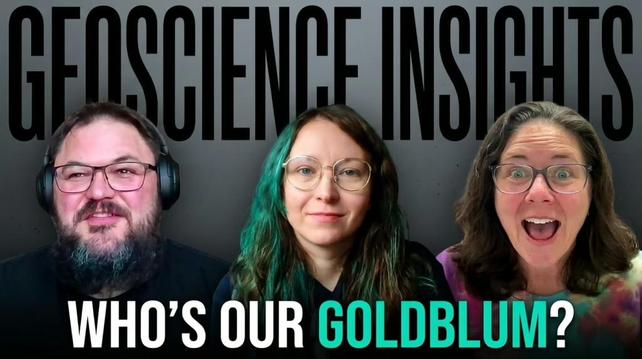
 LeidenForce
 Zeitgeisty Aphorisms
 💧🌏 Greg Cocks