#BlackCherry – Prunus serotina: Benefits, Risks, and How to Grow

"Wildlife Value

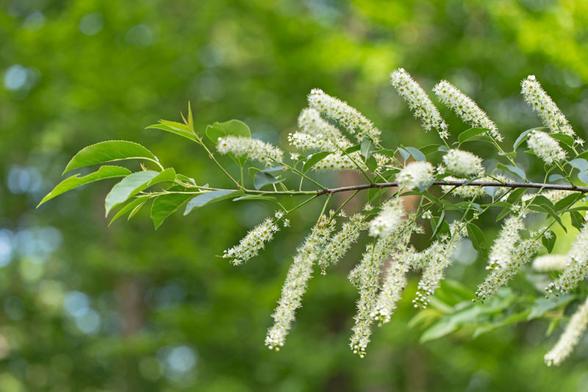
Prunus species support hundreds of butterfly and moth species. Black Cherry offers nectar for pollinators, fruit for #birds and mammals, and cover for #wildlife.

Birds: Robins, cedar waxwings, woodpeckers, wild turkeys, quail, thrushes, and many other birds feed on the fruit and spread seed.

Mammals: Red foxes, black bears, raccoons, opossums, squirrels, rabbits, white-tailed deer, and small mammals utilize the fruit and habitat.

#Pollinators: The nectar-rich flowers attract bees, butterflies, and other beneficial insects.

#Butterflies and #Moths: Larval host plant for species including Eastern Tiger Swallowtail (Papilio glaucus), Cherry Gall Azure (Celastrina serotina), Coral Hairstreak (Satyrium titus), Spring Azure (Celastrina ladon), Viceroy (Limenitis archippus), and Red-Spotted Purple (Limenitis arthemis astyanax)."

Learn more:
https://www.gardenia.net/plant/prunus-serotina

#SolarPunkSunday #BlackCherries #NativeTrees #GardeningForWildlife #GardeningForPollinators

Prunus serotina (Black Cherry)

Black Cherry guide: ID features, toxicity, wildlife value, & care. Learn where it grows, livestock risks, and how to use its fruit and wood.

Gardenia

#BlackCherry

"Common Name: Black Cherry, Wild Black Cherry, Rum Cherry
Scientific Name: Prunus serotina
Family: Rosaceae

Etymology: Prunus comes from the Latin for Plum or Cherry tree, while serotina refers to late bloomer.

Indigenous Uses

#Indigenous communities consumed the black cherry as is, dried and crushed them for use in soup, utilized it as a base for fermented spirits and created cough syrup from the bark.

#Medicinal Uses

Black cherry bark can be turned into a type of natural cough syrup. Cherries also have many vitamins in them.

Edible Parts

The fruits of the black cherry are edible and can be prepared in several ways. The cherries can be eaten raw [NOT RECOMMENDED], turned into jam or syrup, utilized in cooking and baking, and blended into a drink. Other parts of the tree such as the leaves, bark and roots should be avoided as they contain toxic compounds.

Gathering and Using

Black cherries can be gathered in the fall. Wood for various usages such as tools, handles, furniture and paneling can be gathered at any point although spring and fall are the best.

Permaculture Functions and Considerations

Black cherries attract several #pollinators, especially native insects and insects that biologically control garden pests. Black cherries are also a wonderful source of food and lumber.

How to Identify

The black cherry can vary in height from 25 feet to over 100. Leaves are a shiny dark green with fine serrations and an oblong shape. They are 2-5 inches long and 1-2 inches wide. When the leaves are crushed, they give off a cherry-like scent. White blooms emerge from March-June depending on conditions and location. Dark red fruit starts in the summer and changes black in August-October.

Wildlife Support

Birds feast on fruits and these fruits are considered very beneficial to migratory birds in the fall. The cherries are also eaten by several small mammals and the tree is a host plant for over a dozen butterflies and moths.

Additional Information

Black cherry wood is utilized in scientific and professional instruments, as well as cooking."

Source:
https://www.washcoll.edu/learn-by-doing/ces/plants/rosaceae/prunus-serotina.php

#SolarPunkSunday #BlackCherries #NativeTrees #GardeningForWildlife #GardeningForPollinators

Black Cherry - Prunus serotina | Washington College

Permaculture profile for Black Cherry, Prunus serotina

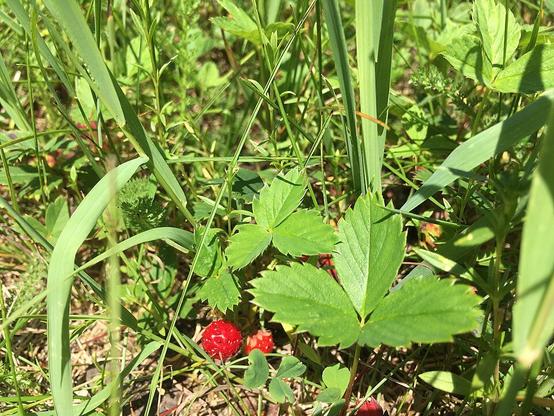
It's #Strawberry season here in #Maine! We have native #WildStrawberries growing in our garden and yard. Commercial strawberries are a hybrid between Wild Strawberries and Chilean Strawberries (I just learned that)!

Wild Strawberry (Fragaria virginiana)

"Fragaria virginiana, commonly known as Wild Strawberry, Virginia Strawberry, or Common Strawberry, is a delightful native perennial herb that serves as both an attractive ground cover and a valuable food source for wildlife and humans alike. This member of the Rosaceae (rose) family creates extensive low-growing mats through spreading runners, producing the familiar three-leaflet leaves, pristine white flowers, and bright red berries that have made strawberries beloved worldwide.

"Despite its diminutive stature — typically growing only 3 to 6 inches tall — Wild Strawberry plays an outsized role in North American ecosystems. The plant spreads by runners (stolons) to form dense colonies that provide ground-level habitat and food resources throughout the growing season. The white flowers, which appear in spring, give way to small but intensely flavorful red berries that are eagerly consumed by birds, mammals, and humans. These berries are the ancestors of all modern cultivated strawberries, though they remain much smaller and more intensely flavored than their domesticated descendants.

"Ecologically, Wild Strawberry serves as an important early-season nectar source when few other plants are flowering, while its dense mat-forming growth provides crucial ground cover that prevents soil erosion and creates habitat for small wildlife. The plant’s ability to thrive in both full sun and partial shade, combined with its tolerance for various soil conditions, makes it an excellent choice for naturalistic gardens, woodland edges, and areas where a low-maintenance, wildlife-friendly ground cover is desired."

Learn more:
https://plantnative.org/native-plants/wild-strawberry-fragaria-virginiana.htm

#SolarPunkSunday #GardeningForWildlife #GardeningForPollinators #NativePlants #Strawberries

Wild Strawberry: Native Wildflower Guide

Discover Wild Strawberry, a native wildflower. Growing guide with planting tips, care instructions, bloom time, and pollinator benefits.

PlantNative.org

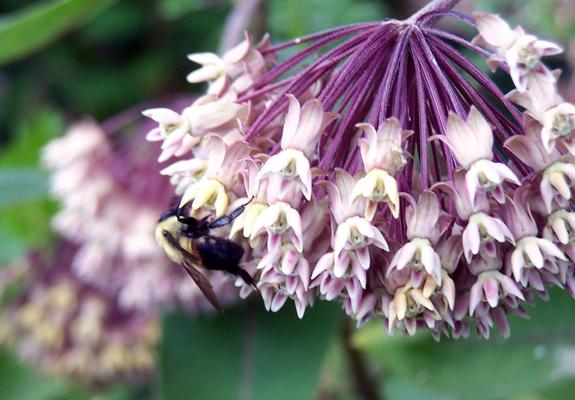
My milkweed appeared on its own when I stopped mowing the lawn a few years ago. This afternoon the fragrant blossoms were a magnet for bumblebees.

#NativePlants #GardeningForPollinators #Gardening #Massachusetts #Bumblebee

Heh. So, here's an example of how I work with what's growing around. Here's a mullein plant that's in it's 2nd year that I left where it was. I decided to just work around it, and have planters with peas growing in them hanging from the plant pole. The plant pole is providing the support for the mullein, which is a favorite of the local bees!

#SolarPunkSunday #GardeningForPollinators #MedicinalPlants #ContainerGardening #HomeGarden

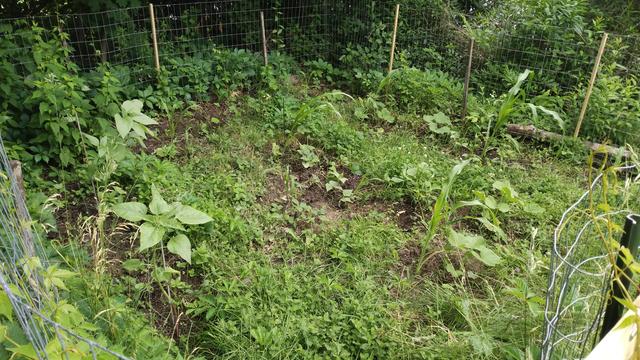
My deliberately messy #HomeGarden. I left wild strawberries for the birds and clover for the bees. I've been weeding a few things out (like mint and a few asters -- there are plenty nearby), and some of my corn, squash and sunflowers are doing pretty well (the beans, not so much). And I have potatoes, tomatoes, onions, lettuce, peas and rainbow chard that are doing well in containers. I should have some tomatoes, lettuce and rainbow chard to harvest soon .😋

#SolarPunkSunday #HomeGardening #GardeningForPollinators #GrowYourOwn

Pennsylvania residents have an opportunity to transform their gardens and add biodiversity to their backyards by purchasing native plant kits, ready to add their landscaping this fall.

Vickie Babyak has more information:

https://tubecityonline.com/2026/06/garden-kits-from-penn-state-extension-promote-native-plants/

#PennState #gardeningForPollinators #gardening

More of this, please...!

#SouthPortlandME - News From #Sustainability: #SwapShop, #ElectricToolLibrary, #ResilientYards

"Swap Shop

Opening Day: April 21, 2026

Celebrate 10 years of the Swap Shop with us this season! Get hours and info at: southportland.gov/swapshop

The Sustainability Department is seeking volunteers to help run the shop. Thinking about joining our great crew? Email [email protected] or call (207) 347-4147.

South Portland Electric #ToolLibrary

Opening Day: April 22, 2026

The South Portland Electric Tool Library (#SPETL) provides the opportunity for South Portland residents to borrow electric lawn equipment free of charge by simply using their South Portland Public Library card. Residents can borrow electric lawn mowers, leaf blowers, string trimmers, hedge trimmers, and edgers.

Residents can sign out electric equipment by going to the SPETL shed located next to the Swap Shop at the Transfer Station. The SPETL manager will assist residents with signing out and learning how to use equipment. All borrowers will be provided a charger and battery with their equipment. To sign out equipment residents must provide a valid City of South Portland Library card and sign an Equipment User Agreement form.

The SPETL is open Wednesdays and Saturdays 10 AM to 3 PM.

For questions about tool availability, call the SPETL during operating hours at (207) 317-2200. For other questions, email [email protected] or call (207) 347-4147.

Resilient Yards

We are now accepting applications for our Resilient Yards Program! Are you interested in learning more about native plants and resilient gardening in your yard? Participating in Resilient Yards is a great way for South Portland Residents to get started. Our volunteer coaches will help you design and install a small native habitat garden in your yard with program resources. Learn more and go to southportland.gov/resilientyards to apply by May 1, 2026."

https://www.southportland.gov/m/newsflash/Home/Detail/528

#SolarPunkSunday #BorrowDontBuy #SharingEconomy #GardeningForPollinators #GardeningForWildlife #ToolLibraries #Swaps #Maine

News From Sustainability: Swap Shop, Electric Tool Library, Resilient Yards

Swap ShopOpening Day: April 21, 2026Celebrate 10 years of the Swap Shop with us this season! Get hours and info at: southportland.gov/swapshopThe Sustainability Department is seeking volunteers to hel

#PleasantvilleNY - #SeedLibrary

#MtPleasantPublicLibrary

"#GrowYourOwn garden with the help of our Seed Library—a collection of quality, regional flower and vegetable seeds that you can 'check out' for free at the Main Library.

What is a Seed Library?

A Seed Library is a collection of flower and vegetable seeds that you can 'check out' for free. Some Seed Libraries include seeds that have been saved by library patrons, or seeds donated from nurseries. We might have those sources one day at Mt. Pleasant Library, but for now we have seeds purchased from quality regional seed producers in #Maine and #AccordNY.

The purpose of a Seed Library is to encourage #SustainableGardening and #biodiversity by providing free access to seeds. These initiatives empower community members to grow their own food; learn #SeedSaving skills; preserve local, rare, or #HeirloomPlant varieties; and reduce reliance on #CommercialSeedCompanies. This helps combat seed #monocultures that threaten the world's food supply.

How does our Seed Library work?

- Go to the Gardening Special Collection at the Main Library and browse our Seed Library binder which includes details about each type of seed we offer.
- Help yourself to up to 5 seed packets per visit.
- Fill out a short form listing which seeds you took and if there are any seeds you want to request so that we can keep our Seed Library well stocked.
- Go and plant a garden!

What kind of seeds do we have?

- Vegetables, such as Amish Paste Organic Tomato, Marketmore and 76 Organic Cucumber
- Herbs, such as Genovese Basil
- Flowers, such as Purple Stem Asters, which are a great source of nectar for #bumblebees and other #pollinators in the #HudsonValley, and #SpottedJoePyeWeed, which is a native, locally sourced perennial that supports #butterfly populations
Check out our Seed Library binder for the full list of seeds we offer!"

FMI:
https://www.mountpleasantlibrary.org/index.php/collections/seed-library

#SolarPunkSunday #SeedSharing #BuildingCommunity #LibrariesRule #GYO #GardeningForPollinators #SeedLibraries

Seed Library

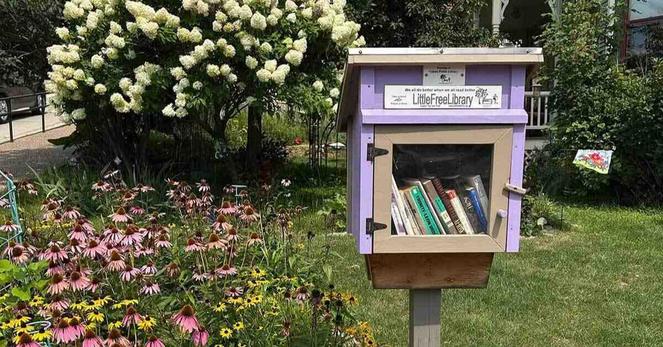
#LittleFreeLibraries are turning into '#LittleBeeLibraries' to give #pollinators a cozy place to rest

May 28, 2026

"Rachael Harms Mahlandt specializes in 'sidewalk joy.'

"For years, the #PortlandOR artist, who goes by @pdxdinorama on social media, has been helping her neighbors transform ordinary walkways, curb gardens, and front yards into colorful, interactive art installations.

"Through the Worldwide Sidewalk Joy Map, Harms Mahlandt encourages artists around the world to 'add whimsy' to their own neighborhoods with tiny #PuzzleLibraries, #WishingTrees, #ToySwaps, miniature #ArtMuseums, #PlantExchanges, #DinoDioramas — and, of course, little #FreeLibraries.

"And one of her latest additions to the list isn’t just sparking joy; it’s helping the pollinators in her neighborhood thrive.

"On May 5, Manlandt shared a video of a Little Bee Library, a #bookbox that had been transformed into a miniature garden for local pollinators to rest and recharge."

Read more:
https://www.goodgoodgood.co/articles/little-free-libraries-bees-book-boxes

#SolarPunkSunday #PDX #PortlandOR #GardeningForPollinators #BeeLibraries #FreeLibraries #BuildingCommunity

'Little Bee Libraries' turn book boxes into adorable pollinator sanctuaries

In addition to neighborhood plant swaps, trinket exchanges, dioramas, and more, Rachael Harms Mahlandt proposed a new craft idea that helps pollinators thrive.

Good Good Good