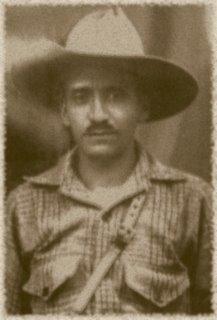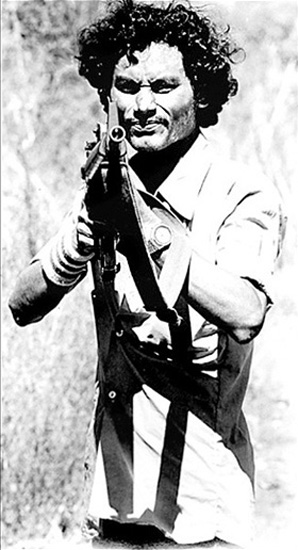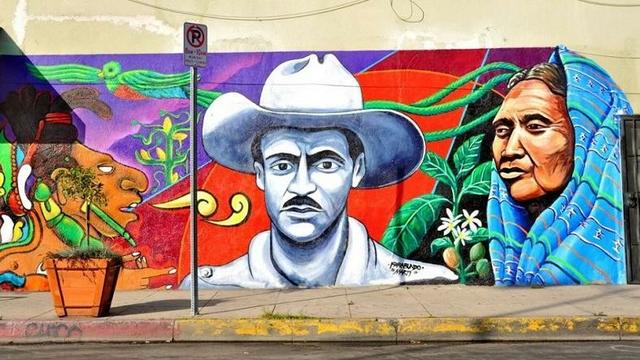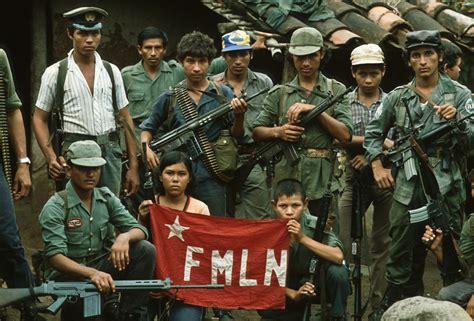
Today in Labor History January 22, 1932: Salvadoran communists, peasants and indigenous people rose up in rebellion against the military dictatorship, creating the first soviets in the Western hemisphere. In response, the military went on a rampage, killing 30,000 people in the "La Matanza." The violence decimated what was left of the country’s indigenous population, as well as most of its socialists, communists, anarchists and labor organizers. One of the first to go before General Martinez’ firing squads was guerilla leader Farabundo Marti (for whom the FMLN guerrillas took their name). Martinez once said that America was great because it wiped out its Indians and so, too, must El Salvador. He was also one of the first heads of state to recognize Hitler and formalize ties with him. Eduardo Galeano talks about La Matanza in his “Memory of Fire” trilogy.

#workingclass #LaborHistory #elsalvador #communism #anarchism #dictatorship #union #peasants #indigenous #racism #massacre #soviet #FMLN #anarchism #EduardoGaleano #writer #author #books #fiction #historicalfiction @bookstadon

Today in Labor History January 16, 1992: The government of El Salvador and the FMLN rebels signed a peace accord, formally ending their 12-year-old civil war. 75,000 people died in that war, mostly civilians, and mostly at the hands of the military and government-supported death squads. 25% of the population became refugees. The U.S. taxpayers heavily subsided the Salvadoran government and its death squads and also trained many of them at the School of the Americas (AKA School of the Assassins), in Fort Benning, Georgia. The FMLN was named after Farabundo Marti, a Salvadoran revolutionary from the 1930s, who led a communist uprising that created the short-lived Salvadoran soviet, the first soviet in the western hemisphere. The Martinez dictatorship then slaughtered over 40,000, mostly indigenous people, in a genocide known as La Matanza. Martinez was one of the first world leaders to recognize Hitler.

#workingclass #LaborHistory #elsalvador #FMLN #FarabundoMarti #imperialism #DeathSquads #communism #indigenous #genocide #CivilWar #SchoolOfTheAmericas #dictatorship #hitler

Torogoces de Morazán performing “Toda Centroamérica.” Torogoces were Salvadoran peasant musicians who carried their instruments into battle zones during the Salvadoran civil war to provide moral support to the guerillas and to entertain civilians.

https://www.youtube.com/watch?v=Lkzht3QqHDA&list=PLKSG6alvDtVR80Jm77wSjBeH7KSpPBU1d

#elsalvador #civilwar #guerillas #fmln #folkmusic #torogocesdemorazan

Torogoces de Morazán - Toda Centroamérica

YouTube

Today in Labor History January 10, 1981: The FMLN launched its first major offensive against the Salvadoran military. As a result, they gained control of the departments of Morazan and Chalatenango. They held onto these regions of El Salvador for most of the civil war. In 1989, it became clear after their “final” offensive, that the government could not defeat them. At this point, the U.S., which had previously supported the government’s genocidal war against the Salvadoran people, began to support negotiations. Over 75,000 people died in the war from 1979-1992, plus another 8,000 disappeared. The United Nations estimated that 85% of all civilian killings during the civil war were committed by government forces and government-supported death squads. The government and death squads also routinely committed kidnapping, torture, and murder of suspected FMLN sympathizers. Many of these murderers were trained at the School of the Assassins (School of the Americas) in Fort Benning, Georgia.

#workingclass #LaborHistory #elsalvador #civilwar #FMLN #Guerilla #communism #cuba #russia #deathsquads #torture #genocide

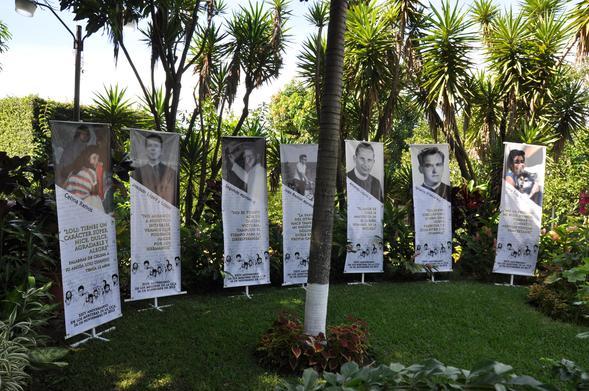
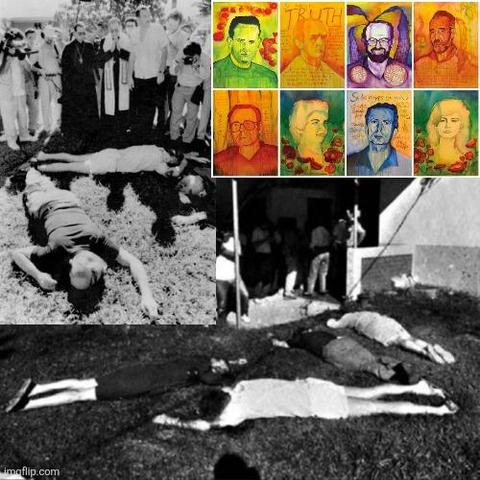
Today in Labor History November 16, 1989: Six Jesuit priests, their housekeeper and her daughter were assassinated in El Salvador. They were among thousands killed by the military and right-wing death squads for speaking out for economic and social justice. The Jesuits were advocates of a negotiated settlement between the government of El Salvador and the Farabundo Martí National Liberation Front (FMLN). The murders attracted international attention and increased international pressure for a cease-fire. It was also a turning point that led toward a negotiated settlement to the war. Nine members of the Salvadoran military were tried. Only Colonel Guillermo Benavides and Lieutenant Yusshy René Mendoza were convicted. Everyone else was absolved or found guilty on lesser charges. Benavides and Mendoza were sentenced to thirty years in prison, but were released in 1993 by a legislature dominated by anti-guerilla and pro-military politicians.

#workingclass #LaborHistory #deathsquads #assassination #elsalvador #fmln #communism #Revolution #prison #imperialism

In 1989 on #ThisDayInHistory, the military of #ElSalvador killed six #Jesuits and two women who were with them. The priests had been advocating a negotiated peace deal with the Farabundo Martí National Liberation Front (#FMLN) leftist group during the bloody #SalvadoranCivilWar.

Today in Labor History October 10, 1980: The Farabundo Martí National Liberation Front was founded in El Salvador. The FMLN, which fought a long civil war to overthrow the rightwing dictatorship, was named after Salvadoran revolutionary Farabundo Marti (1893-1932). Marti, a comrade of Augusto Sandino, the Nicaraguan revolutionary leader, helped found the Central American Communist Party. In 1932, he helped lead an uprising that, for ten days, was the first Soviet in the western hemisphere. The rebellion was crushed by the dictator Maximiliano Martinez, who slaughtered over 30,000 peasants, indigenous people and communists in the Matanza. Martinez had once proclaimed, “America is great because it eradicated its Indians. For El Salvador to become great, so must we.” Martinez was also one of the first world leaders to recognize Adolf Hitler. He also believed in the “court of invisible doctors.”

#workingclass #LaborHistory #elsalvador #FarabundoMarti #communism #soviet #Revolutionary #imperialism #fascism #genocide #indigenous #FMLN #Nicaragua #Sandinista

[LEHEN DENBORALDIKOAK] 1x14: FMLN 1981-1992: iraultzatik negoziaziora

Nazio Askapenerako Farabundo Marti Frontea Latinoamerikako gerrillarik potenteenetakoa izan zen. Saio honetan FMLNren sorrera, 80. hamarkadan garatu zuen borroka eta El Salvadorreko gerra zibilaren erresoluzioari buruz entzun ahal izango duzu.

Iraupena: 46 minutu.

https://baleafunk.eus/library/tracks/3597 #FMLN

[LEHEN DENBORALDIKOAK] 1x14: FMLN 1981-1992: iraultzatik negoziaziora

Nazio Askapenerako Farabundo Marti Frontea Latinoamerikako gerrillarik potenteenetakoa izan zen. Saio honetan FMLNren sorrera, 80. hamarkadan garatu zuen borroka eta El Salvadorreko gerra zibilaren erresoluzioari buruz entzun ahal izango duzu.

Iraupena: 45 minutu

https://baleafunk.eus/library/tracks/3597/ #FMLN

Funkwhale

Your free and federated audio platform

Nayib Bukele and Tulsi Gabbard both pulled political 180s—from the left to the far-right fast lane. Bukele went from a leftist guerrilla party to leading El Salvador with a MAGA-style grip. Now he’s an authoritarian with sky-high approval—no wonder Trump probably stares at him with envy. #uspol #elsalvador #nuevasideas #fmln #centralamerica #geopolitics