 Osna.FM
Johannes Fechner, the parliamentary manager for the SPD parliamentary group in the Bundestag, stated that there is currently no requirement for obtaining permit... https://news.osna.fm/?p=40831 | #news #conscription #extended #fechner #means
 Hubu.de
#news ⚡ Fechner bezweifelt Genehmigungspflicht für Auslandsaufenthalte: Der parlamentarische Geschäftsführer der SPD-Fraktion im Bundestag, Johannes Fechner, geht davon aus, dass es aktuell überhaupt keine... https://hubu.de/?p=321115 | #auslandsaufenthalte #fechner #genehmi
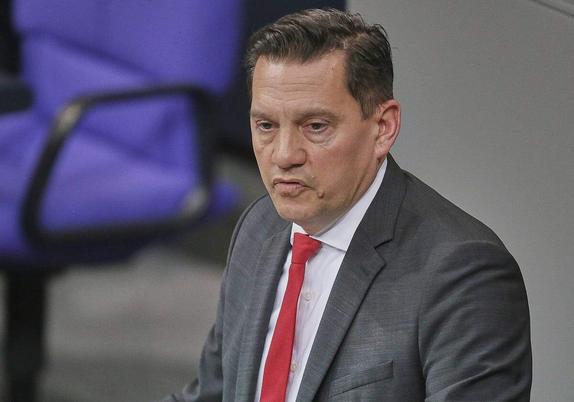
Fechner bezweifelt Genehmigungspflicht für Auslandsaufenthalte - Hubu.de - News & FreeMail
Der parlamentarische Geschäftsführer der SPD-Fraktion im Bundestag, Johannes Fechner, geht davon aus, dass es aktuell überhaupt keine Genehmigungspflicht für längere Auslandsaufenthalte junger Männer gibt.
 goldenage
Every thinker who thinks deeply enough eventually reaches the edge of their own system.
In the third movement of Das Ungesagte — a new essay on Frankl, Heidegger, and the philosophical topology of the unsaid — I ask who fills the open spaces that Frankl deliberately leaves.
Four answers. Four grammars of the same silence.
https://somatichermeneutics.substack.com/p/iv-the-third-movement-gravity
#philosophy #constellation #Jung #Wojtyła #Fechner #Gadamer #Tillich #Frankl

 Alan J. Cain
The idea that the ‘golden’ ratio — $1.61803\ldots:1$ — has applications in visual art and architecture does not go back any further than the 2nd edition (1799–1802) of Jean-Étienne Montucla's (1725–99) (generally superb) ‘Histoire des Mathématiques’, in which he made the **incorrect** statement that Luca Pacioli's (c.1447–1517) book ‘Divina Proportione’ included illustrations of the ratio's application to architecture and font design.
This was shortly after the earliest known appearance of the term ‘golden section’ in Johann Samuel Traugott Gehler’s (1751–95) general scientific dictionary ‘Physikalisches Wörterbuch’.
The golden ratio was then taken up by Adolph Zeising (1810–76) as the basis for a system of aesthetic proportion in his book ‘New Theory of the Proportions of the Human Body’ (1854), where he argued — apparently to his own satisfaction — that his system agreed with the proportions of many masterpieces of art.
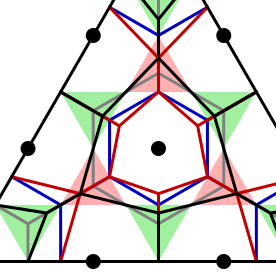
The psychologist Gustav Fechner (1801–87) made a much-misreported experiment in which people were asked to choose the most aesthetically pleasing of various rectangles (shown in the attached image). The most popular choice was the 34 ∶ 21 rectangle, whose proportions approximate the golden ratio. Fechner's conclusion was only that **a range of rectangles**, including the golden ratio rectangle, were considered most pleasing.
1/3
#GoldenRatio #GoldenSection #DivineProportion #HistMath #aesthetics #Zeising #Fechner

 Matt
MattHappy Gustav Fechner day psychophysics people!

 mq86mq
Beim #Bundestagswahlrecht scheint die #Koalition nur relativ kleine Änderungen anzustreben. Insbesondere klingt es nicht danach, dass sie zu den #Ausgleichsmandaten zurückwollen. Der #Koalitionsvertrag sagt »unter Beachtung des Zweitstimmenergebnisses grundsätzlich« 630, wobei »Beachtung« und »grundsätzlich« eine gewisse Flexibilität offen lassen. #Fechner sagt weniger #Wahlkreise oder Zuteilung an den Zweitplatzierten (wo die Union den Koalitionsvertrag anders lesen wird). #WahlThread [1/4]
 Pascal Leinert
#Bürgerpflicht getan, auch wenn ich diesmal nicht wirklich das Gefühl habe, dass alles gut wird. Ich habe diesmal auch taktisch mit der #Erststimme die #SPD gewählt, obwohl ich den #Fechner nicht mag, aber nur mit ihm kann man wohl #CDU und #AfD in meinem Wahlkreis verhindern. Als #Zweitstimme habe ich selbstverständlich die #Grünen und damit #Brandtner und #Habeck, wenn auch indirekt, gewählt.
#BTW #BTW25
#BTW #BTW25