First analysis of the #JezeroRimSpherules by the aptly-called " #PerseveranceRover Crater Rim spherule beds analysis team" in a recent #EGU26 abstract. It favours the impact spherules scenario but doesn't rule out volcanic origin.

Mangold et al: "Four-billion years old spherule beds revealed by Perseverance on the outer rim of Jezero crater"
https://doi.org/10.5194/egusphere-egu26-6455

#JezeroRimScience

Abstract EGU26-6455

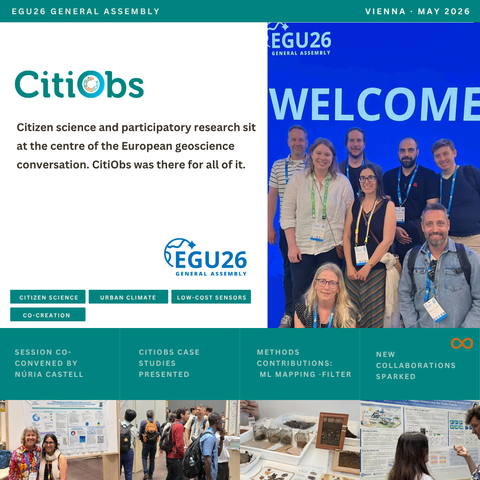
A few weeks since #EGU26 in Vienna and the energy hasn't faded! 🌍 Co-convening a session on climate-resilient cities was incredibly rewarding — from urban heat to flood resilience. Seeing citizen-generated data connect communities, researchers & policymakers is why we do this. Big thanks to Urban ReLeaf, Nuria Castell & the whole #CitiObs team. New collaborations on the horizon! 🌱

In this #GeoLog, Manuela Gialanella shares her experience as a first-time attendee at #Egu26, the importance of EDI, how it shaped this year's General Assembly, and what we can expect in the future!

👉 Read more here: https://egu.eu/11GXS4
#Equality #Diversity #Inclusion

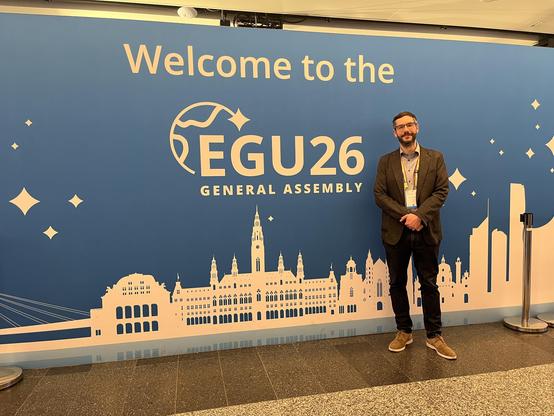
Europe’s largest academic conference. 20,000+ participants. Hundreds of sessions every day. And yet, somehow, everything runs remarkably smoothly. #EGU26 truly is an event unlike any other.

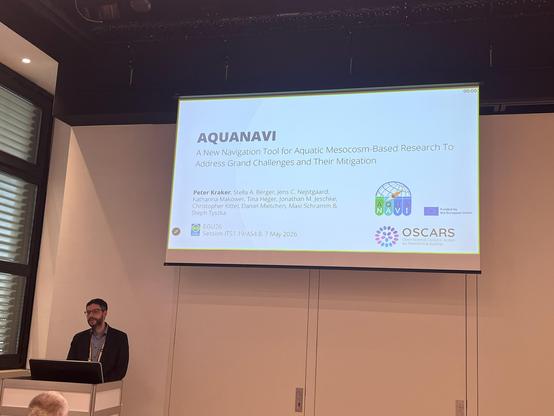
We were honoured to present the AQUANAVI project at the conference this year, which brings together @LeibnizIGB, @wikidata, and Open Knowledge Maps.

A big thank you to all participants, the session conveners, and @copernicus_org for organising such an impressive event at this scale.

#OpenScience

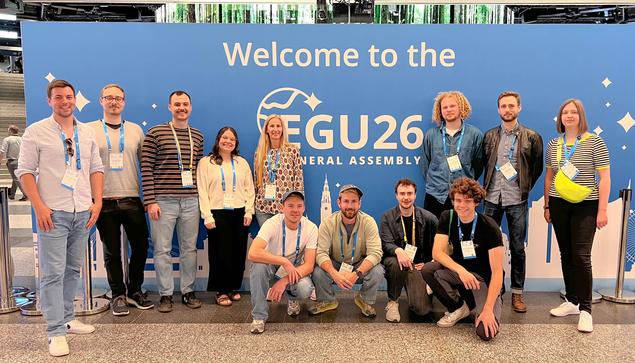
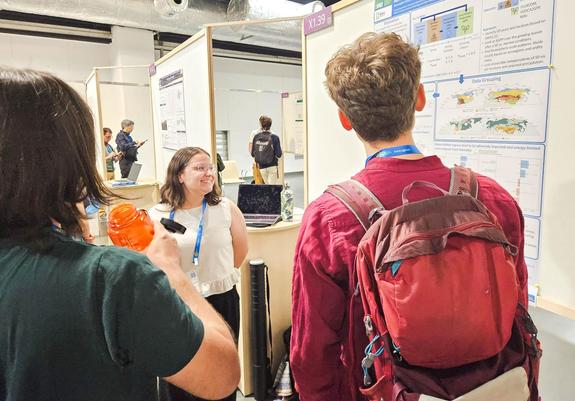
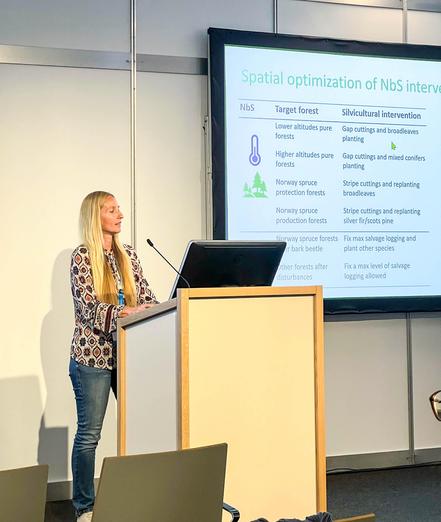
Some impressions from the #EGU26 📸

From our working group, Uta Schirpke, Christoph Jörges, and Mariangela Varela presented their research on Nature-based Solutions, hybrid crop modeling and snow droughts! Thanks to everyone who attended our talks, gave feedback and asked questions 🙌

#research #science #geography

Wo speichern Städte Wärme, und warum?

Forschende der Hochschule Anhalt haben dazu auf der #EGU26 erste Ergebnisse aus einem Messflug über Dessau vorgestellt. Grundlage: bildgebende FTIR-Spektroskopie im thermischen Infrarotbereich.

📄 doi.org/10.5194/isprs-archives-XLVIII-M-7-2025-157-2025

Kirjoittelin lyhyen artikkelin #EGU26 -konferensissa esittelemästäni posterista "LUNINA: In-situ Navigation and Communication Infrastructure for Lunar Science" omaan blogiini. Olen tätä aihetta jo joitakin kertoja esitellyt eri alan tapahtumissa, mutta on on hyvä aika myös tehdä suurelle yleisölle pieni yhteenveto mistä LUNINAssa on oikein kyse. Lukekaapas oheinen artikkeli, jos Kuututkimukset uudet (suomalaiset) innovaatiot kiinnostavat.

#avaruus #Kuu #Kuututkimus

https://avaruusinsinoori.kassiopeia.net/2026/05/12/lunina-konsepti-vahvistaisi-kuututkimuksen-paikannusta-ja-tiedonsiirtoa/

Verifying…

#EGU26 took place last week and, apart from the interesting contributions in my field, I have learned about other topics that I find really interesting 🌍

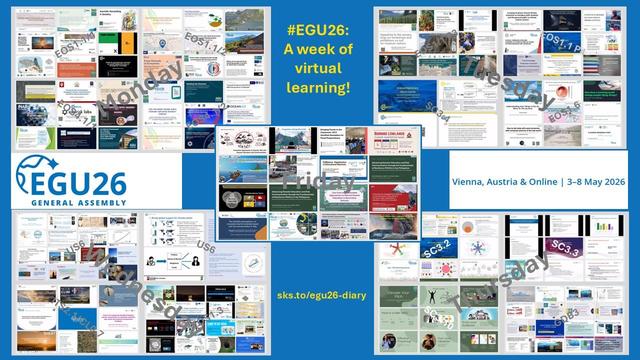
❓ Want to know what it can be like and what all you can learn when joining a big scientific conference even without being a scientist yourself? If your answer is "Yes", then check out the blog post linked below, written by our team member Bärbel Winkler while attending this year's General Assembly of the European Geosciences Union (EGU) held in Vienna and online from May 4 to 8.

Oral sessions Bärbel attended focused on ...
➡️ best practices for science communication and outreach
➡️ how non-specialist audiences can learn about scientific topis
➡️ how students in different age groups can be introduced to science
➡️ the ethical, social, and cultural responsibilities geoscientists hold beyond pure research

Short courses provided input about ..
➡️ the intersection of science and public policy
➡️ what science diplomacy is about
➡️ how to create an engaging short presentation
➡️ how misinformation can be countered and science defended

➡️ A Union Symposium focused on how human responses to climate change are shaped not only by scientific evidence but also by moral values, psychological dynamics, cultural identities, and religious beliefs.

➡️ A Great Debate about Geoengineering raised the question whether these concepts are actually a distraction from the urgent need for climate adaptation and mitigation. Some significant ethical fears were raised, particularly that large-scale testing might occur on Indigenous or disenfranchised lands without consent.

The whole week provided a lot of "food for thought" and the blog post shows that!

https://skepticalscience.com/egu26-personal-diary.html?utm-source=mastodon&utm-campaign=socialnetworks&utm-term=sks

#EGU26 #ScienceConference #ScienceCommunication

@BaerbelW @EuroGeosciences
#NOAA #GML hat die Ergebnisse der globalen atmosphärischen #CH4-Messungen für 2025 veröffentlicht. Nach mehreren Jahren mit sehr deutlicher Zunahme war der Anstieg von +5.55 ppb in 2025 der geringste seit 2012.

Tatsächlich verstehen wir diese jährliche Variabilität nur teilweise. Die sehr großen Schwankungen hängen offenbar mit El-Nino und La-Nina-Ereignissen zusammen. Außerdem wissen wir aus Isotopenmessungen, dass der überwiegende Teil des zusätzlichen #Methan|s aus biologischen und nicht etwa aus fossilen Quellen stammt.

Es war jedenfalls schön, zu sehen, dass die Kollegen von #NOAA noch da sind und weiterhin ihre Arbeit machen. Einige waren diese Woche auch erstmals wieder auf der #EGU26 in #Wien.

Quelle:
https://gml.noaa.gov/ccgg/trends_ch4/

Trends in CH4 - NOAA Global Monitoring Laboratory

GML conducts research on greenhouse gas and carbon cycle feedbacks, changes in aerosols, and surface radiation, and recovery of stratospheric ozone.