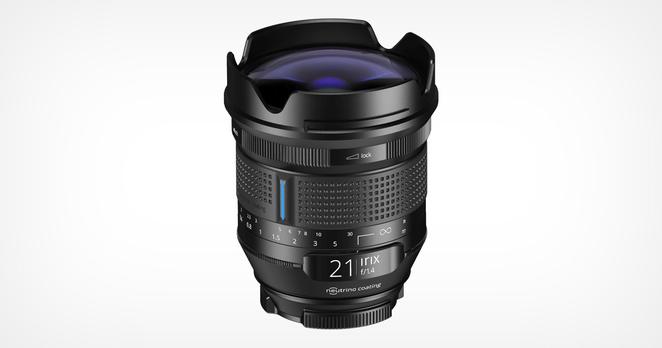
Irix Unveils a 21mm f/1.4 for Canon EF, Nikon F, and Pentax K Mounts

For Canon, Nikon, and Pentax DSLRs.

PetaPixel

Ricoh Launches the Pentax FA 21mm f/2.4ED Limited DC WR Lens

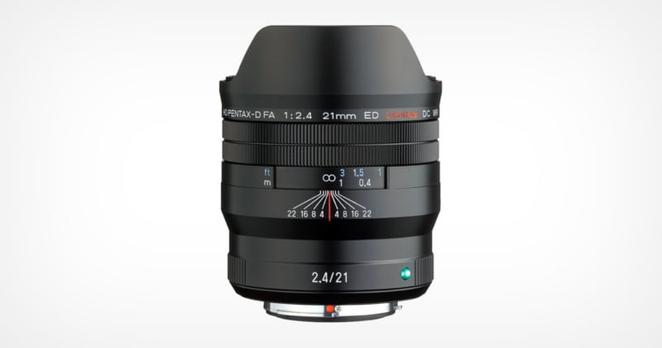
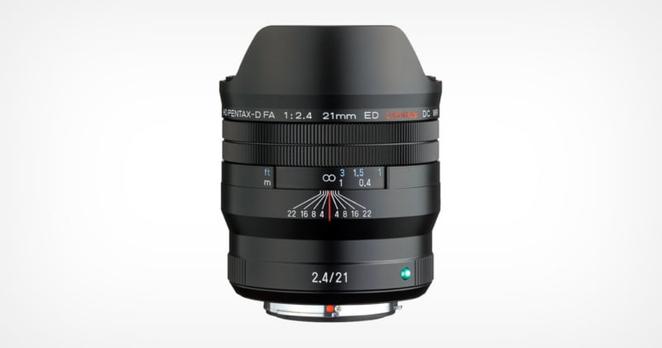
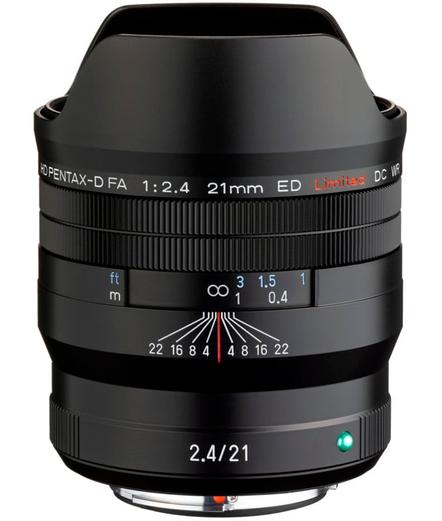
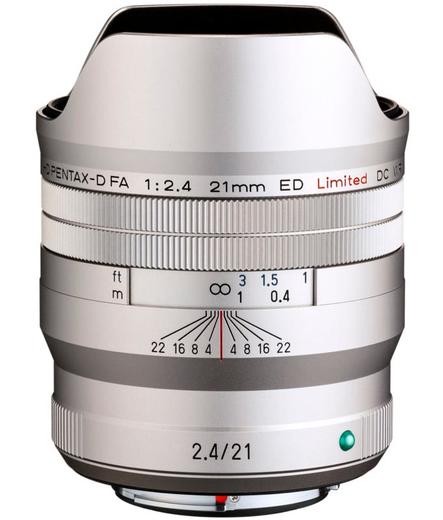
Ricoh has announced the HD Pentax-D FA 21mm f/2.4ED Limited DC WR lens for K-Mount full-frame DSLRs. The company says that this ultra-wide prime is optimized for visual characteristics that can't be measured in numerical values alone.

Ricoh says that the HD Pentax-D FA 21mm f/2.4ED is capable of making photos look more realistic, and captures the prevailing ambiance and true-to-life sense of depth in a scene. The 21mm ultra-wide-angle focal length, not previously available in the FA Limited series and what Ricoh says is ideal for landscape photography, adds "a new perspective of visual expression to the Limited series." When used with PENTAX APS-C cameras, the new lens provides a focal length equivalent to 32mm in the 35mm format.

The lens features a durable, weather-resistant build that Ricoh says makes it able to withstand the rigors of challenging photographic conditions, citing specifically waterfront locations or in the face of a sudden rainstorm.

The lens uses the Limited series design, which was developed to provide what Ricoh calls a "distinctive visual expression." Ricoh says that the process to get to a finished product involved conducting a series of image quality assessments using a vast number of captured images, and then these results were fed back into the design process, along with various numerical evaluations using precision measurement tools.

Build-wise, the lens is constructed of 11 elements in eight groups which includes four extra-low dispersion (ED) elements, one ED aspherical lens element, and one super ED element that Ricoh says will minimize chromatic aberration and prevent color bleeding -- not just in the main in-focus area, but also in the surrounding defocused areas. It also features a large-aperture negative meniscus optical element, a biconvex aspherical glass-mold optical element, and a high-refraction glass optical element in the first lens group. Ricoh says this design reduces the lens’s overall size despite the ultra-wide-angle design, while delivering what it claims to be outstanding imaging performance for sharp, crisp images without "fuzziness," even in the peripheral areas.

The lens also uses Pentax's original High-Definition coating which it says reduces the average reflectance in the visible spectrum to less than 50%, which translates to reduced flare and ghosting in images even when backlit. The Pentax-D FA 21mm f/2.4ED also features an eight-bladed aperture diaphragm.

The autofocus motor is a DC type that fits inside the lens barrel, which is a first for the Limited series. Pentax says it provides quiet, smooth, precise, and fast autofocus operation -- faster and quieter than what has been available in the past.

Below are a few sample images provided by Pentax Ricoh:

The Pentax FA 21mm f/2.4ED Limited DC WR Lens will be available in November for $1,400 in either silver or black color variations.

#equipment #news #21mm #dslr #dslrlens #fastlens #kmount #newlens #pentax #pentaxfa21mmf24edlimiteddcwr #pentaxkmount #ricoh #ultrawide

Ricoh Launches the Pentax FA 21mm f/2.4ED Limited DC WR Lens

A new wide-angle prime for Pentax DSLRs.

Ricoh Launches the Pentax FA 21mm f/2.4ED Limited DC WR Lens

Ricoh has announced the HD Pentax-D FA 21mm f/2.4ED Limited DC WR lens for K-Mount full-frame DSLRs. The company says that this ultra-wide prime is optimized for visual characteristics that can't be measured in numerical values alone.

Ricoh says that the HD Pentax-D FA 21mm f/2.4ED is capable of making photos look more realistic, and captures the prevailing ambiance and true-to-life sense of depth in a scene. The 21mm ultra-wide-angle focal length, not previously available in the FA Limited series and what Ricoh says is ideal for landscape photography, adds "a new perspective of visual expression to the Limited series." When used with PENTAX APS-C cameras, the new lens provides a focal length equivalent to 32mm in the 35mm format.

The lens features a durable, weather-resistant build that Ricoh says makes it able to withstand the rigors of challenging photographic conditions, citing specifically waterfront locations or in the face of a sudden rainstorm.

The lens uses the Limited series design, which was developed to provide what Ricoh calls a "distinctive visual expression." Ricoh says that the process to get to a finished product involved conducting a series of image quality assessments using a vast number of captured images, and then these results were fed back into the design process, along with various numerical evaluations using precision measurement tools.

Build-wise, the lens is constructed of 11 elements in eight groups which includes four extra-low dispersion (ED) elements, one ED aspherical lens element, and one super ED element that Ricoh says will minimize chromatic aberration and prevent color bleeding -- not just in the main in-focus area, but also in the surrounding defocused areas. It also features a large-aperture negative meniscus optical element, a biconvex aspherical glass-mold optical element, and a high-refraction glass optical element in the first lens group. Ricoh says this design reduces the lens’s overall size despite the ultra-wide-angle design, while delivering what it claims to be outstanding imaging performance for sharp, crisp images without "fuzziness," even in the peripheral areas.

The lens also uses Pentax's original High-Definition coating which it says reduces the average reflectance in the visible spectrum to less than 50%, which translates to reduced flare and ghosting in images even when backlit. The Pentax-D FA 21mm f/2.4ED also features an eight-bladed aperture diaphragm.

The autofocus motor is a DC type that fits inside the lens barrel, which is a first for the Limited series. Pentax says it provides quiet, smooth, precise, and fast autofocus operation -- faster and quieter than what has been available in the past.

Below are a few sample images provided by Pentax Ricoh:

The Pentax FA 21mm f/2.4ED Limited DC WR Lens will be available in November for $1,400 in either silver or black color variations.

#equipment #news #21mm #dslr #dslrlens #fastlens #kmount #newlens #pentax #pentaxfa21mmf24edlimiteddcwr #pentaxkmount #ricoh #ultrawide

Ricoh Launches the Pentax FA 21mm f/2.4ED Limited DC WR Lens

A new wide-angle prime for Pentax DSLRs.

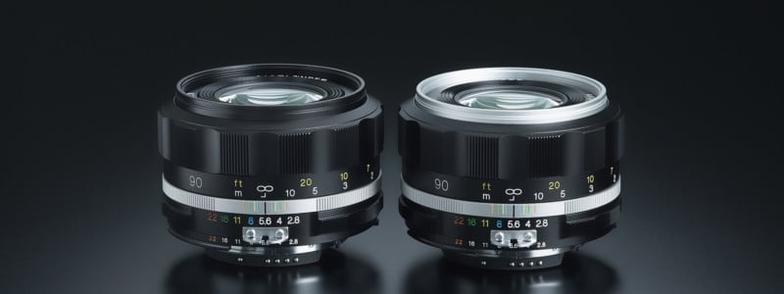
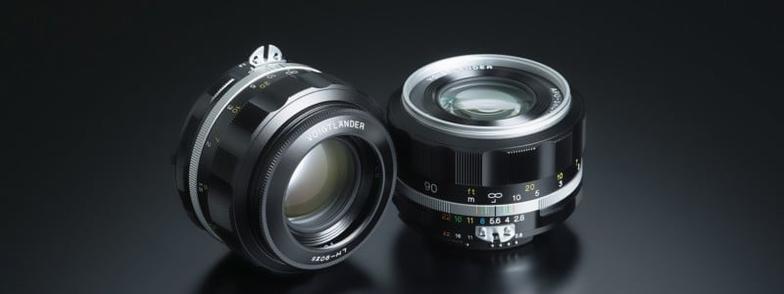
Cosina Launches Voigtlander APO-Skopar 90mm f/2.8 for Nikon F-Mount

Cosina has launched the Voigtlander APO-Skopar 90mm f/2.8 for Nikon's DSLR F-mount. Cosina says that the lens has been designed to bring the appearance of chromatic aberration to as close to zero as possible.

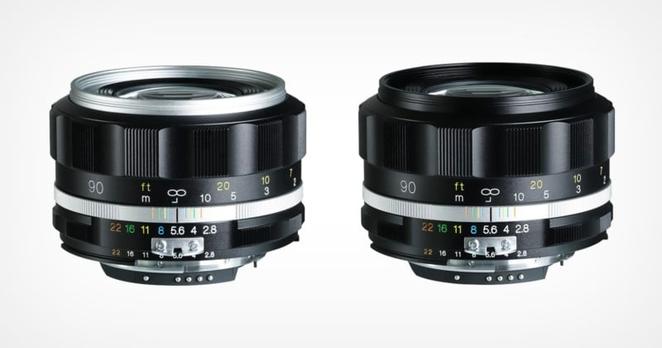
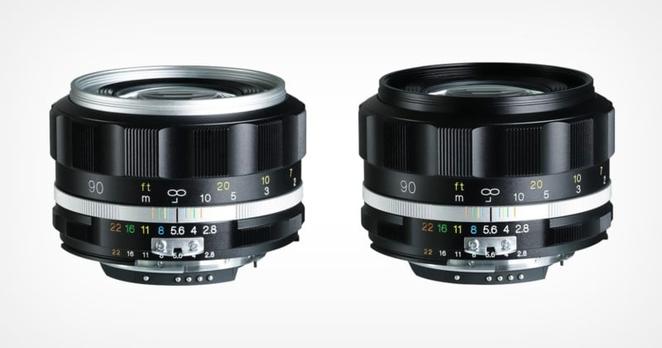
The APO-Skopar 90mm f/2.8 follows the Color-Skopar 28mm f/2.8 SL II S that Cosina launched in September, also for F-mount. It, like the 28mm, is a tribute to classic SLR lenses. The 90mm f/2.8, in particular, is described as a tribute to the lenses produced between 1965 and 1974 and features a silver rim (which Cosina is nicknamed Sakijiro among colelctors) or a black one (called Sakiguro). Both color options will be available when the lens comes to market.

The company says that the newly designed optical system uses "anomalous partially dispersed glass" in five out of the seven elements that are arranged in the seven-group construction. It has a 27.5-degree angle of view, a maximum magnification of 1:8.1, a nine-bladed aperture diaphragm, and a 52mm front element filter size. The lens features an aperture range of f/2.8 through f/22.

Cosina says that it uses an apochromat design that "makes the on-axis chromatic aberration of RGB, which constitutes the three primary colors of light, as close to zero as possible."

Cosina adopted an all-metal helicoid unit that it processed and adjusted with what it describes as high precision and high-quality grease that produces appropriate torque and allows for smooth as well as precise and delicate focusing operation. Given that the lens is entirely manual focus, this kind of attention to detail in the focusing is likely to be appreciated. The company described similar attention to detail in its 28mm f/2.8.

Also like the 28mm f/2.8, the APO-Skopar 90mm f/2.8 is compatible with a variety of Nikon bodies, including Nikon's that feature Ai-S with built-in CPU, but it also has an Ai coupler that Cosina says makes it possible to use with a variety of cameras from classic SLRs from the era the lens celebrates through the latest DSLRs.

The lens is designed specifically to be compact, and Cosina says that despite its high performance, the lens is just 40mm long.

Cosina says that the Voigtlander APO-Skopar 90mm f/2.8 will be available in November in both black and silver iterations for 68,000 yen, or about $596.

#equipment #news #90mm #cosina #cosinavoigtlander #dslrlens #fmount #manualfocus #nikon #nikonfmount #nikonlens #prime #slr #slrlens #voigtlander #voigtlanderaposkopar90mmf28

Cosina Launches Voigtlander APO-Skopar 90mm f/2.8 for Nikon F-Mount

Compact, lightweight, manual focus, and featuring a classic design.

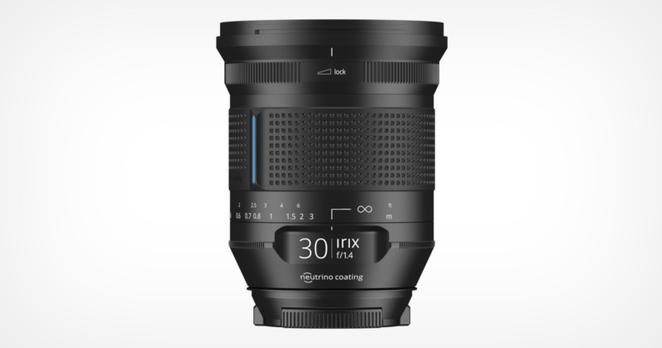
Irix Unveils the Cinema-Inspired 30mm f/1.4 Lens for DSLRs

Irix has announced a new 30mm f/1.4 lens that it says uses the same optical design found in its 30mm cine model, but has been rehoused to work for still photographers. The new DSLR lens is available in Nikon F, Canon EF, and Pentax K mounts.

The Irix 30mm f/1.4 is constructed of 13 elements in 11 groups and features an optical design that includes three ultra-low dispersion glass elements, two high-reflectance elements, and one aspherical lens. Irix says that the combination of elements allows for sharp details, vivid color reproduction, and ultra-low distortion. The aperture diaphragm features 11 blades and has a range of f/1.4 through f/16. The front element features an 86mm filter thread.

The housing for the lens is what Irix refers to as a "Dragonfly" standard that it uses in earlier models (the 45mm and 150mm), and uses a reinforced internal structure based on metal elements. It has a scratch-resistant lens finish, anti-slip focusing rings, engraved markings filled with UV-reactive paint, and is sealed to provide some protection from dust and water.

Speaking of those previous lenses, the 30mm f/1.4 uses a focusing ring that the company says is a hallmark of its 150mm and 45mm lenses. It features special texturing and specially selected rubber material that provides what the company describes as reliable and precise focusing. Additionally, detailed embossing lets users "feel" the position of the ring, likely important as this is a fully manual focus lens.

The lens features a focus lock switch to fix the focusing ring into a specific position, which the company says is particularly helpful in the case of zone focusing or to keep focus at infinity for landscape applications.

The lens focuses from the rear and does have electronic communication, which allows it to provide focus confirmation and aperture control from the camera as well as a full record of exposure parameters in EXIF data. It is also compatible with PASM semi-automatic camera modes.

The company leans on the cine lens design of the optics as a major selling point, saying that it provides a "smoothness" and a cinema look that should stand out. Below are a few example photos taken with the lens:

While designed for DSLR mounts, Irix curiously only provided real-world photo examples of the lens attached to mirrorless cameras.

The Irix 30mm f/1.4 lens will be available for Nikon F, Canon EF, and Pentax K mounts sometime in October, with final pricing and exact timing for release to be revealed at a later date.

#equipment #news #30mmf14 #canonef #cinelens #cinemainspired #dragonfly #dslr #dslrlens #irix #irix30mmf14 #manualfocus #nikonf #pentaxk

Irix Unveils the Cinema-Inspired 30mm f/1.4 Lens for DSLRs

Its same cinema lens rehoused for still photography.

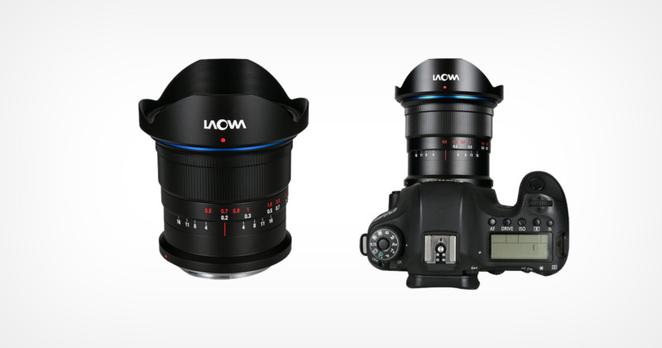
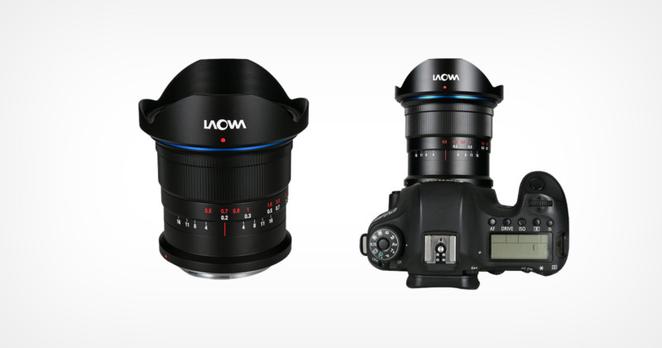
Venus Optics Unveils 14mm f/4 Zero-D Lens for Canon and Nikon DSLRs

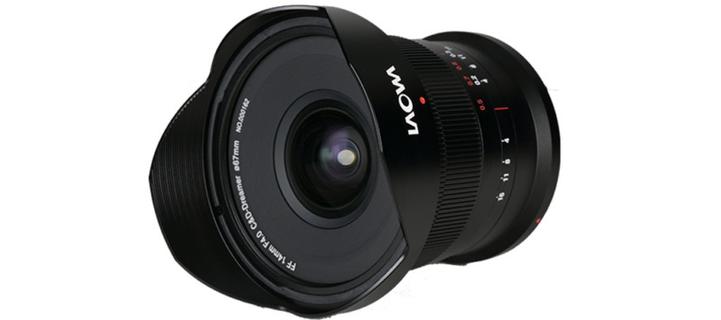
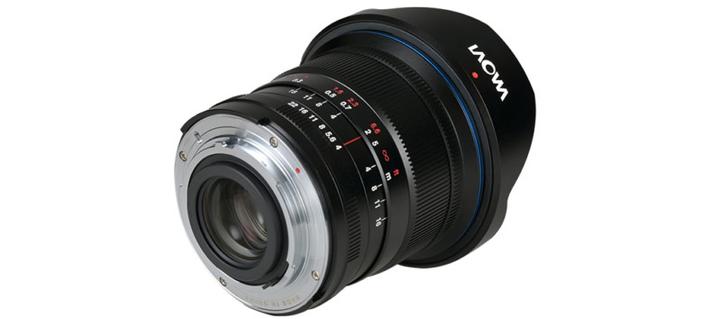
Venus Optics has announced a new Laowa 14mm f/4 Zero-D (zero distortion) wide-angle manual focus prime lens for Nikon and Canon DSLRs. The company says that it uses a completely different optical design from the mirrorless version of the lens.

Venus Optics says that the Laowa 14mm f/4 Zero-D DSLR lens is designed specifically for Canon and Nikon DSLRs and is not just a rehoused version of the mirrorless Laowa 14mm f/4 Zero-D lens it launched last fall. To quote, it uses a "totally different optical design" for full-frame Canon EF and Nikon F cameras.

The company says the lens not only provides a zero-distortion image that reduces time in post-production, but also touts its small size, lightweight design, and close focusing distance. The Canon version of the lens weighs 320 grams (about 11.3 ounces) while the Nikon version weighs 360 grams (about 12.7 ounces) and is just 2.97-inches long. It can focus as close as 14.5 centimeters (5.7 inches), which Venus Optics says allows photographers to create "exaggerated perspectives" with "creamy bokeh."

The lens is constructed of 13 elements in 10 groups and includes two extra-low dispersion elements and two aspherical elements, the latter added to eliminate color fringing and distortion. It uses a 10-bladed aperture, which Venus Optics says can be used to make "fancy 10-point sunstars" when the aperture is stopped down. The lens includes a CPU chip and motor in the Canon EF version, which allows photographers to adjust the aperture via the camera body and will also store EXIF data in photos. The Nikon version has aperture coupling which the company says "provides a clear preview before it is stepped down to the set value."

Venus Optics says that the Laowa 14mm f/4 Zero-D DSLR is the first lens in the range to receive what it calls a focusing scale adjustment system. This feature allows photographers an easy to focus calibrate it against the users' specific camera, allowing the infinity point to actually be exactly on the infinity mark. The company says this is particularly helpful for those shooting in the field, namely astrophotography. Below is the company's tutorial on how to calibrate the lens:

Below are a few sample images provided by Venus Optics for the Laowa 14mm f/4 Zero-D DSLR lens:

Alberto Ghizzi Panizza Andy Chua Andy Chua Chen Guo Heng Jimmy Chan Jimmy Chan John Hanson Mao Ya Dong

The Venus Optics Laowa 14mm f/4 Zero-D DSLR lens is available for $499 directly from the Venus Optics website.

#equipment #news #canonef #dslr #dslrlens #laowa #laowa14mmf4zerod #laowa14mmf4zeroddslr #nikonf #prime #venusoptics #wideangle

Venus Optics Unveils 14mm f/4 Zero-D Lens for Canon and Nikon DSLRs

It features a wholly different optical design from the mirrorless version.

Ricoh Unveils the HD Pentax-DA 16-50mm f/2.8 K-Mount Star Series Lens

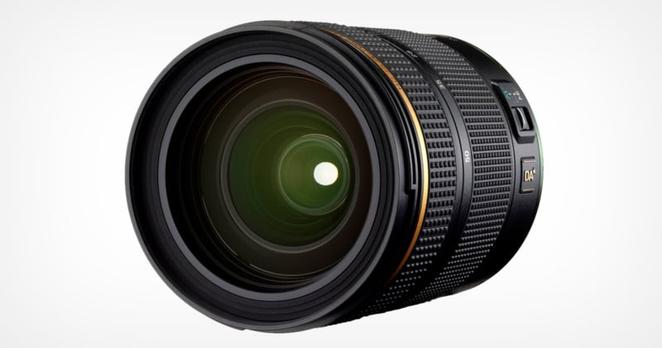
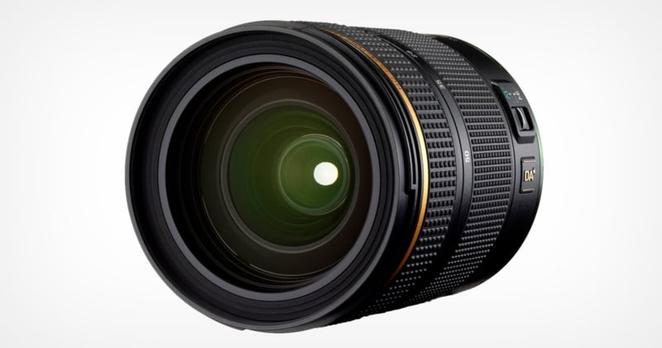
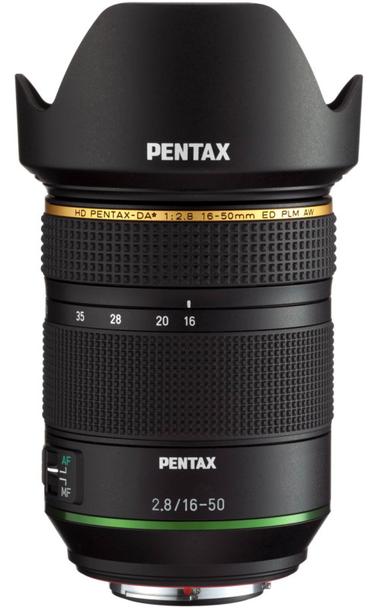
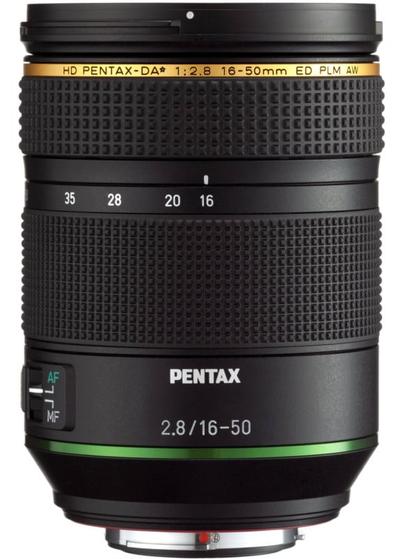
Ricoh has announced a new wide-angle zoom lens that is classified under its "Star" series optics: the HD Pentax-DA 16-50mm f/2.8ED PLM AW lens. Ricoh says it promises the highest imaging performance available and is designed for use on K-mount DSLRs.

This new lens can be used on both APS-C and full-frame Pentax cameras. When attached to an APS-C crop sensor camera, it has an equivalent focal length of 24.5-76.5mm.

The company says that the new lens incorporates a new optical system and for the first time in a large-aperture Pentax lens, what it calls an advanced "pulse motor" (PLM) that Ricoh claims will assure smooth, high-speed, and high-precision autofocus with minimal noise. Additionally, Ricoh says the lens has been fine-tuned to still provide excellent manual focus operation and includes a "quick-shift" focus system that allows it to quickly swap between autofocus and manual focus.

As a note, the PLM is a type of autofocus motor developed by Pentax Ricoh that other manufacturers call a "stepping motor."

The HD Pentax-DA 16-50mm f/2.8ED PLM AW lens is constructed of 16 elements in 10 groups, features a nine-bladed circular diaphragm, has a maximum aperture of f/22, a minimum focusing distance of 11.76 inches (0.3 meters), and has a front filter diameter of 77mm.

Pentax "Star" series lenses are designed by Ricoh to provide greatly improved resolving power to accommodate high-performance digital cameras both now and into the future. In this particular case, Ricoh says that this lens reduces various aberrations to a minimum to deliver sharp, clear images not only in the middle of the frame but also out to the edges of an image. It uses one extra-low dispersion element, one anomalous glass optical element, and two extra-low dispersion aspherical elements to reduce chromatic aberration over the entire zoom range.

Ricoh says that these optical elements combine with what it calls a "high-grade, multi-layer high definition coating" which the company says reduces the average reflectance of the visible spectrum to less than 50% of conventional multi-layer coatings. In short, Ricoh says it effectively minimizes flare and ghosting of images even in complex lighting conditions while also delivering high resolving power and excellent contrast.

The new autofocus PLM engine is attached to a lighter and more compact focus lens group and Ricoh says it is able to drive it smoothly, quickly, accurately, and with minimal noise. The PLM also is used in the lens's electromagnetic diaphragm mechanism which Ricoh says allows it to smoothly track focus combined with "flawless" exposure control while also reducing "annoying" noise that is generated by focus and diaphragm control operations normally found in video applications. Pentax says the integration of both systems allows the lens -- when attached to a camera like the K-3 Mark III -- to assure quality video capture in environments that have rapidly changing lighting conditions. Not all Pentax cameras support electronic diaphragm control, though and this feature is only available on the latest firmware for the Pentax K-3 Mark III, K-3 II, K-3, KP, K-70, K-50, K-S2, K-S1, K-1 Mark II, or K-1.

The HD Pentax-DA 16-50mm f/2.8ED PLM AW lens is designed to be dustproof and weather-resistant, so when combined with an equally weather-resistant Pentax camera, the system can perform in rain or mist as well as areas prone to splashing water or flying dust.

The HD Pentax-DA 16-50mm f/2.8ED PLM AW will be avaialble in August of 2021 for $1,400.

#equipment #news #apsc #dslr #dslrlens #fullframe #hdpentaxda1650f28edplmaw #newlens #newpentaxlens #pentax #pentaxlens #pentaxricoh #plm #pulsemotor #ricoh #starseries #steppingmotor #wideangle #wideanglezoomlens #zoomlens

Ricoh Unveils the HD Pentax-DA 16-50mm f/2.8 K-Mount Star Series Lens

A new Wide-angle zoom designed to perform the best Pentax can manufacture.

Unusual Adapter Places a Polarizing Filter Between Lens and Sensor

While originally launched in 2017, Fotodiox created a line of lens adapters for modern and vintage SLR lenses it calls Polar Throttle adapters that have a built-in polarizing filter. The design allows multiple lenses to be adapted to a single mirrorless camera without needing different sized filters.

The adapters have largely flown under the radar, but YouTuber Mathieu Stern recently featured one of the Polar Throttle adapters -- the Canon FD to E-mount version -- on his YouTube Channel. He demonstrates that the filters work exactly as a polarizing filter is expected to -- it removes reflections from bodies of water and when shooting through glass -- but allows him to use multiple Canon FD lenses on his Sony camera without having to use different sized polarizing filters. It also reduces his kit significantly as it compresses all the circular polarizers he might need to carry with him into just one adapter, which is necessary for using the vintage lenses on his Sony camera anyway.

"Since mirrorless cameras hit the scene, our mission has been to vastly expand customer's lens choices. With the Polar Throttle, we’ve found yet another way to deliver an important level of image control to the mix," Bohus Blahut, the marketing director for Fotodiox Pro, said when the adapters were launched in 2017. "You can't adjust light polarization in post, and fixing issues on-location used to mean lugging around many different-sized CPL filters. With the Polar Throttle, you get easy, reliable, built-in fingertip polarization control for any lens you attach. Cut down haze, manage reflections, create evocative long exposures in full daylight, and dial in richer, bolder colors whether you're shooting photo or video."

Stern shows multiple examples of how the circular polarizer works wonders on bodies of water, which can dramatically reduce reflections and reveal what is going on under the surface.

Before After

The adapter is available in a number of options for Sony E-mount cameras including Canon EOS, Canon FD, Nikon G, and Minolta MD and the polarizing adjustment ring is geared to allow for use on follow focus rigs in video production. Nine of the adapters are priced at $100, but one smart version that includes the circular polarizer and also features "Smart" adaptation between Canon EF and Sony E-mount is priced at $190. All options can be found on Fotodiox's website.

#equipment #news #adapter #circularpolarizer #circularpolarizingfilter #dslrlens #emount #filter #fotodiox #mathieustern #mirrorless #slrlens #sonyemount

Unusual Adapter Places a Polarizing Filter Between Lens and Sensor

One polarizing filter for an assortment of different lenses.

Tokina to Release a 500mm f/8 and Six APS-C Lenses This Year

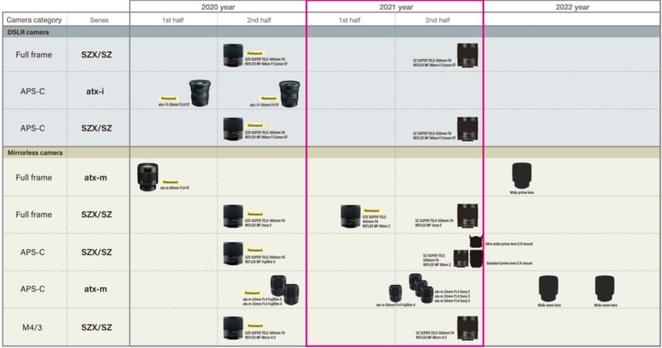
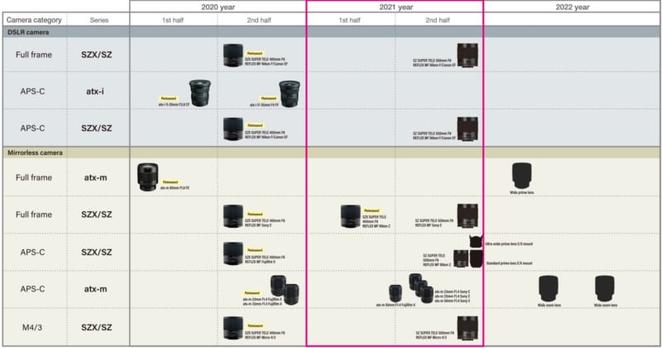
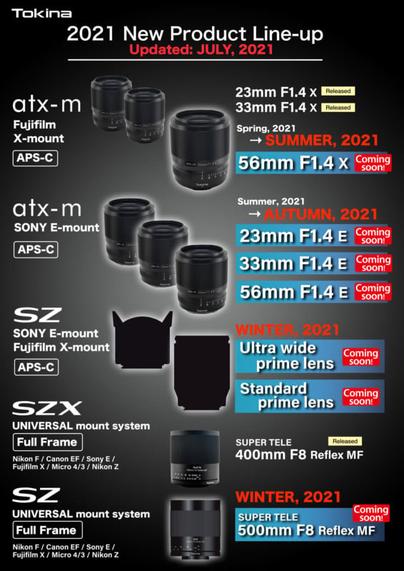
Kenko Tokina has published an updated lens roadmap that extends through 2022 and includes several lenses for a variety of camera mounts. Notably, the company plans to launch a 500mm f/8 reflex lens as well as six APS-C primes for a mix of Fujifilm X- and Sony E-mount.

Tokina recently updated its 400mm f/8 reflex lens that it announced in July of 2020 for both Canon RF and Nikon Z mounts. It originally launched for Canon EF, Nikon F, Sony E, Fuji X, and Micro Four Thirds. The upcoming 500mm f/8 reflex lens will be available again for those same original mounts, but also will include Nikon Z. Canon RF photographers will, unfortunately, have to hope Tokina treats the 500mm the same as it did with the 400mm and bring it to Canon's mirrorless system at a later date.

Reflex lenses are extremely popular when it comes to telescopes, but are significantly less so for photography applications. Also called mirror lenses, a reflex lens uses what is known as a "catadioptric" design that combines mirrors and refracting elements into a single lens, which allows engineers to literally "fold" the optical path and magnify an image. The result is a lens that can be up to four or five times smaller than an optic that uses a more traditional camera lens design while also can completely remove chromatic aberration.

Tokina

The downside of these lenses is that they do not support autofocus, the bokeh is "donut-shaped" and generally considered unattractive, and the lens design does not allow for variable aperture. Still, for those who don't mind the look of the out-of-focus areas or manual focus, on-sensor stabilization has become pretty much a standard on new mirrorless cameras, which makes the lack of stabilization an easier pill to swallow.

Facing unstable global supply of the materials and electronic components Tokina continues developing new products to respond to the growing market demands. The release features a detailed product line-up for 2021 with updated release dates followed by an extensive three year road map.

In addition to the 500mm f/8 reflex lens, Tokina has also promised that it will bring six APS-C prime lenses for a mix of Fujifilm X- and Sony E-mount by the end of the year: five will be available for E-mount and three X-mount. A 56mm f/1.4 for Fujifilm X-mount is due by the summer, postponed a few months from the company's original target of spring. Three Sony E-mount lenses are also coming this fall, postponed from the original target timline of summer: a 23mm f/1.4, a 33mm f/1.4, and a 56mm f/1.4.

Both Fujifilm and Sony will also get an unspecified ultra-wide prime lens and a standard prime lens this winter.

Looking beyond 2021, Tonkina says that it plans to release a full-frame wide-angle prime lens as well as two wide-angle zoom lenses for APS-C. The company did not provide any further details on its 2022 plans.

#equipment #news #apsc #dslrlens #emount #fujifilm #fujifilmxmount #kenkotokina #mirrorlens #mirrorlesslens #reflexlens #sony #sonyemount #tokina #xmount

Tokina to Release a 500mm f/8 and Six APS-C Lenses This Year

A flurry of prime lenses are coming by the end of the year.

Nikon Suspends Orders for DSLR Lens, Cites ‘Production Reasons’

After several reports that Nikon was discontinuing or delaying the production of DSLR lenses without comment, the company has broken its silence. Citing "production reasons," the company is temporarily suspending orders for the AF-S NIKKOR 180-400mm f/4E TC1.4 FL ED VR DSLR lens.

In a public notice published on Nikon Japan's website, the company admits that it will suspend orders of the telephoto lens starting after May 21, 2021 for an indefinite amount of time. The note below has been translated from Japanese:

Thank you for your continued patronage of Nikon products.

Due to production reasons, it will take some time for some products to be delivered to customers. Therefore, we will suspend the acceptance of orders after May 21, 2021 (Friday).

We sincerely apologize for any inconvenience caused to our customers.

We will consider the delivery time and the resumption time of orders while observing the situation and will inform you again as soon as it is confirmed. We will do our utmost to deliver the product as soon as possible, and we appreciate your understanding.

While this notice does not note any other Nikon cameras or lenses as affected, it is the first instance that Nikon is publicly admitting that there are production issues at all.

In early May, it was noticed that multiple Nikon APS-C cameras and lenses were on backorder, with some on backorder for as many as several months as reported by Nikon Rumors. Two days later, the company quietly discontinued several F-mount lenses without explanation.

In the specific case of the NIKKOR 180-400mm f/4E TC1.4 FL ED VR lens, Nikon Rumors reports that the lens has been out of stock at most retailers in several international markets "for a while," which indicates that suspending production of the lens is unlikely to directly affect many would-be buyers anyway.

In late 2020, Nikon announced that it would be shuttering its Japanese factories and moving all production to Thailand as part of an effort to reduce its operating costs by 59% in response to a historic $720 million loss. It is unclear if this transition, which also included the closure of Japanese lens factories, is the reason that the company is suffering from production issues. While Nikon is only admitting it has a problem producing one lens, the low stock of products across both its mirrorless and DSLR lineup indicates that the problem is likely more significant than the company is letting on.

These production issues have led some to question Nikon's ability to meet its promise to deliver 12 more Z-mount lenses this year. On May 11, a Nikon representative denied that there was any such delay and reaffirmed the company's promise of 30 lenses in the Z-mount line by the end of the 2021 fiscal year.

#equipment #news #dslrlens #indefinite #nikkor180400mmf43tc14fledvr #nikkorlens #nikon #nikoncameras #nikonlens #nikonproduction #production #suspended

Nikon Suspends Orders for DSLR Lens, Cites 'Production Reasons'

This is the first instance that Nikon has admitted there are production issues.