Image-Based Sexual Abuse: Why Stranger Danger Misses the Real Risk

Challenging the “Stranger Danger” Archetype

For decades, the public’s conceptualization of “child pornography” was tethered to a specific, mid-90s archetype: a predatory adult in a basement, wielding a camera to exploit a child. This “stranger danger” narrative shaped the first generation of digital safety laws, but it relied on a technological bottleneck that no longer exists. In the early digital era, creating and distributing such material often required “intermediaries,” developers or specialized services, who acted as a friction point for reporting abuse. Today, that barrier has vanished. A landmark 2026 study published in Sexual Abuse reveals a landscape that has shifted from adult-captured content to Image-Based Sexual Abuse (IBSA). A broader term encompassing the non-consensual making, distribution, and threatened distribution of sexual images.

The data is clear: the primary producers of modern abusive content are not “strangers,” but the youth victims themselves and their immediate social circles.

A Massive Shift in Content Creation

The study provides a staggering clarification of the digital landscape: the vast majority (86%) of abusive episodes involved images produced by youth. Either by the victims themselves (73.7%) or by peer perpetrators (12.1%).

In stark contrast, images actually produced by adults accounted for less than 8% of the total episodes. 

The velocity of this shift is remarkable.

Are you an LPC in need of continuing education? Dr. Weeks has a course on this material and many other unique and interesting topics.

In the course, “The Prevalence of Youth-Produced Image-Based Sexual Abuse,” Dr. Weeks teaches how child digital safety is undergoing a paradigm shift, how changes in Image Based Sexual Abuse require adaptation, and proposes a framework for conceptualizing IBSA.

In 2010, youth-produced images accounted for roughly 40% of law enforcement databases; that figure has more than doubled in just over a decade.

This reflects a fundamental change in adolescent socialization where digital media is fully integrated. The “democratization” of recording devices means the power of production has moved into the hands of the adolescents, often within contexts of dating, flirtation, or peer pressure, removing the traditional predatory intermediary entirely. 

“This shift in terminology [from child pornography to CSAM/CSAI] was intended to emphasize that the images were often made by in-person sexual abusers, who recorded their abusive conduct… The new conception also acknowledged the ongoing harm to the children depicted, as these shareable images can be characterized as ongoing abusive provocations and reminders.”

Why the Stranger Myth is Dangerous

The persistent fear of the “online stranger” creates a dangerous blind spot.

The study findings reveal that only 3.4% of youth perpetrators were “not known in-person.”

Mathematically, for youth-on-youth abuse, the “predatory stranger” is almost a statistical anomaly. Even among adult perpetrators, 59% were offline acquaintances like dating partners or friends. 

While 36.7% of perpetrators’ identities remained “unknown” to the victims, a significant data gap that complicates reporting, the known data points to a reality where the threat is an in-person peer or partner.

Perpetrator Relationship Breakdown

Adult PerpetratorsYouth PerpetratorsDating Partner9.5%14.3%Friend/Acquaintance7.1%12.5%Not Known in-person12.3%3.4%

The Victim as the Producer: A New Tool for Adult Abusers

Perhaps the most counter-intuitive finding is the role of the victim in adult-perpetrated abuse.

In 75% of adult-perpetrated episodes, the images were originally produced by the youth victim. Modern adult abusers rarely need to capture images themselves; they leverage unequal power dynamics to manipulate “normal developing interests in sex” into digital assets. 

Adult “Groomers” and “Coercers” no longer require physical proximity to generate material.

By leveraging romantic pretense or blackmail, they turn the victim’s own device into an instrument of exploitation. This evolution demonstrates how predators have adapted to a world where self-production is the social norm, weaponizing the victim’s own agency against them.

Are you exploring your trauma? Do you feel your childhood experiences were detrimental to your current mental or physical health? Utilize this free, validated, self-report questionnaire to find out.

Take the Adverse Childhood Experience (ACE) Questionnaire

The Five-Category Framework for Abuse

To address the complexity of modern IBSA, the study proposes a five-category framework that moves beyond binary labels to define the specific intent and dynamics of the abuse: 

  • Adult Producers: Perpetrators who create images to document their own physical abuse of a child for memorialization or monetization.
  • Adult Coercers: Predators who extort youth into creating and sharing explicit content through the use of threats or digital blackmail. 
  • Adult Groomers: Perpetrators who manipulate youth into self-production by masquerading as romantic partners or offering items of value. 
  • Juvenile Coercers: Peers who weaponize force, threats, or emotional guilt to pressure victims into supplying explicit images. 
  • Juvenile Betrayers: Peers who breach a victim’s confidence by sharing images given voluntarily or by taking secret images of a peer without their consent.
  • The Prevention Paradox: Why Punishment Might Backfire

    The study highlights a critical “prevention paradox”: an over-reliance on harsh criminal sanctions for youth may actually decrease safety.

    When the legal system treats peer-to-peer “betrayals” with the same punitive weight as adult predation, victims become reluctant to report. They fear that reporting a peer, or admitting to self-production, will result in themselves or their friends being permanently labeled as sex offenders. To counter this, we must move toward restorative justice and rehabilitation models.

    Effective prevention requires providing technical resources for image removal and focusing on the nuances of digital boundaries rather than simple prohibition. 

    “Warnings simply to not talk to strangers, not to share information and not to make sexual images are insufficient. These do not address the complexity of the situations many youth face or the context for these offenses, which include romance, bullying, and normal developing interests in sex.”

    Learn why it’s important for everyone, especially teens, to be able to control their online experiences. Dick Pic Culture: How do Teenage Girls Navigate it?

    Redefining Digital Consent

    The epidemiology of digital abuse has fundamentally changed.

    We are no longer defending against a shadow in a dark room. We are navigating a landscape of peers, partners, and self-captured content.

    This necessitates a move toward a “consent standard” rather than a “prohibition model.” Protecting youth today requires multidisciplinary agencies, like Children’s Advocacy Centers, that offer supportive, trauma-informed interventions rather than purely punitive ones.

    The Final Thought

    If the statistical “threat” is more likely to be a known peer or a manipulated self-capture than an online stranger, are our safety conversations still stuck in the 90s?

    We must adapt our education to a reality where the greatest risk to a child is often found in their own contact list. What are your thoughts on this?

    Are you a professional looking to stay up-to-date with the latest information on, sex addiction, trauma, and mental health news and research? Or maybe you’re looking for continuing education courses? Then you should stay up-to-date with all of Dr. Jen’s work through her practice’s newsletter!

    Are you looking for more reputable, data-backed information on sexual addiction? The Mitigation Aide Research Archive is an excellent source for executive summaries of research studies.

    Do you feel your sexual behavior, or that of someone you love, is out of control? Consult with a professional.

    #AdolescentDevelopment #CSAMPrevention #cyberbullying #DigitalBoundaries #DigitalConsent #ImageBasedSexualAbuse #OnlineExploitation #onlinePornography #onlineSafety #parenting #parentingTeens #peerPressure #prevention #RestorativeJustice #sexEducation #sexting #sextortion #techSavvyParenting #TeenSexting #teens #traumaInformedCare #YouthMentalHealth #YouthProducedImages

    AI Nudification: The 55% Stat Parents Can’t Ignore

    How AI Nudification Became the New Adolescent Normal

    From Virtual Fitting Rooms to Digital Danger

    Generative AI (GenAI) was supposed to be our creative co-pilot. We didn’t see AI Nudification coming.

    We marveled at its ability to turn text into art and embraced “virtual try-on” applications that allowed us to see how clothing might fit using nothing more than a smartphone camera. But as a tech ethicist, I’ve watched this innovation take a dark, predatory turn. While the underlying technology, specifically “inpainting,” is legitimate, its application in adolescent circles has reached a terrifying tipping point.

    We are no longer talking about a few “tech-savvy” outliers; we are witnessing the mass-normalization of AI-generated Child Sexual Exploitation Material (CSEM) among teenagers. This isn’t just the next stage of digital growing pains. It’s a fundamental shift in how the first generation of “AI adolescents” navigates consent, identity, and digital harm.

    Takeaway 1: The “Scaling Gap” and the New AI Nudification Normal

    For years, educators and parents tracked the steady rise of traditional “sexting.” Historical meta-analyses placed adolescent creation and receipt of self-generated sexual imagery at roughly 14.8% and 27.4%, respectively. This latest data reveals a staggering “scaling gap” that should alarm every stakeholder in digital safety. 

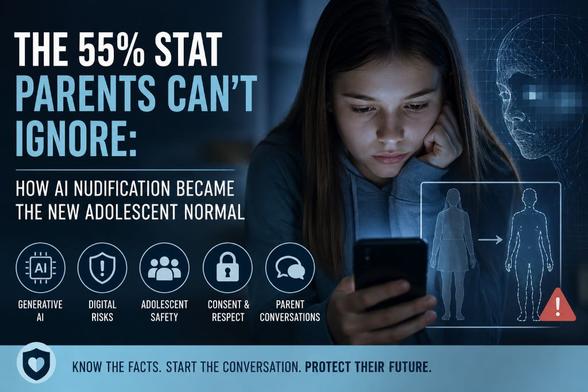
    Today, GenAI has effectively quadrupled those rates. According to a nationally representative survey of 13-to-17-year-olds:

    • 55.3% of adolescents have used AI “nudification” tools to create sexualized images of themselves.
    • 54.4% have received these images.

    What was once a niche behavior has become a majority experience. This isn’t just a technological update to sexting; it is a total normalization of CSEM production as a routine part of adolescent sexual exploration.

    Are you an LPC in need of continuing education? Dr. Weeks has a course on this material and many other unique and interesting topics.

    In the course, “The Prevalence of Youth-Produced Image-Based Sexual Abuse,” Dr. Weeks teaches how child digital safety is undergoing a paradigm shift, how changes in Image Based Sexual Abuse require adaptation, and proposes a framework for conceptualizing IBSA.

    Takeaway 2: Nudification vs. Creation – The Personal Toll of Inpainting

    It is vital to understand the technical nuance that makes this trend so invasive. There is a massive difference between general text-to-image GenAI (which creates an image from a prompt) and “nudification” tools. These tools utilize a technique called inpainting, which modifies a pre-existing, real photo. 

    The survey found that usage of these specific nudification tools is significantly higher than traditional AI content creation. This is precisely why the victimization is so direct: it requires the likeness of a real person. As the study notes, these tools are designed to: 

    “…visualize what individuals might look like without clothing.” 

    By using a real individual as a “basis image,” the technology allows for the digital removal of clothing, turning a casual school photo into CSEM in seconds. The distinction between a “fake” image and a “real” person is erased, leading to a profound degree of direct victimization.

    Are you exploring your trauma? Do you feel your childhood experiences were detrimental to your current mental or physical health? Utilize this free, validated, self-report questionnaire to find out.

    Take the Adverse Childhood Experience (ACE) Questionnaire

    Takeaway 3: The High Cost of Non-Consensual “Deepfakes”

    The most heartbreaking aspect of this shift is the erosion of consent. The data highlights a crisis of victimization: 36.3% of participants reported having a non-consensual image of them created, and 33.2% had such an image shared without their permission. 

    Victims describe a visceral sense of “powerlessness” and “dehumanization.” When your likeness can be hijacked and sexualized without your involvement, it leads to a state of constant hypervigilance. Crucially, these statistics represent a lower bound of the crisis. Because the study only measured peer-to-peer actions, it does not account for images created by adults exploiting minors or images of children under the age of 13. If those variables were included, the scale of victimization would likely skyrocket.

    Takeaway 4: The Gender and Age Myths Around AI Nudification Debunked

    We often fall into the trap of thinking digital crises are limited to specific subcultures or older teens. The data tells a different story. The usage of AI nudification tools is remarkably uniform across all demographics: race, region, and sexual orientation showed no statistically significant differences in prevalence. This is a universal adolescent issue. 

    While male participants showed higher rates of regular (frequent) creation and distribution, the most startling finding was the age breakdown. There was no statistically significant difference in usage between 13-year-olds and 17-year-olds. This destroys the myth that we can wait until high school to talk about AI safety. To be effective, digital literacy and intervention must begin before age 13, as younger adolescents are already engaging with these tools at the same rates as their older peers.

    Learn why it’s important for everyone, especially teens, to be able to control their online experiences. Dick Pic Culture: How do Teenage Girls Navigate it?

    Takeaway 5: A Legal and Ethical Gray Zone

    We must call these images what they are: CSEM. Under federal law (18 U.S. Code § 1466A), the production and distribution of pornographic GenAI images of minors is illegal, regardless of whether the image is “real.” 

    This puts policymakers in an ethical bind.

    We are currently seeing thousands of adolescents technically committing federal crimes as part of “exploratory” peer behavior. Ethicists and lawmakers are now forced to debate whether we need legal “carve-outs” for consensual, same-age peer interactions, or if the permanent digital harm of these images necessitates strict criminal enforcement. Meanwhile, “gray market” apps continue to bypass app store controls, providing easy access to nudification tools without any meaningful age verification.

    Conclusion: A Call for Proactive Digital Literacy

    The window for intervention is narrow but still open. Because much of the current usage is reported as “exploratory” rather than “habitual,” we have a brief opportunity to steer this generation toward a more ethical digital future. However, our response cannot be reactive. We need multimodal education that doesn’t just teach “online safety” but addresses the profound ethical weight of AI tools and the lifelong impact of non-consensual sharing. 

    Final Thought: As we enter an era where a child’s likeness can be permanently decoupled from their consent in a matter of clicks, we must ask: Are our legal and educational frameworks fundamentally incompatible with this new reality, or are we simply too slow to protect the first generation of AI adolescents?

    Are you a professional looking to stay up-to-date with the latest information on, sex addiction, trauma, and mental health news and research? Or maybe you’re looking for continuing education courses? Then you should stay up-to-date with all of Dr. Jen’s work through her practice’s newsletter!

    Are you looking for more reputable, data-backed information on sexual addiction? The Mitigation Aide Research Archive is an excellent source for executive summaries of research studies.

    #AdolescentDigitalSafety #AIDeepfakes #AIEthics #AINudification #CSEM #DeepfakeAbuse #DigitalConsent #DigitalLiteracy #GenerativeAI #NonConsensualImages #OnlineSafetyForParents #ParentEducation #TeenSexting #TeenTechnologyRisks #YouthOnlineSafety
    🤖 Oh dear, Marcin Wichary discovered the groundbreaking feature of... a program moving the mouse pointer! 🌟 This technological marvel, known since the dawn of computing, has our dear author wrestling with philosophical dilemmas about digital consent. 🖱️ Next week, he grapples with the existential crisis of #autocorrect. 📱
    https://unsung.aresluna.org/mouse-pointer-as-a-mere-mortal/ #mousepointer #digitalconsent #technology #existentialcrisis #HackerNews #ngated
    Mouse pointer as a mere mortal – Unsung

    A blog about software craft and quality

    AI personalisation shapes our digital experiences profoundly, but it risks eroding user choice and privacy. Balancing transparency, consent, and deception is crucial to ensure technology empowers rather than manipulates. Discover more at https://dev.to/rawveg/personalisation-kills-choice-3fbd
    #HumanInTheLoop #AIethics #DataPrivacy #DigitalConsent
    Personalisation Kills Choice

    Open your phone right now and look at what appears. Perhaps TikTok serves you videos about obscure...

    DEV Community
    The rise of AI features like Tinder’s Chemistry highlight the tension between personalisation and privacy. Camera roll access risks exposing intimate data, enabling invasive profiling and harm. Strong regulation and privacy-preserving tech are essential to protect users.
    Discover more at https://dev.to/rawveg/the-surveillance-crisis-noa
    #HumanInTheLoop #AIprivacy #DataProtection #DigitalConsent
    The Surveillance Crisis

    When Match Group CEO Spencer Rascoff announced Tinder's newest feature in November 2025, the pitch...

    DEV Community

    Consent in Digital Content: Ethical Sharing, Quoting, and Collaboration Tips

    In a world where a screenshot can outrun context, consent in digital content is what keeps sharing, quoting, and collaborating respectful—not extractive. Learn how to ask for permission, preserve meaning, and give credit in ways that protect creators’ agency, especially when the stakes are highest.

    https://dreamspacestudio.net/consent-in-digital-content-ethical-sharing-quoting-and-collaboration-tips/

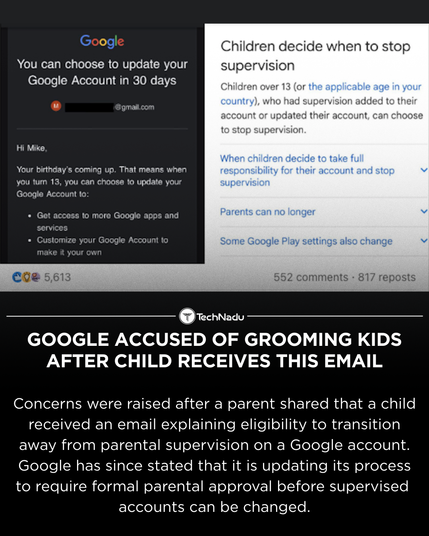
    Recent debate highlights how consumer platforms manage age-based transitions for supervised accounts.

    Following public concern, Google stated it will require formal parental approval before teens can exit supervised account settings. While no security breach is involved, the issue intersects with privacy design, consent models, and child data governance.

    From a governance perspective, this raises questions about:

    • consent frameworks for minors
    • notification design
    • regulatory alignment across regions

    How should platforms architect parental control systems to balance autonomy and protection?

    Share your analysis and follow @technadu for policy-aware tech reporting.

    Source: https://cybernews.com/tech/google-parental-controls-email/

    #PrivacyEngineering #ChildDataProtection #TechPolicy #DigitalConsent #PlatformDesign #OnlineSafety

    Italy Confronts the Digital Violence of AI-Nudified Images

    Italy Confronts the Digital Violence of AI-Nudified Images November 5, 2025 Digital manipulation is transforming im...

    Blogger

    I bought a wheelchair. The algorithm decided who I was.

    Now imagine that happening in real time: through glasses, pendants, or AI assistants that record your life as you live it.

    This is what I worry about with wearables.

    New post:
    When the Glasses Start Watching Back

    https://medium.com/@Diogo_Mendes/when-the-glasses-start-watching-back-facfb1fa4e1b

    #AIethics #Wearables #Neurodivergence #SurveillanceDesign #DigitalConsent
    #artificialintelligence #technology

    When the Glasses Start Watching Back - Diogo Mendes - Medium

    It’s not just self-consciousness. It’s the knowledge that this version of me will be stored somewhere. Stripped of context. Held still. Not who I was, just how I looked. You picture how it could be…

    Medium