Cellular Reprogramming of Somatic Cells to Stem Cells: an Innovative Approach in Pharmaceutical Biotechnology - Cytology and Genetics

Abstract The advancement of cell reprogramming technologies has revolutionized the landscape of regenerative medicine and drug research. This review scrutinizes the process of reprogramming somatic cells into stem cells, particularly focusing on induced pluripotent stem cells (iPSCs), and elucidates their evolution over time. Initially, the review delineates the disparities between normal cells and stem cells. Subsequently, it delves into the historical trajectory of embryonic stem cells (ESCs) and iPSCs. The pivotal role of somatic cell reprogramming in pharmaceutical biotechnology is explored, highlighting its applications in disease modeling, drug discovery, regenerative medicine, and personalized therapies. The review provides insight into the fundamental principles of reprogramming techniques, encompassing iPSC generation, transcription factors, epigenetic modifications, and non-integrative reprogramming methods. Special emphasis is placed on genome-editing techniques such as CRISPR-Cas9, TALENs, ZFNs, and base editing, given their paramount importance in cellular reprogramming endeavours. Finally, the review deliberates on the diverse modalities through which cellular reprogramming can rejuvenate dead cells into stem cells, underscoring the transformative potential of this technology across various domains of biomedicine. By elucidating the multifaceted effects and opportunities of somatic cell reprogramming, this review aims to serve as a valuable resource for scholars and practitioners in the realms of cellular and molecular biology. Graphical Abstract

SpringerLink

UK Scientists Achieve Breakthrough in Reversing Skin Cell Aging by 30 Years
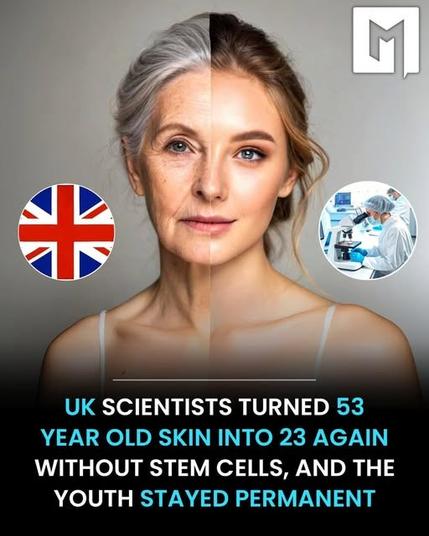
Researchers at the Babraham Institute in the UK have made a ground-breaking discovery, rejuvenating 53-year-old human skin cells to function as if they were 23 years old, while preserving their original identity.

Using a technique called partial cellular reprogramming, they applied a brief, controlled dose of Yamanaka factors—proteins that reset the genetic markers of aging—over just 13 days.

Unlike full reprogramming, which turns cells into stem cells and erases their specialized roles, this method kept the cells’ skin-specific functions intact.

The revitalized cells exhibited remarkable changes: faster wound healing, increased collagen production, and activation of youthful gene patterns.

Visually, they appeared younger under a microscope, with improved structure, stronger connections, and enhanced resilience.

Notably, these rejuvenated traits persisted weeks after the treatment, indicating a deep, lasting reset of the cells’ biological age.

This advancement holds transformative potential for regenerative medicine, with applications for aging skin, arthritis, and possibly neurodegenerative diseases like Alzheimer’s.

The discovery paves the way for therapies that don’t just mask aging but fundamentally reverse it at the cellular level.

Core Topic – Skin & Aging
#SkinAging #AgeReversal #CellRejuvenation #HealthyAging #Longevity #YouthfulSkin #SkinScience #AgeDefying #RegenerativeSkin

Research & Discovery
#ScienceNews #MedicalBreakthrough #CuttingEdgeScience #FutureOfMedicine #ResearchMatters #ScientificDiscovery #LifeSciences #BiomedicalResearch

Techniques & Biology
#CellularReprogramming #PartialReprogramming #YamanakaFactors #Epigenetics #StemCellResearch #CellTherapy #MolecularBiology #GeneticReprogramming

Regenerative & Anti-Aging Medicine
#RegenerativeMedicine #AntiAging #LongevityScience #NextGenMedicine #AgeReversalTherapy #HealthyLongevity #MedicalInnovation