SCAPHIST - NARCISSIST [OFFICIAL LYRIC VIDEO] (2025) SW EXCLUSIVE

SCAPHIST - NARCISSIST [OFFICIAL LYRIC VIDEO] (2025) SW EXCLUSIVE

SCAPHIST - BENIGN (FT. DEVIN SHIDAKER OF THE ACACIA STRAIN) [OFFICIAL LYRIC VIDEO] (2025) SW EXCL

SCAPHIST "NARCISSIST" OUT NOW!

SCAPHIST "BENIGN" (FEAT. DEVIN SHIDAKER OF THE ACACIA STRAIN) OUT NOW!

#TheMetalDogArticleList
#Blabbermouth
HATEBREED's WAYNE LOZINAK Hopes To 'Get The Surgery Scheduled Soon' Following Noncancerous Brain Tumor Diagnosis
#HATEBREED #WayneLozinak #BrainTumor #Surgery #Diagnosis #Instagram #Europe #Guitarist #Benign #Meningioma
on my way out of an estate sale in the thick of winding side street mansions, an overcast and muggy day, folk songs playing on public radio, i realized i was having a quintessentially pasadena day
SciTech Chronicles. . . . . . . . . . . . . . . . . . . . . . . . . . . . . .Jan 15, 2025
#Misinfirmation #outrage #epistemic #hemp #CBD #rhizosphere #phyllosphere #genotypes #microbiome #humility #anger #benign #Kokoro #epub #python #pip #streaming #Plex #video #audio #images
#Man shares two #lessons he learned from #disrupting a #racist #joke in a group of #white #people.
"Can you #speakup? Because our #silence is not #benign?"
#Women #Transgender #LGBTQ #LGBTQIA #Hate #Bigotry #Discrimination #PunchingDown #Racism #WhiteSupremacy #BlackMastodon
https://www.upworthy.com/white-person-shares-two-lessons-from-stopping-a-racist-joke-rp
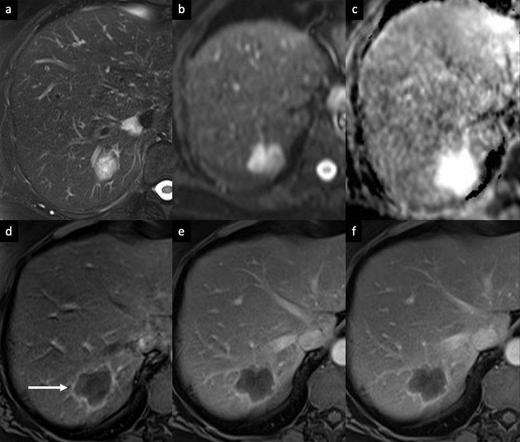
Educational Review: #Benign and #malignant focal liver lesions displaying rim arterial phase hyperenhancement on CT and #MRI. (Francesco Matteini et al.)
Abstract Rim arterial phase hyperenhancement is an imaging feature commonly encountered on contrast-enhanced CT and MRI in focal liver lesions. Rim arterial phase hyperenhancement is a subtype of arterial phase hyperenhancement mainly present at the periphery of lesions on the arterial phase. It is caused by a relative arterialization of the periphery compared with the center of the lesion and needs to be differentiated from other patterns of peripheral enhancement, including the peripheral discontinuous nodular enhancement and the corona enhancement. Rim arterial phase hyperenhancement may be a typical or an atypical imaging presentation of many benign and malignant focal liver lesions, challenging the radiologists during imaging interpretation. Benign focal liver lesions that may show rim arterial phase hyperenhancement may have a vascular, infectious, or inflammatory origin. Malignant focal liver lesions displaying rim arterial phase hyperenhancement may have a vascular, hepatocellular, biliary, lymphoid, or secondary origin. The differences in imaging characteristics on contrast-enhanced CT may be subtle, and a multiparametric approach on MRI may be helpful to narrow the list of differentials. This article aims to review the broad spectrum of focal liver lesions that may show rim arterial phase hyperenhancement, using an approach based on the benign and malignant nature of lesions and their histologic origin. Critical relevance statement Rim arterial phase hyperenhancement may be an imaging feature encountered in benign and malignant focal liver lesions and the diagnostic algorithm approach provided in this educational review may guide toward the final diagnosis. Key Points Several focal liver lesions may demonstrate rim arterial phase hyperenhancement. Rim arterial phase hyperenhancement may occur in vascular, inflammatory, and neoplastic lesions. Rim arterial phase hyperenhancement may challenge radiologists during image interpretation. Graphical Abstract
This study from Han Xia et al. explore how a DECT-based model demonstrated a favorable diagnostic performance for noninvasive differentiation between #benign and #malignant breast lesions.
Objectives To develop and validate a dual-energy CT (DECT)-based model for noninvasively differentiating between benign and malignant breast lesions detected on DECT. Materials and methods This study prospectively enrolled patients with suspected breast cancer who underwent dual-phase contrast-enhanced DECT from July 2022 to July 2023. Breast lesions were randomly divided into the training and test cohorts at a ratio of 7:3. Clinical characteristics, DECT-based morphological features, and DECT quantitative parameters were collected. Univariate analyses and multivariate logistic regression were performed to determine independent predictors of benign and malignant breast lesions. An individualized model was constructed. Receiver operating characteristic (ROC) curve analysis was performed to evaluate the diagnostic ability of the model, whose calibration and clinical usefulness were assessed by calibration curve and decision curve analysis. Results This study included 200 patients (mean age, 49.9โยฑโ11.9 years; age range, 22โ83 years) with 222 breast lesions. Age, lesion shape, and the effective atomic number (Zeff) in the venous phase were significant independent predictors of breast lesions (all pโ<โ0.05). The discriminative power of the model incorporating these three factors was high, with AUCs of 0.844 (95%CI 0.764โ0.925) and 0.791 (95% CI 0.647โ0.935) in the training and test cohorts, respectively. The constructed model showed a preferable fitting (all pโ>โ0.05 by the Hosmer-Lemeshow test) and provided enhanced net benefits than simple default strategies within a wide range of threshold probabilities in both cohorts. Conclusion The DECT-based model showed a favorable diagnostic performance for noninvasive differentiation between benign and malignant breast lesions detected on DECT. Critical relevance statement The combination of clinical and morphological characteristics and DECT-derived parameter have the potential to identify benign and malignant breast lesions and it may be useful for incidental breast lesions on DECT to decide if further work-up is needed. Key Points It is important to characterize incidental breast lesions on DECT for patient management. DECT-based model can differentiate benign and malignant breast lesions with good performance. DECT-based model is a potential tool for distinguishing breast lesions detected on DECT. Graphical Abstract